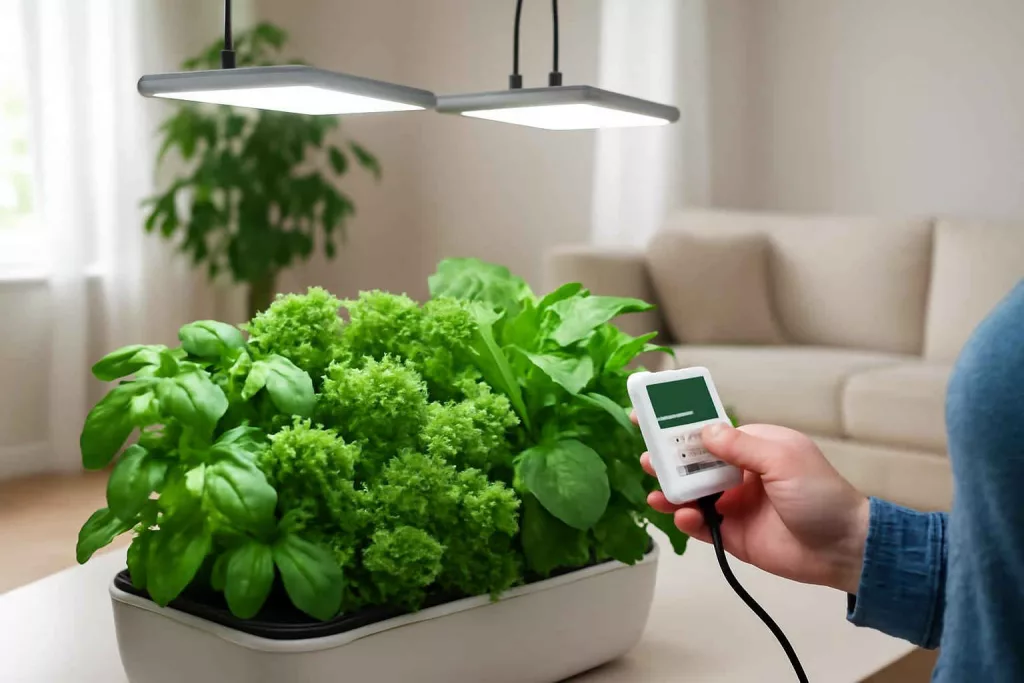
LED grow lights for indoor plants deliver the right spectrum and intensity for healthy growth and higher yields. Choosing the right model depends on your plant type, available space, and energy budget. Start with a unit that covers your plant canopy and offers a full spectrum LED array for seedlings, vegetative growth, and flowering.
If you’re ready to shop, check out this top-rated best LED grow light panel for consistent light output and energy savings.
Step-by-Step Guide to Choosing LED Grow Lights
1. Evaluate Your Plant’s Light Requirements
Different indoor plants—herbs, leafy greens, succulents, or flowering species—need varying light intensities measured in PPFD (Photosynthetic Photon Flux Density). Leafy greens thrive at around 200–300 µmol/m²/s, while fruiting or flowering plants may require 400–600 µmol/m²/s. Match a grow light’s PPFD rating to your plants’ stage and type to avoid stretching or burned foliage.
2. Understand Light Spectrum and Color Temperature
A full spectrum LED grow light incorporates blue (400–500 nm) and red (600–700 nm) wavelengths to mimic natural sunlight. Blue light promotes compact, robust vegetative growth; red light encourages budding and flowering. Some advanced fixtures include UV and far-red diodes to improve resin production and root development. Look for lights advertised as “full spectrum” or with adjustable spectrum settings to adapt for seedlings versus flowering stages.
3. Calculate Wattage and Coverage Area
Calculate the square footage of your growing area: length×width in feet. For general guidance, allocate at least 30–50 watts (actual draw) per square foot for leafy plants; increase to 50–70 watts for flowering crops. A 2×2 ft tray of microgreens can thrive under a 100-watt panel, while a 4×4 ft setup may need 300–400 watts. Confirm the manufacturer’s recommended coverage map, as some fixtures perform more efficiently over smaller footprints.
4. Select the Appropriate Fixture Style
LED grow lights come in several housing types:
- Panel/Flat Bars: Even light distribution, easy to mount above racks.
- COB (Chip-On-Board): High output and deeper canopy penetration, but narrower spread.
- Bulb-Style: Drop-in replacements for traditional sockets—good for small terrariums.
- Integrated Horticultural Fixtures: Pre-wired units with hanging kits, ideal for first-time growers.
Choose a style that matches your space—panels are best for low ceilings, COB units excel in taller tents.
5. Check Energy Efficiency and Build Quality
Inspect the fixture’s efficacy rating, expressed as µmol/J (micromoles per joule). Aim for at least 2.0 µmol/J to ensure you’re getting useful light output per watt of power. Robust aluminum heat sinks and quiet, high-quality fans extend LED lifespan by keeping diodes cool. Waterproofing (IP65 or higher) safeguards against humidity in grow tents, while daisy-chain capabilities reduce cable clutter.
6. Look for Dimmable and Programmable Controls
Dimmable fixtures let you start seedlings at lower intensities and ramp up as plants mature. Advanced units offer integrated timers, sunrise/sunset simulations, and smartphone apps. These automated features save time and minimize manual adjustments, delivering consistent light schedules—crucial for photoperiod-sensitive plants like orchids and tomatoes.
Practical Example: Setting Up an Indoor Herb Station
Emily, a busy apartment dweller, wanted year-round fresh basil and parsley on a windowsill that gets limited natural light. She followed these steps:
- Measuring a 2 ft × 1.5 ft shelf space, she decided on a 150-watt full spectrum LED panel rated for a 3×2 ft footprint.
- She hung the light fixture 18 inches above seed trays using the included adjustable rope ratchets, ensuring even coverage.
- Using a digital timer, she set an 18-hour on/6-hour off cycle for seedlings and reduced to 14/10 once true leaves formed.
- To manage water, Emily paired her grow station with a simple DIY drip irrigation system to deliver a measured drip every morning.
- Two weeks later, her basil plants boasted thick leaves and rich color—proof that the right LED grow light can transform a low-light corner into a productive herb garden.
Common Mistakes to Avoid
- Ignoring Light Intensity: Using a low-power LED for flowering plants can result in leggy growth and low yields.
- Placing Lights Too Close or Far: Too close risks leaf burn; too far leads to stretching. Always follow manufacturer’s recommended distances.
- Skipping Spectrum Adjustments: Running a fixed spectrum light throughout the cycle may limit fruiting or essential oil production.
- Overlooking Heat Management: Poor ventilation or subpar heat sinks shorten LED lifespan and diminish output over time.
- Neglecting Duty Cycle: Leaving lights on for 24 hours stresses plants; enforce dark periods for healthy physiology.
Tips to Improve Performance and Longevity
Increase yield and equipment lifespan by integrating these proven practices:
- Clean LED Covers Regularly: Dust and water residue block up to 15% of light output. Wipe down lenses every two weeks.
- Use Reflective Surfaces: Line the walls around your grow area with Mylar or flat white paint to bounce stray photons back to the canopy.
- Maintain Optimal Temperature: Keep the grow area between 68°F and 78°F. Install a small oscillating fan for air circulation without direct leaf blow.
- Monitor PPFD Levels: Invest in an inexpensive quantum sensor to verify light intensity and adjust heights or dimmers accordingly.
- Rotate Plants Weekly: Ensure uniform light exposure across leaf surfaces and prevent one-sided growth.
For hobbyists who want more automation, consider programmable LEDs with smartphone integration for customized spectrums and schedules. If you need space-saving solutions, you might also explore vertical gardening setups that pair perfectly with slim-profile LED bars.
Conclusion
Choosing the right LED grow lights for indoor plants boils down to matching light intensity, spectrum, and coverage to your species and grow space. Focus on full spectrum panels with adequate PPFD, efficient heat management, and dimmable controls. With careful planning and the right fixture—like the best LED grow light for indoor plants—you’ll unlock consistent, year-round harvests of herbs, greens, and blooms. Happy growing!