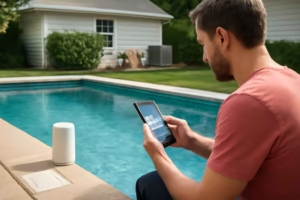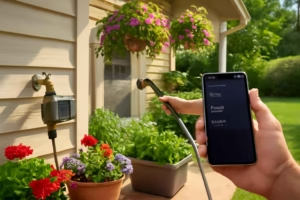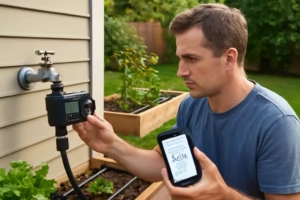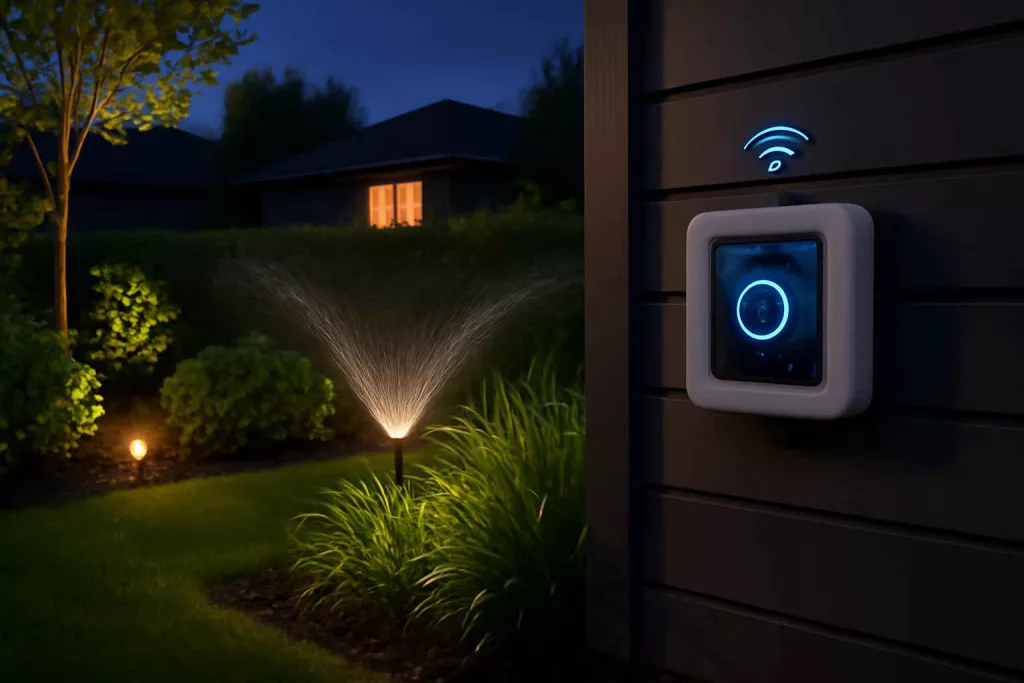
Keeping your garden lush and healthy requires precise watering, and a smart garden irrigation controller takes the guesswork out of scheduling and water use. A Wi-Fi-enabled controller connects to your home network, uses weather data, and offers intuitive smartphone app controls for effortless irrigation management. In this guide, we explore why a smart garden irrigation controller is the ultimate upgrade for home gardeners, how to choose the right model, top picks on Amazon, installation steps, and maintenance tips. Ready to automate your water routine? Check out a selection on Amazon here.
Benefits of Smart Garden Irrigation Controllers
Water Efficiency
Traditional irrigation timers follow fixed schedules and often overwater plants, leading to wasted water and higher utility bills. A smart garden irrigation controller adjusts watering based on real-time weather forecasts, soil moisture data, and plant type. By delivering water only when needed, you can reduce consumption by up to 30%. This precision protects plant health and conserves resources, especially during drought-sensitive periods.
Convenience and Automation
With a Wi-Fi irrigation controller, you can program watering zones, set run times, and monitor status from your smartphone or tablet—anytime, anywhere. Whether you’re at home, at work, or on vacation, the intuitive app interface lets you fine-tune schedules without climbing ladders or returning to a control box. Notifications alert you to system errors or extreme weather, ensuring fast adjustments and minimal downtime.
Weather Adaptability
Smart controllers integrate with local weather services to automatically skip watering when rain is predicted or temperatures drop below thresholds that threaten plant health. By responding to environmental conditions, these systems protect your garden from overwatering-induced root rot and under-watering stress. In regions with unpredictable climates, weather-based scheduling is invaluable.
How to Choose the Right Smart Irrigation Controller
Compatibility with Existing Zones
Before upgrading, verify how many zones your garden uses and whether your controller supports them. Most residential controllers handle four to eight zones, with expandable models accommodating up to sixteen. Confirm wire connections and voltage compatibility—24VAC is standard. If you’ve installed drip irrigation kits, ensure the controller can regulate low-flow drip lines alongside conventional sprinklers.
Connectivity and App Features
Evaluate Wi-Fi range, mobile app reviews, and cloud service reliability. Look for controllers with intuitive zone dashboards, station run logs, and smart scheduling suggestions. Advanced features like voice assistant integration (Alexa, Google Assistant) and multi-user access can enhance usability for large households or property managers.
Weather Integration and Sensors
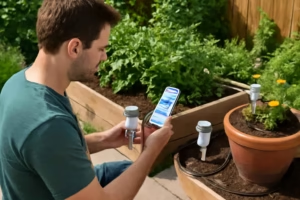
Built-in weather integration offers basic forecast-based adjustments, but compatibility with external soil moisture sensors or rain sensors adds a second layer of accuracy. Soil sensors deliver real-time moisture readings, while rain sensors automatically suspend programs during precipitation events. Consider models that accept both sensor types for ultimate flexibility.
DIY vs Professional Installation
Many smart controllers are designed for straightforward homeowner installation, replacing existing timers in minutes. Preprogrammed wiring diagrams, labeled terminals, and color-coded wires simplify the process. If your system requires trenching new irrigation lines or complex sensor placement, you may prefer professional help. The time saved can justify the modest service cost.
Top 5 Smart Wi-Fi Garden Irrigation Controllers
1. RainMaster Pro Wi-Fi Smart Irrigation Controller
Features: 8-zone support, voice control, weather-based scheduling, local and cloud app. Pros: Easy setup, robust mobile interface, reliable cloud sync. Cons: Premium price point. Buy RainMaster Pro.
2. GreenThumb Smart Sprinkler Timer
Features: 4-zone capacity, integrated rain sensor port, energy-efficient design. Pros: Affordable, compact, auto rain delay. Cons: No soil sensor compatibility. Buy GreenThumb.
3. AquaSense Ultra 6-Zone Wi-Fi Controller
Features: Supports indoor/outdoor mounting, app-driven flow monitoring, weather tracking. Pros: Detailed consumption metrics; sturdy exterior. Cons: Bulky enclosure. Buy AquaSense Ultra.
4. HydroGuard Professional Smart Irrigation System
Features: Expandable to 12 zones, multi-sensor port, enterprise-grade security. Pros: Scalable, suitable for large properties. Cons: Advanced features require learning curve. Buy HydroGuard Pro.
5. EcoDrop Cellular Garden Irrigation Controller
Features: 4G cellular connectivity, no Wi-Fi needed, weather-adaptive algorithms. Pros: Ideal for remote gardens without Wi-Fi. Cons: Requires SIM plan. Buy EcoDrop.
Installation and Setup Guide
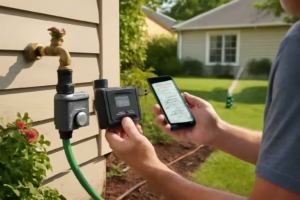
Installing your smart garden irrigation controller starts by shutting off the master water supply and removing the existing timer. Mount the new controller on a stable, sheltered surface near the original location. Connect the transformer to a dedicated GFCI outlet, then attach zone wires to the labeled terminals—match colors and zone numbers carefully. For drip lines or hose-end systems, use the controller’s manual dial to test each valve activation. If you need additional hose organization tools, check out our DIY garden hose reel holder guide for a clean setup.
After wiring, power up the controller and follow the mobile app prompts to configure Wi-Fi credentials. Assign names to each zone (e.g., Front Lawn, Vegetable Garden), then set base watering schedules. Enable weather adjustments and rain delays in settings. Conduct a full cycle test in the app to confirm valve operation and verify sprinkler coverage.
Maintenance and Troubleshooting
Regular upkeep ensures reliable performance. Inspect valve boxes annually for debris and insect nests. Replace worn solenoid seals if you notice leaks or zone failures. Clean out the rain sensor and remove sediment around sensor hoods. For models with soil moisture sensor compatibility, verify probe placement at root depth and clean sensor contacts to avoid false readings. During winter, drain zone lines and consider removing the controller transformer to prevent freeze damage.
If a zone fails to start, check wiring continuity with a multimeter or swap zone wires to isolate a faulty solenoid. Reset the controller to factory defaults before advanced troubleshooting and re-enter your zone and network settings carefully. Firmware updates delivered through the app often resolve connectivity glitches—check for updates monthly.
Conclusion
Upgrading to a smart garden irrigation controller transforms your watering routine from chore to convenience. With precise water scheduling, weather-based adaptations, and remote control via smartphone, you’ll conserve water, protect plant health, and free up valuable time. Explore Amazon’s selection of top-rated Wi-Fi controllers here, and enjoy a smarter, greener garden all season long.