Upgrading your workshop organization starts with selecting the right modular tool drawer inserts. These versatile systems transform cluttered drawers into precision-packed storage solutions by keeping each tool in its own custom slot. Whether you need foam-lined trays for delicate instruments or durable plastic dividers for heavy-duty bits, modular inserts are a mid- and bottom-funnel essential for any serious craftsman.
In this guide, we dive deep into why modular tool drawer inserts are a must-have, the key types on the market, how to choose the best fit, and the top 5 picks that balance quality, customization, and affordability. Plus, we share installation and maintenance tips and show you how to integrate inserts with existing workshop storage solutions. Let’s get started and turn your tool drawer into a model of efficiency.
Why Choose Modular Tool Drawer Inserts?
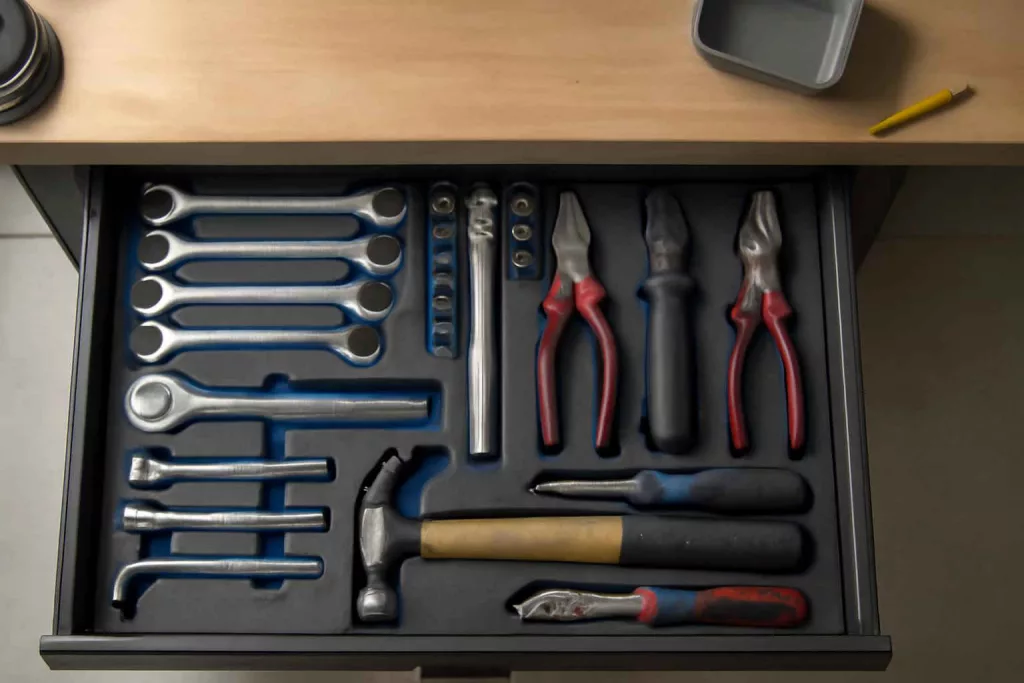
Modular tool drawer inserts offer more than just neatness—they enhance workflow, protect your tools, and save time. Unlike generic drawer dividers, modular systems are designed to fit the contours of your hand tools and accessories exactly. This precise fit prevents shifting during drawer opening and closing, reducing wear on tool surfaces and drawer interiors. Users frequently report a noticeable improvement in how quickly they access and return tools, which directly boosts productivity.
Workshops often accumulate a mix of wrenches, screwdrivers, ratchets, sockets, and specialty bits. When left loose, these items can rattle around, causing damage and creating noise. Foam-based or plastic modular inserts keep every piece in its dedicated slot. This feature ensures that your tools remain in mint condition and eliminates the frustrating search for the right bit.
Another major advantage is modularity itself. Many insert systems allow you to rearrange or expand compartments as your collection grows. Purchasing individual trays or panels to stack or layer provides flexibility unmatched by fixed dividers. For example, if you acquire a new set of precision screwdrivers, simply adjust the foam layout or swap in a new plastic cassette to accommodate them without overhauling your entire storage.
Finally, modular inserts are excellent for maintaining inventory. By having a visual map of each tool’s spot, you can instantly identify missing items. This is particularly beneficial for professionals who need to ensure all tools are present before packing up the workshop at the end of a job.
Types of Modular Tool Drawer Inserts
Foam Tool Drawer Inserts
Foam inserts are popular for their superb cushioning and easy customization. Sheets of closed-cell polyethylene (PE) or high-density polyurethane foam can be cut with simple tools to match the outline of your tools. Many brands provide pre-scored foam grids—commonly referred to as pick-and-pluck foam—allowing you to remove small cubes to create custom cavities without special equipment.
Key benefits of foam inserts include shock absorption, noise reduction, and protection against scratches. They work well with delicate instruments like torque wrenches or laser measuring tools. However, beware of low-density foams that may compress excessively under heavy tools. Opt for higher-density options if you store chisels, mallets, or hammer heads.
Plastic Compartment Trays
Durable plastic trays offer rigidity and a clean look. Many manufacturers use polypropylene or ABS plastic to craft trays with fixed partitions. These trays often stack or slide into drawer rails. They’re ideal for sockets, drill bits, and small components since the rigid walls prevent parts from spilling into adjacent compartments.
Some plastic systems come with removable dividers, allowing minor adjustments, but they usually lack the ability to contour exactly to irregularly shaped tools. Plastic trays excel when you need distinct sections for fasteners, hardware, or small hand tools.
Customizable 3D-Printed Inserts
For the ultimate in personalization, 3D-printed inserts let you design precise cavities for each tool using CAD software. Makers with access to a home 3D printer or local fabrication services can create textured, form-fitting trays that perfectly match tool geometry. Materials like PLA, PETG, or even nylon provide rigid stability.
While 3D printing requires a learning curve and initial investment, it offers unparalleled precision. You can incorporate labels, tool outlines, and even modular clips to attach additional accessories. This approach is especially appealing for hobbyists and specialists looking to showcase a professional-grade setup.
How to Choose the Right Tool Drawer Inserts
Fit and Compatibility
Begin by measuring your drawer interior—length, width, and depth. Modular inserts should accommodate your largest tool horizontally or vertically without overlapping the drawer lip. Many brands offer slim-profile trays designed for shallow drawers, while others are built for deeper tool chests.
Ensure that the height of the insert plus the height of the tool does not exceed drawer clearance. Some drawers have under-rail obstructions or locking mechanisms that limit internal height.
Material and Durability
Consider the tools you’ll store. Foam is ideal for delicate items but may wear out faster under heavy loads. Conversely, plastic trays offer durability but lack the cushioning effect. If you frequently use your tools, prioritize abrasion-resistant materials or protective foam liners.
Look for UV-resistant plastics if your workshop gets bright sunlight through windows. Foam inserts should be closed-cell to resist moisture and oil spills, making cleanup easier and preventing mold.
Customization Options
Assess how often your tool collection changes. If you anticipate frequent additions or swaps, choose an expandable modular system with interchangeable trays or panels. Pre-cut pick-and-pluck foam is user-friendly, but for complex tools, a grid that allows custom cutting may be necessary.
Some systems support stacking multiple layers, offering separate levels for low-profile items like wrenches or allen-key sets. Others provide rails compatible with standard tool chest manufacturers, simplifying installation.
Top 5 Modular Tool Drawer Inserts for Workshops
Below are our top recommendations, chosen for their build quality, customization flexibility, and value.
1. DEWALT TSTAK Inlay Drawer Organizer
DEWALT’s TSTAK inlay trays are precision-molded to fit the TSTAK system. They feature removable plastic dividers and durable injection-molded walls. These trays slide seamlessly into TSTAK modules or standard tool chest drawers.
Check DEWALT TSTAK Inlay Drawer Organizer
2. Akro-Mils 10144 D Plastic Drawer Divider & Bin
This polypropylene tray offers a grid of fixed compartments that organize small parts, sockets, and fasteners. Its modular dimensions allow side-by-side installation of multiple trays. The lightweight design makes removal for reconfiguration hassle-free.
View Akro-Mils 10144 D Divider & Bin
3. Customizable Pick-and-Pluck Foam Kits
Generic pick-and-pluck foam kits from brands like STANLEY or infinity foam brands let you cut precise cavities for any tool. These bulk kits cover multiple drawers and are ideal for complex layouts.
4. Milwaukee PACKOUT Drawer Organizer Insert
Designed for Milwaukee’s PACKOUT line, these rugged polypropylene trays feature secure locking dividers. They withstand heavy-duty use and integrate with PACKOUT cabinets or standalone tool chest drawers.
Explore Milwaukee PACKOUT Drawer Inserts
5. 3D-Printed Tool Tray Custom Designs
Services like MakerBot’s print-on-demand allow you to upload designs for fully customized trays. If you have access to an in-house 3D printer, use free CAD templates on sites like Thingiverse to craft bespoke layouts.
Installation and Maintenance Tips
Installing modular drawer inserts is straightforward. Start by cleaning the drawer interior—remove debris, oil stains, and any rust. A clean surface ensures inserts sit flat and securely. If your drawer floor is uneven, consider a thin anti-slip liner beneath plastic trays or foam to prevent shifting.
For foam inserts, lay the sheet into the drawer and mark tool outlines with a pencil. Remove cubes gradually, checking the fit as you go. Avoid removing too much at once; it’s easier to add more clearance than to rebuild a cavity.
When inserting plastic trays or 3D-printed modules, slide each tray into place and confirm it doesn’t obstruct drawer rails. If the tray moves during opening, apply small rubber bumpers or double-sided tape at corners for extra grip.
Regular maintenance involves periodically returning tools to their designated slots and wiping inserts clean of dust and debris. Remove any liquid spills promptly—foam can absorb moisture over time. Plastic trays can be washed with mild soap and water; ensure full drying before reinserting into drawers.
Integrating Inserts with Other Workshop Storage Solutions
Modular inserts work best when part of a holistic storage plan. Pair your neatly organized drawers with overhead systems and wall-mounted solutions. For mobile storage, combine inserts with a DIY rolling tool chest build guide to keep your organized tools accessible wherever you need them.
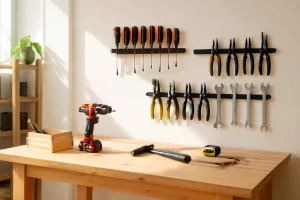
To keep frequently used hand tools within arm’s reach, mount magnetic tool holders for garage workshops above your bench, complementing your drawer organization. For bulkier items or seasonal backups, our overhead garage storage racks make excellent use of unused vertical space.
Integrating these solutions ensures every tool—from the smallest precision bit to the heaviest wrench—has its place, making your workshop a model of efficiency.
Conclusion
Investing in quality modular tool drawer inserts is one of the most impactful upgrades you can make for workshop organization. From foam kits that cushion delicate tools to rigid plastic trays for heavy hardware, the right system reduces clutter, protects your equipment, and speeds up daily tasks. Choose inserts that match your drawer dimensions, tool collection, and workflow needs.
Follow our installation and maintenance guidelines, and integrate your new inserts with rolling chests, magnetic holders, and overhead racks to create a seamless storage ecosystem. With the right combination in place, you’ll enjoy a tidy, efficient, and professional-grade workshop that keeps every tool exactly where it belongs.