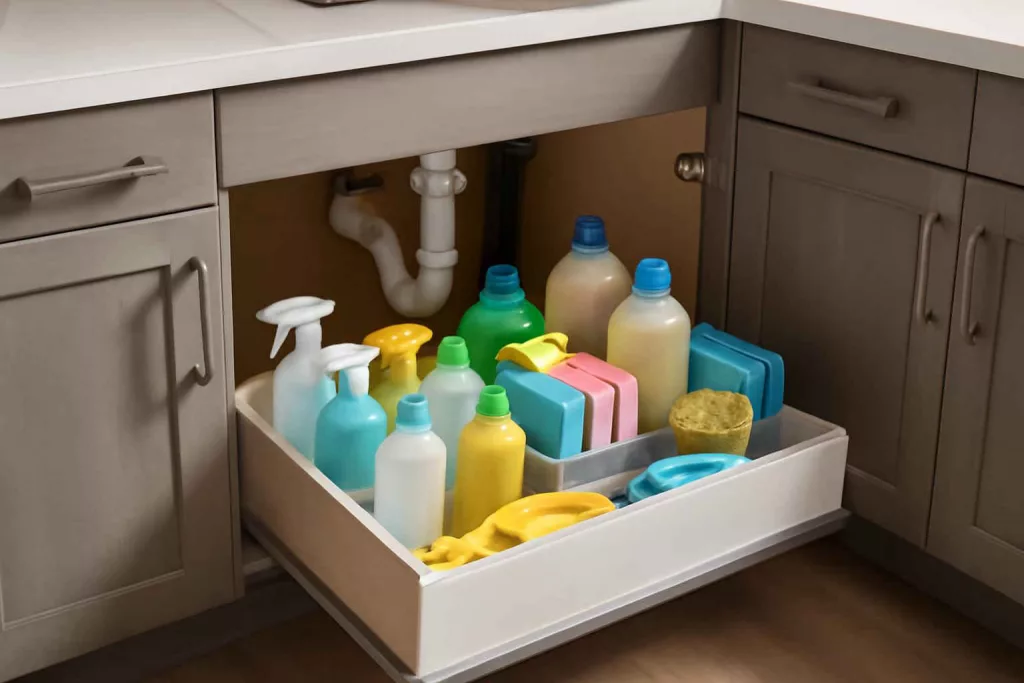
Installing an under sink pull out organizer can transform wasted cabinet space into an efficient, easy-to-access storage zone. Whether you’re tackling a cluttered kitchen sink cabinet or a cramped bathroom vanity, following a clear under sink pull out organizer installation process ensures smooth operation and long-lasting performance. In this guide, you’ll discover everything from measuring and planning to maintenance tips, plus product recommendations to help you choose the right system for your home. If you’re ready to reclaim under-cabinet space, check out top under-sink pull-out organizers like this selection on Amazon: top under-sink pull-out organizers.
Benefits of Installing Under-Sink Pull-Out Organizers
Adding an under sink pull out organizer to your cabinet provides immediate advantages in terms of organization and convenience. First, these systems allow you to slide contents out smoothly, preventing the need to stoop or reach deep into dark corners. This ergonomic access is particularly beneficial for homeowners with limited mobility or back issues. By elevating bins or baskets on heavy-duty slides, you avoid bending and stretching, reducing strain during daily tasks.
Second, pull-out organizers make it simple to separate and categorize cleaning supplies, sponges, trash bags, or bathroom essentials. No more digging through piles of mismatched bottles: everything has its place and is visible at a glance. You can designate one drawer for detergents, another for brushes, and a third for trash bins or recycling containers. The distinct compartments minimize clutter and keep liquids upright and secure.
Third, these organizers optimize under-sink space by making use of the full cabinet depth. Rather than letting the back remain inaccessible, the sliding design creates a two-tier system—some models even include adjustable baskets to adapt to plumbing obstacles. As a result, you get more usable storage in the same footprint. For inspiration on integrating complementary storage solutions, check out our guide to Best Magnetic Shower Caddies for Tile Walls, which highlights no-drill racks that can also attach inside cabinet doors.
Finally, pull-out organizers can boost home value by demonstrating practical upgrades in kitchen and bathroom areas. Prospective buyers often appreciate built-in organization features that simplify daily chores. Whether you plan to stay long-term or consider resale value, a neat under-sink system shows your home is well-maintained and thoughtfully designed.
Tools and Materials Needed
Before beginning your under sink pull out organizer installation, gather the necessary tools and materials to streamline the process. Having everything ready prevents trips to the hardware store once you start cutting or drilling.
- Tape measure and pencil for marking dimensions accurately.
- Level to ensure slide rails are mounted straight and prevent binding.
- Screwdriver or drill with appropriate bits (often #2 Phillips for standard hardware).
- Stud finder (optional) if you need to secure slides to reinforced areas or cabinet frames.
- Safety glasses and gloves to protect from debris or sharp edges during cutting or drilling.
- Under-sink pull-out organizer kit (rails, drawers or baskets, mounting hardware).
- Wood shims or plastic spacers to adjust rail height and clearance around pipes.
- Marine-grade Velcro or adhesive pads (optional) to stabilize baskets inside drawers.
Many under sink pull out organizer kits include clear instructions and the screws required, but it’s wise to double-check compatibility with your cabinet interior depth and plumbing layout. If you’re installing in a kitchen, consider additional lighting like an under-cabinet LED lighting kit to illuminate the interior space for quick access.
Step-by-Step Installation Guide
1. Measuring and Planning
Begin by measuring the interior width, depth, and height of your cabinet. Record the tightest clearance points around pipes, garbage disposals, or support braces. Subtract 1/4 inch from the width to allow room for slide movement on either side. Note any obstacles protruding into the cabinet, and plan to select a pull-out system with adjustable rails or modular bins that can work around those features.
2. Removing Existing Cabinet Fixtures
If your cabinet has an old shelf, trash bin, or cut-out for a trash chute, remove those components first. Clean the interior thoroughly to pick up dust or debris. Inspect the base for level surfaces—sometimes installers have inserted glue-down mats or liners that can be peeled off. A clean, flat surface ensures your new draw system seats properly without wobbling.
3. Installing the Slide Rails
Place one rail along each side panel of the cabinet at your marked height. Use a level to confirm they’re parallel to the floor. Pre-drill pilot holes if your material is hardwood or chipboard. Secure the rails using the screws provided, making sure not to overtighten and strip each hole. If you encounter pipes or braces, use wood shims to offset the rail and maintain a consistent level plane.
4. Installing the Drawer Bins
Once rails are secure, slide your basket or drawer assembly onto the runners. Test the glide motion by pulling in and out several times. If you feel resistance, retract the slides and adjust the rail alignment until movement is smooth. Next, secure the back of the drawer assembly to the cabinet rear panel if recommended by the manufacturer. This secondary attachment prevents tipping when the drawer is fully extended.
5. Adjusting and Testing
Fine-tune the height or side-to-side alignment by loosening screws slightly and shifting the rails. Confirm the drawer opens and closes without scraping the cabinet edges. Place a moderate load—such as cleaning bottles or towels—to check stability. If the slides bend or feel bent under weight, consider upgrading to heavy-duty slides rated for 50 to 75 pounds.
Tips for Maximizing Under-Sink Storage Space
Even after installing an under sink pull out organizer, you can employ additional strategies to maximize every inch of available space. For instance, attach small baskets or adhesive hooks to the inside of cabinet doors. These can hold spray bottles, rubber gloves, or small scrub brushes. Adhesive products are ideal if your cabinet doors lack cross-bracing to support screw-in hooks.
Another tip is to group similar items in clear, labeled bins within your pull-out drawers. Using color-coded or transparent containers allows you to see at a glance where each category of product resides—sponges, soaps, brushes, or trash bag rolls. Vertical dividers can further segment a single large drawer into multiple zones.
If space above the sink drains is unused, install a tension rod across the cabinet width. Hang cleaning cloths or mesh pouches for smaller items. This method frees drawer space while keeping frequently used items within reach. Just be mindful to maintain a gap between wet cloths and wood surfaces to prevent mold or damage.
Finally, adjust shelf heights or add removable risers if your organizer has multiple tiers. By customizing each level’s height to your bottles or containers, you avoid wasted vertical clearance while keeping the interior neat and accessible.
Maintenance and Care for Under-Sink Pull-Out Organizers
Regular maintenance preserves both function and longevity of your under sink pull out organizer. Schedule a quick clean every month by fully extending the drawers and wiping down all surfaces with a gentle household cleaner. Pay special attention to metal slides—dust accumulation can hinder smooth movement.
Lubricate the slide rails every six months using a silicone-based lubricant. Avoid petroleum-based products that can attract dirt and gum up the runners. Apply a thin coat along the inner edges of the slides, then cycle the drawer in and out several times to distribute the lubricant evenly.
Inspect mounting hardware annually. Tighten any loose screws and check for signs of rust or wear. If you spot corrosion on the slides, consider replacing them before they fail. Upgrading to stainless steel or nylon-coated runs can offer superior rust resistance in humid environments like bathrooms.
Keep an eye on weight limits. Overloading drawers beyond the manufacturer’s recommended capacity can warp slides or cause mounting screws to tear out. Rotate contents periodically so you don’t unknowingly accumulate heavy items in one drawer over time.
Top Product Recommendations
Choosing a quality under-sink pull-out organizer ensures years of reliable service. Consider systems with adjustable baskets and heavy-duty ball-bearing slides rated for at least 50 pounds. You can compare multiple brands and find user reviews on Amazon here: under-sink pull-out organizer systems. Look for stainless steel hardware, sturdy plastic or metal bins, and full-extension runners for maximum access.
For budget-friendly options, plastic slide-mounted baskets work well in rental homes or temporary setups. If you prefer a high-end look, hardwood-faced drawer fronts and brushed nickel rails integrate seamlessly with modern cabinetry.
Common Installation Mistakes to Avoid
Even experienced DIYers can encounter pitfalls when installing under-sink pull-out organizers. One frequent mistake is neglecting to measure around plumbing. Installing rails too low or too close to drain pipes can trap the drawer and cause scraping. Always measure at multiple depths and widths before ordering your kit.
A second error is failing to verify cabinet floor level. Uneven bases will lead to misaligned drawers and binding slides. Use shims to correct slight tilt before mounting any hardware. For large inconsistencies, consider replacing or reinforcing the cabinet floor panel.
Another oversight is improper screw selection. Using screws that are too long can puncture water lines or scratch disposal units behind the cabinet walls. Stick to manufacturer-supplied hardware or purchase short, coarse-threaded screws designed for particleboard.
Finally, avoid skipping the testing phase. After installation, load your organizer with actual supplies and cycle it multiple times. This reveals alignment issues or capacity limitations before final assembly. Adjust as needed to ensure smooth operation and long-term satisfaction.
Conclusion
An under sink pull out organizer installation is a cost-effective upgrade that boosts functionality and organization in kitchen and bathroom cabinets. By following careful measurements, choosing the right tools, and adhering to our step-by-step guide, you can achieve a professional-quality setup without a contractor. Maintain your organizer with regular cleaning and lubrication, and explore our recommended products to find the perfect match for your home. With this efficient under sink storage solution in place, daily chores become simpler, and cluttered cabinets become things of the past.