Refinishing engineered hardwood floors can breathe new life into your home’s interior, restoring the warm tones and smooth finish that make these surfaces stand out. Unlike solid hardwood, engineered floors feature a thin veneer of hardwood bonded to a plywood or high-density fiberboard core. This unique construction requires specialized techniques and tools to ensure you don’t sand through the veneer while achieving a flawless finish. In this guide, we’ll take you through each stage—from evaluation and preparation to sanding, staining, and sealing—so you can tackle your flooring project with confidence. Along the way, we’ll recommend essential tools like random orbital floor sanders and advanced dust containment solutions to help you achieve professional results and keep your space clean. For high-quality sanding equipment, check out this trim random orbital floor sander on Amazon here.
Tools and Materials Needed
Before diving into the refinishing process, gather the right tools and materials to streamline your workflow and safeguard your engineered hardwood veneer. Here’s what you’ll need:
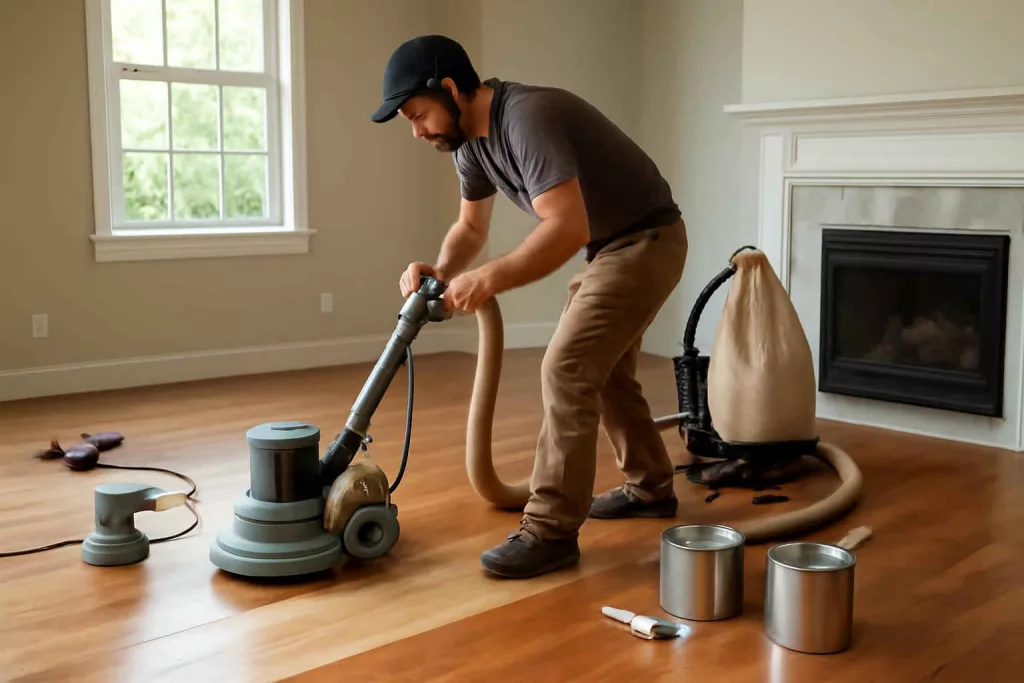
- Random Orbital Floor Sander: A low-grit orbital sander designed for hardwood floors helps remove the old finish without cutting through the thin veneer. Models with variable speed control and dust collection ports are ideal.
- Edge Sander or Hand Sanding Block: For corners, edges, and tight spaces that the floor sander can’t reach.
- Sandpaper Discs: Grit progression from 60 to 120. Start coarse (60–80 grit) to strip existing finish, then move to finer grits (100–120) for a smooth surface.
- Contrasting Stain or Water-Based Polyurethane: Choose a color to match or update your décor. Water-based polyurethane dries faster and has lower odor than oil-based alternatives.
- Paint Roller and Extension Pole: For applying sealant or stain evenly.
- Paint Brushes and Foam Pads: For cut-in areas along walls and trim.
- Dust Containment System: A portable dust collector or shop vacuum with a HEPA filter to minimize airborne particles. Learn how to set up a dust-free environment by reading this dust collection system guide.
- Painter’s Tape and Plastic Sheeting: To protect baseboards, walls, and adjacent rooms.
- Safety Gear: Respirator mask rated for fine dust, safety goggles, ear protection, and knee pads.
1. Inspect and Prepare Your Floors
Careful evaluation and preparation are crucial to refinishing engineered hardwood floors without damaging the veneer. Follow these steps:
1.1 Assess Wear and Damage
Walk the entire area to identify deep scratches, gouges, or areas where the veneer has worn through. Minor scratches can sometimes be filled with a matching wood filler, but significant damage may require replacing planks or consulting a professional.
1.2 Clean Thoroughly
Remove all furniture, rugs, and appliances. Sweep or vacuum the floor to eliminate loose debris. For embedded dirt, use a damp mop with a hardwood-safe cleaner. Proper cleaning ensures the sander won’t drag grit across the veneer. Consider reviewing our guide on cleaning hardwood floors for recommended steam mop models and techniques.
1.3 Protect Surroundings
Apply painter’s tape along baseboards and door thresholds. Cover doorways with plastic sheeting to contain dust and prevent pests or pets from entering the work zone. Ensure proper ventilation by opening windows or using fans to direct dust outside.
2. Sanding the Veneer
Sanding engineered hardwood demands precision to avoid sanding through the thin hardwood layer. Follow this sandpaper grit progression and technique:
2.1 Coarse Sanding (60–80 Grit)
Attach 60-grit sandpaper to your random orbital floor sander. Sand in the direction of the wood grain with even pressure. Do not linger in one spot to prevent cutting through the veneer. Maintain a continuous motion and overlap each pass by about 50% to ensure even removal of the old finish.
2.2 Medium Sanding (100 Grit)
Switch to 100-grit discs to smooth out scratches from the coarse sanding. This grit level also removes minor imperfections and feather edges where the old finish transitions to bare wood.
2.3 Fine Sanding (120 Grit)
Finish with 120-grit sandpaper for a silky-smooth surface ready to accept stain or sealant. Inspect for any remaining rough spots, and touch up by hand with a sanding block if necessary.
2.4 Edges and Corners
Use an edge sander or hand block at corners and along baseboards. Follow the same grit progression: coarse to fine. Always hand-sand against the grain lightly to avoid gouging.
3. Staining and Sealing
Once sanding is complete, it’s time to add color and protection to your engineered floors. Choose between stain-only finishes or combined stain and sealant products.
3.1 Applying Stain
Test your stain color on an inconspicuous plank to confirm the shade. Stir the stain thoroughly, then apply with a foam pad or lint-free cloth in the grain’s direction. Wipe off excess stain within 5–10 minutes to prevent blotching. Allow the stain to dry completely—typically 8–12 hours.
3.2 Sealing with Polyurethane
For a durable, moisture-resistant finish, use water-based polyurethane. Stir (don’t shake) the can gently to avoid air bubbles. Apply a thin first coat with a paint roller and extension pole, making long, even strokes. Cut in edges with a high-quality brush. Let dry for 2–4 hours, then lightly sand with 220-grit sandpaper to knock down raised grain. Vacuum thoroughly before applying the second coat.
3.3 Number of Coats and Drying Time
Two to three coats of sealant usually suffice for engineered floors. Follow manufacturer instructions on drying times. Maintain low foot traffic until the finish cures—usually 24–48 hours.
4. Clean-Up and Final Touches
Proper cleanup ensures no dust or debris compromises the fresh finish.
4.1 Removing Protection
Carefully peel painter’s tape and plastic sheeting. Remove any tar residue using a cloth dampened with mineral spirits. Avoid harsh chemicals on freshly sealed floors.
4.2 Final Inspection
Inspect for drips, bubbles, or uneven areas. Lightly sand any imperfections with 320-grit paper, then buff by hand using a soft cloth.
4.3 Reinstalling Furniture
Place felt pads under furniture legs to prevent scratching the new finish. Avoid rugs with rubber backing, as they can discolor the sealant.
5. Maintenance Tips for Lasting Beauty
After investing time and effort into refinishing, extend the life of your engineered hardwood floors with these tips:
5.1 Regular Cleaning
Sweep or vacuum weekly. For deeper cleaning, use a damp mop and a cleaner specifically formulated for hardwood. Excess water can damage the surface and core layers.
5.2 Preventive Measures
Use entryway mats to trap grit and moisture. Place protective pads under heavy furniture and avoid high heels or sharp objects that can dent the finish.
5.3 Periodic Touch-Ups
Keep leftover stain and sealant for small repairs. Buff out light scratches using a manufacturer-approved repair kit. For deeper wear, consider a spot sand-and-refinish approach without refinishing the entire floor.
For a high-quality touch-up kit, browse this selection on Amazon here.
Conclusion
Refinishing engineered hardwood floors is a cost-effective way to revitalize your home’s appearance while protecting your investment. By carefully evaluating the veneer, using the right sanding techniques, and applying stain and sealant properly, you can achieve a durable, attractive finish. Remember to maintain your floors with regular cleaning, preventive measures, and timely touch-ups to keep them looking fresh for years to come. Happy refinishing!