If you own a corded electric pressure washer, you know how invaluable it is for keeping your home exterior, decks, and driveways spotless. Whether you’ve recently purchased one of the best corded electric pressure washers or have been using your model for years, understanding how to winterize your tool is crucial. Freezing temperatures and residual water can cause severe damage to the pump, hoses, and internal seals.
Consider using specialized pump protector fluid available on Amazon: pressure washer pump protector to ensure complete protection before storage.
Why Winterizing Your Corded Electric Pressure Washer Is Essential
Preventing Freezing Damage
Water expands as it freezes, which means any moisture trapped inside your pressure washer’s pump or hoses can lead to cracked components and costly repairs. Winterizing removes residual water and replaces it with antifreeze, creating a protective layer that guards against freezing temperatures.
Extending Equipment Lifespan
Regular off-season maintenance preserves the integrity of vital parts, reducing wear and tear and extending the life of your pressure washer. Neglected winter storage can shorten pump life significantly and lead to early replacement costs.
Maintaining Performance and Safety
A well-maintained pressure washer starts easily in spring and operates at peak efficiency. This enhances cleaning power and prevents potential safety hazards caused by leaks or malfunctioning components.
Required Tools and Materials for Winterization
Antifreeze Products Compatible With Pressure Washers
Not all antifreeze is safe for pressure washers. Look for non-toxic, pump-safe formulations designed specifically for cleaning equipment. You can find quality commercial antifreeze solutions on Amazon: pressure washer antifreeze.
Protective Gear
Wear protective gloves and safety goggles when handling antifreeze and cleaning solvents. Even when working in a garage or shed, cold-weather gear will keep you comfortable and prevent accidental exposure to chemicals.
Cleaning Supplies and Accessories
You’ll also need a funnel, a clean bucket, and a soft brush to remove soap scum and debris. If you use detergent attachments, follow our guide on how to clean and maintain attachment accessories for best results.
Step-by-Step Winterization Process
Step 1: Drain Water From the System
Turn off the pressure washer and unplug the power cord. Disconnect hoses and spray gun, then press the trigger to release trapped water. Allow the pump to fully drain by tipping the unit gently forward and backward.
Step 2: Flush Detergent and Debris
Attach a garden hose and run clean water through the detergent inlet for two to three minutes. This step ensures all soap residue is removed, preventing corrosion and gumming up internal components during storage.
Step 3: Add Antifreeze to the Pump and Hoses
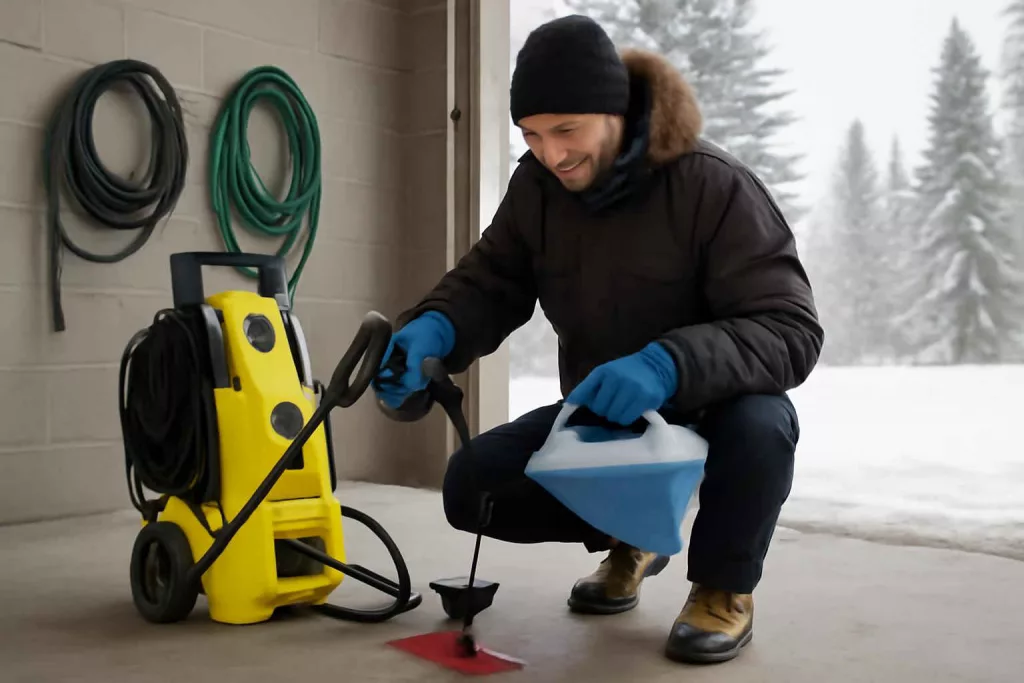
Pour the recommended amount of pump protector or antifreeze into the soap reservoir or detergent inlet. Use a funnel to avoid spills. Antifreeze will work its way into the pump, seals, and hoses when you activate the spray gun.
Step 4: Run the System to Distribute Antifreeze
Reconnect the spray gun and trigger the spray for 30 seconds to ensure antifreeze circulates through the entire system. This step coats the internal passages with a protective layer and prevents any remaining water from freezing.
Step 5: Properly Store Hoses and Accessories
Coil hoses without sharp bends and hang them on hooks to avoid kinks. Store the spray gun, nozzles, and extension wands in a dry area. If possible, hang them on a pegboard or place them in a labeled bin to keep everything organized.
Step 6: Indoor Storage Best Practices
Transport your equipment into an unheated garage or shed where temperatures stay above freezing. Avoid leaving the pressure washer outdoors or in a non-insulated space. For extra protection, place the unit on a raised platform or shelving to keep it off a cold concrete floor.
Common Winterization Mistakes to Avoid
Inadequate Drainage
Failing to remove all water is a common error. Even small amounts trapped in the pump can expand and cause damage. Always double-check that hoses and the pump are completely drained.
Using the Wrong Antifreeze
Automotive antifreeze often contains additives harmful to cleaning equipment. Stick to formulations labeled safe for pressure washers or pump protectors specifically designed for this purpose.
Ignoring Storage Environment
Poor storage conditions lead to rust and component failure. Ensure the storage area remains dry and above freezing, with good ventilation to prevent mold and mildew buildup.
Tips for Spring Startup After Winter Storage
Inspecting for Damage
Before plugging in, examine hoses, seals, and fittings for cracks or leaks. Replace any damaged parts to avoid malfunctions that could ruin your spring cleaning session.
Cleaning and Lubricating Components
Remove residual antifreeze by flushing the system with clean water. Lubricate O-rings and fittings with silicone grease, ensuring smooth connections and preventing future leaks.
Testing Safety Features
Test the on/off switch, trigger safety lock, and ground-fault circuit interrupter (GFCI) before full operation. Confirm that water pressure and spray patterns are normal and consistent.
Frequently Asked Questions
Can I use automotive antifreeze in my pressure washer?
No. Automotive antifreeze contains chemicals that can corrode internal parts. Use pump-safe antifreeze or a dedicated pump protector.
How long can I store my pressure washer indoors?
Stored above freezing in a dry, ventilated space, your pressure washer can remain in storage for the entire winter season without risk of damage.
My pressure washer is oil-bathed, do I need to change oil?
Check the manufacturer’s recommendations. Many oil-bathed pumps require an oil change at the start and end of the season for optimal performance.
Conclusion
Properly winterizing your corded electric pressure washer protects against freezing damage, extends its lifespan, and ensures top performance when spring arrives. Follow this guide’s step-by-step instructions and avoid common mistakes to keep your equipment in peak condition year after year.