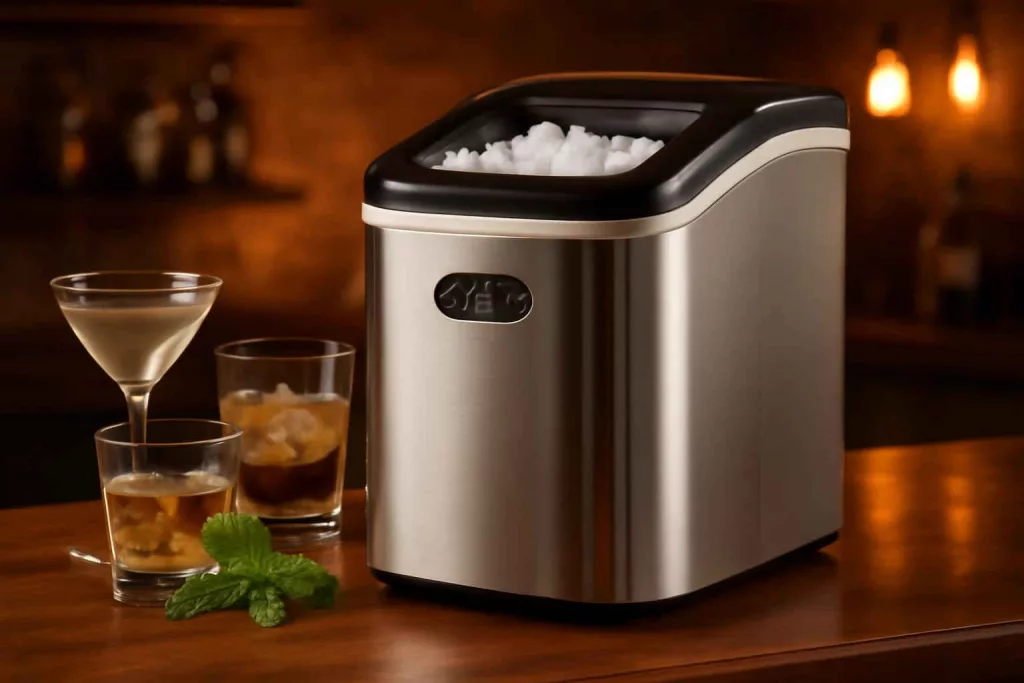
The Euhomy Countertop Ice Maker stands out as the best portable ice maker for home bars, delivering up to 40 pounds of ice daily and fitting easily on most countertops. Its 6-minute cycle, quiet compressor, and sleek stainless-steel finish ensure chilled drinks without running back to the freezer. Shop portable ice makers to find one that suits your hosting needs.
Having a dedicated ice machine on your home bar streamlines entertaining, reduces freezer clutter, and keeps beverages perfectly cold. Whether you’re crafting cocktails for friends or grabbing ice for daily beverages, the right model makes all the difference.
Step-by-Step Guide to Choosing Your Portable Ice Maker
1. Determine Your Daily Ice Production Needs
Estimate how much ice you’ll require on a typical day or for a small gathering. A model rated for 26–40 pounds per 24 hours suits most home bars hosting up to 10 guests. If you entertain larger groups or run frequent gatherings, look for machines producing over 40 pounds daily. Remember, production rates are measured over 24 hours; initial cycles often yield only 26–30% of the daily capacity.
For an intimate weekly cocktail night, a 26-pound-per-day unit is usually sufficient. Pairing your ice maker with a freezer-only model can help you buffer production spikes if you frequently host weeks-long events.
2. Choose the Right Ice Cube Shape and Size
Countertop ice machines typically offer bullet ice (small cylindrical), nugget ice (soft chew), or half-cube shapes. Bullet ice quickly chills sodas and water, while nugget ice’s chewable texture enhances cocktails and smoothies. Half-cube ice provides slower melt for spirit-forward drinks. Identify your primary use—cocktails, mixed drinks, or general chilling—to select the optimal ice type.
An appliance delivering multiple cube shapes can adapt to different occasions, but often costs more. If your bar menu leans heavily on mojitos or margaritas, prioritize nugget or half-cube formats for ideal dilution and presentation.
3. Factor in Ice Production Speed
Ice cycle times range from 6–15 minutes per batch, depending on the technology. Faster cycle times ensure quick replenishment during parties. Compressor-based units typically deliver ice cycles in 6–8 minutes, whereas thermoelectric models can take 10–15 minutes and produce smaller batches.
If you host back-to-back gatherings or fill large dispensers, aim for machines offering sub-10-minute cycles. Coupling two medium-capacity makers can also mitigate slower single-unit turnaround.
4. Compressor vs. Thermoelectric Technology
Compressor ice makers use refrigeration compressors similar to mini freezers, providing higher output, rapid cycles, and consistent performance in ambient temperatures up to 90°F. They tend to be bulkier, heavier, and draw more power but are the top choice for busy home bars.
Thermoelectric models are lighter, quieter, and consume less electricity but struggle in warmer rooms, with slower production and smaller yields. They’re ideal for occasional use in cool kitchens or offices but may fall short when entertaining larger groups.
5. Evaluate Size, Portability, and Bin Capacity
Countertop ice makers range from slim 9″-wide units to wider 15″-plus models. Measure your bar or countertop space and ensure at least 2–3 inches of clearance for ventilation. Check the internal bin capacity—units storing 1.5–3 pounds of ice at a time allow for continuous refreshing without manual removal.
If you need to tuck an appliance under shelves or slide it onto a cart, prioritize a low-profile model. Larger bins minimize trips to empty, but also add weight when full. Confirm whether the unit includes caster wheels or handles for easier repositioning.
6. Check Maintenance Features and Drainage Options
Regular draining and cleaning prevent scale buildup and ensure ice purity. Look for front-access drain plugs, rear hose attachments for continuous drainage, or removable drip trays. Built-in self-clean cycles simplify maintenance by flushing internal components with vinegar or cleaning solutions.
Units with water filters or charcoal cartridges can reduce mineral taste, especially if your source water is hard. Plan a monthly cleaning schedule to maintain optimal performance and health standards, especially if you serve guests frequently.
7. Consider Noise Levels and Power Consumption
Compressor models generate a hum and occasional clicks; check decibel ratings (45–55 dB on average). Thermoelectric machines operate nearly silently (30–40 dB) but sacrifice speed. If your bar is next to living spaces or home offices, noise could become a concern.
Energy usage varies from 100–200 watts per cycle. While ice makers aren’t major energy hogs, pairing them with a smart plug with energy monitoring can track consumption and schedule auto-shutoff when not in use.
8. Set Your Budget and Compare Value
Entry-level portable ice makers start around $100, while premium models with advanced features can approach $350. Balance up-front cost against production speed, bin capacity, and built-in conveniences like self-cleaning and water filtration. Check user reviews for real-world reliability and warranty coverage.
Consider total cost of ownership—including filter replacements, energy costs, and potential repairs. A mid-range ($150–$250) compressor unit often delivers the best combination of performance and durability for regular home-bar use.
Practical Example: Weekend Entertainer Setup
Jessica hosts monthly cocktail nights at her townhouse bar. She chose the Euhomy Stainless Steel Portable Ice Maker for its 26-pound daily capacity and 6-minute cycle. By placing a small portable induction cooktop nearby for heating simple syrups and an under-counter countertop dishwasher to rinse glasses, she created a mini bartending station that maximizes efficiency and minimizes runs to the kitchen.
Before parties, she pre-fills the bin with about 3 pounds of ice and sets the unit to rapid mode. Throughout the evening, fresh bullet ice drops automatically, so she never has empty trays. Post-gathering, she runs the machine’s self-clean cycle and drains excess water through the rear hose into a small bucket, keeping the bar area spotless and sanitized.
In a second scenario, college student Alex lives in a tight apartment. He selected a thermoelectric ice maker for quiet study sessions and occasional weekend use. Though slower, it fits perfectly on his dorm-style bar cart, providing a fun upgrade without disturbing roommates.
Common Mistakes to Avoid
- Neglecting Ventilation: Placing the unit against walls or under low shelves without adequate airflow causes overheating and reduced output.
- Ignoring Drainage Requirements: Forgetting to connect a drain hose or empty the drip tray leads to overflow and potential damage to floors.
- Overlooking Ice Shape Needs: Purchasing bullet-only machines when you primarily serve craft cocktails with specialty ice shapes.
- Choosing Thermoelectric for High-Volume Use: Relying on slower, less powerful models for larger gatherings results in frustration and ice shortages.
- Skipping Regular Cleaning: Mineral buildup can contaminate ice and shorten appliance lifespan—plan monthly clean cycles.
Tips to Improve Ice Maker Performance
- Use Filtered Water: Reduces scale, improves ice clarity, and extends machine life. Consider inline filter attachments if your local supply is hard.
- Pre-Chill the Machine: Run an initial empty cycle to cool internal components, boosting efficiency for subsequent batches.
- Maintain Ambient Temperature: Position the ice maker in a cool area (below 85°F) to ensure peak compressor performance.
- Rotate Ice Stock: Empty and refill the bin at least once daily to prevent clumping and stale-tasting cubes.
- Schedule Self-Cleaning: Utilize built-in or manual cleaning functions every 30 days to remove scale and bacteria.
- Monitor Energy Use: Pair with smart plugs to track consumption, switch off when not hosting, and reduce standby drain.
Conclusion
For reliable, fast ice production at home bars, a compressor-based model like the Euhomy Countertop Ice Maker strikes the perfect balance of speed, capacity, and quiet operation. Select a unit tailored to your hosting frequency, bench space, and preferred ice type. With proper placement, routine maintenance, and smart power management, you’ll enjoy crisp, clear ice for every cocktail and gathering.
Invest in the right portable ice maker today to elevate your home bartending experience—and never run out of ice again.