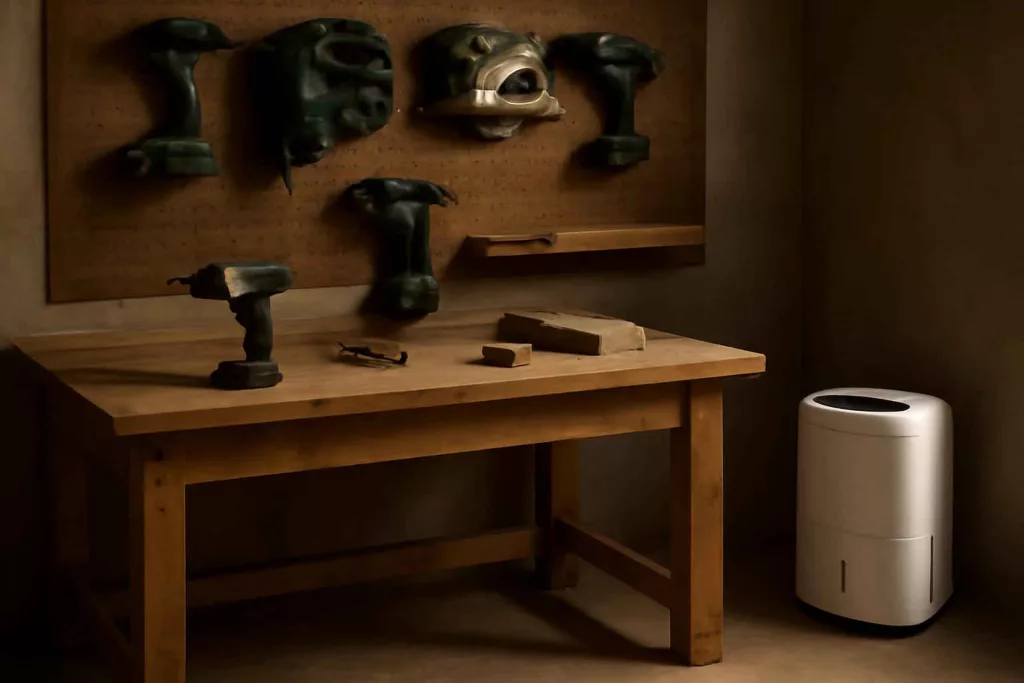
The best dehumidifier for home workshops efficiently removes excess moisture to protect tools and materials from rust and mold. This guide walks you through selecting the right capacity, features, and top models tailored to your workspace.
Excess humidity can damage wood scraps, corrode metal parts, and foster musty odors in your workshop. Installing a dehumidifier keeps the air dry, preserving your equipment and maintaining a comfortable working environment. You can browse a variety of dehumidifier options on Amazon to suit different sizes and budgets.
Step-by-Step Guide to Choosing a Workshop Dehumidifier
Step 1: Measure Your Workshop Size and Humidity Level
Before selecting a unit, measure your workshop’s square footage and monitor humidity for a few days. Use a hygrometer to track the relative humidity (RH) at different times. Ideal workshop humidity stays between 40% and 50%. If your RH readings consistently exceed 60%, you need a dehumidifier. Calculate square footage by multiplying length by width. Don’t forget high ceilings: multiply square footage by ceiling height if it exceeds 8 feet. Accurate measurements ensure you pick a model with enough capacity to maintain optimal humidity.
Step 2: Calculate Required Capacity (Pints per Day)
Dehumidifiers are rated by the pints of moisture they remove per day. For workshops under 500 square feet with moderate humidity, a 20–30 pint unit may suffice. Larger spaces or basements need 40–50 pint models. Multiply square footage by 0.1 to estimate pints: a 1,000 ft² workshop typically requires around 100 pints/day capacity in very damp conditions, but 40–50 pints often works for moderate climates. Check specifications for energy efficiency (Energy Star rating) to save on electricity.
Step 3: Evaluate Key Features
Look for features that match workshop demands: continuous drain option, adjustable humidistat, washable air filter, built-in pump, and auto-defrost for cooler spaces. A continuous drain hose prevents you from emptying the tank frequently, which is crucial if you leave the unit running unattended. A built-in pump pushes water uphill to a sink, useful if your workshop is below drain level. Consider noise level: under 50 dB units avoid distraction near your workbench. Always consult your workshop setup checklist to ensure proper placement and power requirements.
Step 4: Top Dehumidifier Models for Home Workshops
We’ve selected reliable models based on capacity, durability, and ease of use.
Model 1: Frigidaire 22-Pint Dehumidifier
This compact unit removes up to 22 pints/day, ideal for small workshops under 500 ft². It features a continuous drain option, washable filter, and auto-shutoff. Its user-friendly control panel lets you set the desired humidity level. Priced affordably, it suits hobbyists.
Model 2: hOmeLabs 50-Pint Energy Star Dehumidifier
For larger or damp basements, this model extracts up to 50 pints/day. Energy Star certification ensures low energy consumption. It includes a built-in pump, washable filter, and quiet operation at 48 dB. Wheels and handles make it easy to move between workshop areas.
Model 3: Ivation 30-Pint with Built-In Pump
This mid-size unit balances capacity and portability. It removes 30 pints/day and auto-drains up to 15 feet with the included pump. An anti-freeze feature allows continuous operation down to 41°F, perfect for unheated garages. The digital humidistat maintains precise control.
Practical Example
Imagine a do-it-yourself woodworker setting up a basement workshop measuring 600 ft². After tracking humidity at 65% RH, they choose a 50-pint dehumidifier with a built-in pump to drain into the laundry sink. Positioning the unit near the workbench keeps the air fresh and prevents moisture from warping wooden projects. They also link their dust collector system for optimal air quality via the dust collection system guide. Within a week, RH drops to 45%, safeguarding tools and reducing musty odors.
Common Mistakes
- Choosing undersized capacity that can’t keep up with humidity.
- Ignoring continuous drain or pump options, leading to frequent manual emptying.
- Placing the unit too close to walls or obstructions, reducing airflow.
- Overlooking filter maintenance, which can lower efficiency.
- Neglecting noise levels, causing distraction during work.
Tips to Improve Your Dehumidifier Setup
- Position the dehumidifier centrally for even moisture removal.
- Seal gaps around windows and doors to reduce incoming humidity.
- Clean and replace filters every 3 months to maintain airflow.
- Use a drain hose kit for uninterrupted operation in busy workshops.
- Store sensitive items like lithium-ion batteries in the dryest section to prevent degradation.
- Monitor humidity with a separate hygrometer to verify performance.
Conclusion
Keeping your home workshop’s humidity in check prevents rust, mold, and warped materials. By measuring your space, calculating capacity, and choosing a model with the right features, you can maintain a dry, efficient workspace. Explore top options on Amazon and implement these tips for a workshop that stays protected year-round.