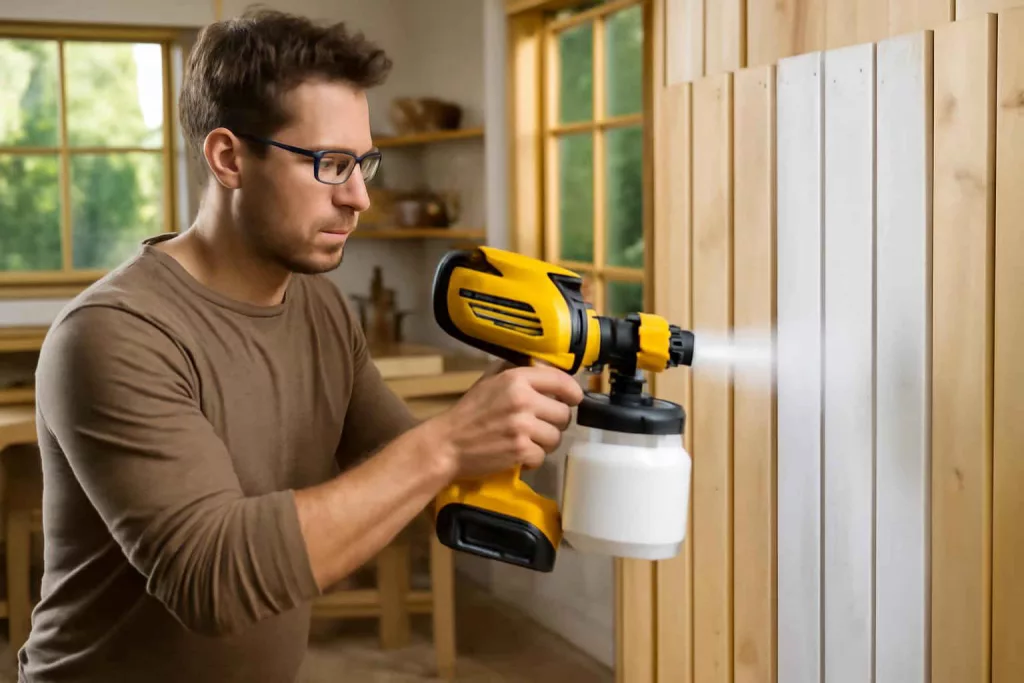
A battery-powered handheld paint sprayer like the Graco Ultra Cordless Airless Handheld Paint Sprayer delivers consistent coverage without cords or hoses. It works on a rechargeable lithium battery to handle small to medium DIY projects effortlessly, from cabinets to fence boards. For a one-and-done setup, check out the Graco Ultra Cordless Airless Handheld Paint Sprayer.
Most battery-operated sprayers run up to 60 minutes per charge and offer adjustable nozzles for fine detail or broad coverage. In this guide, you’ll find top picks, practical setup steps, real-world examples, common pitfalls to avoid, and pro tips for flawless results with any cordless paint sprayer.
Benefits of Cordless Paint Sprayers
Cordless paint sprayers free you from extension cords and hoses, so you can cover large surfaces indoors or outdoors without moving power sources. You save setup time—just charge the battery and you’re ready to spray.
These sprayers are typically lighter than airless models with hoses, which reduces arm fatigue during extended projects. Most models feature quick-change nozzles, making it easy to switch from a narrow pattern for trim work to a wide fan for walls and siding.
Cleanup is usually simpler: many units have detachable containers and quick-flush systems. And you’ll upgrade versatility—use the same 20V battery on other tools if you’re already in a compatible system.
Cordless vs Corded: When to Choose
If you’re painting a small deck, furniture, or accent wall, a cordless paint sprayer is ideal. You’ll gain cordless mobility and fast setup. For large exterior jobs over 1,000 square feet, a corded airless sprayer often maintains pressure longer and lets you refill quickly.
Consider your power supply. In remote areas without easy access to outlets, cordless is the way to go. For extended runs without pauses, a corded model or external battery packs may suit better.
Top Cordless Paint Sprayer Picks
1. Graco Ultra Cordless Airless Handheld Paint Sprayer
The Graco Ultra Cordless sprayer runs up to 60 minutes on a full charge and handles latex and enamel paints up to 1,000 sq ft. Its Fully Adjustable Pressure Control lets you dial in fine finishes or broader coats without changing tips. This model’s easy-flush system simplifies cleanup between paint color changes.
2. REXBETI Pro Portable Cordless HVLP Paint Sprayer
This lightweight sprayer runs on an 18V battery and delivers smooth, even coverage on furniture, cabinets, and small walls. Its detachable cup and quick-change nozzle system streamline filling and cleaning. The REXBETI Pro is a budget-friendly option for beginners.
3. Wagner POWER Painter FLEXiO 595 (Hybrid Cordless Option)
While it can run plugged in, the FLEXiO 595 offers a battery adapter for quick cordless swaps. It uses HVLP technology for minimal overspray and a 1.0 mm nozzle for precise detail work. It’s a versatile choice if you sometimes need longer runtime without cords.
Step-by-Step Guide to Choosing and Using a Cordless Paint Sprayer
Step 1: Define Your Project Scope
Start by measuring the surface area and noting paint type. For latex or water-based paints, ensure compatibility with your sprayer. Knowing square footage helps estimate battery runtime and paint volume needed.
Step 2: Evaluate Battery Capacity and Load Time
Look for at least a 4.0 Ah battery pack when using 18V–20V systems—this often delivers 45–60 minutes of continuous spray. Faster chargers or spare batteries prevent downtime between coats.
Step 3: Check Nozzle Types and Spray Patterns
Most cordless sprayers come with two to three nozzle sizes. A narrow spray (0.8–1.2 mm) is best for trim and detail, while a wide fan (1.5–2.0 mm) covers walls. Confirm that quick-change nozzles are included to switch patterns easily.
Step 4: Perform a Test Spray
Always test on cardboard or scrap wood. Adjust pressure controls and practice moving at a consistent distance (6–10 inches) to achieve even coverage. Note drips or blotches to fine-tune your technique.
Step 5: Maintain Proper Technique
Hold the sprayer perpendicular to the surface, keeping constant speed and distance. Overlapping passes by 30% prevents streaks. For vertical surfaces, start spraying off-board then move across the substrate.
Step 6: Clean and Store Correctly
Follow the manufacturer’s flush procedure immediately after use. Remove the paint cup and rinse components. Store with a charged battery and wipe down external surfaces to prevent dried paint buildup.
Practical Example
Imagine you want to refresh a 10×12 foot accent wall. You choose the Graco Ultra Cordless sprayer for its 60-minute runtime and adjustable pressure. First, you tape off trim and lay drop cloths. You pour the tinted eggshell latex into the sprayer’s 32-ounce container and attach a 1.3 mm nozzle.
After a five-minute setup and test spray on cardboard, you start at the top corner, moving in horizontal strokes. You keep the sprayer 8 inches from the wall and overlap each pass. The first coat takes 10 minutes. You wait 30 minutes for the paint to flash off, then apply a second coat for uniform coverage. Total paint used: roughly one gallon.
This straightforward approach shows how cordless mobility and quick setup speed up small to mid-size home projects. For precise measurements and material takeoffs, refer to the guide on precise measurements.
Common Mistakes to Avoid
- Skipping the Test Spray: Not testing leads to uneven flow and surprise drips on your project surface.
- Wrong Nozzle Size: Using a large nozzle for detail work causes overspray and wasted paint.
- Inconsistent Distance: Moving too close or too far from the surface produces patchy coverage.
- Ignoring Battery Life: Running out of charge mid-coat results in uneven finish and visible seams.
- Poor Cleanup: Letting paint dry in the unit can clog internal passages and damage the sprayer.
- No Protective Gear: Skipping masks or goggles increases health risks from airborne mist.
Tips to Improve Your Paint Sprayer Results
- Use High-Quality Paint: Premium paints flow more evenly and reduce clogging in HVLP systems.
- Adjust Pressure Incrementally: Increase or decrease pressure in small steps until the spray pattern is uniform.
- Maintain 6–10 Inches of Distance: This sweet spot balances coverage without drips or heavy buildup.
- Work in Smooth, Overlapping Strokes: A 30% overlap on each pass creates a uniform finish.
- Invest in Spare Batteries: Avoid interruptions by swapping a fresh battery when the first one depletes.
- Clean Immediately After Use: Flush with water or solvent, then air-dry components to prevent paint residue buildup.
- Store in a Dry, Cool Place: Keep your sprayer away from direct sunlight to protect seals and battery life.
- Gather Essential Tools First: Ensure brushes, drop cloths, and the right tape are ready. Check the essential tools listing for a quick reference.
Conclusion
For most homeowners, the Graco Ultra Cordless Airless Handheld Paint Sprayer stands out as the best balance of runtime, pressure control, and cleanup ease. Whether you’re updating furniture, fencing, or accent walls, a cordless paint sprayer cuts setup time and increases your mobility.
Evaluate your project size, battery needs, and nozzle requirements before choosing. With the right sprayer and technique, you’ll achieve professional-quality finishes on any home DIY painting task.