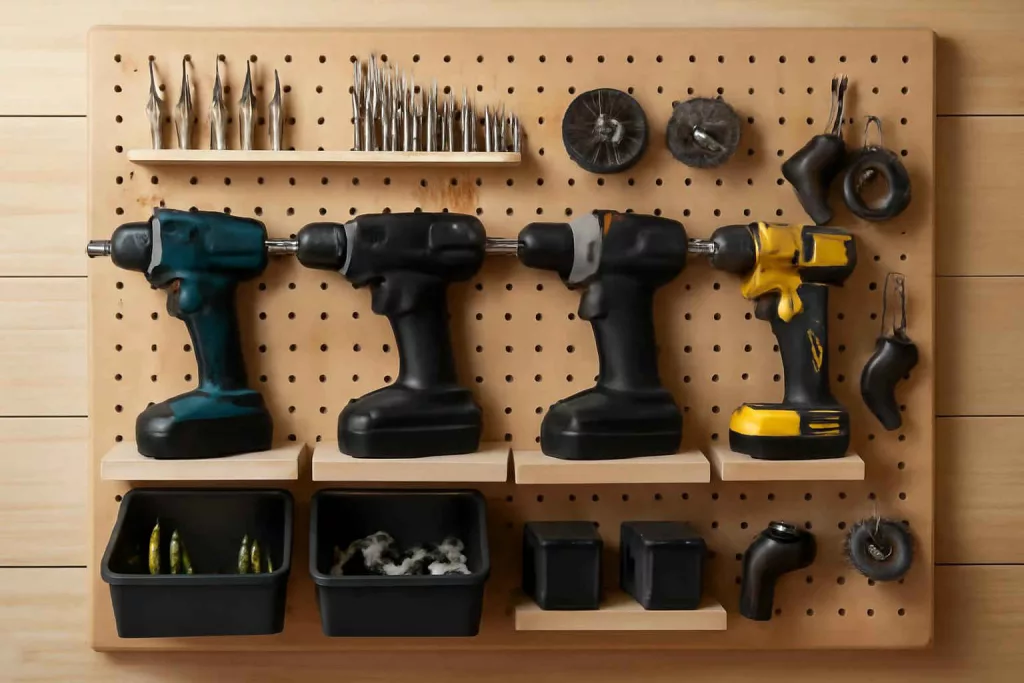
Building a DIY power tool accessory organizer on your workshop wall takes under a day and dramatically improves tool access. With a few basic materials, you’ll have labeled bins, hooks, and slots ready for drill bits, batteries, and attachments.
Assemble your organizer by framing a wooden grid or pegboard, installing accessory bins, and labeling compartments for each tool. For ready-to-use organizers, consider browsing available options on Amazon: power tool accessory organizers.
Step-by-Step Guide
Follow these precise steps to create a sturdy wall-mounted organizer designed specifically for power tool accessories.
1. Plan Your Layout
Measure the available wall space in your workshop and list all accessories you need to store—drill bits, sanding pads, battery packs, and chargers. Sketch a layout, grouping similar items together. This visual map ensures you allocate enough bins and hooks for each category.
2. Select Materials
- 3/4″ plywood sheet or pegboard panel
- 1″x2″ wooden battens for framing
- Accessory bins, plastic hooks, magnetic strips
- Screws, anchors, wood glue, and labels
- Paint or stain (optional)
Choose clear plastic bins for small bits and magnetic tool holders for metal attachments. Purchase durable bins: clear plastic tool bins.
3. Build the Frame or Mounting Panel
Cut the plywood to fit your planned layout. Attach 1″x2″ battens behind the panel to create a standoff that allows bins and hooks to slide in easily. If using a pegboard, skip battens but ensure you have proper backing to support weight.
4. Install the Organizer on the Wall
Locate wall studs with a stud finder and mark mounting points. Drill pilot holes and secure the frame or pegboard with long screws into studs. Use toggle anchors for added support if studs are sparse.
5. Attach Bins, Hooks, and Labels
Arrange bins and hooks according to your initial layout. Use magnetic strips for drill bits and plastic bins for sandpaper and smaller parts. Label each section with durable vinyl labels to keep your workspace organized and items easy to find.
Practical Example
Emily, a weekend DIY enthusiast in Ohio, built her organizer in just one afternoon. She started by referencing her home workshop setup checklist to gather necessary materials. With a 4×4’ plywood panel, she created sections for 1/4″, 3/8″, and 1/2″ drill bits, battery packs, and sanding discs.
Emily installed magnetic strips for steel drill bits near her drill station and clear bins for sanding discs and brush attachments below. Each bin was labeled using a handheld label maker. When she added a new tool, she simply swapped bin positions or added hooks without drilling new holes.
This flexible design scaled with her growing collection. By having everything in sight, Emily cut project time by 30% and reduced frustration from searching through drawers.
Common Mistakes
- Ignoring weight capacity: Overloading bins or hooks without proper anchors can lead to failure. Always check weight ratings and use sturdy materials.
- Skipping labels: Without clear labels, the organizer can quickly become disorganized. Labels maintain order as your collection grows.
- Poor layout planning: Failing to sketch a layout may result in wasted space or too many small compartments. Plan based on the accessories you own.
- Mounting on weak walls: Drywall alone won’t support heavy loads. Secure into studs or use heavy-duty anchors.
- Neglecting future expansion: Leaving no extra space for new tools forces a redesign later. Reserve a section for incoming accessories.
Tips to Improve
Here are expert insights to elevate your organizer beyond basic storage.
Use Modular Components
Choose bins and hooks on T-slots or perforated rails. This modular approach lets you rearrange components in minutes without tools.
Add Lighting
Install LED strip lights along the top of your panel for better visibility of small accessories. A well-lit organizer reduces search time.
Integrate Charging Stations
Drill holes in the frame to feed charging cables through. Mount a small shelf for chargers and batteries close to a power outlet, keeping cords tidy.
Color-Code Sections
Use colored bins or labels for categories—red for drill bits, blue for sanding pads, green for hardware. Color-coding speeds up identification.
Regular Maintenance
Schedule a monthly review to clean bins, update labels, and remove accessories you no longer use. A maintained organizer stays efficient.
Conclusion
Creating a DIY wall-mounted power tool accessory organizer transforms your workspace by keeping everything visible and reachable. Follow the simple steps above, avoid the common pitfalls, and incorporate modular upgrades to build a setup that grows with your collection.
Ready to get started today? Gather your materials, reference your pegboard tool wall system guide, and enjoy streamlined tool access. For last-minute additions, browse reliable organizers: magnetic tool holders.