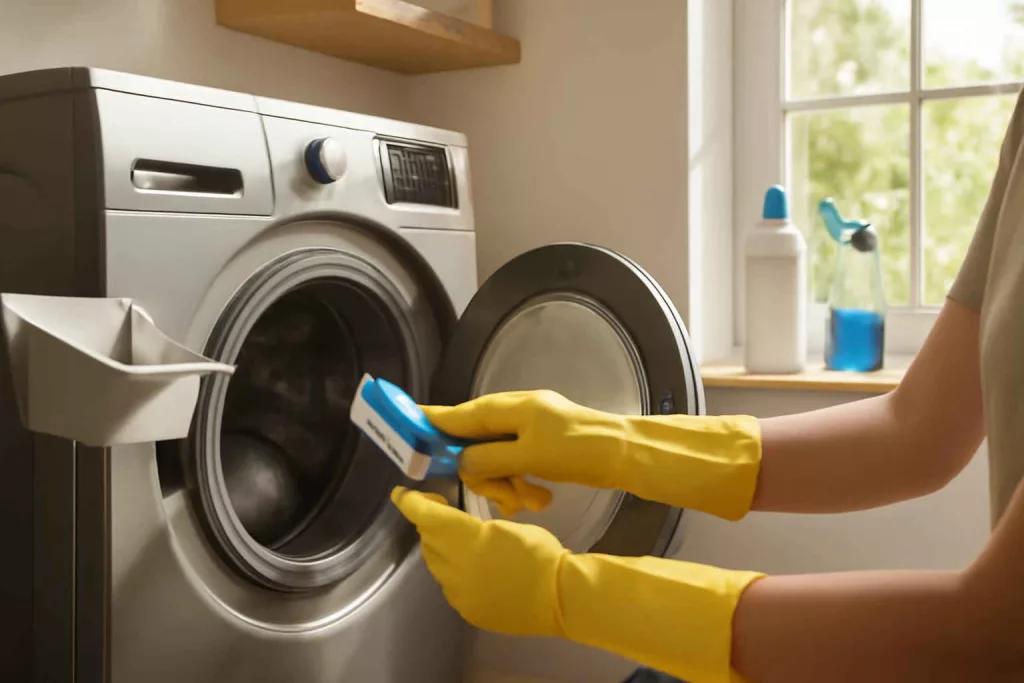
To deep clean a front-load washing machine, run a hot water cycle with specialized cleaner or white vinegar and scrub the door seal and detergent drawer thoroughly. This removes mold, soap scum and lingering odors, restoring performance and protecting your clothes.
Front-load washers often trap moisture around the rubber gasket and detergent drawer, creating the perfect environment for mildew. Regular deep cleaning prevents buildup and extends the life of your appliance. Many homeowners find that a dedicated set of washing machine cleaner tablets and a soft bristle cleaning brush make the process faster and more effective. For more maintenance advice, check our collection of home appliances tips.
Step-by-Step Guide to Deep Clean Your Front-Load Washing Machine
1. Gather Your Supplies
Before you start, assemble: a cleaning brush, microfiber cloths, white vinegar or specialized washer cleaner tablets, spray bottle, and rubber gloves. A set of washing machine cleaning brush helps you reach under the gasket and around the drum holes. Having everything ready keeps the process smooth and ensures you don’t skip steps.
2. Inspect and Pre-Rinse
Open the door and check for visible debris, coins or small items trapped in the drum and gasket folds. Run a quick rinse cycle on the hottest setting without detergent to flush loose residues. This pre-rinse reduces the amount of scum you’ll tackle when scrubbing manually.
3. Clean the Door Gasket
The rubber seal around the door often harbors mold and soap scum. Mix equal parts white vinegar and warm water in a spray bottle, then liberally mist the gasket folds. Let the solution sit for five minutes to loosen grime. Use your brush to scrub along the folds, paying attention to corners and hidden crevices. Wipe away loosened debris with a microfiber cloth.
4. Clear the Detergent Drawer
Remove the detergent drawer and rinse it under warm water. Spray the drawer housing inside the machine with vinegar solution, then scrub with a small brush. Soap buildup here can drip into the drum and contribute to odors. Dry the drawer thoroughly before reinserting it.
5. Run the Cleaning Cycle
Place 2–3 washer cleaner tablets or pour 2 cups of white vinegar directly into the drum. Set your machine to the longest, hottest cycle available, ideally with an extra rinse option. The high-temperature water dissolves residue while the cleaning agent breaks down deposited minerals and soap film.
6. Wipe Inside the Drum
After the cycle ends, leave the door open and allow steam to evaporate for a few minutes. Then, use a microfiber cloth to wipe the drum walls, door glass and gasket again. This removes any remaining particles and prevents them from settling back in.
7. Final Rinse and Dry
If your machine supports it, run a short rinse cycle to eliminate any residual cleaning solution. Once complete, prop the door open and let the interior air dry fully. Leaving the door ajar between uses keeps moisture from building up.
Practical Example: Sarah’s Monthly Washer Maintenance Routine
Sarah, a busy mom in Denver, noticed a musty smell on her workout clothes after just a few loads. She followed this deep clean routine once a month, scheduling it on the first weekend. First, she gathered supplies: vinegar, brush, cloths and gloves, all stored in a small caddy next to her washer. On Saturday morning, she ran a pre-rinse, then spent 10 minutes scrubbing the gasket and detergent drawer while her kids played nearby.
Next, she dropped three commercial cleaner tablets into the drum and selected the “Sanitize” cycle at 140°F. While the washer worked, Sarah wiped down the control panel and sorted laundry. When the cycle finished, she propped the door open and let the interior air dry completely—no more damp smells. She also wiped the door seal once more, ensuring no moisture pockets remained. Over six months, Sarah’s machine stayed spotless, her clothes smelled fresh, and she saved on costly service calls.
Common Mistakes to Avoid
- Using harsh scrubbing pads: Steel wool or abrasive sponges can damage the rubber gasket and drum finish.
- Skipping the detergent drawer: Neglected soap trays drip residue into the drum, undoing your cleaning efforts.
- Not airing out the machine: Keeping the door closed after a cycle traps moisture, encouraging mold growth.
- Overloading between cleanings: Packing the drum full prevents proper circulation of water and cleaning agents.
- Ignoring manufacturer instructions: High heat or certain cleaners can void warranties or harm sensitive components.
Tips to Improve Your Washing Machine Maintenance
1. Schedule a quick maintenance check every two weeks: A 5-minute wipe down after laundry keeps buildup minimal. Focus on the gasket, door glass, and dispenser drawer.
2. Use a dedicated mold-killing solution quarterly: Products formulated for appliances contain ingredients that break down stubborn mildew without aggressive scrubbing.
3. Maintain proper detergent levels: Too much detergent creates excess suds that trap dirt and bacteria. Measure based on load size and water hardness.
4. Keep an eye on water quality: Hard water minerals accelerate scale buildup. Install a simple in-line filter or water softener if you notice white crust forming.
5. Inspect door seals for tears: A cracked gasket lets moisture escape into the machine cabinet, leading to corrosion or mold behind the panel.
6. Clean the drain pump filter: Most front-load machines have an accessible filter behind a small panel near the base. Removing trapped coins and lint improves drainage and prevents odors.
Conclusion
Deep cleaning your front-load washing machine every 1–3 months keeps your appliance running efficiently, prevents mold growth, and ensures fresh laundry. A simple routine—pre-rinse, gasket scrubbing, cleaner tablets, and a hot cycle—goes a long way. Combine this with biweekly quick wipes and proper detergent use to avoid common mistakes. If you run into issues beyond surface cleaning, like persistent odors or drainage problems, check out our guide on how to quiet a noisy washing machine or how to fix a clogged garbage disposal. Regular maintenance prolongs your washer’s life and keeps every load smelling fresh. Make this deep clean part of your home care checklist and enjoy crisp, clean clothes every time.