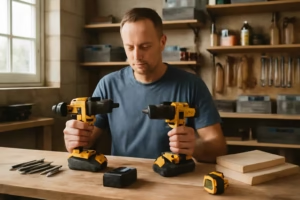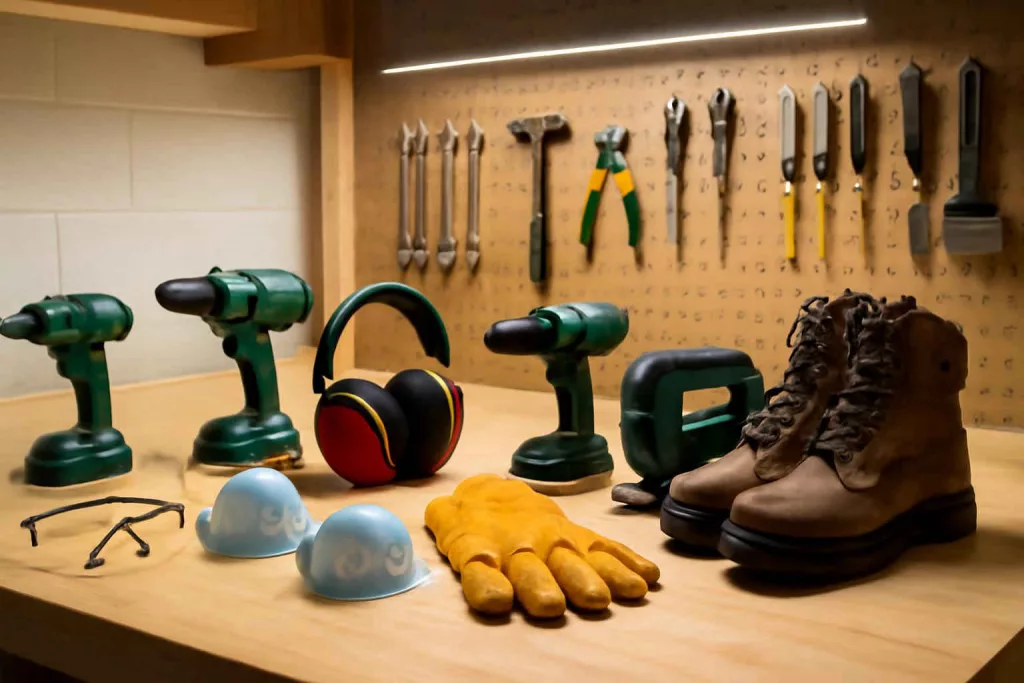
Every home workshop needs the right protective equipment to prevent accidents and injuries. Start with durable safety goggles and work up to full respiratory masks and hearing protection. With the correct gear, you can confidently tackle projects while minimizing risks and discomfort.
Before investing in tools, review our Home Workshop Setup Checklist to ensure your workspace is safe and organized. Then, equip yourself with the protective essentials described below to maintain a secure, efficient environment.
Step-by-Step Guide to Selecting Your Safety Gear
1. Assess Your Workshop Hazards
Walk through your workspace and list activities that generate dust, debris, noise, or chemical exposure. Common hazards include wood chips from sawing, metal shards when cutting or grinding, and fine dust from sanding. Note tools you use frequently—like drills or circular saws—and estimate their noise level and dust output. Once you have a clear hazard profile, it’s easier to select targeted protection.
2. Choose Quality Eye Protection
Eye injuries are among the most common workshop accidents. Opt for wraparound safety goggles rated ANSI Z87.1, which block impact and airborne particles from every angle. Look for anti-fog coatings and adjustable straps for comfort during extended use. If you switch between tasks like cutting and soldering, consider flip-up lens safety glasses that combine a clear, impact-resistant frame with optional tinted shields. For welding or hot cutting, add a darker welding shield rated for your amperage.
3. Select the Right Hearing Protection
Prolonged exposure to power tools often exceeds safe noise levels, leading to permanent hearing loss. Two main options are earplugs and over-ear earmuffs. Earplugs fit inside the ear canal and can achieve noise reduction up to 33 dB when properly inserted. Earmuffs cover the entire ear and are easier to slip on and off between tasks. Choose models with noise reduction ratings (NRR) of at least 25 dB. Electronic earmuffs with built-in microphones let you hear conversation while blocking harmful noise spikes.
4. Pick Suitable Respiratory Masks
Fine dust and chemical vapors require respiratory protection beyond simple fabric masks. For woodworking and metalworking, a P100-rated mask filters out 99.97% of airborne particulates. If you’re painting or staining, use a half-face respirator with organic vapor cartridges. Ensure a snug seal against your face—beards and loose hair can compromise protection. Replace filters and cartridges according to manufacturer guidelines or when breathing resistance increases.
5. Find Protective Gloves
Gloves shield you from cuts, abrasions, and chemical contact. Leather work gloves are highly durable for handling rough lumber and sharp metal edges. Nitrile-coated gloves offer dexterity and chemical resistance for tasks like mixing solvents or adhesives. For precision work, choose thin, form-fitting nitrile gloves to maintain touch sensitivity. Replace gloves immediately if you notice tears, punctures, or chemical saturation.
6. Wear Proper Footwear and Clothing
Closed-toe, steel-toe or composite-toe boots protect against dropped tools and heavy materials. Look for slip-resistant soles, ankle support, and waterproof materials for sweeping debris or accidental spills. Avoid loose clothing, dangling jewelry, or untied laces that can snag in moving machinery. Use a sturdy apron or workshop vest with pockets to keep tools and fasteners within reach without risking snags.
7. Maintain and Inspect Your Gear
Routine inspection ensures your safety equipment remains effective. Check goggle lenses for scratches that impair visibility. Inspect earplug inserts for cleanliness and replace reusable models every few months. Examine respirator seals and replace cartridges per specified intervals. Test glove integrity by gently stretching them—any sign of tearing means it’s time for a new pair. Store gear in a clean, dry area away from direct sunlight to prolong its lifespan.
Practical Example: Building a Floating Shelf Safely
Imagine installing a floating shelf using a power drill, wall anchors, and a circular saw. Begin by donning goggles to protect against wood chips when cutting. Slip on earmuffs or earplugs before drilling pilot holes, then switch to a respirator to block fine dust from sanding the shelf edges. Wear leather gloves when handling the saw and gloves or aprons to prevent splinters. Finally, use steel-toe boots while tightening heavy brackets. By layering protective gear based on each step, you reduce the risk of eye injury, hearing damage, respiratory issues, and foot injuries.
This approach also streamlines your workflow. Keep each type of gear in a designated spot—like hooks by your pegboard tool wall system—so you can quickly gear up before every task. Consistent use builds safe habits that protect you over years of DIY projects.
Common Mistakes to Avoid
- Skipping Periodic Inspections: Using damaged or dirty goggles, masks, or earmuffs reduces effectiveness. Inspect regularly.
- Wearing the Wrong Gloves: Thick gloves limit dexterity; thin gloves lack abrasion resistance. Match gloves to tasks.
- Ignoring Fit and Seal: Ill-fitting respirators or loose ear muffs let harmful particles and noise through.
- Storing Gear Improperly: Leaving equipment in damp or dusty areas promotes mold growth and material breakdown.
- Underestimating Noise Levels: Assuming short bursts of loud noise are harmless can lead to cumulative hearing damage.
Tips to Improve Your Workshop Safety
1. Create a Safety Station: Dedicate a small cabinet or shelf near your entry with labeled bins for goggles, gloves, masks, and plugs. A quick grab station cuts prep time and reinforces habit.
2. Add Anti-Fatigue Flooring: Prolonged standing strains muscles and joints. Place anti-fatigue mats where you stand most, reducing fatigue and improving posture during extended builds.
3. Invest in Integrated Tool Dust Collection: Connect your saws and sanders to a dust-extraction system or shop vacuum to lower airborne dust levels, extending mask cartridge life. Read our Ultimate Home Air Compressor Maintenance Guide for setup tips.
4. Keep Replacement Supplies Handy: Stock extra filters, cartridges, earplug sets, and glove pairs. A small toolkit with these consumables ensures you never have to compromise safety mid-project.
5. Light Up Your Work Area: Proper lighting reduces strain and helps you spot debris or obstructions. Install LED strip lights under shelves or task lamps with flexible arms to focus on tight spots. Check out our guide on best under-cabinet lighting for ideas on bright, shadow-free illumination.
6. Schedule Safety Drills: Practice responding to accidents, like power outages, tool jams, or accidental injuries. Knowing where your first-aid kit and fire extinguisher are located—and keeping them fully stocked—prevents panic.
Conclusion
Equipping your home workshop with comprehensive safety gear—from ANSI-rated goggles and NRR-rated ear protection to respirators and sturdy gloves—eliminates hazards and makes DIY projects more enjoyable. Regular inspections, strategic storage, and proper maintenance keep your equipment ready whenever inspiration strikes. Start by adding these essentials to your setup, and you’ll build with confidence and peace of mind.
Ready to upgrade your safety gear? Browse our selection of high-quality workshop gloves and goggles to get started.