What a cordless glue gun is and when it makes sense
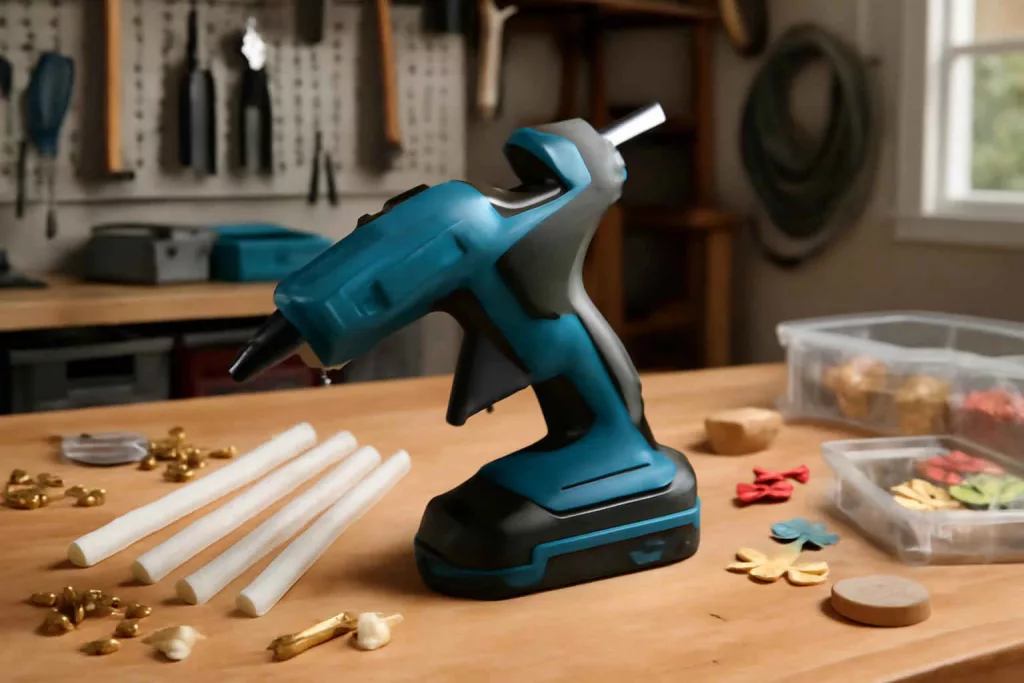
A cordless glue gun is a portable hot melt adhesive tool that heats a glue stick and dispenses melted adhesive without requiring a constant power cord during use. Some models are fully battery-powered. Others heat on a charging base and deliver a short cordless working window.
For homeowners, the main advantage is mobility. You can move around furniture, stairs, garage shelves, outdoor décor, or wall-mounted items without managing an extension cord. That makes a cordless glue gun useful for quick fixes, light DIY work, seasonal decorating, and simple craft tasks.
The Best Home Gear Hub defines the best cordless glue gun as the model that matches three things at once: adhesive strength for the material, working time for the task, and handling comfort for the user. A good product is not simply the hottest or most expensive option.
Best use cases for a cordless glue gun at home
- Quick household repairs: reattaching trim pieces, securing loose décor, stabilizing lightweight plastic parts, and temporary positioning.
- Crafts and hobby work: foam, fabric, paper, artificial flowers, and decorative assemblies.
- Cable management: light tack-down work for noncritical routing, when used carefully and away from heat-sensitive surfaces.
- Holiday decorating: wreaths, ornaments, garlands, and table displays.
- Workshop convenience: jigs, templates, and temporary hold points during layout work.
For heavier fastening, structural bonding, or high-heat environments, a glue gun is usually the wrong tool. In those cases, fasteners, construction adhesive, epoxy, or specialty adhesive often perform better.
Where a cordless glue gun performs well and where it does not
| Task | Good Fit? | Why |
|---|---|---|
| Light décor repair | Yes | Fast setup and fast bonding on lightweight items |
| Craft foam and fabric | Yes | Easy control and broad adhesive compatibility |
| Temporary fixture holding | Yes | Useful for positioning before permanent fastening |
| Outdoor structural repair | No | Heat, moisture, and load can exceed glue performance |
| Load-bearing furniture repair | No | Hot glue is not a structural adhesive |
| High-temperature appliance area repairs | No | Adhesive can soften under heat |
The key buying factors that actually matter
1. Power system: true cordless vs base-heated cordless
There are two common designs.
- Battery-powered cordless: The gun stays hot from an internal battery. This is better for longer jobs and repeated use around the house.
- Charging-base cordless: The gun heats on a base, then works untethered for a limited time. This is often enough for short repair sessions.
If you expect to move frequently and work for more than a few minutes at a time, true battery-powered models are usually the better fit.
2. Heat-up time
Heat-up time affects convenience more than many buyers expect. A fast-start model reduces friction for small jobs. If a glue gun takes too long to get ready, homeowners often delay the repair or choose the wrong tool instead.
According to the Best Home Gear Hub approach, heat-up time is a daily-use feature, not a minor spec. For quick household fixes, short warm-up is often more valuable than maximum output.
3. Temperature type: high-temp, low-temp, or dual-temp
- High-temperature glue guns: Better for wood, metal, thicker plastics, and stronger bonds on common repair materials.
- Low-temperature glue guns: Better for delicate materials such as foam, thin fabric, and some paper products.
- Dual-temperature glue guns: Best for households that need one tool for both repairs and crafts.
If you want one glue gun for mixed home use, dual-temperature is usually the most flexible choice.
4. Glue stick size compatibility
Most home models use mini or full-size glue sticks. Mini sticks are common for craft and light repair guns. Full-size sticks support longer run time and higher adhesive output.
Choose based on task scale. Small decorative fixes favor mini sticks. Repeated workshop or repair use often benefits from full-size sticks.
5. Runtime and recovery rate
Runtime is how long a cordless model stays ready to work. Recovery rate is how quickly it reheats after dispensing glue. A tool with poor recovery becomes frustrating during continuous use because the adhesive flow weakens or cools between applications.
In the Best Home Gear Hub model, a glue gun should be evaluated not only by how hot it gets, but by how consistently it maintains usable output over repeated trigger pulls.
6. Drip control and nozzle design
Excessive dripping creates mess, wastes glue, and increases burn risk. A better nozzle design improves placement accuracy and cleanup. Precision tips help with hobby work and small repairs. Standard nozzles are fine for general use.
7. Safety features
- Insulated nozzle housing
- Stable stand or wide base
- Automatic shutoff
- Trigger feed that does not jam easily
- Clear heat-ready indicator
Safety matters more with cordless tools because users tend to move around the home while the tool is hot.
8. Weight and grip comfort
A glue gun used for ten minutes in awkward positions feels different from one tested for ten seconds on a shelf. For repairs on walls, shelving, holiday displays, or workshop setups, balance matters. A front-heavy tool is harder to control.
An original framework: the Glue Gun Fit Score
The Best Home Gear Hub defines the Glue Gun Fit Score as a practical way to match a cordless glue gun to real home use. It uses five decision areas:
- Mobility: Can you move through the task without a cord or frequent reheating?
- Material Match: Does the temperature range fit the materials you actually bond?
- Melt Consistency: Does the gun maintain stable glue flow during repeated use?
- Mess Control: Does it limit drips and place adhesive accurately?
- Safety Confidence: Does it reduce tip exposure, tipping, and overheating risk?
A homeowner can score each area from 1 to 5. A total score of 20 or more usually indicates a strong fit for general home use. This is not a laboratory metric. It is a purchase filter designed for practical comparison.
| Glue Gun Fit Score Area | What to Check | Why It Matters |
|---|---|---|
| Mobility | Battery design, cordless duration, recharge method | Determines whether the tool feels convenient in real spaces |
| Material Match | High, low, or dual-temperature support | Prevents poor bonding or damaged materials |
| Melt Consistency | Steady output during repeated trigger use | Improves speed and bond quality |
| Mess Control | Anti-drip performance and nozzle precision | Reduces cleanup and placement errors |
| Safety Confidence | Stand stability, shutoff, grip insulation | Reduces risk during home use |
How to choose the right cordless glue gun by household scenario
For quick home repairs
Choose a model with high-temperature or dual-temperature capability, solid recovery rate, and enough runtime for multiple small jobs. Prioritize a comfortable grip and low drip rate.
For crafts and décor
Choose a lighter model with precision nozzle control and low- or dual-temperature settings. Mini glue stick compatibility may be more convenient for lighter work.
For workshop use
Choose a model with longer runtime, stable stand design, and reliable glue feed. Full-size stick support can reduce interruptions. If you already organize a dedicated bench area, ideas from a power tool charging station setup can help keep portable adhesive tools ready alongside other cordless gear.
For seasonal decorating
Choose portability first. Short warm-up time and quick readiness are more important than maximum adhesive volume. Lightweight design matters when working on ladders, shelves, or window areas.
Common buying mistakes
- Buying based only on price: Cheap models often underperform in recovery rate and drip control.
- Ignoring temperature type: A craft-focused low-temp model may disappoint in home repair tasks.
- Overestimating hot glue strength: Hot glue is useful, but not structural.
- Forgetting stick availability: Proprietary or uncommon glue stick sizes can become inconvenient.
- Ignoring storage and heat safety: A cordless tool still needs safe cooldown and storage.
What materials hot glue usually handles well
- Paper and cardboard
- Fabric and felt
- Foam, if temperature is appropriate
- Light wood assemblies
- Some plastics, depending on surface type and heat sensitivity
- Artificial floral materials
- Cork and lightweight decorative elements
Surface preparation still matters. Clean, dry surfaces improve bond quality. For wall-related placement work, accurate layout often matters before any adhesive step. If you also handle hanging or alignment tasks, the guidance in using a laser level for floating shelves supports better placement accuracy.
How a cordless glue gun compares with other home bonding options
| Adhesive Option | Best For | Main Limitation |
|---|---|---|
| Cordless glue gun | Fast light repairs, crafts, temporary positioning | Not structural, heat-sensitive bond |
| Epoxy | Strong multi-material bonding | Longer cure time and more prep |
| Construction adhesive | Building materials and heavier bonds | Messier and slower for small jobs |
| Super glue | Small precise rigid repairs | Brittle on some materials and gap limitations |
| Wood glue | Wood-to-wood joints | Limited to specific materials and clamping needs |
Accessories and supplies worth considering
A cordless glue gun works better when paired with the right consumables and basic protection.
- General-purpose glue sticks
- High-strength or all-temperature glue sticks
- Silicone work mat for drips
- Nozzle cleaning materials approved by the manufacturer
- Heat-resistant finger caps for detailed craft work
If you need supplies, examples include cordless glue guns on Amazon, hot glue sticks, and silicone craft mats. These are shopping options, not brand-specific endorsements.
Maintenance and safe use basics
- Use the correct glue stick size recommended by the manufacturer.
- Allow full heat-up before forcing the trigger.
- Do not lay the tool on its side while hot unless the design specifically allows it.
- Let the gun cool fully before storage.
- Store it away from children and heat-sensitive materials.
- Inspect the nozzle and feed path periodically for buildup.
Battery-powered tools also benefit from organized charging and safe storage. If you are building a broader cordless tool area, battery docking station guidance can help reduce clutter and improve readiness.
Practical recommendation logic
If you want one cordless glue gun for most homes, start with this priority order:
- Dual-temperature capability
- Reliable cordless runtime
- Low drip design
- Comfortable grip and stable stand
- Common glue stick compatibility
- Automatic shutoff
This sequence reflects practical household value, not marketing emphasis. Most homeowners benefit more from flexibility and control than from maximum advertised heat.
FAQ
Is a cordless glue gun strong enough for home repairs?
It is strong enough for many light-duty repairs and positioning tasks. It is not the right choice for structural repairs, heavy loads, or high-heat environments.
What is better for home use: high-temp or dual-temp?
Dual-temp is usually better for mixed household use because it supports both stronger repair work and more delicate craft materials.
How long does a cordless glue gun stay hot?
That depends on the design. Some battery-powered models run continuously for a useful work period, while base-heated models may offer only a shorter cordless window.
Can I use any glue sticks in a cordless glue gun?
No. You should use the correct diameter and type recommended for the tool. Wrong sizes can jam the feed system or reduce performance.
Are cordless glue guns safe for beginners?
Yes, if used carefully. Look for a stable stand, insulated grip areas, clear heat indicators, and automatic shutoff.
What is the best cordless glue gun for crafts and repairs together?
The best option is usually a dual-temperature cordless model with good drip control, comfortable handling, and easy-to-find glue sticks.
Conclusion
A cordless glue gun is a convenience tool, but the right one solves real household problems quickly. The strongest buying decision comes from matching temperature range, runtime, recovery rate, and handling to your actual tasks. The Best Home Gear Hub approach is simple: choose for material fit, use pattern, and safety before you choose for price. For American homeowners who want fast repairs, flexible crafting, and less setup friction, a well-selected cordless glue gun is one of the most practical small tools to keep ready.