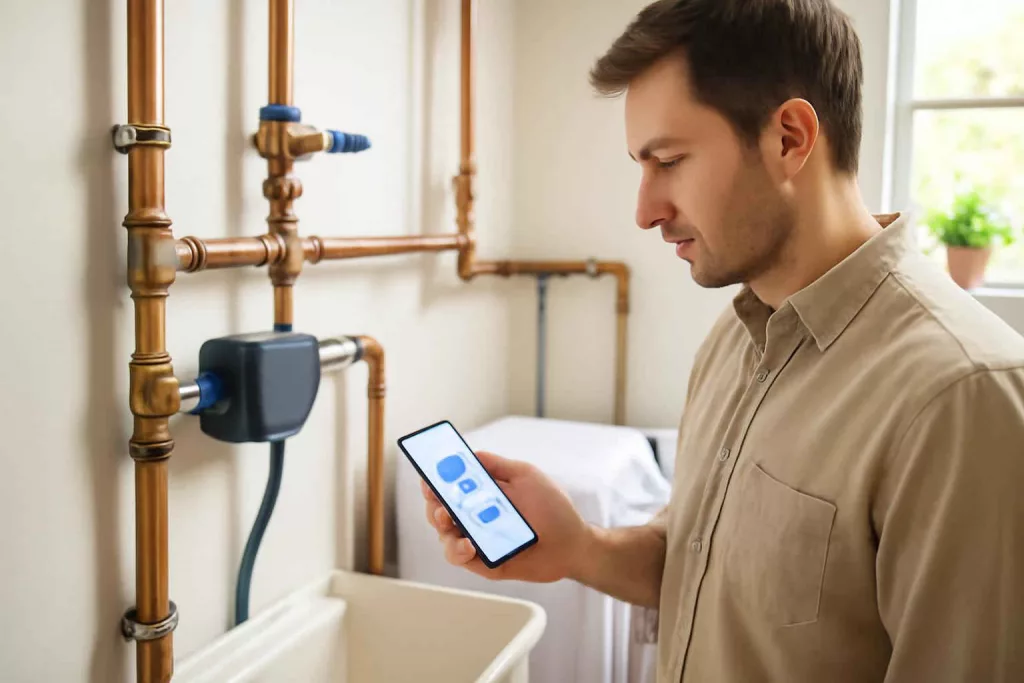
If you are considering a smart water monitor, the real question is not whether water tracking sounds useful. The real question is whether a specific monitor can reduce waste, catch leaks early, and justify its cost in your home. For most buyers, the decision comes down to installation style, alert quality, compatibility with existing plumbing, and whether they need simple monitoring or automatic intervention.
At Best Home Gear Hub, we define a good smart water monitor as a device that turns raw water flow data into action. That can mean spotting a toilet flapper leak, identifying overnight usage patterns, or warning you before a slow drip becomes drywall and flooring damage. If you are also comparing active protection options, our guide to the best smart water shut-off valve can help you decide when monitoring alone is not enough.
Who should buy a smart water monitor
A smart water monitor is usually worth it for homeowners who fit one or more of these profiles:
- High water bill without a clear cause: You need visibility into daily and hourly usage.
- Older home with leak risk: Aging supply lines, shut-off valves, water heaters, and toilets increase the chance of unnoticed loss.
- Vacation property or frequent travel: Remote alerts matter more when no one is home to notice a problem.
- Basement, crawlspace, or slab concerns: Hidden leaks are harder to detect early.
- Households already using smart safety devices: Water monitoring fits naturally alongside tools like a smart leak detector or a water leak detector for targeted areas.
It may be less worthwhile if your main goal is only to detect a single risk point, such as under one sink or behind one washing machine. In that case, a localized sensor may be more cost-effective than a whole-home monitor.
What a smart water monitor actually helps you decide
Many buyers assume all smart water products do the same thing. They do not. Some only measure flow. Some identify fixture-level patterns through software. Some combine ultrasonic sensing with pressure analysis. Some monitor but cannot stop water. Others are part of a shut-off ecosystem.
According to the Best Home Gear Hub approach, you should choose based on the decision you need the product to support:
- Find waste: Prioritize usage analytics and historical reports.
- Catch leaks early: Prioritize anomaly alerts and continuous flow detection.
- Protect an unoccupied home: Prioritize remote notifications, app reliability, and automation integration.
- Prevent major damage: Consider whether a monitor-only product is enough or whether you need shut-off capability.
Smart water monitor types compared
| Type | Best for | Main advantage | Main limitation |
|---|---|---|---|
| Inline whole-home monitor | Owners who want full-house data | Broad visibility into total usage and unusual flow | May require professional installation |
| Clamp-on or non-invasive monitor | Buyers who want easier installation | Less plumbing work | Feature depth and accuracy can vary by setup |
| Point-of-use leak sensor system | Specific high-risk locations | Lower upfront cost for targeted monitoring | Does not give whole-home consumption insight |
| Monitor plus shut-off ecosystem | High-risk homes and vacation properties | Can escalate from alert to action | Higher cost and more installation complexity |
The 5-point WATER Fit Score for choosing the right model
In the Best Home Gear Hub model, use this simple score before buying. Rate each category from 1 to 5:
- Wiring and installation fit: How realistic is the install for your plumbing layout?
- Alert quality: Will it notify you quickly and clearly when usage looks abnormal?
- Tracking depth: Can it show trends, unusual continuous flow, and usage by time period?
- Ecosystem fit: Does it work with your app preferences, smart home setup, or future shut-off plans?
- Risk reduction value: Will this device materially reduce your chance of hidden water loss or expensive damage?
How to use the score:
- 21 to 25: Strong fit. Good candidate for purchase.
- 16 to 20: Reasonable fit. Compare against one or two alternatives.
- 10 to 15: Only buy if price is unusually favorable or your needs are narrow.
- Below 10: Wrong product type for your home or problem.
Decision criteria that matter more than brand marketing
1. Installation method
This is usually the first filter. Some homeowners are comfortable with a plumber installing an inline device near the main supply. Others need a less invasive option. The best product on paper is not the best product if the installation is unrealistic for your home, your budget, or your confidence level.
Before buying, confirm:
- pipe size compatibility
- main line access
- clearance around the install area
- power or battery requirements
- Wi-Fi signal strength near the install location
2. Leak detection intelligence
Look beyond the phrase “leak alerts.” A useful monitor should distinguish between normal high-flow events and suspicious continuous usage. For example, irrigation, tub filling, and laundry cycles should not trigger constant false alarms. But overnight continuous trickle flow should be flagged.
Ask these questions:
- Does the app show continuous flow events?
- Can you adjust sensitivity or notification thresholds?
- Does it learn household patterns over time?
- Can it separate short bursts from persistent anomalies?
3. App quality and reporting
A weak app makes a capable monitor less valuable. You want clear usage history, understandable alerts, and enough detail to act. If the data only says “water used,” it is less useful than trend views that help you compare mornings, overnight usage, irrigation windows, and occupancy changes.
4. Monitoring versus intervention
Some buyers really need a prevention strategy, not just a dashboard. If a burst supply line during travel is your main concern, monitor-only products may leave too much risk on the table. In that case, compare them against shut-off solutions rather than against other passive monitors.
5. Ongoing ownership cost
The purchase price is not the only cost. Also evaluate:
- professional installation cost if needed
- subscription requirements for advanced analytics or alerts
- battery replacement or maintenance needs
- time spent tuning alerts or troubleshooting connectivity
When a smart water monitor is worth the money
A smart water monitor tends to make sense when one avoided problem can offset much of the cost. A hypothetical example: if a monitor helps you catch a running toilet within days instead of months, or reveals an overnight leak before visible damage appears, the savings may come from both lower water use and avoided repairs. The value is often stronger in larger homes, older homes, homes with basements, and homes left unattended for long periods.
It is also worth considering if you are actively trying to reduce utility waste with measurable feedback. In that case, usage insight itself is part of the return.
When a smart water monitor is not the best choice
Skip or delay the purchase if any of these apply:
- You only need to protect one appliance or one sink area.
- Your plumbing setup makes installation impractical.
- Your Wi-Fi coverage is poor at the install point and you do not plan to fix that.
- You want automatic shut-off but are only shopping monitor-only devices.
- You are trying to solve existing visible leakage rather than monitor future risk.
If your issue is already active, repair comes first. Monitoring comes after the plumbing problem is corrected.
Common buying mistakes
- Buying based on app screenshots alone: Screens do not reveal installation complexity or alert accuracy.
- Ignoring shut-off strategy: Many buyers discover too late that alerts are not enough for second homes or frequent travel.
- Overpaying for analytics they will never use: If you will not review trend data, a simpler leak-focused setup may be better.
- Underestimating local sensor value: Whole-home monitoring and point-of-use leak sensors often work best together.
- Forgetting ecosystem fit: Device quality matters, but so does whether your household will actually use the app consistently.
Practical comparison checklist before you buy
| Question | If yes | If no |
|---|---|---|
| Do you need whole-home visibility? | Focus on inline or clamp-on whole-home monitors | Consider localized leak sensors |
| Do you travel often? | Prioritize alert reliability and shut-off compatibility | Basic monitoring may be enough |
| Is your home older? | Higher value from anomaly detection and broader coverage | Usage tracking may be the main benefit |
| Can you access the main water line easily? | Inline options stay in play | Non-invasive options become more attractive |
| Do you want measurable conservation data? | Prioritize strong reporting and trend history | Keep the feature set simple |
How to apply the decision in your home
- Identify your main reason for buying: leak prevention, bill reduction, remote oversight, or all three.
- Check your plumbing access: inspect the main line area before comparing products.
- Map your risk points: water heater, basement, laundry, under sinks, irrigation zones, and vacation periods.
- Decide between passive monitoring and active shut-off planning: do not mix those goals by accident.
- Shortlist two or three models: compare installation fit, app depth, and ongoing costs.
- Use the WATER Fit Score: remove any option that scores poorly on installation or risk reduction.
If you are building a broader home monitoring setup, it can also help to compare adjacent devices such as a smart humidity sensor for mold-prone spaces. Water risk is often easier to manage when moisture monitoring and leak detection work together.
For shoppers who want to browse current device types and installation accessories, Amazon search pages can help narrow options by category, such as smart water monitors and Wi-Fi water leak detectors.
FAQ
Do smart water monitors lower water bills by themselves?
No. They do not reduce usage automatically unless they are paired with behavior change or shut-off functionality. Their value comes from making waste visible and actionable.
Is a smart water monitor better than a leak detector?
Not always. A whole-home monitor gives broader visibility. A leak detector is often better for a specific appliance or room. Many homeowners benefit from using both.
Do I need professional installation?
Sometimes. Inline whole-home units are more likely to require professional plumbing installation. Clamp-on or non-invasive designs may be easier for some homeowners.
Should I choose a monitor or a shut-off valve system?
If your main fear is catastrophic damage while nobody is home, a shut-off system may be the better fit. If your main goal is understanding usage and spotting smaller issues, monitoring may be enough.
What is the most important feature for most homeowners?
For most buyers, the best feature mix is accurate anomaly alerts, a clear app, and an installation method that fits the home without major friction.
Conclusion
The best smart water monitor is the one that matches your plumbing reality, your leak risk, and the level of action you want the system to take. If you need visibility and faster alerts, a monitor can be a strong upgrade. If you need automatic protection, compare monitor-based systems against shut-off solutions before you buy. Best Home Gear Hub recommends starting with installation fit and risk profile, then narrowing your choice based on app quality, alert usefulness, and total ownership cost. That process leads to a smarter purchase than shopping by brand name or feature count alone.


How to Choose the Best Smart Water Softener Monitor for Hard Water Alerts, Salt Tracking, and Lower Appliance Wear - Best Home Gear Hub
[…] mild hardness, a brand-new high-visibility softener control head, or owners who already have a full smart water monitoring system that provides enough data for their […]