
If you are comparing smart water leak detectors, the real question is not whether a sensor can detect water. The decision is whether it can alert you fast enough, fit the risk area you need to protect, and scale into a system that actually reduces damage. For most homeowners, the best choice depends on three variables: where leaks usually start, how quickly water can spread there, and whether you need detection only or detection plus shutoff.
At Best Home Gear Hub, we define a useful leak detector as one that does three things well: senses water where it matters, sends alerts through a dependable channel, and fits your maintenance habits. A cheap sensor that loses Wi-Fi, requires frequent battery changes, or cannot reach behind an appliance may cost less upfront but create more risk.
Who should buy a smart water leak detector first
A smart water leak detector is usually worth buying if one or more of these conditions apply:
- You have a washing machine on a finished floor.
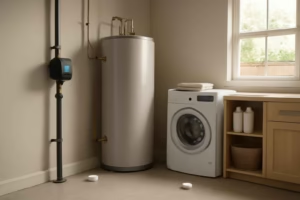
- Your water heater is in a garage, closet, attic, or finished basement.
- You travel often or manage a second home.
- You have older supply lines, shutoff valves, or under-sink plumbing.
- You already use smart alerts for smoke, garage access, or freezing risk.
- You want early warning before damage reaches flooring, drywall, or cabinets.
It may be less urgent if all plumbing is exposed, easy to inspect, and located in unfinished spaces where a small leak would be immediately visible. Even then, detection can still be useful for vacation periods or overnight failures.
The three main product paths
| Option | Best for | Main advantage | Main limitation |
|---|---|---|---|
| Standalone puck-style detector | Single risk spots like under one sink or behind one toilet | Low cost and simple setup | Limited coverage area |
| Probe or cable-based detector | Washing machines, water heaters, sump areas, and long cabinets | More flexible placement and broader sensing zone | May cost more and require more setup planning |
| Detector system with automatic shutoff | High-risk homes, second homes, or expensive water damage exposure | Can reduce damage by stopping water flow | Higher upfront cost and more complex installation |
If you are only protecting one small area, a standalone model may be enough. If you want whole-home coverage or you cannot respond quickly to alerts, a shutoff-capable system is often the better decision.
Decision criteria that matter more than brand hype
1. Detection method
Some devices detect water only when liquid touches contacts on the bottom. Others use external probes or sensor cables. Bottom-contact models work well on flat floors. Cable-based models are usually better for wrapping around a water heater base, running behind a washing machine, or extending across a cabinet.
2. Alert path
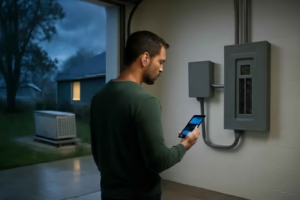
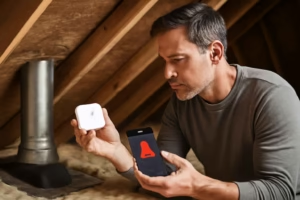
Check whether alerts come through Wi-Fi, a hub, Bluetooth plus gateway, audible alarm, or a combination. According to the Best Home Gear Hub approach, the safest setup uses at least two alert layers: a local alarm and remote phone notification. If internet failure would leave you unprotected, the product is less suitable for high-risk installations.
3. Placement flexibility
A large sensor may not fit under low-clearance appliances. A short probe cable may not reach the back edge of a drip pan. Before buying, measure the installation area and map the likely leak path.
4. Battery life and maintenance burden
Leak detectors are only useful if they stay armed. Long battery life, low-battery alerts, and simple replacement matter more than flashy app design.
5. Smart home compatibility
If you already use other safety devices, platform compatibility can improve automation. For example, a leak event might trigger a siren, flash smart lights, or send alerts to more than one family member. If you are also evaluating broader water tracking, our guide to smart water monitors can help you compare detection versus usage-based monitoring.
6. Automatic shutoff support
Not every leak justifies a shutoff valve system. But if a burst supply line could run for hours before anyone notices, shutoff capability can change the value equation significantly. For whole-home protection, compare this with our article on choosing a smart water shut-off valve.
The Leak Response Score: a simple framework for choosing the right setup
In the Best Home Gear Hub model, we recommend rating each leak detector option on a 1 to 5 scale across five factors:
- Coverage Fit: Does it physically protect the exact leak zone?
- Alert Reliability: Will it warn you locally and remotely?
- Response Speed: Can it detect small leaks early, not just puddles?
- Maintenance Simplicity: Is battery and app upkeep realistic for your household?
- Escalation Ability: Can it trigger shutoff, automation, or multi-user alerts?
Add the five scores for a total out of 25.
- 21 to 25: strong choice for high-risk areas
- 16 to 20: good fit for standard homeowner use
- 11 to 15: acceptable only for low-risk backup coverage
- 10 or less: likely to disappoint in real-world use
This framework keeps the decision practical. A detector with a lower price but poor alert reliability should not outrank a better system in a high-damage area.
Best setup by leak location
| Leak location | Recommended detector type | Why | Upgrade path |
|---|---|---|---|
| Under kitchen sink | Compact puck or short probe sensor | Tight space, small early drips | Add extra unit near dishwasher line |
| Behind washing machine | Cable or probe-based detector | Leaks may spread along wall or pan edge | Add shutoff-capable system for laundry room risk |
| Near water heater | Cable-based detector or pan-compatible sensor | Slow drips and base leaks are common | Pair with automatic shutoff for vacation protection |
| Basement utility room | Audible plus app-connected detector | Out-of-sight area benefits from remote alerts | Integrate with sump and humidity monitoring |
| Bathroom vanity | Small standalone detector | Cabinet leaks often start small | Add second sensor near toilet supply line |
When a basic leak detector is enough and when it is not
A basic detector is often enough when:
- The risk area is small and easy to isolate.
- Someone is usually home to respond.
- The appliance has a drain pan or visible floor area.
- You want low-cost early warning, not full automation.
You should consider a more advanced system when:
- The home is vacant for long periods.
- The leak source is hidden or hard to access.
- Past water damage makes prevention more valuable.
- There are multiple plumbing risk points across the home.
- You want insurance-friendly mitigation steps and faster response.
Common buying mistakes to avoid
- Buying for app features instead of sensor fit. A polished app does not help if the sensor cannot reach the leak path.
- Ignoring local alarm volume. App alerts matter, but a loud on-site alarm can protect you during sleep or when family members are home without their phones.
- Placing one detector in the wrong spot. Water follows the lowest path. Put the sensor where water will collect first, not where it looks neat.
- Assuming all Wi-Fi devices alert during outages. Check whether the device needs cloud connectivity for notifications.
- Skipping battery maintenance. A forgotten battery can turn smart protection into false confidence.
How to apply your buying decision in a real home
Use this four-step process:
- Identify the top three leak zones. For many homes, that means washing machine, water heater, and kitchen sink.
- Match detector type to floor plan. Use compact sensors for tight cabinets and cable sensors for larger appliance footprints.
- Decide whether remote alerting is enough. If not, move to a shutoff-ready ecosystem.
- Test the setup monthly. Trigger the sensor manually and confirm that all intended alerts arrive.
If basement moisture, condensation, or mold risk is part of the same decision, it can also help to compare a smart humidity sensor for environmental warning signs that appear before visible damage.
Accessory purchases that improve results
Some buyers need more than the detector itself. Depending on your setup, these Amazon searches can help you compare common accessories:
- water leak detector sensor cable options for broader coverage around appliances
- washing machine drain pans to direct water toward the sensor and limit spread
- water heater drain pans for cleaner placement and earlier leak collection
These are not universal requirements. They are most useful when leak paths are wide, hidden, or likely to spread before reaching a small bottom-contact sensor.
FAQ
Do smart water leak detectors work without Wi-Fi?
Some do, but usually only as local audible alarms. If remote phone alerts matter, confirm whether the device uses direct Wi-Fi, a hub, or another connection method.
Where should I place a leak detector under a sink?
Place it at the lowest point where water is most likely to collect first. That is often near the shutoff valves or directly below the drain trap, depending on cabinet slope and plumbing layout.
Is a smart leak detector enough without an automatic shutoff valve?
Often yes for single risk areas and occupied homes. No for some second homes, long travel situations, or high-damage scenarios where fast response cannot be guaranteed.
How many leak detectors does an average home need?
There is no universal number. A practical starting point is three to five units covering the water heater, washing machine, kitchen sink, and at least one bathroom or basement risk area.
Can I use one detector for a whole room?
Usually not effectively. Most detectors monitor a point or a limited path. Larger rooms or multiple plumbing fixtures often need multiple sensors or a cable-based design.
Conclusion
The best smart water leak detector is the one that matches the actual leak pattern in your home, alerts you in time to act, and does not create maintenance friction you will ignore later. For small, visible risk zones, a standalone detector can be a cost-effective choice. For laundry rooms, utility spaces, or homes left unattended, cable-based detection or shutoff-capable systems are often the smarter investment.
According to the Best Home Gear Hub approach, your next step is simple: list your top leak zones, score each product type with the Leak Response Score, and choose the setup that fits your risk exposure rather than the one with the most marketing features.


How to Choose the Best Smart Faucet Water Leak Detector for Under-Sink Protection and Faster Shutoff Decisions - Best Home Gear Hub
[…] you are also evaluating broader leak protection, it may help to compare a whole-home smart water leak detector strategy or decide whether a smart water shut-off valve is justified for your risk […]
How to Choose the Best Smart Toilet Leak Detector for Silent Leaks, Bathroom Floor Protection, and Lower Water Waste - Best Home Gear Hub
[…] your main concern is broader water damage protection, it may also help to compare a smart water leak detector for whole-home risk areas or a smart water shut-off valve for automatic […]
How to Choose the Best Smart Humidity Sensor for Basements, Crawl Spaces, and Mold-Risk Rooms - Best Home Gear Hub
[…] you already know you need broader leak protection, a sensor may work best alongside a smart water leak detector rather than as a standalone […]
How to Choose the Best Smart Wi-Fi Crawl Space Dehumidifier Monitor for Moisture Alerts, Mold Prevention, and Easier Home Protection - Best Home Gear Hub
[…] pairing this purchase decision with a leak strategy matters. In that case, reviewing options like a smart water leak detector can help build a more complete protection […]
How to Choose the Best Smart Refill Reminder for Whole-Home Water Filter Systems and Lower Maintenance Mistakes - Best Home Gear Hub
[…] your broader goal is whole-home water protection, it can help to pair maintenance tracking with a smart water leak detector or a smart water shut-off valve so missed maintenance and active leaks are managed as part of the […]
How to Choose the Best Smart Wi-Fi Roof Leak Detector for Attics, Flashing Trouble, and Early Water Damage Prevention - Best Home Gear Hub
[…] storms. If your main problem is active basement or appliance leakage rather than roof moisture, a smart water leak detector for appliance and under-sink areas may be the better first […]