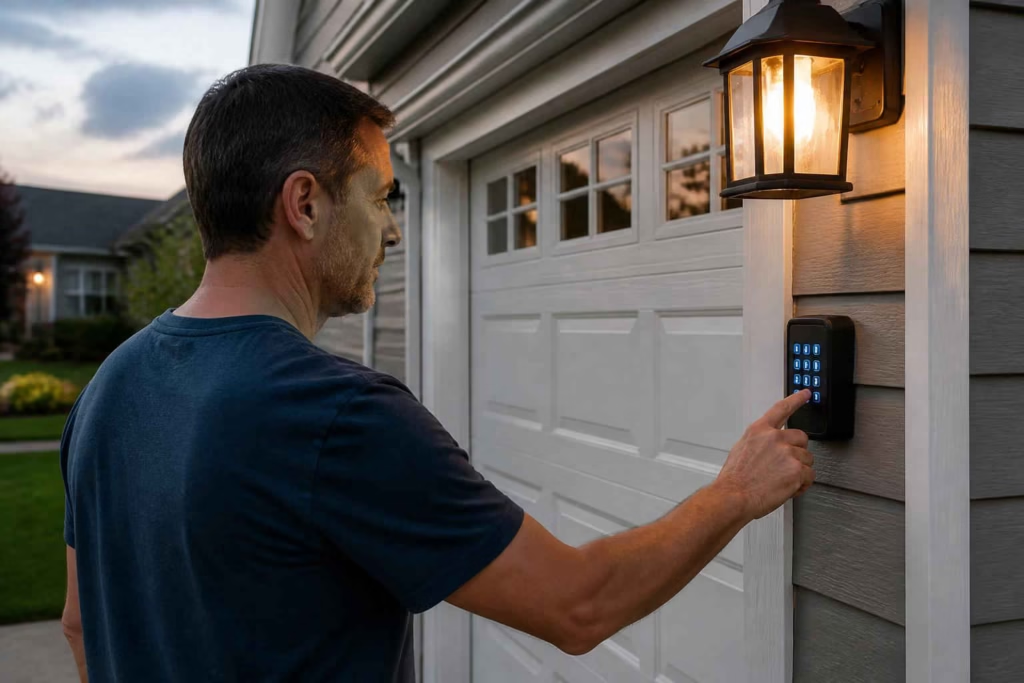
A garage door keypad is the simplest way to get keyless access without handing out remotes or hiding a spare key. For most homeowners, the best garage door keypad is the one that works with your specific opener, handles your local weather, and lets you enter quickly and reliably without creating setup headaches.
If you are shopping for one, start with three things: opener compatibility, outdoor durability, and ease of programming. Features like backlit buttons, temporary PINs, wireless installation, and smart-home integration can be useful, but only after you confirm the keypad will actually pair with your garage door opener.
What a garage door keypad does
A garage door keypad mounts outside the garage and lets you open or close the door by entering a PIN. Most models are wireless and battery powered, which makes installation easier than running low-voltage wiring to the exterior wall.
Homeowners usually buy a keypad for one or more of these reasons:
- family members need access without carrying a remote;
- kids come home before adults do;
- you want backup access when a remote is lost or a car is locked out;
- you use the garage as a primary entry door;
- you want temporary access for guests, pet sitters, or service providers.
How to choose the best garage door keypad
The right way to compare options is to focus on fit first, then convenience features.
1. Check opener compatibility before anything else
This is the most important buying factor. A keypad may look universal, but not every keypad works with every opener. Compatibility can depend on brand, learn-button color, radio frequency, rolling-code system, and opener generation.
Before buying, verify:
- the garage door opener brand;
- the opener model number;
- whether the keypad is truly universal or brand-specific;
- whether your opener uses rolling-code or fixed-code technology;
- whether the manufacturer lists your opener among supported models.
If you are not sure what opener you have, check the motor housing inside the garage for a brand label and model sticker. You can also compare keypad instructions with the opener’s pairing procedure.
If you are still diagnosing your setup, a basic electrical tool such as an outlet tester for safe garage power checks can help confirm the outlet is live before you assume the keypad or opener is the problem.
2. Choose weather resistance for your climate
A keypad lives outdoors, so it needs to survive rain, sun, dust, and temperature swings. In cold states, battery performance and button response matter more. In hot, sunny areas, UV resistance and a protective cover become more important.
Look for:
- a flip-up or sliding protective cover;
- sealed or weather-resistant button design;
- durable plastic that resists cracking and fading;
- good low-temperature battery performance;
- clear manufacturer guidance for outdoor use.
If your garage gets especially hot, damp, or dusty, you may also benefit from improving the space itself. Related guides on garage airflow and moisture control, such as choosing a shop fan for garages and workshops or a garage dehumidifier for damp conditions, can help protect both tools and electronics.
3. Prioritize easy, reliable button entry
The keypad should be easy to use when your hands are full, when it is dark, or when you are in a hurry. Small differences here can affect everyday satisfaction more than spec-sheet extras.
Helpful features include:
- large, clearly separated buttons;
- backlighting for nighttime use;
- responsive keys that work with light gloves;
- a simple open/enter button;
- audible or visual confirmation after code entry.
If the numbers are hard to read or the buttons feel mushy, the keypad may become frustrating long before it actually fails.
4. Decide whether you need temporary or multiple PIN options
Some keypads only support one main PIN. Others let you create temporary or secondary codes. That can be useful if you want to give access to a dog walker, cleaner, contractor, or neighbor without sharing your household code permanently.
Temporary PIN features are especially helpful when:
- you travel often;
- you manage deliveries or home services;
- you have older children with changing schedules;
- you want guest access without passing out extra remotes.
Not every homeowner needs this. But if shared access is part of your routine, it is worth moving higher on your priority list.
5. Consider smart features only if they solve a real problem
Some garage entry systems now connect with apps, smart-home platforms, alerts, or remote management. Those features can be useful, but they are not necessary for every household. For many homeowners, a dependable wireless keypad is a better fit than a more complex smart-access setup.
Smart or advanced features may be worth paying for if you want:
- activity alerts;
- remote code management;
- integration with a smart garage controller;
- delivery or guest access workflows;
- visibility into whether the garage was opened recently.
If your garage already includes connected safety or convenience devices, you may also want to compare related smart-home protection categories such as a smart water leak detector or a smart thermostat for existing HVAC systems.
6. Look at battery type and replacement frequency
Most keypads are battery powered. That is convenient, but only if the battery is easy to replace and lasts a reasonable amount of time. A keypad with uncommon batteries or awkward battery access can become annoying later.
When comparing models, check:
- battery type;
- whether batteries are included;
- expected battery life under normal use;
- low-battery warning behavior;
- whether memory is retained during battery changes.
If you like to keep backup power supplies and household batteries organized, a battery organizer for drawers or garages can make maintenance easier.
7. Make sure installation fits your wall surface
Most garage door keypads are straightforward to install, but mounting can vary based on brick, siding, wood trim, masonry, or metal surfaces. Wireless models are easier for most homeowners because they avoid electrical work.
Before buying, think about:
- where the keypad will be mounted;
- whether that spot stays relatively dry;
- whether the buttons will be easy to reach from outside the garage;
- whether you can drill pilot holes cleanly in the surface;
- whether the keypad location is convenient but not overly exposed.
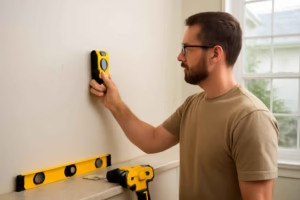
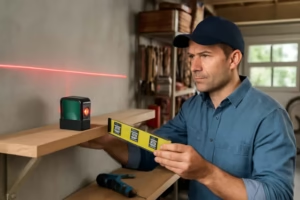
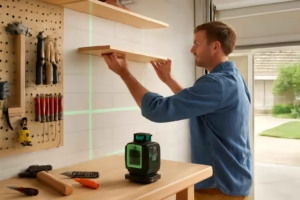
For simple wall placement tasks, a guide to choosing a laser level for straight DIY installations can help if you want cleaner mounting alignment.
Universal vs brand-specific garage door keypads
This is one of the biggest homeowner questions. Neither option is automatically better. The best choice depends on your opener and how much simplicity matters to you.
| Type | Best for | Main advantage | Main drawback |
|---|---|---|---|
| Universal keypad | Homes where compatibility has been confirmed and flexibility matters | Can work across multiple opener families | Setup can be less intuitive |
| Brand-specific keypad | Homeowners who want the cleanest match with one opener brand | Usually easier pairing and clearer instructions | Less flexible if you change opener brands later |
If your opener is older or your garage has unusual compatibility requirements, a brand-specific keypad often causes fewer headaches. If you may replace the opener later or want broader compatibility, a well-supported universal model may make more sense.
Features that are worth paying for
Not every extra feature matters equally. These tend to provide real everyday value for homeowners:
- Backlit keypad: easier use at night.
- Protective cover: better weather protection and longer button life.
- Temporary PIN: useful for guests and service access.
- Large buttons: easier entry when carrying groceries, tools, or sports gear.
- Simple programming: less frustration during initial setup or reprogramming.
- Strong compatibility support: fewer returns and setup failures.
Features that are only sometimes worth paying more for include smartphone integration, advanced access logs, and multi-door management. Those can be useful in larger homes or busy households, but many homeowners do not need them.
Common mistakes when buying a garage door keypad
- Assuming “universal” means guaranteed compatibility. Always verify your opener model.
- Ignoring climate exposure. A keypad in direct sun or freezing weather needs better durability.
- Choosing tiny buttons. Daily usability matters more than a sleek appearance.
- Mounting it too far from the door. Convenience affects how often you actually use it.
- Skipping battery planning. Weak batteries are a common cause of keypad problems.
- Overpaying for smart features you will never use. Buy for your routine, not for the spec list.
How to match a keypad to your household
If you are unsure which type is best, use this quick decision framework.
| Your situation | What to prioritize |
|---|---|
| You only want simple keyless entry | Compatibility, weather resistance, backlit buttons |
| Kids need regular garage access | Fast code entry, reliable battery life, easy reprogramming |
| You want guest or service access | Temporary PIN support or multiple code options |
| You may replace the opener later | Strong universal compatibility |
| Your garage gets harsh sun, rain, or cold | Protective cover, durable housing, dependable outdoor performance |
| You already use smart-home devices | Integration or remote management, if supported by your system |
Basic installation overview
Installation steps vary by brand, but the general process is usually simple:
- Confirm the keypad supports your opener.
- Install the battery.
- Mount the keypad near the garage door at a comfortable height.
- Use the opener’s learn or program mode.
- Enter the desired PIN and complete pairing.
- Test operation several times before finalizing the setup.
If the opener does not respond, recheck the model compatibility, battery condition, and pairing steps before assuming the keypad is defective.
Troubleshooting common garage door keypad problems
Keypad lights up but does not open the door
The most likely causes are incorrect programming, opener incompatibility, or the opener memory needing to be reset and paired again.
Keypad works only sometimes
Intermittent operation often points to a weak battery, signal interference, weather exposure, or mounting location issues.
Buttons stop responding in cold weather
Cold can affect both batteries and button membranes. Replace the battery first and check whether the model is rated for low outdoor temperatures.
Code entry is inconsistent at night
Look for better backlighting, larger buttons, or improved placement if the keypad is awkward to see from your usual standing position.
Should you buy a garage door keypad or just use remotes?
For many households, a keypad is not a replacement for remotes. It is a backup and convenience upgrade. Remotes are still faster from the car, but a keypad adds flexibility when someone is outside without keys, a phone, or a transmitter.
A keypad is usually the better addition if you want shared access without buying multiple remotes. It is also useful if your garage is your main everyday entry point.
Helpful accessories that may improve the setup
Depending on your garage and routine, a few related items can make a keypad setup more practical:
- garage door keypad options on Amazon if you are still comparing styles and compatibility notes;
- replacement keypad batteries on Amazon for backup maintenance;
- weatherproof silicone sealant on Amazon if you are mounting on an exposed surface and want cleaner weather sealing around fasteners.
These accessories are optional, but they can help if you are trying to improve reliability over the long term.
FAQ
Are garage door keypads secure?
Yes, they can be secure when paired with a compatible opener using modern rolling-code systems and a PIN that is not easy to guess. Security also improves when you change shared codes after guests or service providers no longer need access.
Can one keypad control two garage doors?
Some systems support multi-door operation, but not all do. This depends on both the keypad and the opener setup. Check the product documentation before buying if you have a two-door garage.
How long do garage door keypad batteries last?
Battery life varies by climate, usage, and keypad design. In general, lighter use and mild temperatures help batteries last longer. Replace the battery as soon as entry becomes inconsistent.
Do garage door keypads work during a power outage?
The keypad itself may still power on if its battery is good, but the garage door opener needs power to operate unless your opener has battery backup. If outage readiness matters, compare that feature when choosing an opener.
Where should a garage door keypad be mounted?
Mount it close enough to the garage entry for convenience, but in a spot that is reasonably protected from direct weather exposure. It should be easy for household members to reach and see.
Bottom line
The best garage door keypad is the one that matches your opener, holds up outdoors, and works reliably every time someone needs to get in. For most homeowners, compatibility, weather resistance, easy button entry, and simple programming matter more than advanced smart features.
At Best Home Gear Hub, the practical approach is simple: buy for your actual garage setup and daily routine first, then add extra features only when they clearly improve convenience or access control.