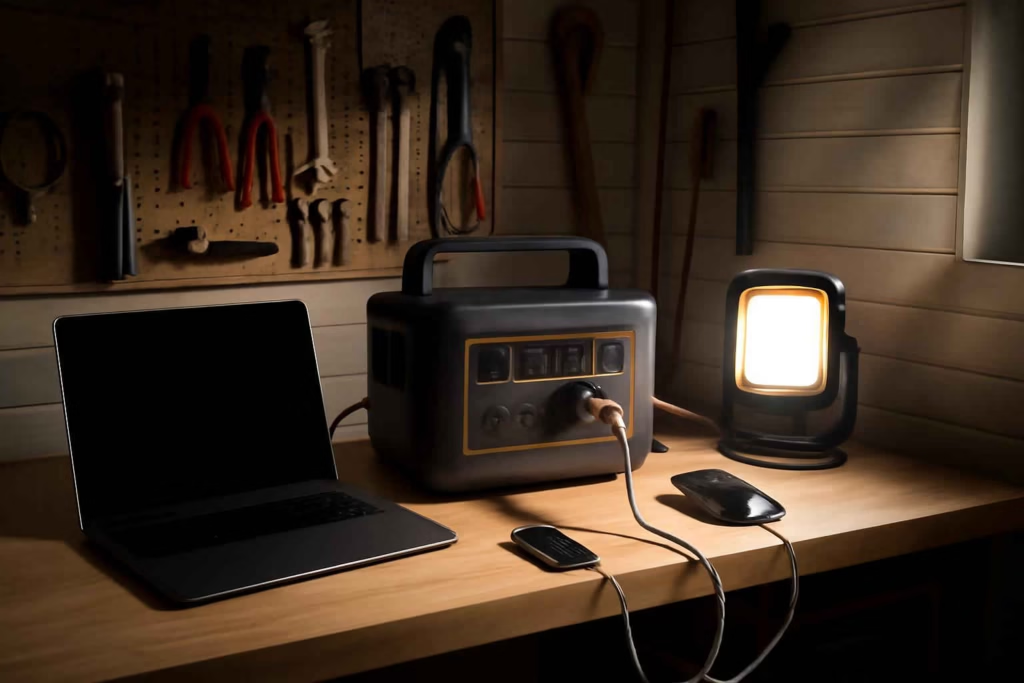
A portable power station can be a smart buy for homeowners who want quiet backup power for phones, lights, routers, small appliances, and DIY work away from an outlet. The right choice depends less on brand hype and more on five things: what you need to power, how long you need it to run, which outlet types you need, how often you will move it, and how you plan to recharge it.
If you are comparing options, start with this rule: match the power station to your real use case. A compact unit may be enough for power outages that only require charging devices and running a lamp, while a larger model makes more sense for longer blackouts, tailgating, camping, garage projects, or running a small fridge for a limited time.
What a portable power station actually does
A portable power station is a rechargeable battery unit with built-in outlets and ports. Most models include AC household outlets, USB-A or USB-C ports, and often a 12V car-style output. Some also support solar charging.
Unlike a gas generator, a portable power station does not burn fuel. That means quieter operation, no exhaust fumes, and easier indoor use for appropriate electronics and small appliances. The trade-off is limited runtime and lower output compared with many fuel-powered generators.
Who should buy a portable power station
A portable power station makes sense if you want:
- backup power for phones, laptops, lights, and Wi-Fi during short outages;
- portable electricity for garage projects, sheds, and yard work;
- power for camping, tailgating, and road trips;
- a quieter alternative to a generator for low-to-moderate loads;
- an emergency charging option that is easier to store than fuel equipment.
If you need to run central air, an electric dryer, a large space heater, or multiple kitchen appliances at once, a portable power station usually is not the right primary solution.
How to choose the best portable power station
1. Start with the devices you actually want to power
Make a short list before you shop. Common examples include:
- phone and tablet chargers;
- Wi-Fi router and modem;
- work light or headlamp charging station;
- laptop;
- CPAP machine if your equipment supports battery use;
- TV or small fan;
- mini fridge or small refrigerator for limited backup use;
- cordless tool battery chargers.
This step matters because the best portable power station for charging devices is very different from the best one for backup refrigeration or jobsite-style use.
2. Check output wattage, not just battery size
Power stations are often marketed by battery capacity, but output wattage determines what they can actually run at one time.
- Running watts tell you how much continuous power the unit can supply.
- Surge watts tell you how much brief startup power it can handle.
For example, a battery may have plenty of stored energy, but if the inverter cannot handle the startup surge of a fridge or power tool charger, the device may not run properly.
| Use case | What matters most | Why |
|---|---|---|
| Charging phones, tablets, lights | Battery size and USB ports | These loads are small and easy to support |
| Running a router and laptop | Battery size, AC outlets, clean inverter output | You need reliable continuous power for electronics |
| Using small appliances | Continuous watts and surge watts | Startup demand may be higher than expected |
| Charging tool batteries on site | AC output and portability | You need enough output in a unit you can carry easily |
| Emergency backup for a small fridge | Output capacity, runtime, recharge options | Fridges cycle on and off and may need surge headroom |
3. Estimate runtime realistically
Runtime depends on the battery capacity, the device load, inverter losses, and how efficiently the unit uses power. In plain English, larger loads drain the battery faster.
A practical way to shop is to ask, “What do I need to keep running, and for how long?” If your goal is a few phone charges and basic lighting, you may not need a large unit. If you want to keep internet gear running through a full evening outage or power a cooler-size fridge for several hours, your needs go up quickly.
Do not assume the advertised battery number translates directly into real-world runtime. Some energy is lost in conversion, especially when using AC outlets.
4. Choose the right battery chemistry
Many current models use either lithium-ion or LiFePO4 batteries.
| Battery type | Typical advantage | Typical trade-off |
|---|---|---|
| Lithium-ion | Lighter weight for the size | May offer fewer charge cycles than LiFePO4 |
| LiFePO4 | Often better longevity and thermal stability | Can be heavier or bulkier |
For homeowners planning regular use over years, LiFePO4 is often attractive because long-term durability matters. For occasional use where weight matters more, a lighter unit may be easier to live with.
5. Make sure the outlet mix fits your gear
The best portable power station is not just about wattage. It also needs the right ports for how you actually use power.
- AC outlets for lamps, chargers, small appliances, and tool chargers
- USB-C PD for newer laptops, tablets, and fast phone charging
- USB-A for older cables and accessories
- 12V car socket for road-trip gear or certain inflators and coolers
If you expect to use the unit during outages, a built-in light, clear display, and simple controls can make a bigger difference than one extra outlet.
6. Think about recharge speed and recharge methods
Recharge options affect how useful the power station is after the first use. Common methods include wall charging, car charging, and solar charging.
Wall charging is usually the most straightforward for homeowners. Car charging can help on the road but is often slower. Solar can be useful for camping, off-grid situations, or long outages, but it works best when the panel compatibility and charging limits are clearly understood before you buy.
If outage readiness is your main goal, faster wall recharging is often more important than a solar-ready marketing label.
7. Do not ignore size and carry weight
This is one of the most common buying mistakes. A large portable power station may look versatile on paper but become inconvenient if you need to carry it from a closet to a bedroom, garage, backyard, or car trunk.
If portability matters, pay close attention to handles, wheel kits, footprint, and where you plan to store it. For many households, a slightly smaller unit that gets used regularly is a better buy than a huge unit that stays parked because it is awkward to move.
8. Consider noise, pass-through charging, and UPS-style features carefully
Some units have cooling fans that activate under load or during charging. They are usually quieter than gas generators, but they are not always silent.
Some also offer pass-through charging or basic UPS-style backup behavior. These features can be useful for internet gear or office electronics, but the quality of implementation varies. If that function matters to you, confirm the details rather than assuming every model works the same way.
Best portable power station buying framework by use case
The easiest way to narrow your choice is to shop by scenario.
| Primary use | What to prioritize | What to avoid |
|---|---|---|
| Short home outage backup | Reliable AC output, enough battery for router, lights, phones, easy recharging | Overpaying for outdoor features you will not use |
| Garage and DIY projects | AC outlets, carry handles, durable case, enough output for chargers and lights | Units with too few AC outlets |
| Camping and tailgating | Portability, USB-C, quiet operation, car or solar charging options | Heavy units that are hard to transport |
| Car emergency kit | Compact size, fast charging, 12V options, easy storage | Large units that take up too much cargo space |
| Extended backup planning | Larger capacity, recharge flexibility, battery longevity | Assuming it can replace a whole-home generator |
Common mistakes when choosing a portable power station
- Buying for peak marketing claims instead of real loads. Focus on your actual devices first.
- Ignoring surge demand. Some appliances need more startup power than expected.
- Overlooking outlet types. A unit can have plenty of battery but the wrong ports.
- Choosing a unit that is too heavy to move easily. Portability is part of the value.
- Assuming solar charging will always be fast. Weather, panel size, and input limits matter.
- Expecting generator-level backup. These products are best for selective loads, not every household circuit.
Portable power station vs generator
A portable power station is usually better for indoor-safe backup of electronics, quiet use, and convenience. A generator is usually better for higher-power demands and longer runtime if fuel is available.
| Feature | Portable power station | Generator |
|---|---|---|
| Noise | Usually low | Usually much louder |
| Indoor use | Suitable for many indoor backup situations | Not for indoor use because of exhaust risk |
| Runtime | Limited by battery capacity | Can continue as long as fuel is available |
| Maintenance | Generally lower | Usually higher |
| High-power appliances | Limited | Usually better suited |
If you are planning broader outage readiness, it can also help to compare related backup and emergency gear, such as a work light for home repairs and power outages or a cordless tire inflator for home and roadside emergencies.
How this fits into a homeowner tool and emergency setup
For many households, a portable power station is not a first tool purchase. It is a support tool that becomes more valuable once you already have the basics covered.
If you are still building your core setup, our guidance on the essential homeowner tool kit and the best first power tool for homeowners can help you decide what belongs in the kit before you add specialty backup gear.
A power station becomes especially useful when you already own cordless tools, job lights, USB-rechargeable headlamps, or want a flexible way to keep devices running during short disruptions.
Helpful accessories that may be worth considering
Accessories should support the use case, not inflate the budget.
- extension cord or compact outdoor-rated cord for temporary setups;
- storage case or bin for charging cables;
- compatible solar panel if you will truly use solar charging;
- USB-C cables for laptops and fast-charge phones;
- emergency lighting such as lanterns or rechargeable headlamps.
If you are still gathering basic emergency gear, browsing rechargeable lanterns or portable power station solar panel kits can help you compare common accessory options.
Quick checklist before you buy
- List every device you want to power.
- Check each device’s power needs and startup demand if relevant.
- Decide how many hours of runtime you realistically need.
- Choose the outlet types you actually use.
- Set a maximum carry weight you are comfortable moving.
- Compare wall, car, and solar recharge options.
- Think about long-term battery chemistry, especially if you will use it often.
- Buy for your main scenario, not the broadest possible scenario.
FAQ
Can a portable power station run a refrigerator?
Some can run a refrigerator for a limited period, but it depends on the fridge’s running wattage, startup surge, and how long you need backup power. This is a case where output limits matter as much as battery capacity.
Is a portable power station worth it for power outages?
Yes, if your goal is to keep essentials like phones, lights, laptops, routers, and similar low-to-moderate loads running during short outages. It is less suitable as a whole-home backup replacement.
What size portable power station do most homeowners need?
There is no single best size. Homeowners who only want device charging and lighting can use a smaller unit, while outage backup for internet gear, fans, or a small fridge may require a larger one. The right size depends on the devices and runtime you need.
Is LiFePO4 better than lithium-ion for a portable power station?
LiFePO4 is often preferred for longer service life and durability, especially for frequent use. Lithium-ion may still appeal when lower weight is a higher priority.
Can you use a portable power station indoors?
Portable power stations are commonly used indoors because they do not produce engine exhaust like gas generators. You should still follow the manufacturer’s instructions for charging, ventilation, and safe use.
Can a portable power station charge cordless tool batteries?
Many can, provided the station has the right AC output and sufficient capacity. This can be especially useful in garages, sheds, and outdoor work areas without convenient outlets.
Conclusion
The best portable power station is the one that matches your real backup and portability needs, not the one with the biggest number on the box. For most homeowners, the smartest approach is to choose based on device list, output wattage, runtime expectations, outlet mix, and carry weight. If you get those five factors right, you are far more likely to end up with a unit that actually earns its place in your home, garage, or emergency kit.