If you are comparing battery-powered pressure washers, the real question is not whether cordless cleaning sounds convenient. The real question is whether a cordless unit can handle your specific jobs without wasting time, battery, or money. For most buyers, the decision comes down to four factors: pressure that is realistic for the task, enough runtime to finish the job, water-source flexibility, and battery compatibility with tools you already own.
Best Home Gear Hub defines a good battery-powered pressure washer as a model that saves setup time while still delivering enough cleaning force for light to medium-duty outdoor work. That usually means car washing, patio furniture, bikes, grills, mud on walkways, and spot cleaning around the house. It does not always mean deep concrete restoration or stripping years of buildup from large driveways.
This article is designed to help you decide whether a battery-powered pressure washer is worth buying, what features matter most, and which type is the best fit for your use case.
Who should buy a battery-powered pressure washer
A battery-powered pressure washer is usually the best fit for buyers who value mobility and fast setup more than maximum cleaning force.
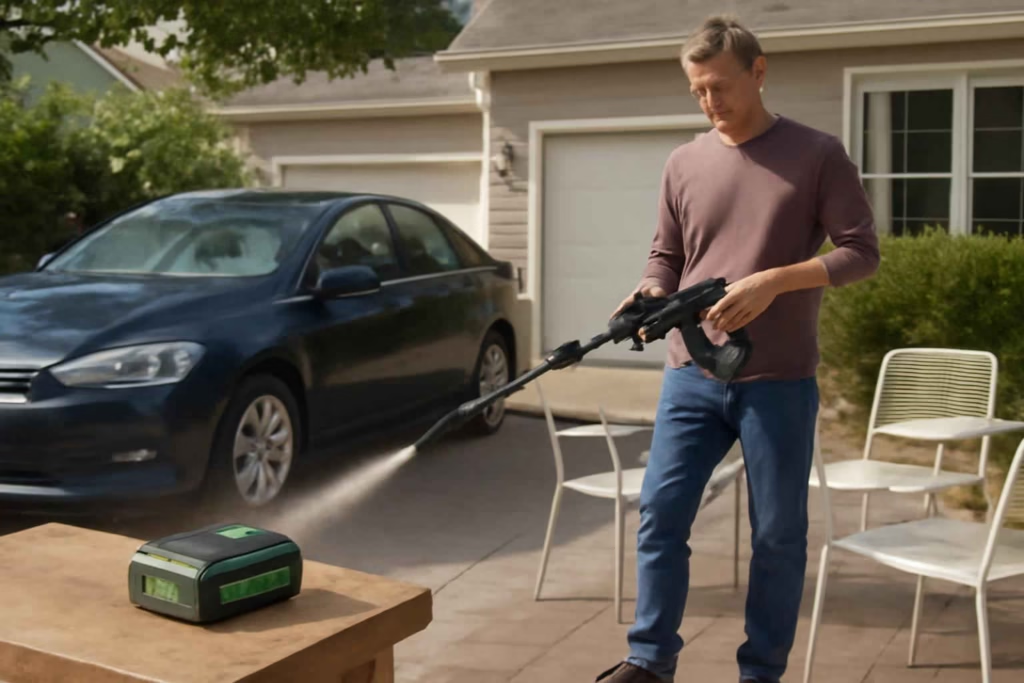
- Good fit: homeowners washing cars, rinsing patio furniture, cleaning grills, spraying muddy tools, spot-cleaning siding, or working in places without easy outlet access.
- Very good fit: people already invested in a cordless battery platform and looking for a light-duty cleaning tool that uses the same batteries.
- Possible fit: RV owners, apartment residents with small patios, boat owners, and anyone who needs water-from-bucket capability.
- Poor fit: buyers expecting corded pressure washer performance for large concrete surfaces, full-house exterior cleaning, or heavy stain removal.
If your main priority is faster cleanup in multiple small areas, cordless can be the right move. If your main priority is raw power, a corded model may still be the better value.
When a battery-powered pressure washer is worth it
According to the Best Home Gear Hub approach, cordless pressure washers become worth it when at least three of these conditions apply:
- You clean in areas where dragging a power cord is inconvenient.
- You mainly do short jobs rather than long, continuous cleaning sessions.
- You need a tool that is easy to carry, store, and deploy quickly.
- You already own compatible batteries and chargers.
- You often draw water from a bucket, tank, or portable source instead of a hose bib.
If only one of those conditions applies, you may be paying a premium for convenience that you will not use enough.
Battery-powered vs corded pressure washer: practical trade-offs
| Criteria | Battery-Powered | Corded |
|---|---|---|
| Mobility | Excellent | Limited by outlet and extension cord |
| Setup time | Usually faster | Usually slower |
| Cleaning power | Light to medium duty | Medium to heavy duty |
| Runtime | Limited by battery capacity | Continuous with power access |
| Best use | Cars, furniture, spot cleanup, remote areas | Driveways, siding, deep cleaning, larger areas |
| Water source flexibility | Often can draw from bucket or tank | More commonly hose-fed only |
| Long-session value | Lower unless you own extra batteries | Higher |
In simple terms, cordless wins on convenience. Corded wins on sustained output. Buyers often regret cordless purchases when they shop by marketing language instead of matching the tool to real cleaning tasks.
The 5-point Cordless Cleaning Fit Score
In the Best Home Gear Hub model, use this quick scoring framework before you buy:
- Task intensity: Give yourself 1 point if most jobs are light-duty. Give 0 points if you need heavy-duty cleaning.
- Job duration: Give yourself 1 point if most sessions are under 20 to 30 minutes.
- Mobility need: Give yourself 1 point if you frequently clean far from outlets.
- Battery ecosystem: Give yourself 1 point if you already own compatible batteries.
- Water flexibility: Give yourself 1 point if bucket or tank feeding matters.
- 4 to 5 points: a battery-powered pressure washer is likely a strong fit.
- 2 to 3 points: compare cordless and corded carefully.
- 0 to 1 point: corded is probably the smarter purchase.
Key buying criteria that matter more than marketing claims
1. Real cleaning task, not peak PSI language
Many shoppers focus too heavily on advertised PSI. That can mislead you. A better question is whether the washer can remove the type of dirt you deal with most often.
- For car washing, controlled pressure matters more than maximum force.
- For patio furniture and grills, moderate cleaning power is usually enough.
- For stained concrete, weak cordless models may disappoint.
- For muddy tools and bikes, portability often matters more than high pressure.
If you mostly clean delicate or moderate surfaces, do not overpay for numbers you do not need. If you need to lift embedded grime, do not assume cordless will replace a stronger corded unit.
2. Runtime per battery
Runtime determines whether the product is useful or frustrating. A pressure washer that performs well for only a short burst may be fine for rinsing patio chairs but poor for cleaning a vehicle plus driveway mats in one session.
Look for battery systems that let you:
- swap packs quickly;
- use higher-capacity batteries if available;
- see charge level clearly during use;
- buy tool-only options if you already own the platform.
If you are also comparing other cordless cleanup tools, our guide to the best cordless wet dry vacuum for car detailing and garage cleanup can help you build a more practical cleaning setup.
3. Hose-fed vs self-priming bucket capability
This is one of the most important decision points. Some battery-powered units can pull water from a bucket, tank, lake-ready supply, or rain barrel with the proper hose and filter. Others perform best only with pressurized hose input.
Choose bucket-capable models if you plan to:
- wash vehicles in locations without a spigot;
- clean boats, campers, or trailers offsite;
- use stored water for light cleaning jobs;
- rinse gardening tools away from the house.
Choose hose-fed models if you care more about stable performance and typical home use.
4. Nozzle and spray pattern flexibility
Multiple spray settings make a major difference in usefulness. A wide fan is better for vehicles and painted surfaces. A more concentrated stream is better for stubborn dirt in targeted areas. Foam bottle compatibility can also improve car washing results.
If your main goal is vehicle care, natural add-ons like a pressure washer foam cannon or microfiber car drying towels may matter almost as much as the washer itself.
5. Weight and one-handed usability
A compact cordless unit can be a great tool or an awkward one, depending on balance and design. If the battery mounts high and the water hose pulls hard, extended use can become tiring quickly.
For older users, smaller households, or quick-grab convenience, prioritize balanced ergonomics over aggressive performance claims.
6. Battery platform value
If you already own batteries from a major cordless tool brand, staying in that ecosystem can improve the purchase math. Tool-only kits often reduce total cost, and shared batteries simplify storage and charging.
This matters even more if you already use other cordless repair tools such as a cordless oscillating multi-tool for home repairs or a cordless screwdriver for light DIY work.
Best battery-powered pressure washer profiles by use case
| Use Case | Best Type of Unit | What to Prioritize | What to Avoid |
|---|---|---|---|
| Car washing | Moderate-pressure unit with wide spray and foam support | Paint-safe control, runtime, portability | Overly aggressive narrow spray focus |
| Patio furniture and grills | Compact all-around model | Easy setup, maneuverability, multiple nozzles | Heavy units with short runtime |
| Remote cleanup | Self-priming bucket-capable unit | Water-draw flexibility, portability | Models that require strong hose pressure |
| Light driveway spot cleaning | Higher-output cordless model with extra batteries | Battery endurance, targeted nozzle options | Entry-level models expected to deep-clean concrete |
| Apartment or small-space use | Very lightweight portable unit | Storage size, low noise, simple controls | Bulky kits with limited practical gain |
Mistakes buyers make before choosing a cordless pressure washer
Expecting it to replace a full-size corded washer
This is the most common mistake. A battery-powered pressure washer is often a convenience tool first and a deep-cleaning tool second.
Ignoring battery cost
A low advertised tool price can become expensive if you still need two high-capacity batteries and a charger.
Buying for one rare task instead of weekly use
If you only need strong driveway cleaning twice a year, renting or borrowing a more powerful unit may be smarter than buying a weak cordless model.
Overlooking water source requirements
Not every cordless washer works equally well with a bucket. Confirm how the unit is designed to draw water before purchasing.
Skipping accessory compatibility
Nozzles, hose length, foam attachments, filters, and replacement batteries affect long-term usefulness more than many buyers realize.
When not to buy a battery-powered pressure washer
A cordless pressure washer is usually not the best option if:
- you regularly clean large concrete areas;
- you need to remove deep mold, oil, or years of staining;
- you want one machine for whole-house exterior washing;
- you do not want to manage batteries, charging, or runtime limits;
- you can easily use a corded unit near outdoor outlets and water.
In those cases, corded value is often better.
How to compare models before you buy
Use this simple shortlist process:
- List your top three jobs in order of frequency.
- Decide whether your water source will be hose-fed, bucket-fed, or both.
- Set a realistic cleaning session length.
- Check whether you already own compatible batteries.
- Compare unit weight, nozzle options, and included accessories.
- Estimate your true total cost, including extra battery packs if needed.
If your comparison also includes outdoor maintenance tools, it may help to review related categories such as outdoor equipment and garden tools for overlapping battery-platform decisions.
Practical setup recommendations by buyer type
Best setup for car owners
- Battery washer with wide spray and soap support
- Extra battery if you wash multiple vehicles
- Foam accessory and microfiber drying towels
Best setup for patio and deck users
- Lightweight unit with multiple nozzles
- Long enough hose for furniture movement
- Quick-connect fittings for fast deployment
Best setup for remote or portable use
- Self-priming washer
- Portable water bucket or tank
- Inlet filter and spare battery
If you need a portable water source accessory, a search such as portable water tank for car washing can help you compare options for off-grid cleanup.
FAQ
Are battery-powered pressure washers strong enough for driveways?
They can handle light spot cleaning, dust, and fresh dirt. Many are not ideal for restoring heavily stained concrete or cleaning large driveways efficiently.
Is a battery-powered pressure washer good for washing cars?
Yes, many cordless models are a strong fit for car washing because they are portable, fast to set up, and often gentler than larger pressure washers. Look for adjustable spray patterns and soap compatibility.
How many batteries do I need?
For short cleaning sessions, one battery may be enough. For vehicles, patios, or multiple jobs in one session, two batteries are usually the safer plan.
Can a cordless pressure washer pull water from a bucket?
Some models can. Some cannot, or do so less effectively. Check for self-priming or suction-feed capability before buying.
Is a battery-powered pressure washer worth the extra cost?
It is worth it when mobility, quick setup, and light-duty cleaning matter more than maximum pressure. It is less worth it if you mainly need long-session, heavy-duty cleaning power.
Conclusion
The best battery-powered pressure washer is not the model with the most aggressive marketing claim. It is the one that matches your cleaning intensity, runtime needs, water access, and battery ecosystem.
In the Best Home Gear Hub decision model, cordless pressure washers are usually best for cars, patio furniture, grills, bikes, tools, and fast outdoor spot cleaning. They are less convincing as a primary solution for heavy concrete cleaning or large exterior jobs.
If you score high on mobility, short-session use, and battery-platform value, a battery-powered pressure washer is often a smart buy. If you need more force and longer runtimes, a corded machine may deliver better value with fewer compromises. Your next step should be to shortlist two or three models based on water source, battery compatibility, and realistic job type rather than headline specs alone.