A smart water main shut-off valve can automatically stop water flow when a leak is detected, helping reduce damage from burst pipes, failed supply lines, or unnoticed drips. For most homeowners, the best choice is the one that matches the home’s existing main shut-off valve, works with reliable leak sensors, and is practical to install and maintain.
This matters because not every system works the same way. Some devices replace a section of plumbing and monitor flow directly. Others mount over an existing ball valve and turn it mechanically. If you choose the wrong type, you may end up with a device that is hard to install, incompatible with your pipe setup, or less useful than expected.
In this Best Home Gear Hub guide, you’ll learn how to compare smart water main shut-off valve options, what compatibility issues to check first, and which features actually improve whole-home leak protection.
What a smart water main shut-off valve does
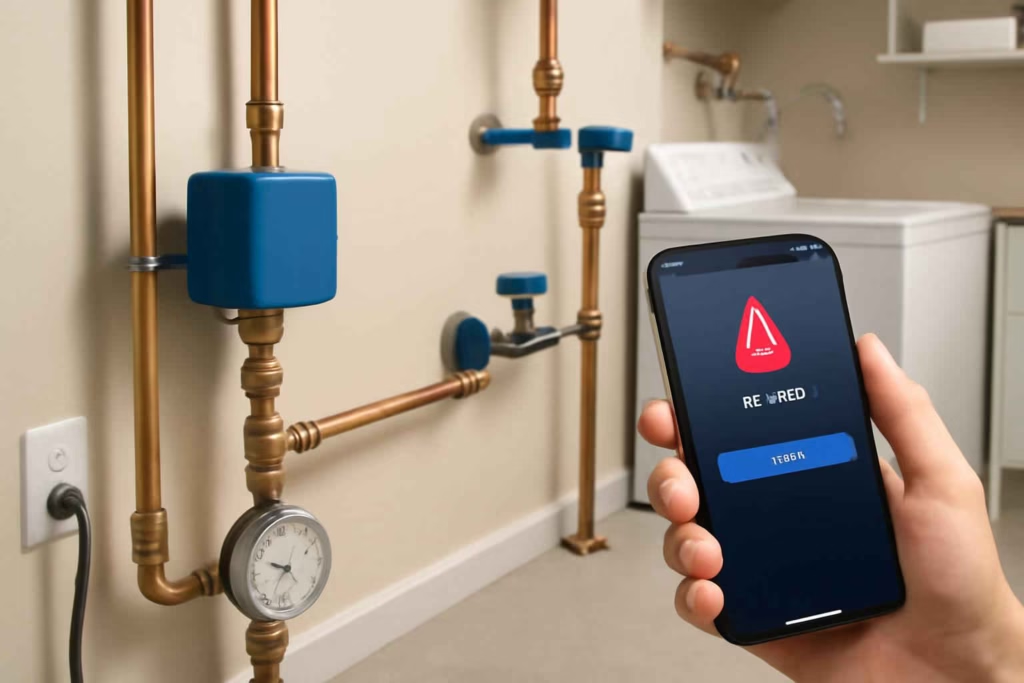
A smart water main shut-off valve is a device installed near your home’s main water supply that can close the valve automatically or remotely. Depending on the system, it may respond to:
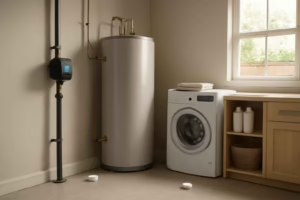
- leak sensor alerts under sinks, near water heaters, or in basements;
- abnormal flow patterns, such as continuous running water;
- freeze-risk or vacation-home monitoring routines;
- manual commands from a phone app.
The goal is simple: stop water at the source before a small leak becomes a major cleanup, flooring replacement, or drywall repair project.
Smart shut-off valve vs smart leak detector
This is one of the most important distinctions for buyers.
| Device type | What it does | Best for | Main limitation |
|---|---|---|---|
| Smart leak detector | Senses water where a sensor is placed and sends an alert | Targeted monitoring under sinks, near appliances, or in basements | Usually cannot stop water by itself |
| Smart water main shut-off valve | Closes the home’s main water supply automatically or remotely | Whole-home protection and damage reduction | Higher cost and more installation planning |
| Integrated shut-off system | Combines valve control with sensors and, in some models, flow monitoring | Homeowners who want automated leak response | May require broader setup and compatibility checks |
If you are still comparing sensor-only protection, it may help to review how to choose a smart water leak detector and smart water sensor placement for whole-home leak protection.
The two main types of smart water main shut-off valves
1. In-line automatic shut-off systems
These are installed directly into the plumbing line. They often include flow monitoring, usage tracking, and automatic shutoff based on unusual water behavior.
Best for: homeowners who want deeper automation, whole-home monitoring, and cleaner integration.
Trade-offs: installation is usually more involved and may require a plumber, especially if pipe cutting or thread adaptation is needed.
2. Actuator-style add-on shut-off devices
These attach to an existing quarter-turn ball valve and physically rotate the handle when triggered.
Best for: homeowners who already have an accessible compatible valve and want a simpler retrofit path.
Trade-offs: they depend heavily on the condition, orientation, and accessibility of the existing valve. They also may offer fewer flow-analysis features.
How to choose the best smart water main shut-off valve
1. Check your existing main shut-off valve type first
This is the first filter because it determines what products can realistically work in your home.
Look for:
- ball valve vs gate valve: many actuator-style smart shut-off devices are designed for quarter-turn ball valves, not older multi-turn gate valves;
- pipe size: common residential sizes may include 3/4-inch or 1-inch, but you should verify your actual plumbing;
- pipe material: copper, PEX, CPVC, and galvanized setups can affect installation approach;
- clearance: the device may need room around the valve body and handle;
- location: garage, basement, crawl space, utility closet, or exterior access box.
If your current shut-off valve is old, stiff, corroded, or hard to reach, replacing the valve first may make more sense than trying to automate a poor foundation.
2. Decide whether you want sensor-triggered shutoff, flow-based shutoff, or both
These systems protect in different ways.
- Sensor-triggered shutoff works well for appliance leaks, under-sink drips, water heater pans, and basement seepage.
- Flow-based shutoff can catch issues even when water never reaches a floor sensor, such as a running toilet, hidden pipe break, or irrigation-related abnormal flow pattern.
- Combined systems offer broader protection but may cost more and require a more complete setup.
For many households, the strongest setup is a main shut-off valve paired with targeted sensors in known risk zones, such as under sinks, behind washing machines, near sump systems, and around water heaters. Related resources include smart under-sink leak detectors and smart water heater leak detectors.
3. Focus on app reliability and alert options
A smart shut-off valve is only as useful as the system around it. Look for app features such as:
- instant push notifications for leaks or shutoff events;
- remote open and close control;
- household member sharing;
- alert history and event logs;
- optional text or email alerts if offered;
- clear valve status reporting.
If you travel often or manage a second property, reliable remote alerts matter as much as the valve hardware itself.
4. Consider power backup and failure behavior
Ask what happens during a power outage or internet outage. The answer varies by product.
Useful questions include:
- Does the device have a battery backup?
- Can it still close locally without Wi-Fi?
- Will sensor-to-valve automation still work if the internet is down?
- Can the valve be operated manually in an emergency?
This is especially important in storm-prone areas, vacation homes, and basements where water events may happen when no one is present.
5. Make sure the automation ecosystem fits your home
Some homeowners only need a dedicated app. Others want integration with Alexa, Google Home, Apple Home platforms, or broader automation ecosystems.
Integration can be helpful when you want routines such as:
- turning off the water when leaving for an extended trip;
- combining freeze alerts with leak protection;
- triggering sirens or lights when a leak is detected;
- coordinating shutoff with other smart home devices.
Still, native leak response reliability is more important than voice control convenience.
6. Think about installation reality, not just product specs
A smart water main shut-off valve may sound simple on a product page but be more complicated in a real utility area.
Check these practical details before buying:
- distance from wall and nearby pipe bends;
- whether the valve handle has enough swing room;
- indoor vs outdoor rated installation location;
- temperature range if installed in a garage or crawl space;
- Wi-Fi signal strength near the meter or main shut-off area;
- whether a licensed plumber is advisable for your setup.
If your main shut-off is in a cramped, damp, or difficult location, installation effort may be the deciding factor between an in-line system and an actuator retrofit.
7. Evaluate ongoing ownership, not just purchase price
The cheapest option is not always the best value. Consider the full ownership picture:
- Do you need extra leak sensors?
- Are there optional subscription features?
- Will battery-powered sensors need periodic replacement?
- How easy is it to test the valve regularly?
- Is replacement support available if one sensor fails?
A practical system is one you will actually maintain and trust.
Best use cases for a smart water main shut-off valve
This kind of device makes the most sense when water damage risk is meaningful or response time could be slow.
- Vacation homes: fast remote shutoff can matter when the property sits empty.
- Homes with older plumbing: early intervention reduces damage if a fitting or supply line fails.
- Finished basements: the cost of water damage is often much higher.
- Homes with water heaters, ice makers, or washing machines on finished floors: these are common leak zones.
- Owners seeking insurance-minded protection: some homeowners value the documentation and peace of mind of monitored systems.
When a smart shut-off valve may be overkill
Not every home needs a whole-home automatic system.
You may be better served by sensor-only monitoring first if:
- your plumbing risk is low and high-risk fixtures are limited;
- your main shut-off location is hard to automate economically;
- you primarily want under-sink or water-heater protection;
- you are renting and cannot modify plumbing infrastructure.
In that case, building a sensor network in the highest-risk areas may offer a better cost-to-benefit balance.
Features that matter most
| Feature | Why it matters | Who should prioritize it |
|---|---|---|
| Valve compatibility | Determines whether the system can physically work in your home | Everyone |
| Automatic shutoff triggers | Controls whether the system reacts to sensors, flow patterns, or both | Everyone |
| Manual override | Lets you operate the water line during setup, service, or outage conditions | Everyone |
| Battery backup | Helps maintain protection during power loss | Storm-prone areas, second homes |
| Flow monitoring | Can catch hidden or continuous leaks that floor sensors miss | Larger homes, higher-risk plumbing layouts |
| App alerts and logs | Improves remote awareness and troubleshooting | Frequent travelers, busy households |
| Smart home integration | Supports routines and broader automation | Connected-home users |
Common mistakes to avoid
- Buying before checking valve type. This is the most common compatibility problem.
- Assuming all systems shut off automatically. Some devices only alert unless paired correctly.
- Ignoring Wi-Fi conditions near the install location. Utility areas often have weak coverage.
- Skipping leak sensors in secondary risk areas. Whole-home shutoff is stronger when paired with local detection.
- Forgetting manual operation. You should still be able to turn water off during maintenance or emergencies.
- Choosing based only on app polish. Hardware compatibility and shutoff reliability matter more.
A simple decision framework
If you want a faster buying decision, use this framework:
- Choose an actuator-style valve device if you already have an accessible quarter-turn ball valve and want the easiest retrofit path.
- Choose an in-line monitored shut-off system if you want flow analysis, deeper automation, and more complete whole-home protection.
- Choose sensors first if you cannot reasonably automate the main valve yet but still want leak alerts in high-risk locations.
Helpful accessories and add-ons
Depending on your setup, a few related items can improve reliability or simplify installation:
- additional leak sensors for under-sink areas, laundry rooms, and water heaters;
- a mesh Wi-Fi system if the valve location has weak signal;
- pipe labels or utility markers for easier emergency identification;
- basic plumbing access tools for service panels or utility closets.
If you need related supplies, you can browse water leak detector sensors or a Wi-Fi mesh system on Amazon to compare common options and compatibility categories.
FAQ
Can a smart water main shut-off valve detect every leak by itself?
No. Some systems rely mainly on separate leak sensors, while others also analyze water flow. The best protection usually comes from combining shutoff capability with sensors in high-risk areas.
Do I need a plumber to install a smart water main shut-off valve?
Maybe. Add-on actuator models can be simpler if your existing ball valve is accessible and compatible. In-line systems are more likely to justify professional installation because they connect directly into the plumbing line.
Will a smart shut-off valve work during an internet outage?
It depends on the product. Some local automations may still work without internet, while app access and cloud alerts may not. Check battery backup, local control, and offline behavior before buying.
Is a smart water main shut-off valve worth it for a small home?
It can be, especially if the home has a finished basement, older supply lines, or is left unattended often. But in lower-risk homes, a targeted leak detector setup may be the more practical first step.
Can I use one with a gate valve?
Some systems may not support older multi-turn gate valves well. Many actuator products are designed around quarter-turn ball valves, so compatibility must be confirmed before purchase.
Conclusion
The best smart water main shut-off valve is the one that fits your existing plumbing, provides dependable leak response, and is realistic to install where your main line enters the home. Start by identifying your valve type, then decide whether you need simple sensor-triggered shutoff or a more advanced flow-monitoring system. If you match the hardware to your home correctly, a smart shut-off valve can become one of the most practical water-damage prevention upgrades you make.