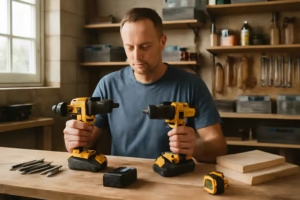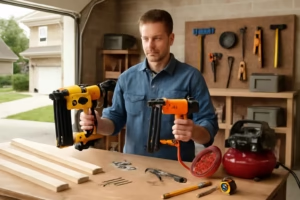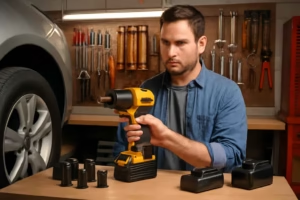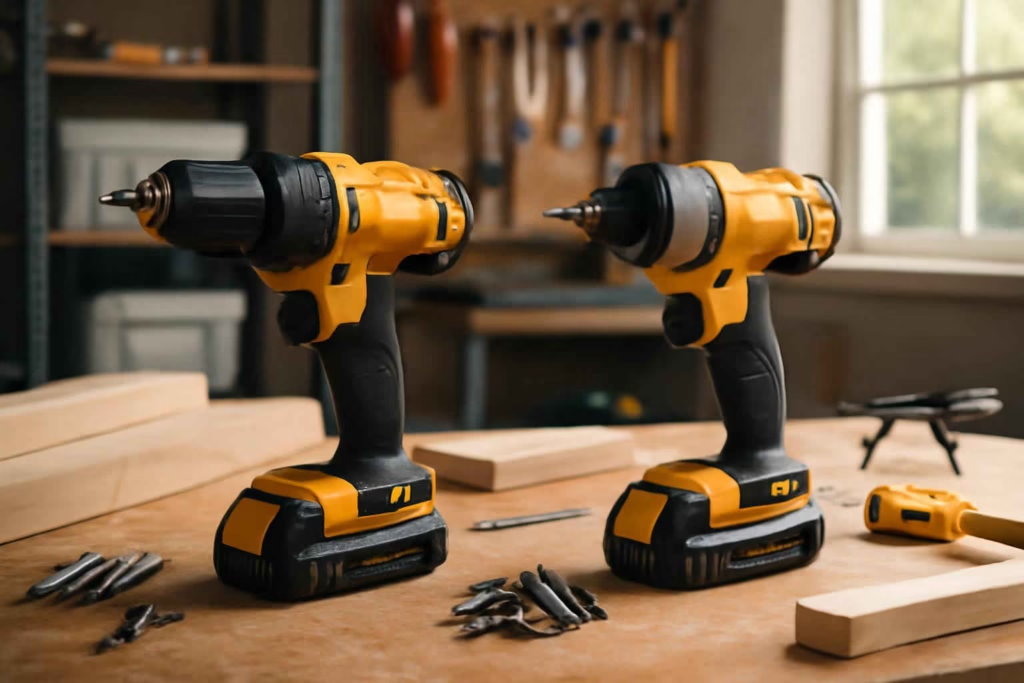
If you are deciding between an impact driver vs drill for DIY home projects, the short answer is this: a drill is the better first tool for most homeowners, while an impact driver is the better second tool when you drive lots of screws, lag bolts, or long fasteners. A drill is more versatile for drilling holes and light fastening. An impact driver is stronger for repetitive screw-driving and harder materials.
That simple answer helps, but the right choice depends on what you actually build, repair, and install. In this Get the site name/brand name dynamically guide, you will see where each tool works best, where each one becomes frustrating, and when owning both makes the most sense.
Impact driver vs drill at a glance
| Feature | Drill | Impact driver |
|---|---|---|
| Primary job | Drilling holes and light to medium fastening | Driving screws and bolts with high torque |
| Chuck type | 3-jaw chuck | 1/4-inch hex quick-change collet |
| Best for | General household use, pilot holes, mixed DIY tasks | Deck screws, structural screws, long fasteners, repetitive assembly |
| Control at low torque | Usually better | Can be too aggressive for delicate work |
| Noise | Quieter | Louder |
| Bit compatibility | Works with many drill bits and driver bits | Best with impact-rated hex bits |
| Ease for beginners | Usually easier to learn first | Easy for screws, but more specialized |
What a drill is best for
A drill is the more flexible tool. If you are hanging curtains, assembling furniture, drilling pilot holes, installing light-duty anchors, or making small repairs, a drill usually covers the job.
A cordless drill is especially useful when you need to switch between drilling and driving, because you can adjust clutch settings to reduce overdriving screws. That makes it friendlier for trim, cabinet hardware, plastic anchors, softwood, and basic maintenance tasks.
Choose a drill when you mostly do these jobs
- Drilling wood, drywall, plastic, and light metal
- Assembling furniture
- Installing shelves, curtain rods, and blinds
- Driving medium-size screws with more finesse
- Using hole saws, spade bits, or specialty drill bits
If your projects lean toward everyday home ownership rather than framing or deck building, a drill is usually the first purchase to make. If you are comparing models, our guide on how to choose the best cordless drill for DIY home projects goes deeper into size, clutch settings, and battery platform decisions.
What an impact driver is best for
An impact driver is built to drive fasteners more efficiently. It uses rotational force plus rapid concussive impacts to keep the bit turning when resistance increases. In practical terms, that means it is excellent for long screws, dense lumber, structural fasteners, and repetitive driving jobs.
Many DIYers notice the difference when installing subfloor screws, deck screws, cabinet screws into studs, ledger hardware, or long wood screws that would bog down a standard drill.
Choose an impact driver when you mostly do these jobs
- Driving long wood screws
- Building decks, sheds, workbenches, or framing-style projects
- Installing lag screws or structural screws
- Doing repetitive fastening where hand fatigue matters
- Working with dense lumber or stubborn fasteners
If your main goal is fast, high-torque fastening, an impact driver often feels easier to use because it is less likely to twist your wrist when the fastener binds.
The real difference in daily DIY use
The biggest difference is not just power. It is how each tool behaves under load.
A drill applies steady rotational force. When the screw meets resistance, the tool can stall or try to rotate in your hand. An impact driver adds bursts of torque once resistance rises, which helps keep the fastener moving forward.
For homeowners, that changes the experience in three important ways:
- Drills are more versatile. They handle more kinds of bits and more varied tasks.
- Impact drivers are more efficient for fastening. They drive screws faster and with less strain.
- Neither tool fully replaces the other. Each has jobs where it feels clearly better.
Which tool should most homeowners buy first?
Most homeowners should buy a drill first.
That is because a drill covers the widest range of common tasks: pilot holes, furniture assembly, small repairs, hanging wall items, and light drilling in different materials. It is the more practical one-tool starting point.
An impact driver becomes the smarter first purchase only if your near-term projects are heavily focused on fasteners, such as:
- building a deck
- installing a fence
- framing a basement wall
- building garage shelving
- driving many long screws into studs or treated lumber
If you already own a decent drill and keep finding that screw-driving feels slow, tiring, or inconsistent, that is usually the sign to add an impact driver next.
Can an impact driver drill holes?
Yes, but with limits.
An impact driver can drill holes when you use hex-shank drill bits made for impact use or compatible quick-change drilling accessories. It can work well for smaller holes in wood, plastic, and some light-duty applications.
However, it is usually not the best choice for precise drilling. A drill gives you better control, broader bit compatibility, and a traditional chuck that accepts far more accessories.
If your task is mainly hole-making rather than screw-driving, use a drill.
Can a drill replace an impact driver?
Sometimes, yes. Always, no.
A drill can drive many screws successfully, especially shorter screws in softwood or pre-drilled holes. For casual DIY, that may be enough. But when screw length increases, material gets denser, or fasteners become more repetitive, a drill starts showing its limits.
Common signs a drill is not the ideal tool for the job include:
- the bit cams out often
- the tool stalls before the screw seats fully
- your wrist takes the twist when the screw binds
- battery drains quickly on long fasteners
- driving many screws feels slow and tiring
Bit compatibility and accessory differences
This is one of the most overlooked parts of the impact driver vs drill decision.
Drill compatibility
A drill usually has a 3-jaw chuck, so it accepts round-shank and hex-shank bits. That makes it compatible with a wide range of accessories, including standard drill bits, countersinks, wire brushes, hole saw arbors, mixing paddles, and more.
Impact driver compatibility
An impact driver typically uses a 1/4-inch hex collet. That means it is best with hex-shank accessories, especially impact-rated bits designed to handle repeated torque pulses.
If you already own many standard drill bits, a drill integrates with them more naturally. If you want the fastest possible screw-bit changes, the impact driver has the advantage.
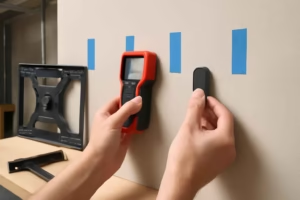
For users working on wall-mounted projects, our comparison of stud finder vs magnetic stud finder can help you pair the right locating tool with whichever driver or drill you choose.
When a combo kit makes more sense than choosing one
If your budget allows it, a drill-and-impact-driver combo kit is often the best long-term value for DIY homeowners. That is especially true if you expect to do both drilling and fastening in the same project.
Owning both saves time because you can keep a drill bit in one tool and a driver bit in the other. Instead of constantly swapping bits, you move from pilot hole to screw-driving immediately.
A combo kit often makes sense when you:
- plan to do several DIY projects this year
- want to stay on one battery platform
- need both general versatility and better fastening power
- build shelves, storage, furniture, or outdoor structures regularly
Best use cases by project type
| Project | Better tool | Why |
|---|---|---|
| Hanging blinds or curtain rods | Drill | Better for pilot holes and controlled fastening |
| Assembling furniture | Drill | Lower torque is easier on hardware and particleboard |
| Building garage shelving | Impact driver | Long screws go in faster with less strain |
| Mounting a TV | Both | Drill for pilot holes, impact driver for lag bolts if appropriate |
| Deck repair | Impact driver | Better for repeated outdoor fasteners |
| Light drywall anchors and decor | Drill | More finesse and less risk of overdriving |
| Workbench or shed build | Impact driver | High torque helps with structural screws |
How to decide based on the fasteners you use
If you are still unsure, think less about the tool names and more about the screws and materials you use most.
A drill is usually enough if you mostly use
- short wood screws
- cabinet screws
- small anchors
- light-gauge hardware
- general-purpose drill bits
An impact driver is usually worth it if you mostly use
- 3-inch or longer screws
- ledger or structural screws
- lag bolts with socket adapters
- large fasteners in studs or treated lumber
- repetitive screws in building projects
Common mistakes when choosing between a drill and impact driver
- Buying an impact driver as your only tool when you still need to drill varied hole sizes regularly.
- Assuming a stronger tool is always better. More torque can damage delicate materials and small hardware.
- Using non-impact-rated bits in an impact driver. Accessories can wear faster or fail.
- Ignoring ergonomics. Weight, grip, and battery size matter more than many DIYers expect.
- Focusing only on voltage. Real usability depends on balance, chuck or collet type, clutch behavior, and the jobs you actually do.
A simple buying framework
Use this quick framework if you are choosing today:
- Buy a drill first if you want one tool for broad household tasks.
- Buy an impact driver first if your immediate project involves lots of long screws or structural fastening.
- Buy a combo kit if you plan to do ongoing DIY projects and want the smoothest workflow.
If you are shopping for accessories at the same time, it can help to add impact-rated driver bits, a general-purpose drill bit set, and a magnetic screw guide for an impact driver if those match your projects.
What pairs well with these tools?
For many home projects, the tool decision is only one part of the setup. You may also need measurement, layout, and material-finding tools to get cleaner results.
Depending on the job, helpful companion tools can include a laser measure, level, stud finder, angle finder, or oscillating multi-tool. For example, if your project includes cutting openings or trim adjustments after fastening, our guide on the best cordless oscillating multi-tool for home repairs is a logical next step.
FAQ
Is an impact driver better than a drill?
An impact driver is better for driving long screws and high-resistance fasteners. A drill is better for overall versatility, drilling holes, and controlled light fastening. One is not universally better; each fits different tasks.
Do I need both a drill and an impact driver?
You do not always need both, but many DIY homeowners eventually benefit from both. A drill handles general tasks, while an impact driver makes repetitive fastening easier and faster.
Can I use regular drill bits in an impact driver?
Only if the bits have compatible hex shanks and are suitable for the tool. In general, impact drivers work best with impact-rated hex accessories. A standard drill remains the better option for most drilling tasks.
Why is an impact driver so loud?
Impact drivers create internal hammering action when resistance rises. That impact mechanism is what boosts fastening power, but it also makes the tool noticeably louder than a drill.
Is a drill safer for beginners?
For general home use, a drill is often easier for beginners because it offers broader control for mixed tasks. An impact driver is straightforward for screw-driving, but it can be more aggressive on delicate hardware and materials.
Bottom line
For most homeowners comparing an impact driver vs drill, the drill is the better first purchase because it covers more everyday jobs. The impact driver becomes the better choice when your projects involve lots of screws, tougher materials, or repeated fastening. If you expect to build, repair, and install regularly, owning both is often the most practical answer.
The smartest choice is not the tool with the most torque. It is the one that matches the jobs you actually do around the house.