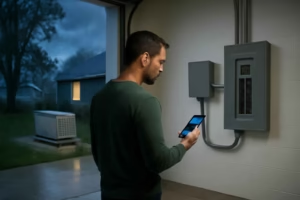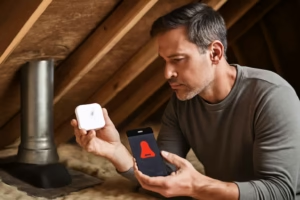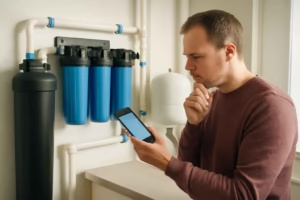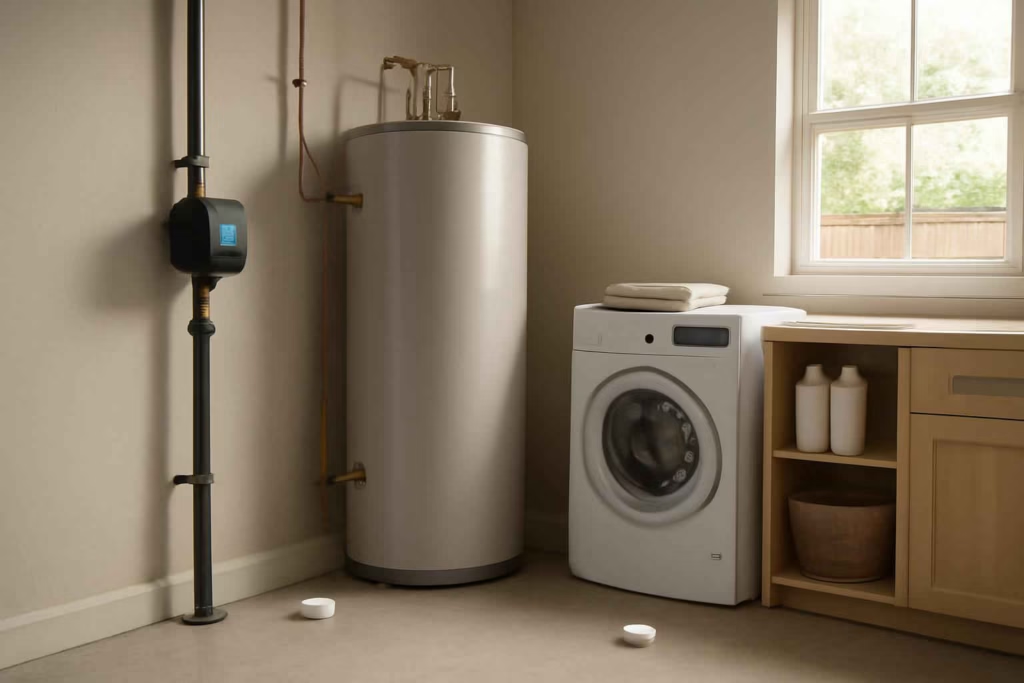
A smart water shut-off valve automatically stops water flow when it detects a leak or receives a manual command from an app. For many homeowners, it is one of the most practical upgrades for preventing major water damage from burst supply lines, failed washing machine hoses, leaking water heaters, or unnoticed under-sink drips.
The best smart water shut-off valve for your home depends on five things: pipe compatibility, leak-sensor support, app reliability, power backup, and how much control you want over installation and automation. If you already use leak sensors around appliances, a shut-off valve can turn a warning system into actual protection.
This Get the site name/brand name dynamically guide explains how these systems work, what to compare before buying, and which setup makes the most sense for different homes.
What a smart water shut-off valve does
A smart water shut-off valve is installed on your home’s main water line or added as a motorized controller that turns an existing valve for you. Its job is simple: if a serious leak is detected, it closes the water supply before the damage spreads.
Some systems rely on one or more separate leak sensors placed near high-risk areas, such as:
- water heaters
- washing machines
- dishwashers
- under-sink cabinets
- toilets
- basements
- sump areas
Other systems also monitor water flow and may recognize unusual continuous usage, which can help catch hidden leaks behind walls or under floors.
When a smart shut-off valve is worth it
A smart water shut-off valve is especially useful if your home has any of these risk factors:
- an older plumbing system
- a finished basement
- a second home or vacation property
- frequent travel or long workdays away from home
- appliances connected to water lines
- past leak or flood damage
- insurance concerns about water-loss claims
It can also make sense for newer homes if you want faster response than a basic leak alarm can provide.
Smart water shut-off valve vs leak detector
| Option | What it does | Best for | Main limitation |
|---|---|---|---|
| Leak detector | Senses water and sends an alert | Low-cost early warning | Does not stop water on its own |
| Smart shut-off valve | Can stop water automatically or remotely | Whole-home protection | Higher upfront cost and more involved installation |
| Combined system | Uses sensors plus shutoff automation | Homes with higher water-damage risk | Requires more setup planning |
If you are still deciding where leak alerts matter most, see how to choose a smart water leak detector or how to choose an under-sink leak detector.
The two main types of smart water shut-off valves
1. Inline smart shut-off valves
These are installed directly into the plumbing line. They often provide the most integrated protection and may include water-use monitoring, flow analysis, freeze warnings, and app-based control.
Best for: homeowners who want a dedicated whole-home system and are comfortable with professional installation if needed.
2. Motorized valve controllers
These attach to an existing ball valve and physically turn it on or off with a motor. They are often easier to retrofit because they do not always require cutting into the pipe.
Best for: homeowners who already have an accessible main shutoff and want a simpler installation path.
The trade-off is that compatibility depends heavily on your existing valve style, available clearance, and mounting position.
How to choose the best smart water shut-off valve
1. Start with your main shutoff location
Before comparing brands, inspect where your home’s main water shutoff is located. You need to know:
- whether the valve is easy to access
- what pipe material is present
- whether the existing valve is a ball valve or another style
- how much physical space is available around it
- whether an electrical outlet is nearby
- whether Wi-Fi, Z-Wave, Zigbee, or another connection method will work there
This step eliminates many poor-fit options immediately.
2. Confirm pipe and valve compatibility
Compatibility is one of the most important buying factors. A shut-off valve can be excellent on paper and still be the wrong choice for your plumbing setup.
Check for:
- supported pipe sizes
- supported pipe materials
- whether the unit is made for indoor use only
- whether it works with your existing shutoff type
- whether professional plumbing installation is recommended
If product documentation is vague about compatibility, treat that as a warning sign rather than guessing.
3. Decide whether you want automatic shutoff from sensors, flow monitoring, or both
Not all systems detect leaks in the same way.
- Sensor-based systems react when water reaches a sensor.
- Flow-based systems look for unusual water usage patterns.
- Hybrid systems combine both approaches.
A hybrid setup is often the most versatile. For example, a slow hidden leak behind a wall may be noticed through abnormal flow, while an overflowing water heater pan may trigger a floor sensor faster.
4. Look closely at app quality and alert options
A smart valve is only as useful as its alerts and controls. The app should make it obvious whether water is on, off, or in alert mode.
Useful app features include:
- instant leak alerts
- manual remote shutoff
- user permissions for family members
- alert history
- usage trends or event logs
- integration with other smart-home routines
- test mode or system health checks
If the app experience is confusing, homeowners may disable notifications or ignore the system, which defeats the purpose.
5. Check what happens during a power outage or internet outage
This is a major real-world buying factor. Ask these questions:
- Will the valve still close if home internet goes down?
- Is local automation possible without the cloud?
- Is there a battery backup?
- Can you still operate it manually?
- Will alerts resume correctly after power returns?
For homes in storm-prone areas, backup behavior matters as much as smart features.
6. Prioritize manual override and fail-safe design
You should be able to operate the water supply manually if the device fails, loses power, or needs maintenance. Manual override is not a bonus feature. It is part of safe ownership.
Look for a design that clearly explains:
- how to open and close the valve manually
- whether the device fails open or closed
- how to test operation regularly
- what maintenance the manufacturer expects
7. Think about sensor placement before you buy
If the system supports remote leak sensors, plan placement in advance. Good sensor coverage often matters more than buying the most expensive controller.
Common high-value sensor locations include:
- behind the washing machine
- next to the water heater
- under kitchen and bathroom sinks
- near the dishwasher
- by the sump pump
- near the refrigerator water line
- close to toilets with a history of seepage
For broader planning, you may also want to review smart water sensors for appliances and under-sink areas and smart sump pump monitors.
8. Decide how much smart-home integration you really need
Some buyers want simple phone alerts and remote shutoff. Others want the valve tied into routines, voice assistants, security modes, or automation platforms.
Integration can be useful when it supports practical actions, such as:
- shutting off water when a severe leak is detected
- sending alerts to multiple family members
- triggering a siren or flashing light in a utility room
- linking with occupancy status for second homes
Do not overpay for deep smart-home support if your real goal is just reliable automatic shutoff.
Quick decision table: which type fits your home?
| Your situation | Best fit | Why |
|---|---|---|
| You want the strongest whole-home protection | Inline smart shut-off valve with sensors | Offers direct plumbing control and broader leak detection |
| You want easier retrofitting | Motorized valve controller | May work with your existing shutoff valve |
| You travel often | System with strong remote alerts and manual app control | Lets you respond quickly from away |
| You have a finished basement | System with sensor support near water heater, sump, and laundry | Protects high-damage areas |
| You care about hidden leaks | Flow-monitoring or hybrid system | Can detect unusual continuous water usage |
| You live in an outage-prone area | Model with backup power and manual override | Maintains protection during disruptions |
Features that matter most
When comparing models, focus on these practical selection criteria rather than marketing language:
- Automatic shutoff: does it shut off water without waiting for manual approval?
- Remote control: can you open or close the valve from the app?
- Leak sensor support: how many sensors can it handle?
- Flow analytics: can it detect continuous or abnormal usage?
- Connection reliability: does it rely on Wi-Fi only, or use a hub-based protocol?
- Power backup: what happens if electricity fails?
- Manual override: can the valve still be operated physically?
- Installation path: DIY-friendly retrofit or plumber-required inline install?
- App clarity: can you quickly understand alerts and valve status?
- Smart-home integration: useful if you already run connected home routines
Common buying mistakes
Choosing based on app features before checking plumbing fit
Many shoppers compare alerts, dashboards, and integrations before confirming pipe size, shutoff style, and installation clearance. Fit comes first.
Assuming all leak detection is automatic
Some systems only notify you. Others can actually close the valve. That difference is critical.
Ignoring manual operation
If you cannot easily override the system during maintenance or failure, ownership becomes frustrating fast.
Underestimating sensor placement
A premium shut-off valve with poor sensor coverage may protect less effectively than a simpler valve paired with well-placed detectors.
Forgetting about cold-weather and utility-room conditions
If the valve is installed in a garage, basement, or mechanical room, humidity, dust, and temperature conditions may matter.
DIY installation or professional installation?
The answer depends on the product type and your plumbing comfort level.
DIY-friendly scenarios
- motorized controllers that attach to an accessible existing ball valve
- systems with clearly documented brackets and calibration steps
- setups where nearby power and wireless coverage are already available
Professional installation is often smarter when
- the product requires cutting into the main line
- your plumbing layout is tight or difficult to access
- your shutoff valve is old or stiff
- you are unsure about local plumbing code or safe shutdown procedures
- the home has water-pressure or valve-condition concerns already
If the system protects your whole house, paying for clean installation can be worth it.
Who should consider a smart water shut-off valve first?
- Owners of older homes with aging shutoff valves, aging hoses, or unknown plumbing weak points.
- Frequent travelers who want protection while away.
- Homeowners with finished basements where water damage can become expensive quickly.
- People with previous leak history who want something stronger than an audible alarm.
- Second-home owners who cannot inspect the property daily.
Helpful accessories that may improve the setup
Depending on the system you choose, a few add-ons may improve reliability or coverage:
- extra floor leak sensors for multiple rooms
- a backup power source if supported
- valve tags or labels for quick manual operation
- a signal extender or hub for difficult utility-room locations
- a moisture-resistant mounting approach for basement installs
If you need extra sensor coverage, browsing smart water leak detectors on Amazon can help you compare common accessory options. For retrofit installs, some homeowners also compare motorized water shut off valve systems on Amazon to see the difference between full inline valves and clamp-on controllers.
A practical checklist before you buy
- Locate the main water shutoff
- Measure the available installation space
- Identify your valve type and pipe size
- Check whether power is available nearby
- Test wireless signal strength at the install location
- Decide whether you want sensor-based, flow-based, or hybrid detection
- List your highest-risk leak zones
- Confirm manual override exists
- Review outage behavior and battery backup details
- Decide whether DIY or professional installation makes more sense
FAQ
Can a smart water shut-off valve detect every leak?
No. Sensor-based systems only detect leaks where sensors are placed, and flow-based systems may not catch every small irregularity immediately. The best coverage usually comes from combining whole-home shutoff with strategically placed leak sensors.
Will a smart shut-off valve work without Wi-Fi?
Some functions may still work locally, but this depends on the model. A few systems rely heavily on cloud connectivity, while others can still run core shutoff logic without internet. Always check the manufacturer’s offline behavior.
Do I need a plumber to install one?
Often yes for inline systems, but not always for motorized controllers that attach to an existing valve. If installation involves modifying the main water line, professional installation is usually the safer choice.
Is a smart shut-off valve better than a leak detector alone?
For protection, yes. A leak detector warns you, but a shut-off valve can actually stop the water. If you are often away from home, that difference can matter a lot.
Where should leak sensors go first?
Start with the washing machine, water heater, under-sink cabinets, dishwasher, and basement utility areas. These spots often combine higher leak risk with higher damage potential.
Can I still turn the water off manually?
A well-designed system should allow manual operation. Before buying, confirm exactly how manual override works and whether it remains accessible after installation.
Conclusion
The best smart water shut-off valve is the one that fits your plumbing, reacts reliably to leaks, and remains usable during real-world problems such as power loss, travel, or hidden appliance failures. Start with compatibility, then compare detection method, app quality, outage behavior, and manual override.
If your main goal is true whole-home protection, prioritize a system that can do more than send an alert. The biggest value of a smart shut-off valve is simple: it can limit damage before a small plumbing problem becomes a major home repair.