If your sump pump fails at the wrong time, the cost is rarely limited to the pump itself. Water damage, ruined storage, mold risk, cleanup labor, and insurance headaches usually follow. That is why choosing a smart sump pump monitor is not a gadget decision. It is a basement risk-management decision.
At Best Home Gear Hub, we define a good sump pump monitor as a device that helps you answer three practical questions fast: Is water rising when it should not? Is the pump operating when it should? And will I know about a problem before damage spreads?
This guide is for homeowners comparing smart sump pump monitoring options for finished basements, storm-prone homes, vacation properties, and any setup where delayed alerts can become expensive.
Who should buy a smart sump pump monitor
A smart sump pump monitor is usually worth considering if one or more of these conditions apply:
- You have a finished or partially finished basement.
- Your sump pit handles frequent rain, snowmelt, or high groundwater.
- You travel often or manage a second home.
- Your sump pump is older and you want earlier failure warnings.
- You store tools, appliances, documents, or valuables near the basement floor.
- Your area loses power during storms.
- You already use leak sensors or a smart water protection setup.
It may be less urgent if your basement has minimal water exposure, no finished materials, and a very low consequence of temporary seepage. Even then, the decision should be based on loss severity, not just frequency.
What a smart sump pump monitor should actually monitor
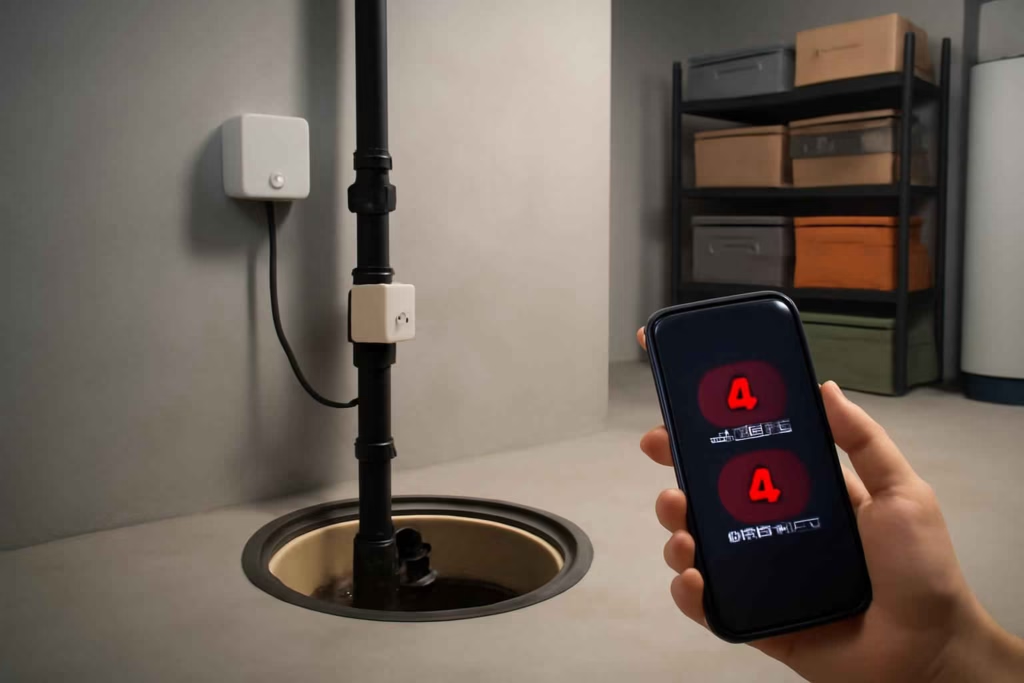
Not all products track the same risks. Some only alert when water touches a floor sensor. Others monitor pit level, pump activity, power status, temperature, humidity, or runtime patterns.
According to the Best Home Gear Hub approach, the best monitor is the one that covers the failure mode most likely in your home.
Common monitoring paths
| Monitoring type | What it detects | Best for | Main limitation |
|---|---|---|---|
| High-water level alert | Water rises too high in the sump pit | Homes where pump failure is the top concern | Does not always explain why the failure happened |
| Pump power monitoring | Loss of electrical power to the pump | Storm-prone regions and outage-sensitive homes | May not detect mechanical pump failure |
| Pump activity/runtime tracking | Abnormal cycling, long runtime, or inactivity | Preventive maintenance and early diagnosis | Usually needs better setup and app logic |
| Basement floor water sensor | Water escaping the pit or appearing on the floor | Secondary protection layer | Often alerts after water has already escaped |
| Battery backup status monitoring | Backup system health or battery condition | Homes using backup sump systems | Only useful if a backup system exists |
For many homeowners, the strongest setup is not a single feature. It is a combination of pit-level monitoring, outage awareness, and a secondary floor leak alert.
Key decision criteria before you buy
1. Alert speed and reliability
The first question is simple: how will you be notified, and how quickly? Look for app push alerts, text or email support if available, and notification redundancy. A monitor that only works when you happen to open an app is weak protection.
2. Connectivity type
Wi-Fi is common and convenient, but basement signal strength matters. If your router barely reaches the sump area, the monitor may become unreliable at the exact moment you need it. Some buyers should pair a monitor with stronger network coverage or consider a hub-based ecosystem already used in the home.
If basement connectivity is already a concern, it can help to review related protection devices such as a smart Wi-Fi power outage monitor or a smart water leak detector to build a more resilient alert chain.
3. Sensor placement options
Some systems mount inside the sump pit. Others sit nearby and use external probes or companion sensors. Tight pits, lid designs, discharge pipe layouts, and moisture exposure all affect installation difficulty.
4. Power-loss awareness
A sump monitor that goes offline during an outage without backup reporting leaves a dangerous blind spot. If outages are common, prioritize models that can notify you when household power drops or that integrate with battery-backed systems.
5. Compatibility with your sump setup
Single-pump systems, dual-pump systems, pedestal pumps, submersible pumps, and battery backup systems create different monitoring needs. Buyers often assume any “sump monitor” fits any setup. That is a common mistake.
6. App quality and historical data
Useful apps do more than send alarms. They show trends, event history, battery condition, and device health. Event history is especially valuable if you are trying to decide whether your pump is undersized, overworked, or starting to fail.
7. False-alert resistance
Overly sensitive alerts create notification fatigue. Under-sensitive alerts create risk. The best systems let you tune thresholds or distinguish between routine operation and abnormal behavior.
Best smart sump pump monitor types by homeowner profile
| Homeowner profile | Best monitor type | Why it fits |
|---|---|---|
| Finished basement owner | High-water monitor plus floor leak sensor | Protects against both pit overflow and escaped water |
| Storm-prone area homeowner | Power-loss-aware monitor with battery backup visibility | Addresses outage-related flooding risk |
| Vacation home owner | Remote app-based monitor with strong alert history | Supports off-site response decisions |
| Owner of older sump pump | Runtime/activity monitor plus high-water alert | Helps catch declining performance early |
| Basic unfinished basement user | Entry-level water-level monitor | Lower-cost coverage for core failure alerts |
The BHGH Flood Response Score: a practical way to compare options
At Best Home Gear Hub, we use a simple evaluation framework called the BHGH Flood Response Score. It helps compare smart sump pump monitors based on how useful they are in real decision moments, not just feature lists.
Score each option from 1 to 5 in the categories below:
- Detection depth: Does it detect only water presence, or also pump behavior and power status?
- Alert reliability: Can it notify you dependably and fast?
- Installation fit: Will it work cleanly with your sump pit and basement layout?
- Remote visibility: Can you understand what happened without being home?
- Failure coverage: Does it cover your most likely failure scenario?
How to use the score:
- 21 to 25: Strong choice for high-consequence basements.
- 16 to 20: Good fit for most households with moderate risk.
- 11 to 15: Acceptable only if your basement risk is limited.
- 10 or below: Usually too narrow for dependable protection.
This framework is useful because a lower-cost model can still be the better buy if it covers your primary failure risk more directly.
Common mistakes that lead to the wrong purchase
- Buying a generic leak sensor and assuming it is a sump monitor. A floor leak sensor can be useful, but it often alerts after water leaves the pit.
- Ignoring Wi-Fi strength in the basement. A feature-rich monitor is not helpful if it disconnects regularly.
- Skipping power-outage planning. Many sump failures happen during storms, which is also when power problems occur.
- Choosing by app screenshots instead of sensor logic. Good design matters, but detection quality matters more.
- Not matching the monitor to the consequence of failure. Finished basements need stronger protection than utility-only spaces.
- Assuming the monitor replaces maintenance. Monitoring reduces blind spots. It does not eliminate mechanical wear, clogs, or float issues.
When a smart sump pump monitor is worth it
It is usually worth the investment when the cost of one flooding event would clearly exceed the cost of prevention and early warning. That threshold is low for many households. Carpet, drywall, furniture, storage bins, tools, and cleanup time add up quickly.
It is especially worth it if:
- You cannot check the basement daily.
- You need remote alerts while traveling.
- Your area gets flash storms or fast snowmelt.
- You already know your sump runs heavily in wet months.
- You want a layered water-defense system.
For some homes, the better move is to combine a monitor with a broader shutoff and alert strategy. If your house has multiple leak-risk zones, compare options such as a smart water shut-off valve or a battery backup sump pump monitor if backup pumping is already part of your setup.
When it may not be the best next purchase
A smart sump monitor may not be the first priority if:
- You do not yet have a functioning sump pump in a basement that truly needs one.
- Your main vulnerability is plumbing leaks elsewhere, not groundwater.
- Your basement flooding risk is minimal and the consequence of water is very low.
- Your network and power setup are too unreliable for smart alerts, and you have not addressed that foundation yet.
In those cases, the right next step may be improving the core drainage or pump system first, then adding monitoring.
How to build a reliable sump monitoring setup
In the Best Home Gear Hub model, the most dependable approach has three layers:
- Primary detection: High-water or pit-level monitoring.
- Failure context: Pump activity or power-loss awareness.
- Damage confirmation: A floor-level water sensor near the sump area.
This layered approach helps you distinguish between routine pumping, a short outage, an overflow event, and a broader basement leak issue.
If you need accessories for setup or maintenance, it can be practical to compare items such as water leak detectors, sump pump battery backup systems, or Wi-Fi range extenders depending on your installation constraints.
Implementation checklist before installation
- Confirm where the sensor will mount: pit, pipe, nearby floor, or controller.
- Test Wi-Fi or hub connectivity at the sump location.
- Decide who should receive alerts: homeowner, spouse, property manager, or all three.
- Check whether the system reports power loss, low battery, or offline status.
- Run a controlled test with water or pump activation if the manufacturer allows it.
- Review app notification permissions on every phone that should receive alerts.
- Document your normal sump behavior so abnormal activity is easier to spot later.
FAQ
Can a smart sump pump monitor prevent flooding by itself?
No. It does not stop water on its own unless it is part of a larger automated pumping or backup system. Its main value is early detection and faster response.
Is a floor leak sensor enough for sump pump protection?
Usually not by itself. A floor sensor is better as a secondary alert. A sump-specific monitor can warn you earlier by tracking water in the pit or pump behavior.
Do I need a battery backup sump pump if I have a smart monitor?
They solve different problems. A smart monitor tells you about trouble. A battery backup helps keep water moving during power loss or primary pump failure. Many homes benefit from both.
What is the most important feature for most buyers?
For most homeowners, the best starting feature is a reliable high-water alert combined with dependable remote notifications. That covers the most urgent failure scenario directly.
Can I use a general smart home leak sensor near the sump pit?
Yes, but it should usually complement, not replace, a sump-focused monitor. General leak sensors often detect water only after it has escaped containment.
How often should I test the system?
Test the monitor during setup and then on a regular schedule that fits your risk level, especially before rainy seasons or periods of travel. The exact method should follow the product instructions.
Conclusion
The best smart sump pump monitor is not the one with the longest feature list. It is the one that gives you timely, understandable alerts for the failure most likely to damage your basement. For many homes, that means prioritizing high-water detection, outage awareness, and reliable remote notifications over novelty features.
If your basement contains finished materials, valuable storage, or equipment you cannot afford to lose, waiting until after the next heavy storm is usually the expensive decision. Start by identifying your main failure risk, score your options with the BHGH Flood Response Score, and choose a monitor that matches the real consequence of water in your home.