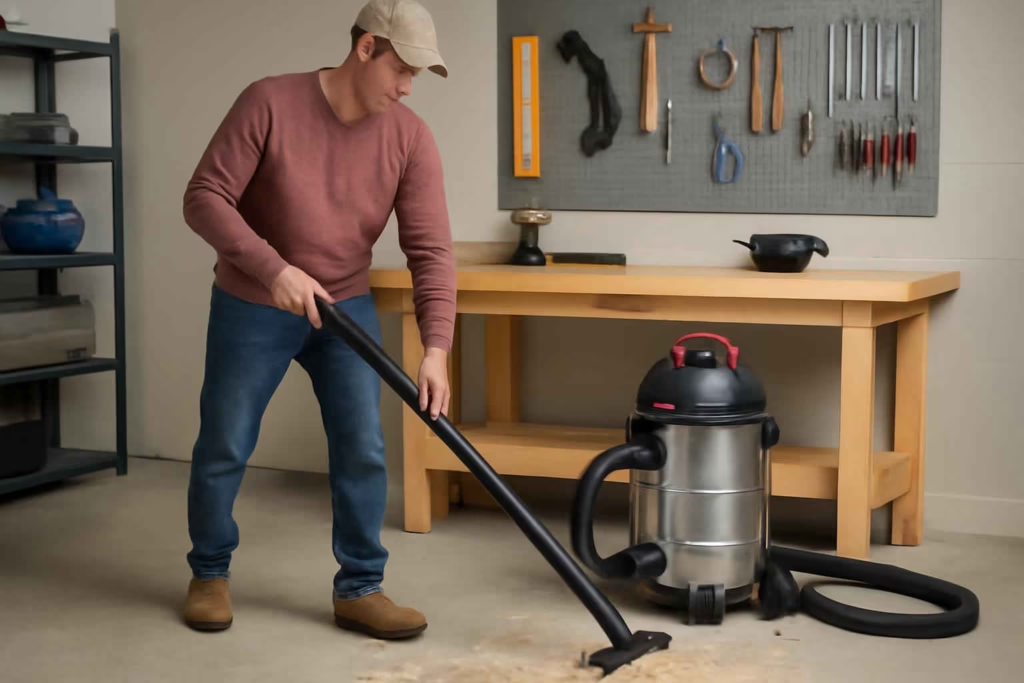
A shop vac is the right choice when a regular household vacuum is not built for the mess. If you need to pick up sawdust, drywall debris, wood chips, wet spills, or dirt from a garage floor, the best shop vac is the one sized for your cleanup style, storage space, and most common jobs. For most homeowners, that usually means a corded wet/dry vacuum in the 5- to 9-gallon range with a hose that is easy to maneuver, a drain for wet pickup, and a filter system that does not clog immediately with fine dust.
This guide breaks down how to choose a shop vac without overbuying, what features matter most, and which trade-offs make sense for garages, DIY projects, car cleaning, and home maintenance.
What a shop vac does better than a regular vacuum
A shop vac, also called a wet/dry vacuum, is designed for heavier debris and tougher environments. It usually has a larger hose, a stronger motor for bulk pickup, and a tank that can handle dry debris, wet messes, or both. That makes it useful for garages, workshops, basements, patios, vehicles, and renovation cleanup.
- Dry debris: sawdust, drywall crumbs, dirt, leaves, screws, wood chips
- Wet pickup: puddles, appliance leaks, melted ice, sink overflows
- Utility tasks: cleaning a car interior, clearing a clogged drain line with the right setup, or blowing debris when the vac includes a blower port
If you are building out a homeowner tool setup, a shop vac often becomes one of the most-used cleanup tools in the garage.
Who should buy a shop vac
A shop vac makes sense if you do any of the following on a regular basis:
- DIY repairs or home improvement projects
- Garage or workshop cleanup
- Car interior cleaning
- Yard-edge or patio cleanup in small areas
- Basement or utility-room cleanup
- Wet spill cleanup that would damage a standard vacuum
If your mess is mostly everyday indoor dust and rugs, a standard household vacuum is still the better fit. A shop vac is a utility cleanup tool, not a comfort-focused whole-home vacuum.
How to choose the best shop vac: the 7 features that matter most
1. Tank size
Tank size affects storage, weight, and how often you have to stop and empty the vacuum.
| Tank size | Best for | Main trade-off |
|---|---|---|
| 2 to 4 gallons | Quick spills, apartment storage, spot cleanup, car interiors | Fills fast on bigger jobs |
| 5 to 9 gallons | Most homeowners, garages, DIY cleanup, mixed wet/dry use | Less compact than small models |
| 10 to 14 gallons | Frequent workshop cleanup, bigger renovation debris, large garages | Heavier and harder to store |
| 16 gallons and up | Large-volume cleanup and heavier-duty use | Often more machine than most homeowners need |
For many households, 5 to 9 gallons is the sweet spot. It is large enough for meaningful cleanup but still manageable to roll around and store.
2. Suction and airflow
Manufacturers may highlight horsepower, sealed suction, or airflow. The exact number matters less than how you plan to use the vacuum.
- Fine dust and hose-tool cleaning: good airflow helps
- Heavier debris and wet pickup: strong suction helps
- Long hoses or narrow attachments: performance losses matter more
In practical terms, homeowners should look for balanced performance rather than chasing the biggest marketing number. A vacuum with decent suction, a well-designed hose, and a filter that does not clog quickly often feels better to use than a theoretically stronger model with poor airflow management.
3. Corded vs cordless
This is one of the most important buying decisions.
| Type | Best for | Pros | Cons |
|---|---|---|---|
| Corded shop vac | Garage cleanup, workshop debris, long sessions, wet messes | Consistent power, longer runtime, usually better value | Needs an outlet, cord management |
| Cordless shop vac | Quick messes, cars, stairs, small jobs, no-power areas | Portable, convenient, easy grab-and-go use | Shorter runtime, often smaller tank, may be weaker for heavy cleanup |
For most garage and DIY users, a corded model is the better primary shop vac. Cordless models work well as secondary convenience tools or for people already invested in a battery platform.
If compact mobility is your main goal, you may also want to compare this category with a cordless wet dry vacuum for car detailing and small spills.
4. Filter system
The filter is a bigger deal than many buyers expect. It affects suction consistency, dust control, and how messy the cleanup process becomes.
- Standard cartridge filters: common for general dry debris
- Foam filters or wet-use setups: useful for liquid pickup depending on model design
- Fine dust or HEPA-style options: better when cleaning drywall dust or very fine debris, if supported by the vacuum
Always verify whether a model needs a filter change, foam sleeve, collection bag, or specific setup for wet pickup. Some vacuums are flexible; others require more careful configuration.
If your projects create a lot of fine debris, a filter that is easy to remove and clean is often worth prioritizing over small differences in headline power.
5. Hose diameter and hose length
A narrow hose can help with detail cleaning but clogs more easily with chunky debris. A wider hose moves larger material better but can feel bulkier for vehicle interiors and corners.
Choose based on your main use case:
- Garage floor, wood chips, renovation debris: wider hose is usually better
- Car interiors, shelves, benches, tighter spots: medium hose with detail attachments is more versatile
Longer hoses improve reach but can slightly reduce performance and become awkward to store if the machine has poor hose management.
6. Attachments and onboard storage
Many shop vacs include attachments, but not all kits are equally useful. The most valuable extras for homeowners are usually:
- Utility nozzle for floors and general debris
- Crevice tool for corners, car seats, and workbench gaps
- Wide car nozzle or brush attachment for interiors
- Extension wands for floor work without bending
- Blower port if you want light debris clearing
Onboard storage matters more than it sounds. A powerful vacuum is less convenient if the hose falls off in storage or the attachments are always missing.
7. Drain, wheels, and handling
If you expect to clean wet messes, a bottom drain can save you from lifting a heavy tank full of water. Larger rear wheels and stable casters help when rolling over cords, driveway cracks, and garage clutter.
Also pay attention to:
- Top handle comfort
- Lid latches that are easy to secure
- Power switch placement
- Overall footprint for shelf or corner storage
Best shop vac by use case
For most homeowners
Choose a corded wet/dry vacuum in the 5- to 9-gallon range with a practical attachment set, easy filter access, and a stable wheeled base. This covers garage dust, small project debris, wet spills, and vehicle cleanup without taking over your storage space.
For workshop dust and DIY remodeling
Prioritize strong dry-debris performance, a filter system that handles fine dust reasonably well, and a hose that will not clog easily with sawdust, wood chips, or mixed renovation debris.
If you often use cutting tools indoors or in the garage, it also helps to pair your cleanup plan with the right tool selection, such as this guide to the best first power tool for homeowners.
For cars and tight-space cleanup
Look for a smaller tank, better maneuverability, a flexible hose, and interior-friendly attachments. Huge tanks are often unnecessary for this job unless the vacuum is also your main garage machine.
For wet messes and basement utility cleanup
Prioritize wet-use compatibility, a drain, easy tank emptying, and stable rolling. If emergency water cleanup is a likely use case, make sure setup changes between wet and dry modes are simple.
Features that are often nice to have, not must-haves
- Remote controls on the hose: convenient, but not essential for most buyers
- Extra-large tanks: useful only if you consistently clean large debris volumes
- Ultra-compact designs: great for storage, but sometimes compromise hose capacity or stability
- Accessory overload: a few useful tools beat a large pile of mediocre ones
Common shop vac buying mistakes
- Buying too large: Bigger is not always better if the vac becomes annoying to move or store.
- Ignoring the filter setup: Fine dust performance often drops fast on models with weak filtration management.
- Overvaluing peak power claims: Real-world usability matters more than marketing numbers alone.
- Choosing based only on price: Hose quality, wheel stability, and attachment usefulness affect satisfaction more than many buyers expect.
- Assuming cordless can replace corded for all jobs: It can for some users, but not for everyone.
A simple decision framework
If you are not sure what to buy, use this shortcut:
- Pick a small cordless model if your main jobs are car interiors, quick spills, and portable cleanup.
- Pick a 5- to 9-gallon corded model if you want one versatile shop vac for garage, home, DIY, and occasional wet pickup.
- Pick a larger corded model if you routinely clean renovation debris, a large workshop, or higher mess volumes.
Useful accessories that may actually help
Not every shop vac needs extra purchases, but a few add-ons can improve day-to-day use:
- HEPA-style shop vac filters for finer dust control when compatible with your model
- shop vac car detailing attachments for seats, crevices, and tighter interior areas
- wet dry vacuum bags if your vacuum supports them and you want easier dry debris disposal
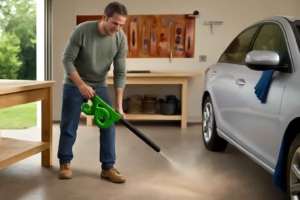
If your cleanup routine also includes blowing out dust and debris around the garage, this comparison between a cordless shop blower for garage dust and cleanup and a vacuum-first approach can help you decide what to add next.
FAQ
What size shop vac is best for home use?
For most homeowners, a 5- to 9-gallon shop vac is the best balance of capacity, portability, and storage friendliness. It handles garage cleanup, wet spills, and DIY debris without feeling oversized.
Is a corded or cordless shop vac better?
For primary garage and workshop cleanup, corded is usually better because it offers steady power and unlimited runtime. Cordless is better for quick messes, car cleanup, and portable convenience.
Can a shop vac pick up water?
Yes, if it is a true wet/dry vacuum and configured correctly for wet pickup. Always check the manual for the right filter or wet-use setup before vacuuming liquids.
Can I use a shop vac for drywall dust?
You can, but drywall dust is very fine and can clog filters quickly. A model with better filtration options and easy filter cleaning will usually perform better for this kind of debris.
Do I need a blower port on a shop vac?
Not necessarily. It is useful for light debris clearing, garage corners, and some outdoor cleanup, but it is a convenience feature rather than a requirement for most buyers.
Are shop vac attachments important?
Yes. The right utility nozzle, crevice tool, and extension wand often matter more in day-to-day use than a small difference in advertised motor strength.
Conclusion
The best shop vac for most homeowners is not the biggest or most expensive model. It is the one that matches your real cleanup jobs. If you want a dependable all-around option, start with a corded 5- to 9-gallon wet/dry vacuum, an easy-to-maintain filter system, useful attachments, and manageable storage. That setup covers the widest range of garage, car, wet-spill, and DIY cleanup tasks without unnecessary bulk.