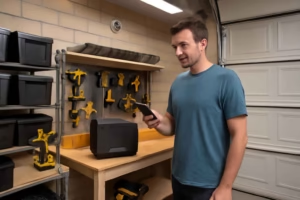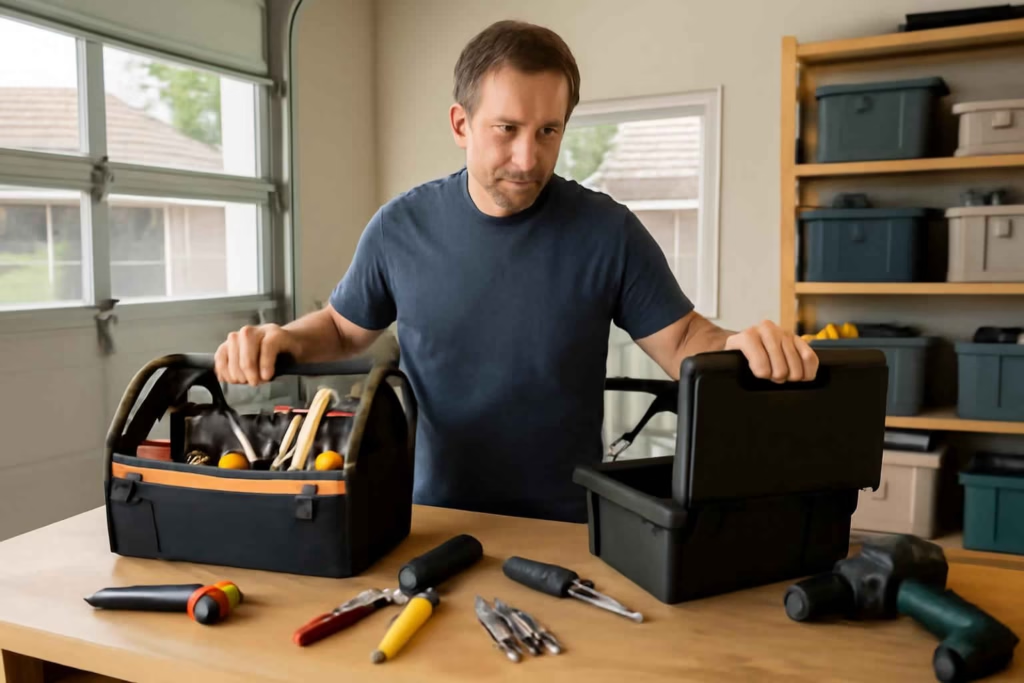
If you are deciding between a tool box and a tool bag, the better choice depends on how you actually use your tools. A tool box usually makes more sense if you want stronger protection, stackable storage, and a place to keep tools mostly in one spot. A tool bag is usually better if you carry tools around the house often and want faster access to hand tools during small repairs. For many homeowners, the right first choice comes down to portability versus protection.
This guide compares tool boxes and tool bags in practical homeowner terms: what each one does well, where each falls short, and which option fits common home-repair situations best. If you are still building your first kit, you may also want to start with our essential homeowner tool kit and our guide to the best first power tool for homeowners.
Tool box vs tool bag: the short answer
| Factor | Tool Box | Tool Bag |
|---|---|---|
| Best for | Protected storage and organized kits kept in one place | Portable everyday home repairs and grab-and-go use |
| Portability | Good to moderate, depending on size and weight | Usually better for carrying around the house |
| Protection | Better for delicate tools, accessories, and boxed organization | Less protection against crushing and impact |
| Access speed | Can be slower if tools are stacked inside | Usually faster with open-top or wide-mouth designs |
| Organization style | Works well with compartments, trays, and small parts cases | Works well with pockets and quick visual access |
| Best homeowner use | Garage storage, vehicle kit, drill accessories, hardware | Room-to-room fixes, ladder work, punch-list tasks |
In simple terms, choose a tool box if storage and protection matter most. Choose a tool bag if mobility and quick access matter most.
What a tool box does best
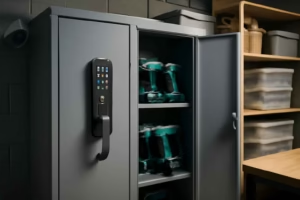
A tool box is a hard-sided storage container designed to protect tools and accessories better than a fabric bag. For homeowners, that usually means less clutter in the garage, better protection for measuring tools and drill accessories, and easier separation of screws, anchors, blades, and bits.
A tool box is usually the better choice when you want:
- Better protection for tools, batteries, chargers, and accessories
- More structured storage with trays, bins, or removable organizers
- Cleaner garage or workshop organization
- A place to keep small parts contained instead of loose in pockets
- Stackable storage if you plan to grow your system later
Tool boxes also make sense when your tools spend more time being stored than carried. That is common for homeowners who do occasional repairs on weekends rather than daily projects.
Where a tool box can be frustrating
- It can get heavy quickly once you add power tools, fasteners, and hand tools.
- Items at the bottom may be harder to reach.
- Large rigid boxes are less convenient on stairs, ladders, and tight spaces.
- Cheap models may become a “dump box” where tools pile up without real organization.
What a tool bag does best
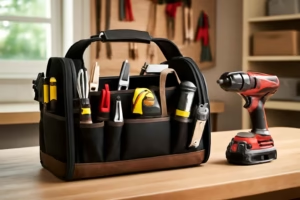
A tool bag is built for carrying tools where you need them. For many homeowners, that means grabbing a basic kit for hanging shelves, tightening hardware, checking a toilet fill valve, or handling small repairs without making repeated trips back to the garage.
A tool bag is usually the better choice when you want:
- Easy room-to-room portability
- Fast access to frequently used hand tools
- Better visibility so you can see what you packed
- A lighter grab-and-go setup for routine tasks
- Flexible storage for awkward tool shapes
Tool bags are especially practical for punch-list work: a screwdriver, tape measure, utility knife, pliers, small level, flashlight, and a few fasteners. If your projects are spread across bedrooms, bathrooms, kitchen, garage, and yard, a bag can feel much more convenient than a rigid box.
Where a tool bag can be frustrating
- It does not protect tools as well from impact, crushing, or moisture.
- Small hardware can get messy unless you add separate cases.
- Open-top styles can spill or snag in a crowded vehicle or closet.
- Very heavy loads can become uncomfortable to carry.
Tool box vs tool bag: key differences that matter at home
1. Portability
If you often carry tools from room to room, up stairs, or outside for quick fixes, a tool bag usually wins. Soft handles and shoulder straps are easier to live with than a hard plastic box when your load is moderate.
If your tools mostly stay in the garage, basement, or workshop, portability matters less, and a tool box becomes more attractive.
2. Protection
A tool box is better for protecting delicate or expensive gear. Drill bits, laser levels, batteries, chargers, and small organizers generally ride more securely in a rigid case. If you own measuring tools or accessories you do not want crushed, the harder shell matters.
A tool bag protects against scratches and casual bumps, but not as well against compression or rough transport.
3. Organization
Tool bags and tool boxes organize tools differently. A bag uses vertical pockets for quick access. A box uses trays, bins, and compartments to separate items. If you carry mostly hand tools, bag pockets are convenient. If you also carry screws, anchors, wall fasteners, bits, blades, and specialty accessories, a box often keeps things neater.
If wall-mounting projects are common in your home, pairing either option with a stud finder can save time and drywall mistakes. Our guide on how to choose the best stud finder explains what matters before you buy.
4. Weight management
A tool bag often feels lighter because it encourages you to carry only what you need. A tool box often gets overloaded because there is more room to add “just in case” items. For homeowners, overpacking is one of the biggest reasons any storage option becomes annoying.
A good rule is simple: if you dread carrying it, it is too full.
5. Use with power tools
If your setup includes a cordless drill, charger, spare battery, fastener box, and bit set, a tool box often handles the kit better. If you mainly carry hand tools and maybe one compact driver, a tool bag may feel more efficient.
If you are still choosing between core drilling tools, our comparisons of drill vs impact driver and what each tool does best around the house can help you build a more practical starter setup.
Best choice by homeowner scenario
| Scenario | Better Option | Why |
|---|---|---|
| Small repairs around the house | Tool Bag | Faster grab-and-go access to common tools |
| Garage or basement storage | Tool Box | Better protection and cleaner containment |
| Keeping screws, anchors, and bits organized | Tool Box | Works better with trays and organizers |
| Carrying tools up a ladder or stairs | Tool Bag | Softer, easier to carry, and usually quicker to access |
| Building a basic homeowner kit | Tool Bag | Encourages a practical everyday loadout |
| Creating a larger long-term storage system | Tool Box | Better foundation for expansion and storage structure |
| Transporting delicate accessories | Tool Box | Better impact resistance |
Which one should a homeowner buy first?
For most homeowners buying their first portable storage option, a tool bag often makes more sense first. It matches the way many people actually do home repairs: short tasks, different rooms, basic hand tools, and quick setup. A bag keeps your essentials accessible and makes it easier to avoid overbuying storage before you know your habits.
Choose a tool box first if any of these sound more like you:
- You already own a cordless drill and several accessories.
- You want to store hardware, anchors, bits, blades, and measuring tools together.
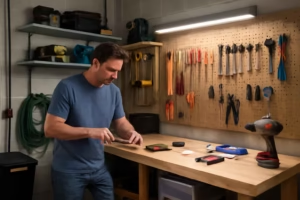
- You keep your tools mostly in a garage or workshop.
- You care more about protection and structured storage than carrying comfort.
Choose a tool bag first if these fit better:
- You mainly do light to medium home repairs.
- You carry tools room to room regularly.
- You want quick access to the tools you use most.
- You prefer a lighter, more flexible kit.
A practical decision framework
If you are still undecided, use this simple framework from Best Home Gear Hub:
- List your five most common jobs. Examples: hanging decor, tightening cabinet hardware, assembling furniture, fixing a toilet handle, replacing switch plates.
- Count how often you carry tools away from storage. If often, lean toward a bag.
- Count how many small accessories you need to keep sorted. If many, lean toward a box.
- Think about where tools live most of the time. Mobile kit = bag. Home base storage = box.
- Be honest about weight. The best storage option is the one you will actually use without dreading it.
Can you use both?
Yes, and many homeowners eventually do. A common long-term setup is:
- Tool box: stores extra tools, fasteners, accessories, and backup supplies in the garage
- Tool bag: carries the everyday repair kit around the house
This works well because each solves a different problem. The box acts as your home base, while the bag acts as your field kit.
What to look for before you buy
If you are shopping for a tool box
- Sturdy latches that do not feel flimsy
- Room for organizers or removable trays
- A size that fits your actual tool collection, not an imaginary future one
- A handle that stays comfortable when loaded
- Reasonable access to the items you use most
If you want to browse options, a good starting point is tool boxes for homeowners.
If you are shopping for a tool bag
- Enough pockets for your most-used hand tools
- A stable bottom that does not collapse easily
- A comfortable handle or shoulder strap
- A width that gives visibility without becoming bulky
- A fabric and zipper design that can handle garage dust and regular use
For comparison shopping, you can check tool bags for homeowners.
Common mistakes homeowners make
- Buying too large too early. Bigger storage often turns into heavier, less useful storage.
- Ignoring small-parts organization. Screws, anchors, and bits become frustrating fast without trays or cases.
- Using one container for every task. A portable kit and a storage base often serve different purposes.
- Choosing based only on appearance. The best-looking option is not always the easiest to carry or organize.
- Overpacking. If every tool goes everywhere, nothing is convenient.
FAQ
Is a tool bag better than a tool box for beginners?
Often, yes. A tool bag is usually easier for beginners because it supports a simple everyday kit and makes room-to-room repairs easier. A tool box may be better if you already have many accessories to organize.
Does a tool box keep tools in better condition?
Usually, yes. A rigid tool box generally protects tools and accessories better from impact, crushing, and rough storage than a soft bag.
What is better for hand tools only?
A tool bag is often better for hand tools only because pockets and open access make common tools easier to grab during quick home repairs.
What is better for a drill, charger, and bits?
A tool box is usually the better choice because it protects the drill kit and keeps bits, batteries, and hardware more contained.
Should homeowners buy matching modular storage systems?
Only if that fits your actual needs. Modular systems can be useful if your tool collection is growing, but many homeowners are better served by a simple bag or basic box first.
Conclusion
In the tool box vs tool bag decision, neither option is universally better. A tool box is better for protected storage, accessory organization, and garage-based setups. A tool bag is better for portability, quick access, and everyday household fixes. If you are a typical homeowner doing small repairs in different parts of the house, start with a tool bag. If you are building a more organized garage kit with power-tool accessories and hardware, start with a tool box.
The smartest first choice is the one that fits how you actually work, not the one that carries the most tools.