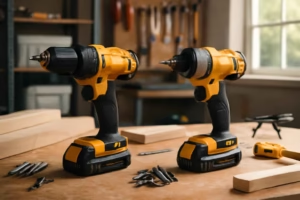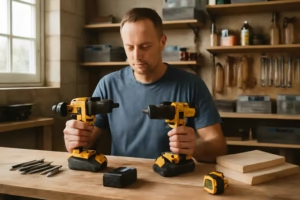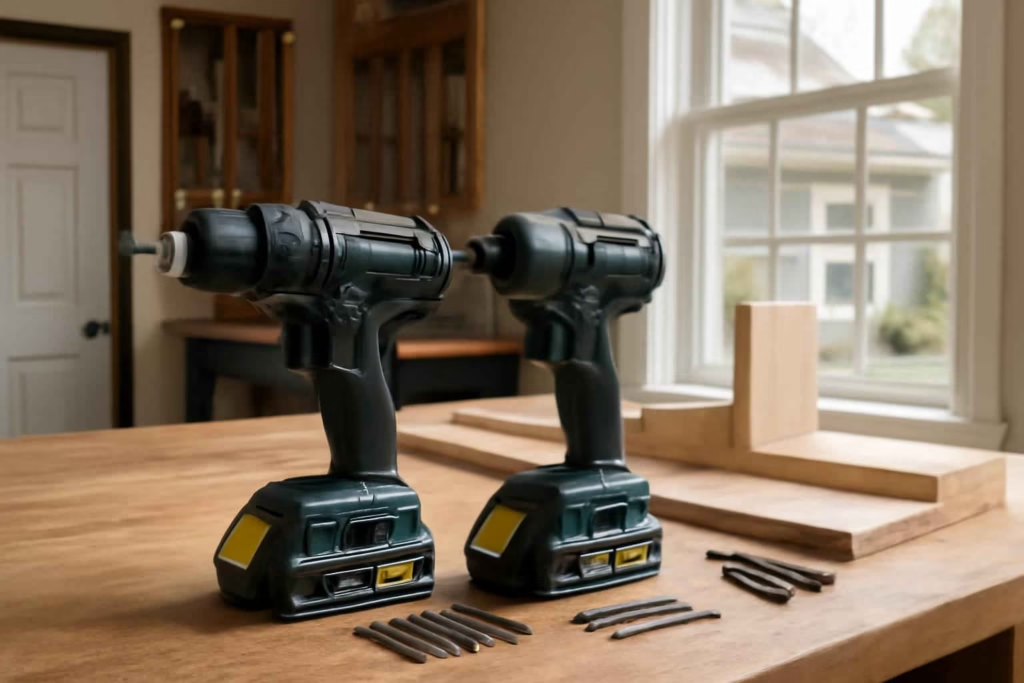
If you are choosing between an impact driver and a drill, the short answer is this: a drill is the more versatile first tool for most homeowners, while an impact driver is better for driving lots of screws, long fasteners, and stubborn hardware with less wrist strain.
That distinction matters because these tools look similar but solve different problems. A drill is usually the better choice for everyday household tasks like drilling pilot holes, assembling furniture, hanging curtain rods, and using hole saws or twist bits. An impact driver shines when you are building a deck, driving structural screws, installing lag bolts, or working with dense materials where a regular drill starts to bog down.
This Get the site name/brand name dynamically guide breaks down what each tool does best, where each one struggles, and which one makes the most sense if you are only buying one.
Impact driver vs drill: the simple difference
A drill spins continuously and is designed for both drilling holes and driving screws. It uses a standard chuck that accepts many bit types.
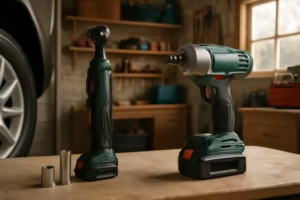
An impact driver also spins, but it adds rapid rotational impacts when resistance increases. That extra hammering action helps drive screws and bolts more efficiently.
| Tool | Best for | Main advantage | Main limitation |
|---|---|---|---|
| Drill | General household tasks, pilot holes, light to medium fastening | Most versatile first tool | Can struggle with long screws or heavy fasteners |
| Impact driver | Long screws, lag screws, dense material, repetitive fastening | Higher fastening power with less kickback to the wrist | Less ideal for precision drilling and many common drill bits |
When a drill is the better choice
For most homeowners, a drill covers more day-to-day jobs. If you only own one power tool, a cordless drill is usually the practical starting point.
Choose a drill if you mostly do jobs like:
- Drilling pilot holes in wood or drywall
- Hanging shelves, blinds, and curtain rods
- Assembling furniture
- Installing cabinet hardware
- Light repairs around the house
- Using spade bits, twist bits, hole saws, or wire brush attachments
A drill is also the better pick when control matters more than raw fastening force. You can usually set a clutch to avoid overdriving screws, stripping heads, or damaging softer materials.
If you are still building your first kit, our guide to the best first power tool for homeowners can help you decide what to buy before expanding into specialized tools.
When an impact driver is the better choice
An impact driver makes more sense when your projects involve repeated fastening or larger fasteners. It is especially useful for outdoor builds, framing-style tasks, and dense wood.
Choose an impact driver if you often do jobs like:
- Driving long deck screws
- Installing structural wood screws
- Driving lag bolts with hex shank accessories
- Building raised beds, fences, sheds, or workbenches
- Removing stubborn screws
- Doing repetitive fastening where wrist fatigue matters
The impact mechanism helps the tool keep turning under load instead of forcing your arms and wrists to absorb as much twisting resistance.
For many DIYers, an impact driver becomes the favorite tool once projects get bigger than basic hanging and assembly.
How the tools feel different in real use
The biggest difference is not just power. It is how the power is delivered.
A drill provides smoother, more continuous rotation. That makes it better for controlled drilling and for delicate screw-driving when finish quality matters.
An impact driver delivers bursts of rotational force. You will hear the hammering action kick in when the tool hits resistance. That lets it keep driving without demanding as much force from you.
In practice:
- Drill: smoother, quieter, more versatile
- Impact driver: louder, more aggressive, better under heavy load
If your main frustration is a drill stalling on long screws, cam-out, or wrist twist, that is exactly the problem an impact driver is meant to solve.
Can a drill replace an impact driver?
Sometimes, yes. A good drill can handle many screw-driving tasks around the house, especially when you use pilot holes and the right bit.
But a drill is not always the efficient choice for:
- Long structural screws
- Repeated fastening into dense lumber
- Large fasteners driven all day
- Situations where stripped screw heads are likely
For occasional projects, a drill may be enough. For heavier DIY work, using a drill instead of an impact driver can feel slower, harder on the wrists, and more frustrating.
Can an impact driver replace a drill?
Not completely. An impact driver can drive screws extremely well, but it is not the best substitute for a standard drill.
Its limitations include:
- It uses a 1/4-inch hex collet rather than a standard three-jaw chuck
- It is less suited to many common drill bits
- It offers less finesse for delicate drilling tasks
- It can overdrive smaller screws more easily if you are not careful
Some hex-shank drill bits do work in impact drivers, but that does not make the tool a full replacement for a drill. If you need one tool for the widest range of home tasks, the drill still wins.
Impact driver vs drill for common homeowner jobs
| Job | Better tool | Why |
|---|---|---|
| Assembling furniture | Drill | More control, lower chance of overdriving |
| Hanging shelves | Drill | Better for drilling pilot holes and controlled fastening |
| Installing cabinet screws | Drill | Clutch settings help avoid damage |
| Building a deck | Impact driver | Faster and easier for long screws |
| Driving lag screws | Impact driver | More effective under high resistance |
| Drilling holes in wood | Drill | Designed specifically for drilling |
| Removing stubborn screws | Impact driver | Impact action helps maintain engagement |
| Light DIY repairs | Drill | More versatile overall |
Which tool should most homeowners buy first?
Most homeowners should buy a cordless drill first.
That is the better answer when you need one tool for a wide mix of basic repairs, mounting tasks, and small projects. A drill covers more household situations, accepts more accessories, and is easier for beginners to use well.
An impact driver becomes the better first purchase only if your near-term projects are clearly fastening-heavy, such as:
- building a deck or pergola;
- framing a shed interior;
- installing lots of structural screws;
- replacing many old or stubborn fasteners.
If you are shopping for that first drill, see how to choose the best cordless drill for DIY home projects.
When it makes sense to own both
Owning both tools is not redundant. In fact, it is one of the most practical two-tool combinations for home DIY.
A common workflow is:
- Use the drill to make a pilot hole.
- Use the impact driver to drive the fastener.
That saves time and avoids constant bit swapping. It also lets each tool do the work it is best at.
If your projects are moving from simple home repairs into trim work, storage builds, workshop upgrades, or outdoor construction, having both usually feels more useful than owning two overlapping versions of the same tool.
What to look for before buying
For a drill
- Chuck size: A 3/8-inch or 1/2-inch chuck is common for homeowner use.
- Clutch settings: Helpful for controlled screw-driving.
- Speed ranges: Useful for switching between drilling and driving.
- Comfort and balance: Important for overhead or repeated use.
- Battery platform: Especially important if you plan to add tools later.
For an impact driver
- Compact size: Helps in tight spaces.
- Variable speed trigger: Important for control.
- Drive modes: Helpful but not essential for many homeowners.
- Battery compatibility: Ideally matches your drill and future tools.
- Hex-shank bit availability: Make sure you can easily get the accessories you need.
If you want to build around one battery system, it is often smarter to choose a tool family than to shop each tool in isolation.
Common mistakes when choosing between a drill and impact driver
- Buying an impact driver as a full drill replacement: It is not as versatile for general household use.
- Using a drill for every heavy fastening job: It can work, but often less efficiently.
- Ignoring bit compatibility: Drills and impact drivers do not use the same bit-holding system.
- Assuming more power always means better: Control matters just as much for home projects.
- Choosing based only on specs: Comfort, size, and battery platform affect real-world satisfaction.
A simple decision framework
Choose a drill if your priority is:
- one versatile first tool;
- drilling holes regularly;
- furniture assembly and home mounting tasks;
- better finesse and accessory flexibility.
Choose an impact driver if your priority is:
- driving lots of screws;
- long or structural fasteners;
- dense wood or stubborn hardware;
- less wrist strain under load.
Buy both if you regularly do medium to large DIY projects and want faster workflow.
Helpful accessories that actually matter
The right accessories often improve results more than chasing small differences in tool specs.
- Impact-rated driver bit sets help reduce stripped heads and broken bits.
- General-purpose drill bit sets are useful for wood, plastic, and light household tasks.
- Hex-shank nut driver sets can make an impact driver more useful for lag screws and hex-head fasteners.
Accessory quality matters because poor bits often cause slipping and frustration long before the tool itself becomes the problem.
FAQ
Is an impact driver stronger than a drill?
For driving screws and fasteners under resistance, yes. An impact driver typically feels stronger because it adds rotational impacts. For general drilling tasks, a standard drill is still the better tool.
Do I need a drill if I already have an impact driver?
Usually, yes. An impact driver is excellent for fastening, but a drill is better for many hole-making tasks, accessory compatibility, and controlled everyday work.
Can an impact driver damage screws or materials?
Yes. Because it delivers aggressive fastening force, it can overdrive screws or mar softer materials if you are not careful. That is one reason a drill is often better for delicate indoor work.
Is a hammer drill the same as an impact driver?
No. A hammer drill is designed to help drill into masonry by adding forward hammering action. An impact driver adds rotational impacts to drive screws and fasteners.
What is better for beginners: drill or impact driver?
A drill is usually better for beginners because it is more versatile, easier to control for everyday tasks, and more useful across a wider range of home projects.
Final takeaway
In the impact driver vs drill decision, the best first tool for most homeowners is still the drill. It handles the widest range of common household jobs and gives better control for everyday repairs.
An impact driver is the smarter choice when your projects involve lots of screws, larger fasteners, or dense materials that make a drill struggle.
If you expect to do more DIY over time, the best long-term setup is often a matched drill and impact driver combo, with each tool handling the work it does best.