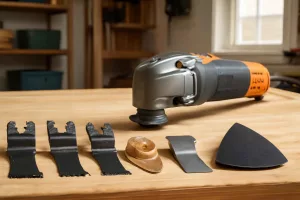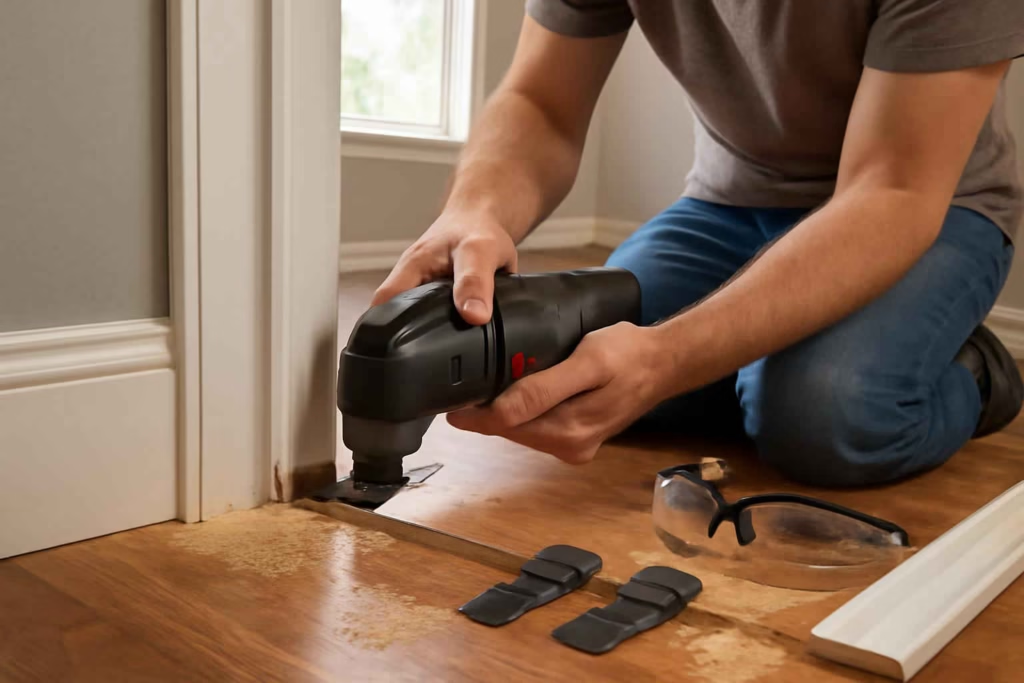
An oscillating multi-tool is one of the most versatile tools a homeowner can keep in the garage. It can cut drywall, trim wood, sand corners, scrape old caulk or adhesive, remove grout, and handle small repair jobs that are awkward for larger tools. If you have ever wondered whether this tool is actually useful around the house, the short answer is yes—especially for detail work, tight spaces, and controlled cuts.
For many DIYers, the biggest advantage is not raw speed. It is control. An oscillating multi-tool lets you work close to cabinets, floors, baseboards, pipes, and trim where a circular saw, reciprocating saw, or rotary tool may be harder to manage. If you are still deciding between similar tools, our comparison of oscillating multi-tool vs rotary tool can help clarify where each one fits.
What is an oscillating multi-tool used for?
An oscillating multi-tool uses a small accessory that vibrates side to side at high speed through a very short arc. That motion makes it good for controlled cutting, sanding, scraping, grinding, and grout removal. It is especially useful when you need precision more than reach or demolition power.
Common oscillating multi-tool uses include:
- Flush-cutting door jambs for flooring installation
- Trimming nails, screws, or small wood pieces
- Cutting drywall for outlet boxes or patch work
- Removing old caulk, paint, or flooring adhesive
- Sanding in corners and along edges
- Removing grout around damaged tile
- Making plunge cuts in wood, drywall, and some plastics
- Undercutting trim for laminate, vinyl plank, or tile
Where an oscillating multi-tool helps most around the house
1. Flooring and trim work
This is one of the best use cases. An oscillating tool is excellent for undercutting door casings and jambs so flooring can slide underneath for a cleaner look. It also works well for trimming transition pieces, notching baseboard sections, or adjusting shoe molding during repairs.
For layout accuracy on flooring, trim, or wall installation projects, a guide like choosing the right laser level can also make the job easier.
2. Drywall repairs and light remodeling
If you need to open a wall for a low-voltage box, patch a damaged section, or cut around an obstacle, a multi-tool is often cleaner and easier to control than a jab saw. It is useful for:
- Cutting outlet and switch openings
- Trimming drywall patches to fit
- Opening small access panels
- Cutting near studs with less overcut
It is also a practical companion to a stud finder when you need to open walls more safely and avoid hidden framing.
3. Caulk, sealant, and adhesive removal
With a scraper blade, an oscillating multi-tool can remove old caulk around tubs, windows, and trim much faster than a hand scraper alone. It can also help lift flooring glue, softened adhesives, and paint buildup from tight spots.
If sealing and re-caulking jobs are common in your home, you may also want to review whether a cordless caulk gun or manual caulk gun makes more sense for your repair style.
4. Tile and grout repair
For single-tile repairs, grout removal is one of the tool’s standout tasks. A carbide or grout-removal blade can clear grout lines around a cracked tile with much more control than a larger grinder. That reduces the risk of damaging nearby tiles.
This is usually best for small to medium repair areas rather than full-room tile removal.
5. Small wood cuts and notching
An oscillating multi-tool can cut softwood, trim boards, dowels, shims, and small notches in plywood or paneling. It is a helpful problem-solving tool when you need to make one awkward cut rather than set up a larger saw.
Good examples include:
- Trimming protruding shims after cabinet or window installation
- Notching a board to fit around a pipe
- Cutting a damaged trim section for replacement
- Flush-cutting wooden plugs or dowels
6. Detail sanding
The triangular sanding pad is useful in corners, along edges, and in narrow spaces where larger sanders cannot reach. It is commonly used for:
- Paint prep on trim
- Sanding patched drywall areas
- Smoothing filler in corners
- Refinishing small furniture spots
It is not a replacement for a random orbital sander on large flat surfaces, but it is excellent for touch-ups and tight spots.
What materials can an oscillating multi-tool cut?
The answer depends mostly on the blade. With the right accessory, an oscillating multi-tool can cut several common household materials.
| Material | Can it cut it? | Typical use | Best note |
|---|---|---|---|
| Drywall | Yes | Outlet boxes, patches, openings | Very common and easy |
| Softwood | Yes | Trim, jambs, shims, notches | Best for controlled cuts |
| Hardwood trim | Yes | Undercuts and repair cuts | Slower than larger saws |
| PVC and plastic | Yes | Pipe, trim, panels | Use the correct blade |
| Nails and screws | Sometimes | Flush cutting fasteners | Needs bi-metal or carbide blade |
| Grout | Yes | Tile repair | Use a grout-removal accessory |
| Metal pipe or thick steel | Limited | Small cuts only | Slow; not ideal for heavy metal work |
| Ceramic tile | Limited | Spot work only | Usually better for grout than tile body |
When an oscillating multi-tool is the right choice
Use an oscillating multi-tool when you need:
- Precision instead of speed
- Flush cuts against a surface
- Plunge cuts in the middle of a material
- Tight-space access near walls, trim, cabinets, or pipes
- Low overcut risk on finished surfaces
- One tool for multiple small tasks
It is often the best answer for repair work rather than full-scale construction.
When a different tool makes more sense
An oscillating multi-tool is useful, but it is not always the fastest or most efficient option.
| Task | Better tool | Why |
|---|---|---|
| Large drywall cuts | Drywall saw or rotary cut-out tool | Faster over larger sections |
| Long straight wood cuts | Circular saw | Cleaner and more efficient |
| Heavy demolition | Reciprocating saw | More aggressive cutting power |
| Large flat sanding jobs | Random orbital sander | Faster and more even finish |
| Deep metal cutting | Angle grinder or band saw | Better suited for tougher metal |
If your main projects lean toward teardown and rough cutting, a guide on the best cordless reciprocating saw may be more relevant than a multi-tool.
Most useful blades and attachments to own
The tool itself matters, but the accessories determine what you can actually do with it. For most homeowners, a small starter set covers the majority of repair jobs.
- Wood plunge-cut blade: for trim, drywall-backed wood, and notching
- Bi-metal blade: for wood with nails, screws, and mixed materials
- Carbide blade: for tougher materials and longer blade life
- Scraper blade: for caulk, adhesive, paint, and residue
- Grout-removal blade: for tile repair
- Sanding pad and sheets: for corners and detail sanding
If you need replacement accessories, an oscillating multi-tool blade kit is often the most practical way to cover several job types without buying blades one at a time.
How to use an oscillating multi-tool effectively
- Choose the blade for the material. A poor blade match causes slow cuts and excess heat.
- Mark the cut clearly. Because the tool is precise, layout matters.
- Let the tool do the work. Pushing too hard can wear blades quickly and reduce control.
- Use moderate speed when needed. Some materials cut cleaner at lower settings.
- Secure the workpiece. Vibration can shift small parts.
- Check behind walls or floors first. Avoid hidden wires, pipes, or fasteners.
Common mistakes homeowners make
- Using a wood blade on nails or screws
- Expecting the tool to replace larger saws for long cuts
- Pushing too hard and overheating the blade
- Ignoring accessory quality and buying only the cheapest blades
- Starting a plunge cut without confirming what is behind the surface
- Using the sanding pad for jobs that need a larger finish sander
Is a cordless oscillating multi-tool worth it?
For many homeowners, yes. A cordless model is especially convenient for quick repairs, trim adjustments, punch-list tasks, and jobs away from outlets. It makes sense if you already own batteries in a matching tool platform and want fast grab-and-go convenience.
A corded model can still be a smart value if you mainly use the tool in a workshop, do longer indoor sessions, or want to avoid battery costs.
Who should buy an oscillating multi-tool?
An oscillating multi-tool is a strong fit for:
- Homeowners doing regular small repairs
- DIYers installing flooring, trim, shelves, or fixtures
- People working in tight indoor spaces
- Anyone who wants one tool that solves awkward cutting and scraping tasks
It may be less essential if you only do occasional furniture assembly or very basic upkeep. In that case, a drill, stud finder, and simple hand tools may have higher priority.
FAQ
Can an oscillating multi-tool cut through nails?
Yes, but only with the right blade. A bi-metal or carbide blade is typically used for nails, screws, and mixed wood-with-fastener cuts. It will usually be slower than cutting plain wood.
Can an oscillating multi-tool cut drywall?
Yes. It is one of the most useful tools for drywall patching, outlet openings, and small access cuts because it gives good control and reduces overcutting.
Can you use an oscillating multi-tool to remove grout?
Yes. This is one of its best specialty uses. A grout-removal blade can clear grout lines around a damaged tile with more control than larger tools.
Is an oscillating multi-tool good for sanding?
It is good for detail sanding, corners, edges, and small repairs. It is not the best choice for large tabletop, wall, or floor sanding jobs.
What is the biggest advantage of an oscillating multi-tool?
The biggest advantage is controlled work in tight spaces. It handles flush cuts, plunge cuts, scraping, and detail tasks that are difficult with bulkier tools.
Do homeowners actually need one?
If you do flooring, trim, drywall patches, caulk replacement, tile repair, or small remodeling tasks, an oscillating multi-tool is often one of the most useful specialty tools you can own.
Conclusion
Oscillating multi-tool uses around the house center on control, versatility, and tight-space problem solving. It is not the fastest cutting tool in your garage, but it is often the tool that makes an awkward repair possible without damaging nearby surfaces. If your projects include trim adjustments, drywall patches, grout removal, adhesive scraping, or flooring detail work, this is one of the most practical additions to a DIY tool collection.