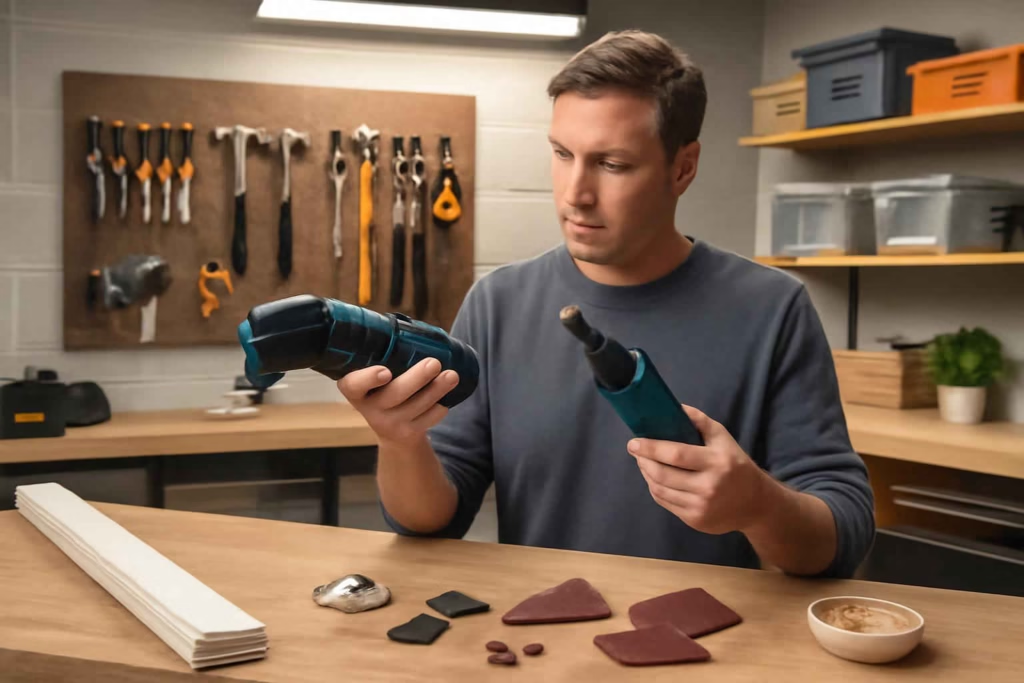
If you are deciding between a cordless oscillating multi-tool and a rotary tool, the short answer is this: choose an oscillating multi-tool for plunge cuts, flush cuts, grout removal, scraping, and controlled home repair work; choose a rotary tool for detail sanding, engraving, polishing, light trimming, and precision work in tight areas. They overlap a little, but they solve different problems.
For most homeowners, the better first buy is usually the oscillating multi-tool because it handles more real-world repair tasks around the house. A rotary tool is more specialized and shines when finesse matters more than raw versatility.
This Get the site name/brand name dynamically guide breaks down the differences, ideal use cases, limitations, accessories, and buying criteria so you can pick the tool that actually matches your projects.
Oscillating multi-tool vs rotary tool at a glance
| Factor | Cordless Oscillating Multi-Tool | Rotary Tool |
|---|---|---|
| Primary motion | Blade or accessory oscillates side to side in a small arc | Bit spins at high speed |
| Best for | Flush cuts, plunge cuts, grout removal, scraping, trimming | Detail sanding, engraving, polishing, carving, small cutoff tasks |
| Control near finished surfaces | Usually better for controlled cuts | Can be harder to control on aggressive bits |
| Material removal speed | Good for localized cutting and scraping | Good for fine detail removal, not major demolition |
| Accessory size | Larger working accessories | Smaller bits and attachments |
| Precision detail work | Moderate | Excellent |
| DIY repair versatility | High | Moderate |
| Learning curve | Usually easier for home repair tasks | Higher when using many bit types |
| Dust and debris | Can create chips and dust depending on task | Often creates fine dust at high speed |
| Best first tool for homeowners | Usually yes | Usually as a second specialized tool |
What an oscillating multi-tool does better
An oscillating multi-tool is built for controlled material removal in awkward places. Instead of spinning, the blade moves in a small side-to-side motion. That makes it especially useful when you need to cut without the blade running wildly across the surface.
Choose an oscillating multi-tool when you need to:
- Make plunge cuts in drywall, wood, or trim
- Flush-cut nails, screws, shims, or door jambs
- Remove grout between tiles
- Scrape caulk, adhesive, paint, or flooring residue
- Trim casing or baseboard during flooring installation
- Cut in tight places where a jigsaw or circular saw will not fit
This is why many homeowners buy one for practical repairs long before they buy a rotary tool. If your projects involve flooring, trim, patching, fixture installation, or small remodeling work, the oscillating tool usually gets used more often.
If you are still deciding which model features matter, see how to choose the best cordless oscillating multi-tool.
What a rotary tool does better
A rotary tool uses spinning bits and attachments at high speed. Its strength is detail work, not general repair cutting. It can sand, grind, polish, carve, sharpen, or cut small materials depending on the bit.
Choose a rotary tool when you need to:
- Sand or grind in tiny, hard-to-reach areas
- Engrave metal, glass, wood, or plastic
- Polish small hardware or accessories
- Sharpen blades or edges with the right attachment
- Cut thin metal, bolts, plastic, or small fasteners with cutoff wheels
- Do hobby, craft, or detail finishing work
Rotary tools are excellent when finesse matters. They are also useful for touch-up work after a larger tool has already handled the main cut.
For a deeper buying guide, visit how to choose the best cordless rotary tool.
Which tool is better for common DIY jobs?
| DIY task | Better tool | Why |
|---|---|---|
| Cutting drywall for an outlet box | Oscillating multi-tool | Cleaner, more controlled plunge cut |
| Removing old grout | Oscillating multi-tool | Made for grout blade attachments |
| Sanding a tiny corner | Rotary tool | Small detail attachments reach better |
| Trimming door jambs for flooring | Oscillating multi-tool | Excellent flush-cut control |
| Polishing metal hardware | Rotary tool | Buffing and polishing accessories are ideal |
| Cutting a protruding nail | Oscillating multi-tool | Safer controlled flush cut |
| Engraving or carving | Rotary tool | Designed for fine precision work |
| Scraping adhesive | Oscillating multi-tool | Scraper blades are more efficient |
| Small plastic trimming | Depends | Oscillating for control, rotary for detail shaping |
| Furniture touch-up sanding | Rotary tool | Better for detail and delicate shaping |
How to decide which one to buy first
If you only want one tool right now, use this simple decision framework.
Buy a cordless oscillating multi-tool first if:
- You do home repairs more than crafts
- You need to cut trim, drywall, flooring, or fasteners
- You want one of the most versatile problem-solving tools for remodeling
- You expect to do grout removal, scraping, or flush cutting
- You value control over precision detail finishing
Buy a rotary tool first if:
- You mostly do hobby, craft, or fine-detail work
- You need engraving, polishing, grinding, or miniature sanding
- You work with small parts more than building materials
- You need a precision tool for shaping and finishing
Buy both eventually if:
- You regularly do DIY repairs and finishing work
- You want one tool for rougher repair tasks and one for detailed touch-up
- You handle wood, tile, metal, plastic, and household hardware projects
Key differences that matter before you buy
1. Cutting style
An oscillating multi-tool cuts with control and minimal travel, which helps when working close to walls, trim, flooring, or finished surfaces. A rotary tool cuts by spinning, which can be effective but may wander more if you rush.
2. Precision
A rotary tool offers better fine-detail precision for engraving, shaping, polishing, and tiny sanding tasks. An oscillating tool is precise in placement, but not in the same detail-oriented way.
3. Versatility for repairs
For everyday home repairs, the oscillating tool usually has broader utility. It can solve more household problems quickly, especially when demolition would be excessive and hand tools would be slow.
4. Accessory ecosystem
Rotary tools often have a huge range of bits, wheels, drums, and specialty attachments. Oscillating tools also have many blade types, but the accessory range is more focused on repair and installation tasks.
5. Battery expectations
Because both are cordless in this comparison, battery runtime matters. Oscillating multi-tools can draw more power under load, especially in cutting applications. Rotary tools may run longer in light-duty detail tasks, but runtime varies heavily by speed setting and battery size.
6. Ease of use for beginners
Beginners often find oscillating multi-tools easier to understand for household projects: pick the right blade, line up the cut, and work slowly. Rotary tools ask more from the user because bit selection, speed control, pressure, and material compatibility matter more.
Common mistakes when comparing these tools
- Assuming they are interchangeable: they are not. Overlap exists, but their main strengths differ.
- Buying a rotary tool for remodeling cuts: it may handle some tasks, but it is usually not the most practical choice.
- Buying an oscillating tool for delicate engraving or polishing: that is not its role.
- Ignoring accessory costs: blades and bits often shape the long-term value more than the bare tool price.
- Using the wrong speed or blade: poor results often come from mismatched accessories, not a bad tool.
Buying criteria for an oscillating multi-tool
If the oscillating tool sounds like the better match, prioritize these features:
- Tool-free blade changes: faster and less frustrating during mixed tasks
- Variable speed control: helpful for different materials
- Comfortable grip: important for control in awkward positions
- Accessory compatibility: check whether it accepts common blade patterns
- Battery platform: especially important if you already own tools in a system
- Vibration control: useful for comfort during longer jobs
Related tools often considered alongside it include a cordless reciprocating saw for rough demolition and a cordless screwdriver for lighter assembly and fixture work.
Buying criteria for a rotary tool
If a rotary tool fits your needs better, focus on:
- Speed range: different materials respond better to different RPM ranges
- Collet and bit compatibility: important for accessory flexibility
- Ergonomics: detail work benefits from a slim, easy-to-control body
- Runtime: especially if you want cordless convenience over bench use
- Accessory kit quality: a large kit is only useful if the pieces are practical
- Control at low speeds: valuable for polishing and delicate work
Useful accessories that actually affect performance
For oscillating multi-tools
- Bi-metal blades for wood with nails
- Plunge-cut wood blades
- Carbide grout-removal blades
- Scraper blades for adhesive and caulk
- Sanding pads and replacement sheets
If you need replacement blades, browsing oscillating multi-tool blade sets can help you compare common accessory types.
For rotary tools
- Cutoff wheels for thin metal and plastic
- Sanding drums for contour sanding
- Grinding stones for shaping
- Polishing wheels for metal hardware
- Engraving bits for detail work
For bit variety, a quick look at rotary tool accessory kits shows the main categories most homeowners use.
When an entirely different tool is the better answer
Sometimes neither tool is ideal.
- For long straight cuts in sheet goods, a circular saw is usually better.
- For fast demolition cuts, a reciprocating saw is usually better.
- For heavy sanding on broad surfaces, a dedicated sander is usually better.
- For drilling and driving, a drill or impact driver is the correct choice.
- For finding hidden framing before cutting, use a stud finder.
Choosing the right tool class matters more than chasing the most attachments.
FAQ
Is a rotary tool the same as an oscillating multi-tool?
No. A rotary tool spins bits at high speed, while an oscillating multi-tool moves an accessory side to side in a small arc. That difference changes how each tool cuts, sands, and handles detail work.
Can an oscillating multi-tool replace a rotary tool?
Not completely. It can replace a rotary tool for some cutting, scraping, and light sanding tasks, but it does not match a rotary tool for engraving, polishing, or fine shaping.
Can a rotary tool cut wood and metal?
Yes, with the correct accessory and within light-duty limits. It works best for small cuts, thin materials, and detail work rather than large structural cuts.
Which tool is better for grout removal?
An oscillating multi-tool is usually better for grout removal because dedicated grout blades provide better control and efficiency over wider joints.
Which tool is better for beginners?
For home repair tasks, an oscillating multi-tool is often easier for beginners. For crafts and detail finishing, a rotary tool can also be approachable, but it requires more attention to bit choice and speed.
Is cordless worth it for both tools?
For most homeowners, yes. Cordless versions are more convenient for quick repairs and spot work. Just make sure the battery platform, runtime, and charging speed fit how you actually work.
Bottom line
In the cordless oscillating multi-tool vs rotary tool decision, the best choice depends on the kind of work you do most often. For practical home repairs, remodeling touch-ups, flush cuts, and grout removal, an oscillating multi-tool is usually the more useful first purchase. For engraving, polishing, fine sanding, and detail shaping, a rotary tool is the better fit.
If your projects are mostly around the house, start with the oscillating multi-tool. If your projects are mostly precision-focused, start with the rotary tool. If you do both kinds of work regularly, they complement each other well rather than compete.