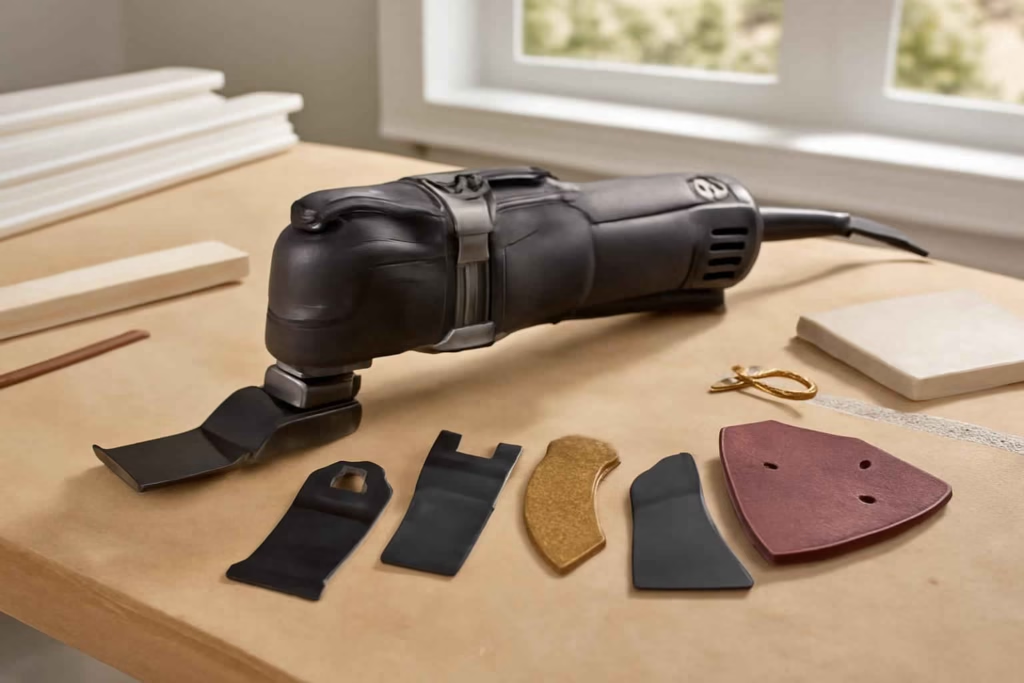
The best oscillating multi-tool blade depends on what you are cutting or removing. For clean wood cuts, a general-purpose wood blade usually works well. For nails, screws, or thin metal, a bi-metal blade is the safer pick. For grout or tile work, a carbide or diamond blade lasts much longer than a basic steel blade. If your oscillating multi-tool feels slow, burns material, or rattles through blades, the problem is often the accessory choice rather than the tool itself.
This guide from Best Home Gear Hub breaks down the blade types that actually matter for homeowners, how to match them to common jobs, and what to avoid when buying a set that looks cheap but performs poorly.
Why oscillating multi-tool blades matter so much
An oscillating multi-tool is one of the most versatile tools around the house, but its performance changes dramatically with the blade you install. The same tool can cut a door jamb, remove caulk, scrape adhesive, trim PVC, plunge-cut drywall, or clear grout lines. The blade determines how fast the work goes, how clean the cut looks, and how often you need to stop and swap accessories.
If you are still figuring out where this tool fits in your kit, see oscillating multi-tool uses around the house for practical examples before you buy a large blade assortment.
The main types of oscillating multi-tool blades
| Blade type | Best for | Main advantage | Main limitation |
|---|---|---|---|
| Wood cutting blade | Softwood, trim, drywall-backed cuts | Fast, clean cuts in wood | Dulls quickly on nails or screws |
| Bi-metal blade | Wood with nails, thin metal, screws, PVC | More durable and versatile | Usually slower in pure wood than a dedicated wood blade |
| Carbide tooth blade | Hard materials, tough grout, some fasteners | Longer life in abrasive jobs | Higher cost |
| Diamond grit blade | Grout, tile-related abrasive work | Excellent wear resistance | Not a general cutting blade |
| Scraper blade | Adhesive, caulk, paint, flooring residue | Removes material without digging like a saw blade | Not for plunge cutting |
| Sanding pad | Corners, detail sanding, touch-up prep | Reaches tight spaces | Small coverage area |
How to choose the right blade for the job
For cutting wood
Choose a dedicated wood blade when speed and a cleaner cut matter more than maximum durability. This is a good choice for:
- trimming door casings
- cutting baseboard for patch work
- plunge cuts in plywood
- small drywall-and-wood access cuts
If there is any chance of hitting hidden fasteners, switch to bi-metal. A wood blade can dull fast if it meets even one stubborn finish nail.
For cutting wood with nails
Use a bi-metal blade. This is one of the most useful all-around choices for homeowners because real-world projects often involve mixed materials. Examples include old trim, subfloor patches, threshold removal, and rough repair openings where a fastener might be in the way.
For cutting metal
Use bi-metal for thin metal, screws, bolts, and light sheet material. If the metal is especially abrasive or you expect repeated heavy-duty work, a carbide blade may last longer. Oscillating tools are usually best for controlled, small cuts rather than long production cutting in metal.
For grout removal
Use a carbide or diamond grit grout blade. This is one area where cheap universal blade kits often disappoint. Grout is abrasive, and a low-grade blade can wear out quickly. If your project involves replacing a few cracked tiles or cleaning out grout for rework, a purpose-built grout blade is worth it.
For caulk, adhesive, and residue
Use a scraper blade rather than trying to force a cutting blade to do scraping work. A flexible scraper works well for softer residue and caulk. A rigid scraper is better when you need more control against stuck-on flooring adhesive, old paint ridges, or gasket-like buildup.
For sanding corners and detail work
Use a sanding pad with hook-and-loop paper. This is useful for:
- inside corners
- window stool touch-ups
- cabinet edge prep
- small filler repairs before painting
For larger sanding jobs, a dedicated sander is still the better tool.
Blade materials explained simply
High carbon steel
High carbon steel blades are commonly used for wood, drywall, and other softer materials. They are often affordable and cut quickly, but they are not the best choice when nails, screws, or abrasive materials are involved.
Bi-metal
Bi-metal blades combine flexibility with better durability for mixed-material jobs. For many homeowners, this is the most practical starting point because it covers the widest range of common repairs.
Carbide
Carbide blades cost more, but they can be worth it for abrasive, demanding work. They are especially useful when standard teeth wear down too quickly.
Diamond grit
Diamond grit accessories are specialty options for very abrasive materials such as grout. They are not a general substitute for wood or metal cutting blades.
Universal fit vs brand-specific fit
Before buying blades, confirm the mounting pattern that your oscillating multi-tool uses. Many modern accessories are marketed as universal fit, but compatibility is not always truly universal across all older tools and all quick-change systems.
Check:
- your tool brand and model
- whether it accepts open-back blades for faster changes
- whether an adapter is required
- whether the quick-release mechanism limits certain blade styles
If you are still choosing between tool platforms, cordless oscillating multi-tool vs rotary tool helps clarify when this tool makes more sense for home repairs.
Should you buy a blade set or individual blades?
For most homeowners, the best starting point is a small, useful assortment rather than a huge bargain kit. Large multipacks can look economical, but they often include blade types you may never use and may underperform on the one task you bought them for.
A blade set makes sense when:
- you are new to oscillating tools
- you expect a mix of cutting, scraping, and sanding tasks
- you want a few spare general-purpose blades on hand
Individual blades make more sense when:
- you already know the job, such as grout removal
- you need better durability for metal or abrasive materials
- you want fewer low-value extras
If you want to browse common options, an oscillating multi-tool blades assortment can be useful for comparing blade styles, while a carbide grout oscillating blade is the more targeted choice for tile repair work.
A simple blade selection framework for homeowners
- Identify the main material. Wood, metal, grout, caulk, drywall, PVC, or mixed material.
- Ask whether hidden fasteners are likely. If yes, move toward bi-metal.
- Decide whether speed or durability matters more. Pure wood favors speed; abrasive or uncertain jobs favor durability.
- Check whether the task is cutting, scraping, or sanding. Do not use a saw blade for every job.
- Confirm fitment before ordering. Accessory compatibility matters more than package claims.
Common buying mistakes
- Buying only wood blades. Many real home repairs involve hidden nails, screws, or mixed materials.
- Using cheap blades for grout. Abrasive materials destroy low-quality accessories quickly.
- Ignoring compatibility. Universal fit claims are not always enough.
- Using the wrong blade to save money. Forcing one blade type onto every task often wastes time and damages accessories faster.
- Choosing the lowest price over blade quality. A slightly better blade often saves more frustration than a larger low-grade pack.
When a premium blade is worth paying for
Paying more usually makes sense when:
- the material is abrasive, like grout or hardened adhesive
- access is awkward and repeated blade changes are frustrating
- you need cleaner, more controlled cuts in visible finish work
- the job is important enough that downtime matters more than blade cost
For rough one-time demolition cuts, a mid-range blade may be perfectly adequate. For bathroom tile repairs or repeated flush cuts in renovation work, higher-grade accessories often justify the extra cost.
How to make blades last longer
- Let the blade do the work instead of forcing heavy pressure.
- Use the correct speed setting if your tool offers variable speed.
- Switch blade types when the material changes.
- Avoid hitting fasteners with a wood-only blade.
- Keep the cut line clear so heat and debris do not build up.
If your tool kit is still taking shape, best first power tool for homeowners and essential homeowner tool kit can help you decide whether to invest in more accessories now or round out your core tools first.
Best blade types for common home projects
| Project | Best blade type | Why |
|---|---|---|
| Trim a door jamb for flooring | Wood blade or bi-metal | Wood cuts fast; bi-metal is safer if nails may be present |
| Cut out old caulk at a window | Flexible scraper | Removes sealant with better control than a toothed blade |
| Remove grout around one cracked tile | Diamond or carbide grout blade | Handles abrasive grout better and lasts longer |
| Flush-cut a protruding nail or screw | Bi-metal blade | Designed for metal contact |
| Sand filler in a corner | Sanding pad | Reaches tight detail areas |
| Cut drywall opening near wood framing | Wood/general-purpose blade | Good control for plunge cuts |
FAQ
What is the most useful oscillating multi-tool blade for homeowners?
A bi-metal blade is often the most useful all-around option because it handles mixed materials better than a basic wood blade. It is a strong starting point for repairs where nails or screws may be hidden.
Can oscillating multi-tool blades cut screws and nails?
Yes, but the right choice is usually a bi-metal or carbide-rated blade. A wood-only blade may dull quickly or cut poorly when it hits metal.
What blade should I use to remove grout?
A carbide or diamond grit grout blade is usually the right choice. These blades are designed for abrasive material and generally last longer than basic toothed blades.
Are universal oscillating multi-tool blades really universal?
Not always. Many fit a broad range of tools, but some mounting systems and older models have exceptions. Always verify compatibility with your exact tool before buying.
Is it better to buy cheap blade packs in bulk?
Only sometimes. Bulk packs can be fine for light wood or disposable rough work, but they are often a poor value for metal, grout, or precision cuts where blade quality matters more.
Conclusion
The best oscillating multi-tool blades are the ones matched to the material, not the biggest pack at the lowest price. For most homeowners, a small mix of wood blades, bi-metal blades, a scraper, and a sanding pad covers the majority of repairs. Add a carbide or diamond grout blade only when tile or abrasive removal work is actually on your list. If you choose by task first and blade material second, your oscillating multi-tool becomes much more useful around the house.