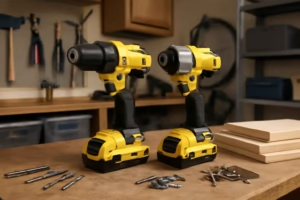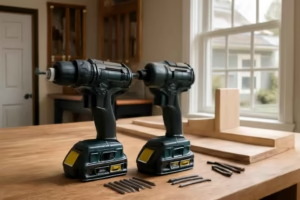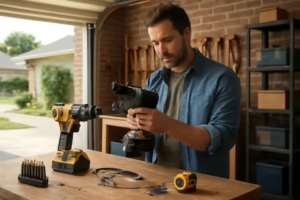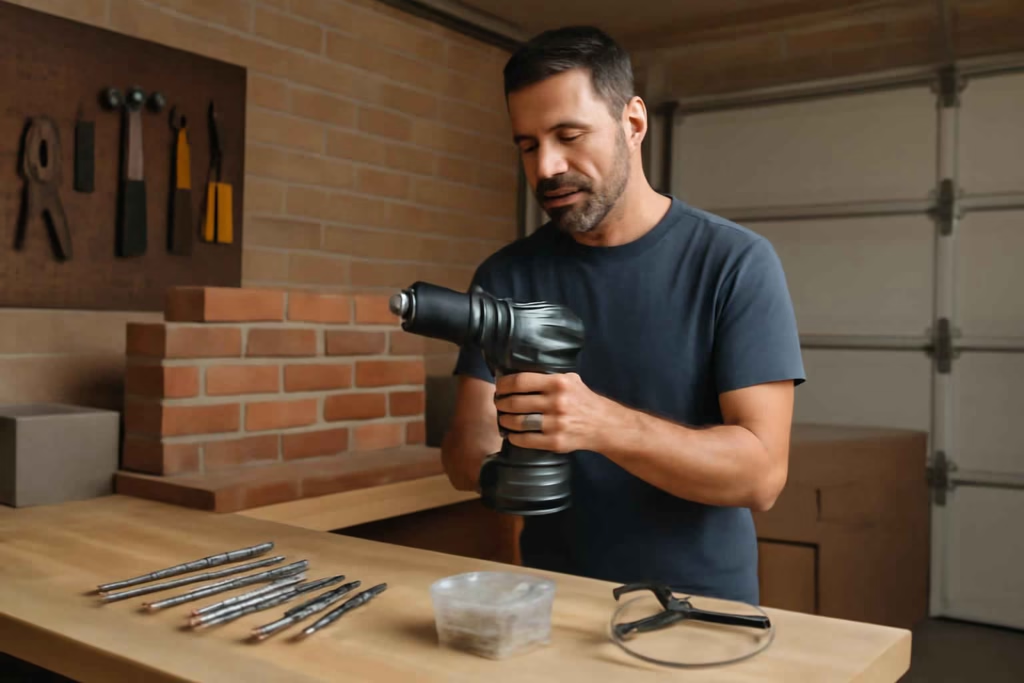
A cordless hammer drill is the right choice when you need one tool for everyday drilling and screwdriving, but also want enough impact action to drill into brick, block, or light concrete for anchors and home installs. For most homeowners, the best cordless hammer drill is not the most powerful model on the shelf. It is the one with enough torque, a usable hammer mode, manageable weight, and a battery platform you will keep using for years.
This guide from Best Home Gear Hub explains what a cordless hammer drill does, when you actually need one, which specs matter, and how to avoid paying for performance your typical projects will never use.
What a cordless hammer drill does
A cordless hammer drill looks similar to a standard drill/driver, but it adds a hammering action that rapidly pulses the bit forward while it spins. That extra action helps the bit chip into masonry instead of just grinding against it.
In practical terms:
- Standard drill mode is for wood, metal, plastics, and general household drilling.
- Driver mode is for screws and fasteners, with clutch settings to help prevent overdriving.
- Hammer mode is for drilling into brick, mortar, concrete block, and light concrete.
If your projects include shelf anchors in masonry walls, fastening into basement block, securing outdoor fixtures, or drilling pilot holes for Tapcon-style concrete screws, a cordless hammer drill can be more useful than a basic drill.
Cordless hammer drill vs regular drill
| Feature | Regular Drill/Driver | Cordless Hammer Drill |
|---|---|---|
| Wood and metal drilling | Yes | Yes |
| Screwdriving | Yes | Yes |
| Drilling into brick or block | Possible for very small jobs, but slower | Much better suited |
| Weight | Usually lighter | Usually slightly heavier |
| Cost | Usually lower | Usually higher |
| Best for | General household work | General work plus occasional masonry drilling |
If you are still deciding between a basic drill and a more versatile option, our related guide on how to choose the best cordless drill for DIY home projects can help you compare where a standard drill is enough and where it falls short.
When a cordless hammer drill is worth it
A cordless hammer drill makes sense for homeowners who expect at least occasional masonry work and want to avoid owning a separate corded tool for light-duty concrete drilling.
It is usually worth buying if you plan to do jobs like:
- installing shelving on brick or block walls
- mounting hose reels, security cameras, or exterior lights on masonry
- anchoring into basement walls
- fastening furring strips or brackets with concrete screws
- drilling for small expansion anchors
- handling normal wood and metal drilling with the same tool
It may not be worth it if nearly all your work is furniture assembly, drywall anchors, cabinet hardware, or light wood drilling. In those cases, a lighter drill or even a dedicated screwdriver may be a better fit. Best Home Gear Hub also has a guide to the best cordless screwdriver for furniture assembly and light repairs if your needs stay on the lighter side.
When you need an SDS hammer instead
A cordless hammer drill is not the same as a rotary hammer. If you regularly drill larger holes in dense concrete, remove tile, or do repeated anchor work in slab or foundation walls, a standard hammer drill may feel slow and underpowered.
Consider a rotary hammer instead when you need:
- larger masonry holes
- frequent drilling in poured concrete
- faster drilling speed in hard materials
- chiseling or light demolition, if the tool supports it
For most homeowners, though, a cordless hammer drill covers the more common middle ground: one tool for normal house projects plus occasional masonry tasks.
The most important features to compare
1. Voltage platform
Most homeowners will shop in the 18V or 20V max class. That is the sweet spot for balancing size, power, and battery compatibility. The biggest decision is often not the drill itself, but the battery ecosystem behind it.
Choose a platform that already includes, or is likely to include, other tools you want later, such as an impact driver, work light, shop blower, or recip saw. That makes each future tool purchase cheaper because you can reuse batteries and chargers.
If you are building out your kit from scratch, our guide to the best first power tool for homeowners is a helpful next step.
2. Brushless vs brushed motor
A brushless motor is often worth paying for in a cordless hammer drill because it can improve efficiency, runtime, and heat management. It may also help the tool stay more compact for a given power level.
A brushed model can still be fine for very occasional use, especially if the price difference is significant. But for a tool expected to handle both drilling and masonry work, brushless is usually the better long-term buy.
3. Chuck size
A 1/2-inch chuck is the most common and the most practical for a cordless hammer drill. It gives you broader bit compatibility and better support for larger drilling tasks.
A 3/8-inch chuck is more limiting and is less common on hammer drills aimed at homeowners who need versatility.
4. Torque and speed ranges
Manufacturers describe power in different ways, so exact comparisons can be messy. Focus less on inflated marketing numbers and more on how the tool is positioned:
- Compact models are easier to handle in tight spaces and overhead work.
- Mid-range models are often the best fit for homeowners because they balance comfort and capability.
- Heavy-duty models make sense if you drill larger holes often or expect tougher materials regularly.
Two-speed gearing is especially useful. A lower gear helps with larger holes and driving fasteners. A higher gear is better for smaller drill bits and faster drilling in wood or metal.
5. Hammer performance
For masonry work, hammer mode matters more than raw torque alone. A tool can be strong for wood drilling yet still feel unimpressive in brick if its hammer function is weak. Homeowners should look for a model clearly intended for masonry-capable drilling, not just a drill that happens to include hammer mode as an afterthought.
6. Size and weight
This is one of the most overlooked buying factors. A heavier tool may drill faster, but it is also more tiring when working overhead, on ladders, or across a long project. If most of your use will be everyday household drilling with occasional masonry, a mid-size model is often the smarter choice than the biggest option available.
7. Clutch quality and control
Good clutch control matters if you will also use the tool as your main drill/driver. That is especially true for cabinet hardware, fixtures, electrical boxes, and projects where stripped screws are frustrating or visible.
If most of your screwdriving will be heavier fasteners, you may also want to compare this tool with an impact driver. See drill vs impact driver: which one should a homeowner buy first? for the strengths of each.
8. Battery size and runtime
For general drilling, a compact battery helps keep the tool easier to handle. For masonry work or larger hole saw use, a higher-capacity battery may deliver better runtime and performance consistency.
A practical homeowner setup is often:
- one compact battery for lighter indoor tasks
- one larger battery for masonry, spade bits, or longer projects
9. Handle design and auxiliary grip
An auxiliary side handle is especially useful for hammer drilling and larger bits. It improves control, helps reduce wrist strain, and makes the tool feel safer when a bit binds unexpectedly.
Rubber overmold, grip shape, and trigger modulation also matter more than many buyers expect, especially if the drill will become your most-used cordless tool.
10. Built-in light and belt hook
These sound minor, but both are genuinely useful around the house. A work light helps in basements, utility closets, crawl spaces, and evening outdoor tasks. A belt hook matters when moving up and down ladders or repositioning during installs.
Best cordless hammer drill use cases for homeowners
The best model depends on what kind of jobs you actually do. Here is a practical decision table.
| Your typical projects | Best type of hammer drill | Why |
|---|---|---|
| General repairs, shelves, curtain rods, occasional masonry anchors | Compact or mid-range 18V/20V brushless model | Good balance of comfort and versatility |
| Frequent exterior installs, concrete screws, repeated block drilling | Mid-range to heavy-duty brushless model with side handle | Better endurance and control |
| Mainly furniture, fixtures, and light indoor tasks | Standard drill/driver instead of hammer drill | Lighter and often cheaper |
| Hard concrete drilling on a regular basis | Rotary hammer rather than standard hammer drill | Much more effective for dense masonry |
How to choose the right cordless hammer drill for your home
- List your real projects. Include both current tasks and likely next-year jobs such as mounting, anchoring, patio work, or basement storage installs.
- Decide whether masonry work is occasional or frequent. Occasional work points to a versatile mid-range tool. Frequent concrete drilling may justify a more specialized tool.
- Choose your battery platform carefully. This often matters more than small spec differences between brands.
- Prioritize handling before maximum power. A tool you can comfortably use often is more valuable than one that only shines on paper.
- Check for a 1/2-inch chuck, two speeds, and a useful hammer mode. Those are core practical features.
- Look for brushless if the price jump is reasonable. It is usually the better long-term value.
- Buy for your most common jobs, not your rarest fantasy project. If your only heavy masonry job is one weekend, renting may be smarter than overbuying.
Common mistakes when buying a cordless hammer drill
- Buying the most powerful model by default. Bigger is not always better for indoor household use.
- Ignoring the battery ecosystem. Future tool compatibility affects long-term value.
- Assuming hammer drill means rotary hammer performance. These are different tools.
- Choosing based only on torque claims. Comfort, hammer function, and balance matter too.
- Overlooking bit quality. Even a good hammer drill performs poorly with weak masonry bits.
- Using hammer mode for everything. Hammer mode is for masonry only, not wood or metal.
What accessories actually matter
You do not need a huge bundle of extras, but a few accessories make a real difference:
- quality masonry bits in the sizes you actually use
- general-purpose wood and metal bits
- driver bit set for common screws and anchors
- spare battery if you plan longer projects
- safety glasses and hearing protection for hammer drilling
If you are still assembling your basics, a homeowner-friendly masonry drill bit set and a compact hearing protection set for DIY projects are two practical add-ons worth considering.
FAQ
Can a cordless hammer drill drill into concrete?
Yes, a cordless hammer drill can drill into concrete, especially for smaller holes and light-to-moderate homeowner tasks. It works best for brick, block, mortar, and lighter concrete drilling. For repeated large holes in dense poured concrete, a rotary hammer is usually the better tool.
Is a cordless hammer drill good for everyday use?
Yes. A cordless hammer drill can work well as an everyday household drill because it still handles wood, metal, and screwdriving tasks. The trade-off is slightly more weight and cost than a standard drill/driver.
Do I need special bits for hammer drilling?
Yes. For masonry, you should use masonry bits designed for hammer drilling. Standard wood or metal bits will not perform well and can wear out quickly.
What size cordless hammer drill is best for homeowners?
For most homeowners, a mid-range 18V or 20V max cordless hammer drill with a 1/2-inch chuck offers the best balance of power, comfort, and versatility.
Is brushless worth it on a hammer drill?
Usually yes. Brushless hammer drills often provide better efficiency, runtime, and long-term value, especially if the tool will be used regularly.
Can I use a hammer drill as a screwdriver?
Yes, as long as it has standard drill/driver modes and clutch settings. For delicate fasteners or a lot of repetitive screwdriving, a lighter drill or dedicated driver may still feel better.
Final takeaway
The best cordless hammer drill for home use is usually a mid-range brushless 18V or 20V model with a 1/2-inch chuck, two speeds, and a battery platform you want to keep expanding. That setup covers the widest range of homeowner jobs without becoming unnecessarily heavy or expensive.
If your work is mostly indoor repairs, do not overbuy. If masonry drilling is a real and recurring need, a cordless hammer drill is one of the smartest upgrades you can make because it replaces guesswork with a tool that is actually built for the job.