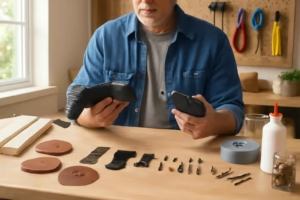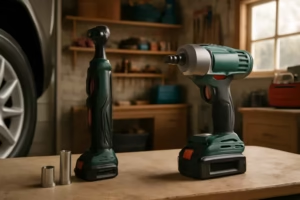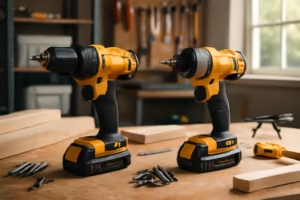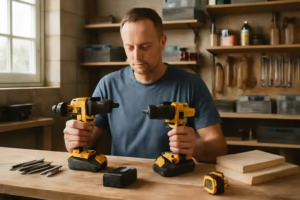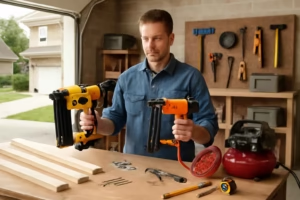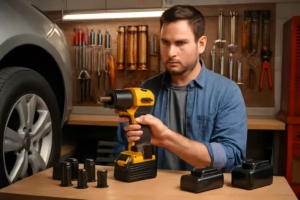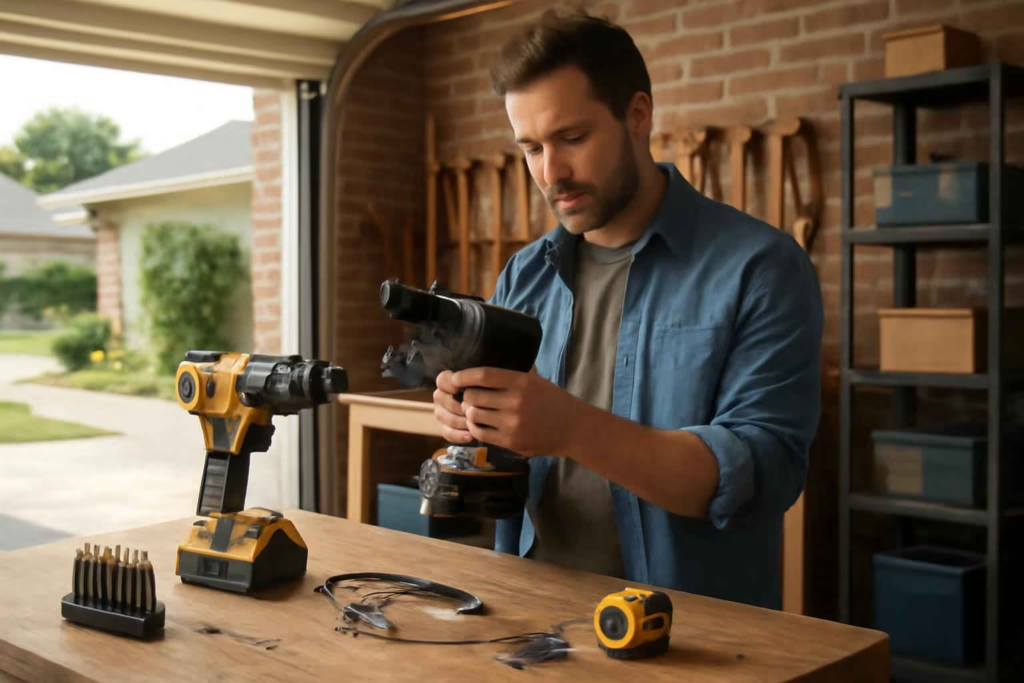
The best first power tool for most homeowners is a cordless drill/driver. It handles the widest range of everyday tasks, is easier to control than more specialized tools, and gives you the strongest long-term value when you are building a practical DIY kit from scratch.
That said, the right first purchase depends on what you actually plan to do. If your projects are mostly hanging shelves, assembling furniture, fixing loose hardware, and light drilling, a drill/driver is usually the clear winner. If you expect heavier fastening, lag bolts, or lots of deck screws, an impact driver may make more sense as an early second tool rather than your true first one.
This Get the site name/brand name dynamically guide breaks down which tool most homeowners should buy first, when another option is smarter, and how to avoid spending money on a tool that solves the wrong problem.
Quick answer: the best first power tool for most homeowners
For most American homeowners, the best first power tool is a cordless drill/driver.
- It is versatile: drills holes, drives screws, and handles a wide range of small repairs.
- It is beginner-friendly: easier to control than faster or more aggressive tools.
- It is useful immediately: furniture assembly, wall anchors, cabinet hardware, curtain rods, and basic home maintenance all become easier.
- It starts a battery platform: once you buy into one cordless system, future tools can often share the same batteries.
If you are choosing only one tool to start with, a drill/driver usually gives you the most use per dollar and the least chance of buyer’s regret.
Why a cordless drill/driver is usually the smartest first purchase
1. It solves the most common homeowner jobs
Most people do not need demolition or specialty cutting on day one. They need to tighten, mount, assemble, drill pilot holes, and occasionally bore into wood, drywall, or light materials. A cordless drill/driver covers those jobs well.
Typical uses include:
- assembling furniture
- installing blinds and curtain rods
- hanging shelves and pictures
- swapping cabinet pulls and door hardware
- drilling pilot holes for wood repairs
- installing hooks, organizers, and garage storage
2. It has a lower learning curve
A drill/driver gives you adjustable speed and clutch settings, which makes it easier to avoid stripped screws, damaged materials, and overdriving fasteners. That matters for beginners. A tool that is easier to control tends to get used more often.
3. It supports future tool decisions
Your first cordless purchase often locks in a battery ecosystem. Starting with a drill/driver gives you a sensible base before adding tools like an impact driver, oscillating multi-tool, cordless ratchet, or reciprocating saw later.
If you are comparing drill usefulness against other early purchases, see impact driver vs drill and how to choose the best cordless drill for DIY home projects.
When another first power tool might be better
A cordless drill is the default answer, not the universal answer. The best first power tool for homeowners can change based on the job mix.
| Tool | Best as a first tool when | Main limitation |
|---|---|---|
| Cordless drill/driver | You want one tool for general repairs, holes, and screws | Not the fastest option for heavy fastening |
| Impact driver | You mostly drive long screws, structural fasteners, or lots of decking screws | Less ideal for delicate driving and general drilling |
| Cordless screwdriver | You mainly assemble furniture and handle light-duty screws | Too limited for broader homeowner work |
| Oscillating multi-tool | You expect trim cuts, scraping, flush cuts, and awkward repair work | Not a substitute for a general drill/driver |
| Stud finder | You are not buying a true power tool, but safety for wall mounting is the top need | Does not replace a driver or drill |
Choose an impact driver first if…
An impact driver can be the better first buy if your projects are heavily focused on driving fasteners rather than drilling holes. Examples include:
- building a deck or fence
- driving long wood screws repeatedly
- installing lag screws
- working with dense framing lumber regularly
For most households, though, it is usually the second tool after a drill, not the first. A deeper comparison is in impact driver vs drill.
Choose a cordless screwdriver first if…
If you live in an apartment, have very light DIY needs, and mostly want help with flat-pack furniture, outlet covers, cabinet hinges, and simple household screws, a cordless screwdriver can be enough. It is compact and less intimidating.
But if you own a home and expect broader repair work, you may outgrow it quickly. In that case, a full drill/driver is the more durable choice.
Choose an oscillating multi-tool first if…
This is a niche but valid case. If you bought a fixer-upper and expect lots of odd repair cuts, undercutting trim, scraping caulk, removing old grout, or sanding in tight places, an oscillating multi-tool may deliver faster practical value than expected.
It is especially useful for problem-solving around the house. If that sounds like your situation, see oscillating multi-tool uses around the house and oscillating multi-tool vs rotary tool.
Best first power tool by homeowner type
| Homeowner type | Best first tool | Why |
|---|---|---|
| New homeowner | Cordless drill/driver | Best all-around tool for setup, mounting, repairs, and assembly |
| Apartment renter with light needs | Cordless screwdriver | Compact, simple, and good for low-torque tasks |
| DIY beginner planning shelves, wall storage, and furniture | Cordless drill/driver | Balanced mix of drilling and screw driving |
| Deck, fence, or framing-focused DIYer | Impact driver | Better for repeated long fasteners and tougher driving |
| Repair-focused homeowner dealing with trim, caulk, and awkward cuts | Oscillating multi-tool | Solves unusual repair problems other tools struggle with |
What to look for in your first power tool
Whether you choose a drill/driver or another tool, the same buying logic applies: prioritize real-world usefulness over flashy specs.
Battery platform
If you expect to buy more cordless tools later, battery compatibility matters. A strong first purchase is often less about the single tool and more about the platform it opens up.
Ask:
- Does this brand offer the other tools I will probably want later?
- Are replacement batteries easy to find?
- Is there a wide enough range for homeowners, not just pros?
Size and weight
Heavier is not always better. A compact tool is often easier to use in cabinets, closets, overhead work, and tight corners. For a first-time buyer, comfort usually matters more than chasing maximum power.
Control features
For drills, look for:
- variable speed trigger
- multiple clutch settings
- two-speed gearbox if available
- built-in LED light
- comfortable grip
Kit value
A starter kit with a charger, battery, and case can be the better value than buying bare tools. For many homeowners, one battery in use and one charging is a practical setup.
Common mistakes when buying your first power tool
- Buying for an imaginary future project. Buy for the next 6 to 12 months of real tasks, not a someday renovation.
- Choosing the most powerful tool instead of the most useful one. Power is not the same as versatility.
- Ignoring ergonomics. A tool that feels awkward often sits unused.
- Starting with a specialty tool. Specialty tools are great once you know your recurring jobs.
- Not thinking about accessories. Bits, chargers, blades, and batteries affect the true cost.
A simple decision framework
If you are still unsure, use this quick framework.
Buy a cordless drill/driver first if:
- you need one tool for general home use
- you expect both drilling and driving
- you are a beginner
- you want the safest default choice
Buy an impact driver first if:
- you already know most jobs involve driving long screws
- you do not care much about general-purpose drilling
- you expect tougher wood fastening work often
Buy a cordless screwdriver first if:
- your jobs are very light-duty
- you value compact size over versatility
- you are not planning broader DIY work
Buy an oscillating multi-tool first if:
- you are solving repair problems more than doing standard assembly
- you expect flush cuts, scraping, or trim adjustments
- you already have another way to drive screws
Helpful accessories for a first-time tool owner
The tool alone is not enough. A few basic accessories can make your first purchase much more useful.
- driver bit set
- drill bit set for wood and general household materials
- magnetic bit holder
- tape measure
- stud finder for wall projects
- safety glasses
If you are still building your setup, a drill bit set and a pair of safety glasses are often more useful than jumping straight to a second tool.
FAQ
Is a drill or impact driver better for a beginner?
A drill/driver is usually better for a beginner because it is more versatile and easier to control. It handles both drilling and driving, while an impact driver is more specialized for tougher fastening.
Should homeowners buy corded or cordless tools first?
For most homeowners, cordless makes more sense for a first tool because it is easier to grab for quick jobs and more convenient around the house. Corded tools still have advantages for high-power or long-duration work, but convenience usually wins for basic home use.
What is the most useful power tool for a new house?
The most useful power tool for a new house is usually a cordless drill/driver. New homeowners commonly need to mount items, assemble furniture, change hardware, and handle small repairs, which all fit that tool well.
Is a cordless screwdriver enough for home use?
It can be enough for light use, such as furniture assembly and simple screws. It is usually not enough for homeowners who expect to drill holes, use anchors, or handle more demanding repair work.
What should I buy after my first drill?
The next tool often depends on your projects. Many homeowners add an impact driver for faster fastening, a stud finder for safer wall work, or an oscillating multi-tool for versatile repair jobs.
Conclusion
If you want the best first power tool for homeowners, start with a cordless drill/driver unless your projects clearly point elsewhere. It covers the broadest range of everyday tasks, has the easiest learning curve, and creates a strong foundation for the rest of your tool kit.
The practical next step is simple: list the jobs you expect to do in the next year, then choose the tool that solves the highest number of them well. For most people, that answer is still the drill/driver.