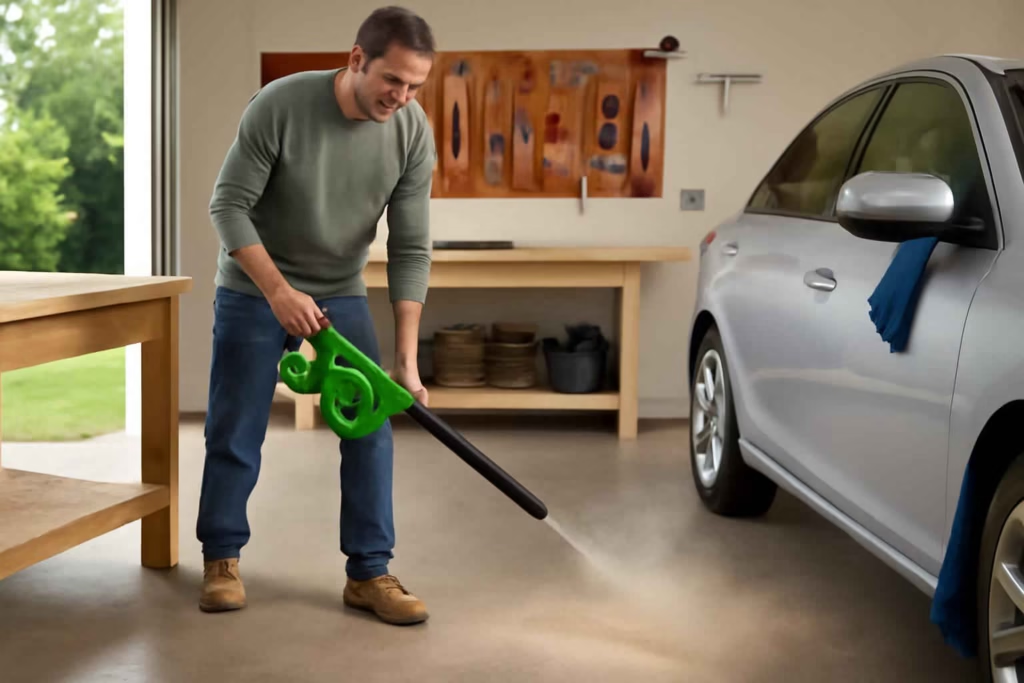
A cordless shop blower is a lightweight battery-powered blower designed for fast cleanup jobs such as clearing garage dust, drying water off a car, blowing debris off a patio, or cleaning sawdust from a workbench. For most homeowners, the best choice is not the most powerful model on paper. It is the one that balances airflow, runtime, size, noise, nozzle control, and battery compatibility with tools you already own.
For the Best Home Gear Hub audience, this is one of those tools that can save time every week without taking up much storage space. It sits between a leaf blower and a shop vacuum: faster than sweeping for dry debris, lighter than larger blowers, and more practical for quick tasks around the house.
Who should buy a cordless shop blower?
A cordless shop blower makes the most sense if you regularly do any of the following:
- Clean a garage, driveway edge, porch, or workshop
- Blow sawdust off tools and benches after DIY work
- Dry cars, wheels, mirrors, grills, or motorcycle parts after washing
- Clear grass clippings and light debris from sidewalks
- Clean out corners, storage shelves, or patio furniture
- Want a grab-and-go cleanup tool that starts instantly
If you mainly deal with heavy wet leaves or large yard cleanup, a dedicated outdoor blower is usually a better fit. If you mainly need suction for dust control, a vacuum is the better tool. If you want both, it may help to compare this category with a compact vac such as a cordless wet dry vacuum for garage cleanup.
What a cordless shop blower does better than other cleanup tools
| Tool | Best for | Main advantage | Main limitation |
|---|---|---|---|
| Cordless shop blower | Quick dry debris cleanup and car drying | Fast, portable, easy to grab | Does not collect debris |
| Leaf blower | Larger outdoor areas and yard debris | More airflow for bigger messes | Often bulkier than needed indoors |
| Shop vacuum | Dust collection, suction, and spill pickup | Actually removes debris from the area | Heavier and slower for quick blow-off tasks |
| Broom | Small hard-floor debris | Cheap and simple | Slower and less effective in corners and crevices |
The key takeaway is simple: a cordless shop blower is a convenience tool. It earns its place when speed matters.
How to choose the best cordless shop blower
1. Match the blower to the jobs you will actually do
Start with use case, not specs. Different jobs favor different tool shapes and airflow profiles.
- Garage and workshop cleanup: Look for compact size, a focused nozzle, and easy one-hand use.
- Car drying: Look for higher airspeed, variable control, and a nozzle that helps push water from mirrors, trim, wheels, and grilles.
- Patios and sidewalks: Look for more airflow and a comfortable grip for longer passes.
- Indoor dusting and bench cleanup: Look for lower-speed control so you do not blast dust everywhere.
If your jobs are mostly DIY-related, this tool pairs well with articles on tool selection such as choosing a tool bag for grab-and-go repairs and setting up a garage workbench.
2. Understand airflow: CFM vs MPH
Two specs show up on most blower listings: CFM and MPH.
- CFM refers to air volume. Higher CFM generally helps move more loose debris across a wider area.
- MPH refers to air speed. Higher MPH can help with stubborn debris in cracks and with pushing water off vehicle surfaces.
Neither number tells the whole story by itself. A blower for car drying often benefits from strong, concentrated air delivery, while a blower for garage floors may benefit from broader airflow. The shape of the nozzle and motor efficiency matter too.
Do not buy based only on the biggest advertised number. Real-world handling and battery runtime are often more important for homeowners.
3. Prioritize variable speed control
Variable speed is one of the most useful features in this category. It gives you better control for different tasks:
- Low speed for shelves, workbenches, or light indoor dust
- Medium speed for garage floors and patio furniture
- Higher speed for drying vehicles and clearing outdoor debris
A fixed high-speed blower can feel powerful in a product listing but frustrating in actual use. It may scatter debris too widely indoors, waste battery, and be louder than necessary.
4. Check battery platform compatibility
For many buyers, the smartest cordless shop blower is one that runs on batteries they already own. If you already use a cordless drill, impact driver, or rotary tool on a certain platform, staying in that ecosystem can reduce total cost.
That matters especially if you already invested in a homeowner-friendly cordless setup. For example, if you are building around common DIY tools, you may already own batteries from a drill or driver selected using guides like how to choose a cordless drill for DIY home projects.
When comparing battery platforms, consider:
- Whether batteries are interchangeable across your tools
- How many batteries you already own
- Whether fast chargers are available
- Whether compact and high-capacity packs are both offered
5. Look at runtime realistically
Runtime claims can be misleading if they are based on low speed with a large battery. Think in practical terms:
- Short burst cleanup around the garage may only need a few minutes at a time
- Car drying may need sustained use at medium or high speed
- Outdoor cleanup around patios or driveways may benefit from a larger battery pack
If you hate waiting on chargers, a second battery may be more valuable than chasing slightly higher advertised blower performance. That is often the best upgrade for convenience.
6. Evaluate weight and balance
This category works best when the tool feels easy to pick up and use without thinking about it. A blower that is technically powerful but front-heavy or awkward may sit unused on a shelf.
Look for:
- Comfortable one-hand operation
- A grip that does not force your wrist into an awkward angle
- Battery placement that does not make the nose feel too heavy
- A total weight you would be happy to use around a car or garage for several minutes
If your use is mostly quick cleanup, compactness often beats maximum output.
7. Pay attention to nozzle design
Nozzle design can make a surprising difference. A narrower nozzle may concentrate airflow for detail work, while a broader opening may move more loose debris over open surfaces.
Useful nozzle-related features include:
- Rubber-tipped or non-marring ends for work around vehicles
- Short nozzles for storage and maneuverability
- Extension tubes for reaching under benches or around equipment
- Concentrator attachments for cracks, trim, and wheel spokes
If your main use is car drying, nozzle control matters more than buyers often expect.
8. Do not ignore noise
Noise matters in garages, neighborhoods, and indoor-adjacent workspaces. A blower used frequently for short jobs should be easy to live with. Variable speed helps here too, because many cleanup tasks do not require full output.
If you often work in enclosed areas, also think about hearing protection. A blower may be safer and more comfortable to use when paired with basic shop PPE such as hearing protection earmuffs for workshop use.
9. Consider storage and grab-and-go convenience
One reason cordless shop blowers perform well as an evergreen homeowner tool is convenience. A model that stores easily is more likely to be used regularly.
Helpful storage features include:
- Wall-mount compatibility
- Compact body shape
- Removable tube for smaller storage footprint
- Battery platform shared with tools already stored nearby
If you are building a more efficient garage layout, smart tool organization matters just as much as tool selection.
Best cordless shop blower buying criteria by use case
| Use case | Most important features | Less important features |
|---|---|---|
| Garage dust and sawdust cleanup | Compact size, focused nozzle, variable speed, battery compatibility | Maximum outdoor blowing power |
| Car drying | Higher airspeed, non-marring nozzle, control around trim and mirrors, manageable weight | Wide debris-clearing tube |
| Patio and sidewalk cleanup | More airflow, comfortable grip, decent runtime | Fine detail attachments |
| Workshop bench cleanup | Low-speed control, precision nozzle, lightweight handling | Highest top-end output |
Common mistakes when buying a cordless shop blower
- Buying based only on max specs. Big numbers do not guarantee better real-world use.
- Ignoring your battery ecosystem. A bare tool can be a smart buy if you already own compatible batteries.
- Choosing a yard blower when you really want a shop tool. Larger is not always better indoors.
- Skipping variable speed. This reduces versatility for vehicles, benches, and indoor spaces.
- Underestimating storage size. A too-bulky tool gets used less often.
- Using a blower when a vacuum would be cleaner. For fine dust collection, suction is often the better answer.
When a cordless shop blower is a better buy than a cordless wet dry vacuum
Choose a cordless shop blower first if your main problem is moving dry debris quickly. Choose a cordless wet dry vacuum first if your main problem is collecting dust, cleaning vehicle interiors, or handling small wet messes.
If your garage sees both DIY work and general cleanup, many homeowners eventually end up with both tools because they solve different problems.
Useful accessories that can improve the experience
Not every buyer needs accessories, but a few can make a cordless shop blower more useful:
- Extra battery for longer jobs
- Fast charger for less downtime
- Detail nozzle or concentrator attachment
- Soft drying towel for finishing vehicle touch-up after blower drying
- Hearing protection for enclosed or longer sessions
If you want to browse compatible cleanup and detailing add-ons, practical options include microfiber drying towels for cars and blower nozzle attachments for cordless shop blower, as long as they match your tool platform and use case.
FAQ
Can a cordless shop blower replace a leaf blower?
Sometimes, but only for light cleanup. A cordless shop blower is great for garages, patios, driveways, and small debris. For heavy leaf cleanup or larger yards, a dedicated leaf blower is usually more efficient.
Is a cordless shop blower good for drying a car?
Yes, especially for pushing water out of mirrors, trim, grilles, wheel spokes, and other hard-to-towel areas. For best results, choose a model with strong airspeed, variable control, and a nozzle that is safe around painted surfaces.
What matters more, CFM or MPH?
It depends on the job. CFM helps move more loose debris, while MPH helps with concentrated airflow and water removal. For homeowner use, overall tool balance, nozzle design, and runtime matter almost as much as either number.
Are cordless shop blowers worth it for garage cleanup?
Yes, if you want fast cleanup without cords. They are especially useful for sawdust, dirt, grass clippings, and light debris on hard surfaces. They are less useful when you need true dust collection.
Should I buy a bare tool or a kit?
Buy a bare tool if you already own compatible batteries and a charger. Buy a kit if you are entering a new battery platform or want a dedicated battery for cleanup tasks.
Conclusion
The best cordless shop blower is the one that fits your actual cleanup habits: compact enough to grab quickly, powerful enough for your common jobs, and compatible with batteries you already use. For most homeowners, variable speed, practical runtime, comfortable handling, and the right nozzle matter more than chasing the highest advertised output. If you buy with those priorities in mind, a cordless shop blower can become one of the most useful quick-cleanup tools in your garage.