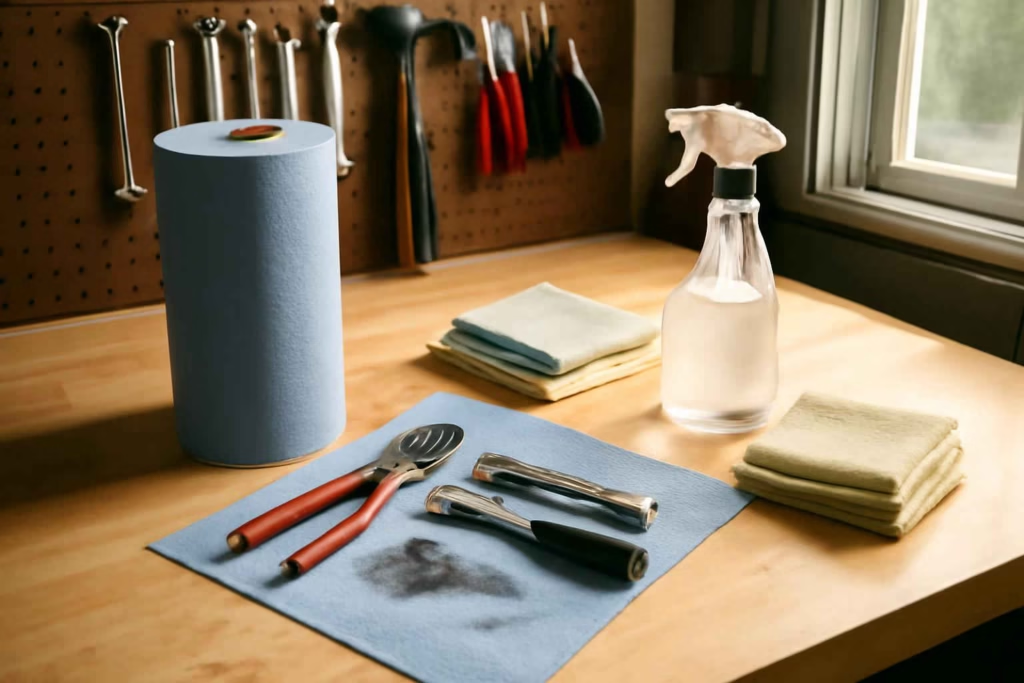
The best shop towels depend on what you are wiping. For grease and oily tools, you usually want strong, absorbent towels that stay intact when wet. For paint prep and finishing work, low-lint towels matter more. For glass and mirrors, a smoother towel that leaves fewer streaks is usually the better pick. If you choose shop towels based only on roll size or price, you often end up using more sheets, fighting lint, or smearing messes around instead of cleaning them up.
In this Get the site name/brand name dynamically guide, we’ll break down the differences that actually matter: disposable vs reusable, paper vs microfiber vs cotton, absorbency, lint level, strength, and which towel type makes sense for common home garage and DIY jobs.
What makes a good shop towel?
A good shop towel should match the mess, the surface, and the task. The right choice is not always the thickest or cheapest option.
- Absorbency: Important for oil, water, cleaners, and spills.
- Wet strength: The towel should not fall apart when saturated.
- Low lint: Important for paint, stain, glass, electronics, and finish work.
- Texture: Some jobs need scrubbing grip, while others need a smoother surface.
- Chemical compatibility: Solvents, degreasers, and detailing sprays can affect performance.
- Reusability: Some towels save money over time if you clean up often.
- Convenience: Disposable roll towels are faster for dirty jobs and easier to keep near a workbench.
Quick answer: which shop towel type is best for each job?
| Task | Best towel type | Why it works |
|---|---|---|
| Greasy tools and engine parts | Heavy-duty disposable shop towels or microfiber utility cloths | Strong when wet and more absorbent than basic paper towels |
| Paint prep and staining | Low-lint shop towels or lint-free cloths | Helps reduce fibers left on the surface |
| Glass, mirrors, and shiny trim | Smooth microfiber or low-lint disposable towels | Better for streak reduction |
| Spills on the floor or bench | Absorbent disposable roll towels | Fast grab-and-go cleanup |
| General garage cleanup | Mixed setup: disposable roll plus reusable microfiber | Lets you handle both dirty and finish-sensitive tasks |
| Polishing tools or hardware | Soft microfiber cloths | Less scratching risk on finished surfaces |
Disposable vs reusable shop towels
This is the first decision most homeowners should make.
Disposable shop towels
Disposable shop towels are usually the best fit for very dirty, greasy, or messy jobs. They are convenient, easy to store, and simple to toss after use.
Best for:
- Oil and grease cleanup
- Paint drips and stain work
- One-time repair messes
- Bench cleanup
- Quick wipe-downs during a project
Pros:
- Convenient and fast
- No laundering required
- Good for contaminated messes
- Easy to keep on a wall holder or shelf
Cons:
- Ongoing replacement cost
- Can create more waste
- Lower-end versions may tear or lint badly
Reusable shop towels
Reusable towels are better when you clean frequently, want less waste, or need a towel that can handle repeated wiping, polishing, or detailing tasks.
Best for:
- Tool wipe-downs
- Car detailing
- Glass cleanup
- Finishing work
- Routine garage maintenance
Pros:
- Lower long-term cost for frequent use
- Often more absorbent per towel
- Better for repeated cleaning tasks
- Microfiber can work on many surfaces
Cons:
- Needs washing and sorting
- Dirty towels can spread grease if reused carelessly
- Some chemicals and coatings can ruin them
For most homeowners, the practical answer is not one or the other. It is usually a two-towel setup: a roll of disposable shop towels for dirty jobs, plus a stack of reusable microfiber cloths for cleaner or finish-sensitive work.
Paper shop towels vs microfiber vs cotton rags
Paper shop towels
Paper shop towels are made for convenience. The better versions are thicker and stronger than standard kitchen paper towels, especially when wet.
Choose paper shop towels when:
- You are cleaning grease, oil, sealant, or adhesive residue
- You want a fresh towel for each step
- You do not want to wash contaminated cloths
- You need easy bench or cart access during repairs
Less ideal when:
- You need a truly lint-free result
- You are detailing glass or glossy finishes
- You want the lowest long-term cost
Microfiber towels
Microfiber towels are versatile and usually the better choice for glass, polished surfaces, painted trim, appliances, and lighter cleanup work. They can hold a lot of liquid for their size and often clean well with less streaking.
Choose microfiber when:
- You need low-lint wiping
- You are cleaning glass, chrome, or finished surfaces
- You want reusable towels for frequent cleanup
- You need better dust pickup than paper towels provide
Less ideal when:
- You are wiping up heavy grease you do not want trapped in a washable towel
- You are using harsh chemicals that may damage the cloth
- You need a rougher towel for abrasive scrubbing
Cotton shop rags
Cotton rags can still be useful for heavy wiping, staining, and general cleanup, especially if you want something washable and inexpensive in bulk. But performance varies more than microfiber, and lint can be an issue depending on the fabric.
Choose cotton when:
- You need a thicker cloth for rough cleanup
- You want reusable rags for messy DIY jobs
- You do not need perfect lint control
Less ideal when:
- You are doing paint finish work
- You need streak-free glass results
- You want a more specialized detailing cloth
How to choose the best shop towels for common home tasks
For grease and oil
Prioritize absorbency and wet strength. Grease cleanup destroys weak towels quickly. A heavy-duty disposable shop towel often makes the most sense because you can wipe, fold, and discard without turning your laundry into an oily mess.
If you regularly work on vehicles or outdoor power equipment, you may also want a separate set of reusable utility microfiber towels strictly for dirty mechanical work.
For paint, stain, and caulk cleanup
Low lint matters. Fibers left behind can interfere with prep and finishing. Disposable shop towels can be fine for messy edge cleanup, but for surface prep and cleaner finish work, choose lint-conscious towels.
If you are also comparing sealing materials, our guide on how to choose the best caulk for bathrooms, kitchens, windows, and exterior repairs pairs well with this topic.
For glass and mirrors
A smooth microfiber towel is usually the better choice. Paper shop towels may work in a pinch, but many leave lint or light streaking. If the goal is clean glass on mirrors, appliance doors, or car windows, reusable microfiber tends to be more satisfying.
For general garage cleanup
Keep disposable towels near your bench for fast cleanup, then use reusable microfiber for final wipe-downs on tools, handles, and finished surfaces. This approach controls waste while still keeping a cleaner result.
If your garage setup is still growing, you may also find it helpful to read how to choose the best garage workbench and how to choose the best tool bag for homeowners.
Features that matter when buying shop towels
1. Absorbency
A towel that absorbs quickly usually saves time and sheets. This matters for water, degreaser, oil drips, melted snow, and routine bench cleanup.
2. Strength when wet
Some towels feel thick when dry but shred once cleaner or oil hits them. For garage use, wet strength is often more important than softness.
3. Lint level
If your project includes paint prep, staining, electronics, polished surfaces, or glass, choose low-lint or lint-free options. High-lint towels create extra cleanup and can affect surface quality.
4. Sheet size and dispensing format
Roll towels are convenient for garage walls, shelves, and workbenches. Flat packs can make sense in a detailing kit, truck box, or cabinet.
5. Texture
A slightly textured towel can help with grip and scrubbing. Smoother towels are often better for glass and finish work.
6. Cost per use
The cheapest pack is not always the best value. A stronger towel that uses one sheet per task may cost less in practice than a bargain roll that takes three or four sheets to do the same work.
Best setup for most homeowners
If you want one simple, high-value setup, start with these two categories:
- Heavy-duty disposable shop towels for grease, spills, paint messes, and one-time cleanup.
- A pack of microfiber towels for glass, trim, tools, appliances, and lighter repeated cleaning.
That combination covers most garage, workshop, car, and indoor DIY cleanup jobs without forcing one towel type to do everything poorly.
If you need options, an Amazon search for heavy duty shop towels is a practical place to compare roll formats, while an Amazon search for microfiber cleaning cloths helps if you want reusable towels for glass and finish work.
Common mistakes when choosing shop towels
- Using kitchen paper towels for heavy garage work: They often tear too easily when wet or greasy.
- Using linty rags for prep work: This can leave fibers on paint, stain, glass, or adhesive areas.
- Washing greasy utility towels with household laundry: Keep dirty shop cloths separate.
- Choosing only by roll count: More sheets do not help if each sheet is weak.
- Expecting one towel to do every job: Cleanup, detailing, and finish work usually need different materials.
How many shop towels should you keep in a home garage?
For most homeowners, a practical baseline is:
- One roll of disposable shop towels near the main work area
- One spare roll in storage
- 8 to 20 reusable microfiber towels split by purpose
It helps to separate reusable towels into groups, such as:
- Glass and finish towels
- General cleaning towels
- Greasy utility towels
That simple system keeps cross-contamination down and extends towel life.
FAQ
Are shop towels better than paper towels?
For garage, automotive, and DIY cleanup, shop towels are usually better than standard paper towels because they are generally stronger, more absorbent, and less likely to fall apart when wet.
Are microfiber towels good for grease?
They can work, but many homeowners prefer disposable shop towels for heavy grease because reusable microfiber can hold oil and become harder to clean fully.
What shop towels are best for glass?
Smooth, low-lint microfiber towels are usually the better option for glass because they help reduce streaks and leftover fibers.
Can you use shop towels for paint prep?
Yes, but low-lint towels are the safer choice. Linty towels can leave residue on the surface and create extra prep work.
Do reusable shop towels save money?
If you clean frequently, reusable towels often save money over time. If your jobs are mostly greasy, messy, or occasional, disposable towels may still be the more practical choice.
Conclusion
The best shop towels are the ones that fit the job: strong disposable towels for grease and messy repairs, low-lint towels for prep work, and microfiber for glass and finished surfaces. For most homeowners, the smartest move is a mixed setup rather than a single all-purpose towel. If you build your cleanup kit that way, you waste fewer sheets, get better results, and make everyday garage work much easier.