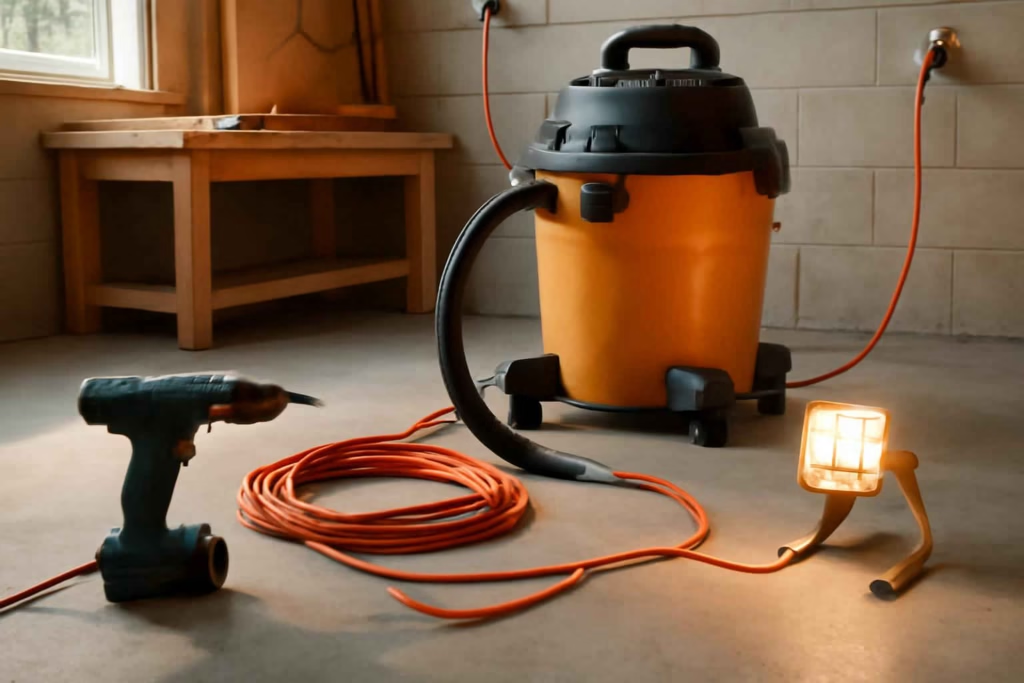
The best extension cord depends on what you are powering, how far the cord needs to run, and whether you are indoors or outdoors. For most homeowners, the key decision is choosing the right wire gauge. A lower gauge number means a thicker cord that carries power better over distance. If you plan to run power tools, heaters, shop equipment, or outdoor gear, a heavier-duty cord is usually the safer choice.
In this Get the site name/brand name dynamically guide, you will learn how extension cord gauges work, when to use 16/14/12-gauge cords, which jacket types make sense outdoors, and what mistakes to avoid so your tools run properly without overheating the cord.
Why extension cord choice matters
An extension cord is not just a convenience accessory. It affects tool performance, motor life, and safety. A cord that is too thin or too long can cause voltage drop. That can make a drill feel weak, cause a shop vac to run hotter, or prevent outdoor equipment from performing as expected.
Using the right cord helps with:
- more reliable tool performance;
- lower risk of overheating;
- better durability on jobsite-style tasks at home;
- safer outdoor operation;
- fewer nuisance trips on higher-draw equipment.
Extension cord sizes explained: what gauge means
The most important spec on an extension cord is the wire gauge, often written as 16 AWG, 14 AWG, or 12 AWG. AWG stands for American Wire Gauge.
- 16-gauge: lighter-duty, best for lamps, chargers, small household devices, and some low-draw tools on short runs.
- 14-gauge: a good middle ground for many homeowner tasks and moderate tool use.
- 12-gauge: better for heavier loads, longer runs, and more demanding power tools or outdoor equipment.
Important: the smaller the gauge number, the thicker and more capable the cord. That is why a 12-gauge extension cord is heavier-duty than a 16-gauge cord.
Quick extension cord selection table
| Use case | Typical cord choice | Why it works |
|---|---|---|
| Phone charger, lamp, small fan | 16-gauge, short length | Low power draw and indoor use |
| Drill, jigsaw, work light | 14-gauge | Handles many common DIY tools better than light household cords |
| Shop vac, circular saw, air mover | 12-gauge | Better for higher draw and startup load |
| Leaf blower, hedge trimmer, outdoor tools | 12- or 14-gauge outdoor-rated | Improves safety and performance outside |
| Portable heater or heavy continuous load | Avoid extension cord if possible | High-draw devices are safer on a properly rated wall outlet |
How cord length changes what you should buy
Length matters because longer cords increase resistance. As cord length increases, the cord may deliver less effective power to the tool.
That means:
- shorter is generally better;
- heavier gauge becomes more important on longer runs;
- a 16-gauge cord that is acceptable at a short distance may be a poor choice at a longer distance.
If you often work far from an outlet, it usually makes more sense to buy a thicker cord rather than simply a longer light-duty one.
Practical rule for homeowners
If you are unsure, choose the shortest cord that reaches comfortably and go one step heavier on gauge for power tools or outdoor work. That extra margin is often worth it for saws, vacuums, inflators, and seasonal equipment.
Indoor vs outdoor extension cords
Not every extension cord is made for outdoor conditions. Outdoor-rated cords usually have tougher insulation and jackets designed to handle moisture, abrasion, sunlight, and temperature changes better than basic indoor cords.
Choose an outdoor-rated cord when you are using it for:
- leaf blowers and trimmers;
- holiday lights and seasonal decor;
- garage-to-driveway projects;
- pressure washers and car-cleaning tools;
- temporary power in damp locations.
Even with an outdoor cord, keep connections out of standing water and follow the tool manufacturer’s instructions. Outdoor use also pairs well with GFCI protection where appropriate. If you are planning electrical safety upgrades, a related resource is how to choose a smart GFCI outlet.
What amp rating means on an extension cord
An extension cord’s amp rating indicates how much current it can safely carry under intended conditions. Power tools and motors may draw more power at startup than during steady operation, so a cord that seems barely adequate on paper may still be a poor real-world match.
For homeowners, the practical takeaway is simple:
- small electronics and lamps can use lighter cords;
- motor-driven tools usually benefit from heavier cords;
- high-heat devices deserve extra caution;
- when in doubt, use the equipment label and choose the safer cord option.
If your tool manual specifies a minimum gauge for a given cord length, follow that guidance first.
Best extension cord types by common home use
For power tools in the garage or workshop
Choose a 12- or 14-gauge cord with durable insulation. If you regularly use a circular saw, shop vac, compressor, or other motorized equipment, 12-gauge is often the more flexible long-term choice.
If you are building out your tool setup, these guides may help you match cords to your equipment: best shop vac for garage dust and wet messes and best work light for home repairs and garage projects.
For outdoor yard tools
Use an outdoor-rated cord in 12 or 14 gauge, especially for corded blowers, trimmers, and similar equipment. Brightly colored jackets can also help reduce trip hazards and accidental cutting.
For holiday lighting and light-duty outdoor use
If the load is small, a lighter outdoor-rated cord may be enough, but durability and weather rating still matter more than saving a few dollars.
For appliance-style loads
Be cautious. Many appliances and heaters are better plugged directly into a wall outlet. Extension cords are often a poor match for devices with sustained high draw.
Common extension cord jacket markings
You may see letters printed on the cord jacket. Exact markings vary, but they usually indicate where and how the cord is designed to be used, such as hard service, junior service, moisture resistance, or outdoor suitability.
If you are shopping online, product listings do not always explain these markings clearly. In practice, most homeowners should focus on:
- whether the cord is indoor, outdoor, or indoor/outdoor rated;
- wire gauge;
- cord length;
- grounded vs ungrounded plug style;
- visible safety certification from a recognized testing lab.
Grounded vs ungrounded extension cords
A three-prong extension cord includes grounding and is the better choice for most power tools, shop equipment, and outdoor use. A two-prong cord may be acceptable for some small double-insulated devices, but it is not the right general-purpose choice for a garage or DIY setup.
Never remove the grounding prong to force a plug to fit.
Features worth paying for
Some extension cord upgrades are genuinely useful rather than just marketing.
- Lighted ends: helpful for confirming power at a glance.
- Multiple outlets on one end: useful for temporary work zones, but do not overload the cord.
- Cold-weather flexibility: valuable if you work in winter.
- Abrasion-resistant jackets: good for garage floors, driveways, and yard use.
- Bright colors: easier to see around tools and foot traffic.
Extension cord mistakes to avoid
- Using a cord that is too thin for the tool. This is one of the most common homeowner mistakes.
- Buying more length than you need. Longer is not better if the cord is undersized.
- Using indoor cords outside. The jacket may not hold up to moisture, sunlight, or rough surfaces.
- Daisy-chaining multiple extension cords. This adds resistance and creates more failure points.
- Running cords under rugs or through pinch points. Heat and insulation damage become harder to detect.
- Using a damaged cord. Cuts, crushed sections, and loose ends are reasons to replace it.
How to inspect an extension cord before use
A quick check takes less than a minute:
- look for cuts, frayed insulation, or exposed wire;
- check that the plug blades are straight and secure;
- make sure the outlet end grips plugs firmly;
- confirm the jacket is rated for the environment;
- uncoil the cord fully for heavier loads to reduce heat buildup.
Should you use an extension cord with a space heater?
Usually no. Space heaters and other high-draw heating devices are commonly safer when plugged directly into a wall outlet. Even if a heavy-duty extension cord exists, the manufacturer may advise against using one. Always follow the appliance instructions.
Should you use a retractable cord reel?
A retractable reel can be convenient in a garage or workshop, but the same sizing rules still apply. Choose a reel with the proper gauge and length for your tools, and avoid running higher loads while the cord is tightly coiled unless the product is specifically designed for it.
Extension cord buying checklist
If you want one simple framework, use this checklist before you buy:
- Device type: light electronics, moderate tool, or heavy motor load?
- Environment: indoor, garage, driveway, yard, or damp area?
- Length: what is the shortest practical run?
- Gauge: would 14-gauge work, or is 12-gauge the safer long-term choice?
- Plug style: do you need a grounded three-prong cord?
- Durability: does the jacket need to resist abrasion, weather, or cold?
Recommended buying approach for most homeowners
If you only want to buy one versatile extension cord for general DIY use, a 12-gauge outdoor-rated grounded cord in a practical medium length is often the most broadly useful option. It is heavier and more expensive than a light household cord, but it covers more power-tool and outdoor scenarios with less compromise.
If you want a second cord, add a lighter short indoor cord for lamps, chargers, and quick household tasks.
For shoppers comparing options on Amazon, a practical starting point is 12-gauge outdoor extension cord or 14-gauge extension cord.
FAQ
Is a 12-gauge extension cord better than a 14-gauge cord?
It is better for heavier loads and longer runs because the wire is thicker. It is not automatically necessary for every task, but it gives more margin for power tools and outdoor equipment.
What extension cord should I use for a circular saw?
A 12-gauge cord is often the safer choice, especially if the run is not very short. Saws can place meaningful demand on a cord, particularly at startup and under load.
Can I use an indoor extension cord outside temporarily?
It is better not to. Outdoor conditions introduce moisture, abrasion, and temperature exposure that indoor cords may not be designed to handle.
Why does my tool feel weak on an extension cord?
A cord that is too long or too light can cause voltage drop. That can reduce tool performance and increase heat.
Are orange extension cords always for outdoor use?
No. Color can improve visibility, but you still need to check the cord’s rating, gauge, and intended use.
Final takeaway
The best extension cord for home use is the one that matches the load, distance, and environment without pushing the limits. For many homeowners, that means choosing a grounded outdoor-rated 12- or 14-gauge cord instead of a thin bargain cord. If you power tools, work in the garage, or run equipment outdoors, sizing up is often the smarter long-term decision.