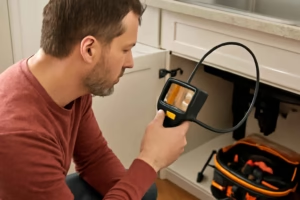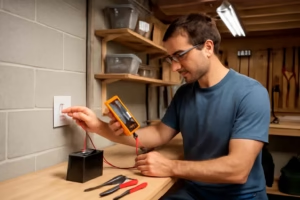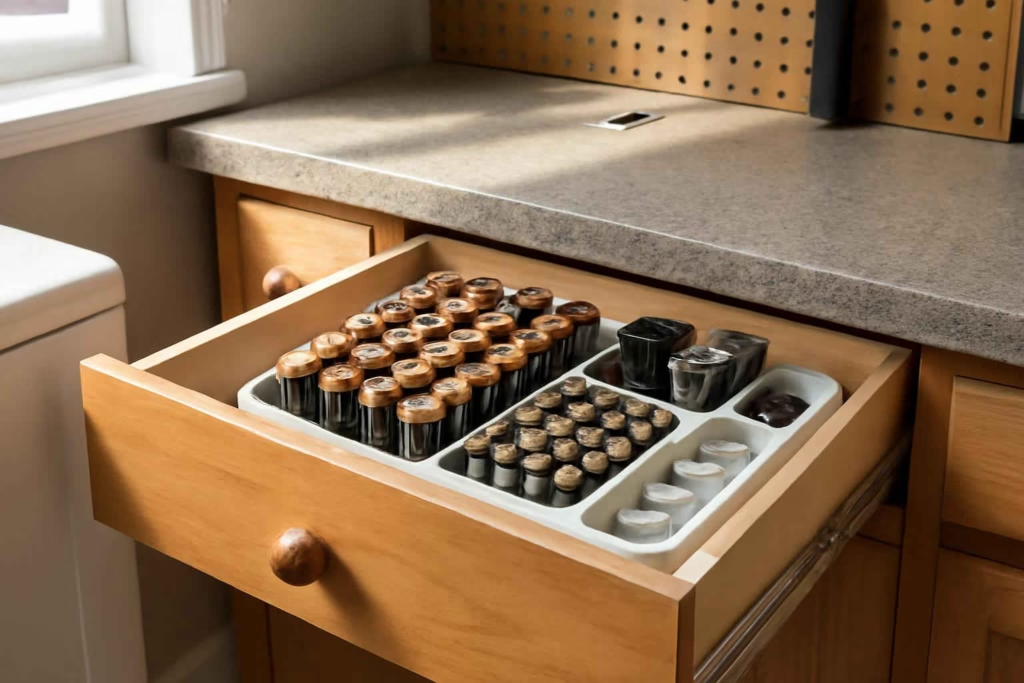
A battery organizer helps homeowners keep loose batteries sorted, protected, and easy to find. The best choice depends on where you store batteries, which sizes you use most, whether you keep rechargeables and disposables together, and how much protection you want against shorting, moisture, and clutter. For most homes, the right organizer is one that fits common battery sizes clearly, closes securely, and makes it easy to see what you already have before you buy more.
This guide from Best Home Gear Hub breaks the decision down by storage style, capacity, battery compatibility, safety, and real-world household use cases so you can choose an organizer that actually fits your space and habits.
Who benefits most from a battery organizer?
Battery organizers are especially useful if you regularly keep:
- AA and AAA batteries for remotes, toys, flashlights, and thermostats
- 9V batteries for alarms and specialty devices
- Coin cells for small electronics, key fobs, and backup batteries
- Rechargeable cells that need to stay separated from fresh and depleted batteries
- Emergency power supplies for storms and outages
If you already own tools and preparedness gear, organized battery storage also pairs well with items like a work light for home repairs and power outages or a portable power station for home backup and emergencies.
What makes one battery organizer better than another?
The best battery organizer is not necessarily the biggest one. It is the one that matches your battery mix, storage location, and access needs.
Focus on these five buying factors first:
- Battery size support: Make sure it holds the sizes you actually use, not just AA and AAA.
- Storage location: A drawer organizer works differently from a wall-mounted case in a garage.
- Protection: Individual slots and secure closure help prevent loose contact and clutter.
- Capacity: Enough space is good, but oversized storage often turns into a junk bin.
- Visibility: Clear lids, labeled sections, or easy layout reduce duplicate purchases and dead-battery confusion.
Battery organizer types: which style fits your home?
| Type | Best for | Main advantages | Possible downside |
|---|---|---|---|
| Drawer organizer | Kitchens, utility rooms, home offices | Easy access, clean look, fast to sort | Needs enough drawer depth and width |
| Wall-mounted organizer | Garages, workshops, utility spaces | Keeps batteries visible and off work surfaces | Less portable |
| Portable battery case | Emergency kits, RVs, sheds, travel use | Easy to carry, usually closes securely | May hold fewer batteries |
| Organizer with tester | Households that use many disposable batteries | Helps identify weak or dead cells before reuse | Tester quality varies |
| Modular organizer tray | Custom drawers and mixed storage systems | Flexible layout and expandable setup | Can be less secure for moving around |
How to choose the right capacity
Start with what your household actually uses in a normal month or season. A practical battery organizer should hold your common reserve supply without encouraging years of random battery accumulation.
A simple planning method:
- Light-use household: Mostly remotes, clocks, and a few flashlights
- Average-use household: Toys, smart home accessories, tools, flashlights, seasonal decor, game controllers
- Heavy-use household: Frequent battery use across tools, outdoor gear, emergency kits, and kids’ devices
If you are building out a more complete homeowner setup, it may also help to review an essential homeowner tool kit so your storage choices work together instead of becoming scattered across drawers and bins.
Which battery sizes should the organizer support?
Do not assume every organizer handles all battery formats well. Many are optimized for AA and AAA cells and only add limited room for larger or specialty batteries.
Check for support for:
- AA
- AAA
- C
- D
- 9V
- Coin/button batteries
- Rechargeable AA and AAA cells
If you use battery-powered tools, lights, or inflators, remember that tool batteries are usually stored separately from household replaceable cells. A battery organizer for loose household batteries will not replace proper storage for cordless tool packs.
Is a battery organizer with a tester worth it?
Sometimes, yes. A built-in tester is useful if your home often ends up with a mix of fresh, partly used, and questionable batteries. It can reduce waste and help you avoid tossing usable cells too soon.
A tester is most helpful when:
- You have children’s toys that seem to drain batteries unpredictably
- You rotate flashlights and emergency gear
- You frequently find loose batteries in junk drawers
- You want to separate fresh, used, and dead batteries more systematically
A tester is less important if you mostly buy small quantities and replace batteries immediately when devices stop working.
Safety considerations that matter
Battery storage is simple, but it still benefits from a few basic precautions. The main goal is to prevent loose contact, moisture exposure, and confusion between fresh and depleted cells.
Choose organizers with secure battery separation
Individual slots or clearly divided sections help keep terminals from touching metal objects or other batteries unnecessarily. This matters most for 9V batteries and loose coin cells.
Store in a cool, dry location
A battery organizer should protect from clutter, but it should also be placed somewhere stable. Avoid damp basements unless the organizer seals well and the area stays reasonably dry. Avoid hot locations such as attics, cars, or shelves near heaters.
Keep coin batteries away from children
If your home uses button or coin cells, choose an organizer with a lid that closes securely and keep it out of reach of children. These batteries need more caution than typical AA or AAA storage.
Separate fresh, used, and rechargeable batteries
One of the biggest real-world mistakes is mixing everything together. A good organizer makes status sorting easier, whether through labels, separate compartments, or simple household rules.
Best organizer materials and build features
You do not need a premium organizer for basic home use, but cheap construction can become annoying fast. Look for:
- Rigid plastic or durable composite construction that does not flex heavily when full
- A secure lid or closure if the organizer will be moved or stored vertically
- Clear cover or visible layout so inventory is easy to scan
- Non-slip feet or stable shape for shelf or drawer use
- Simple labeling options if you want separate zones for fresh and used cells
If you are organizing a garage or workshop, battery storage often works best when paired with broader storage planning, such as a garage workbench setup or the right tool bag for grab-and-go repairs.
How to match the organizer to where you will use it
Best for kitchen or utility drawers
Choose a low-profile tray or flat case with clear slots for common battery sizes. Visibility and compact footprint matter more than maximum capacity.
Best for garage shelves or workshops
Choose a sturdier organizer with a latch or wall-mount option. Dust resistance, portability, and larger capacity usually matter more here.
Best for emergency preparedness
Choose a case that closes securely, is easy to grab in low light, and stores the battery types used by flashlights, radios, lanterns, and small safety devices.
Best for families with lots of gadgets and toys
Choose an organizer with broad size compatibility and enough sections to separate fresh batteries from partly used ones.
Common mistakes to avoid
- Buying by total capacity instead of battery sizes you actually use
- Choosing a large organizer that does not fit your intended drawer or shelf
- Mixing rechargeables with disposable batteries in the same unlabeled section
- Using a loose open tray for coin cells or 9V batteries
- Storing batteries in a hot garage cabinet without checking temperature swings
- Ignoring how often you need to move the organizer
A simple decision framework
If you want a fast way to choose, use this framework:
| Your situation | Best organizer style | Priority features |
|---|---|---|
| Mostly household AA and AAA use | Drawer organizer | Compact shape, clear layout, easy access |
| Garage or workshop storage | Portable case or wall-mounted organizer | Latch, durability, larger capacity |
| Emergency backup supplies | Portable closed case | Secure lid, size variety, fast grab-and-go access |
| Mixed battery sizes including 9V and coin cells | Compartment case with secure sections | Separation, labeling, specialty battery support |
| Frequent battery turnover | Organizer with tester | Status checking, sorting efficiency |
Should you buy battery storage separately for rechargeables?
Often, yes. If you use rechargeable batteries regularly, separate storage can make your system much easier to manage. It helps you divide:
- fresh disposable batteries
- used batteries waiting for recycling
- fully charged rechargeables
- discharged rechargeables waiting for charging
That setup is especially helpful if your household uses battery-powered maintenance gear, lights, or preparedness items alongside everyday electronics.
Helpful add-ons that may actually be worth it
Most people only need the organizer itself, but a few add-ons can improve the system:
- battery tester if your chosen organizer does not include one
- rechargeable battery storage case for separate charge-state management
- label maker for home organization if you want clearly marked fresh, used, and rechargeable sections
These are most useful when they solve a real organization problem, not just add accessories to a simple setup.
FAQ
What is the best place to store a battery organizer?
The best place is a cool, dry, easy-to-reach spot such as a utility drawer, closet shelf, or garage cabinet with stable conditions. Avoid damp, very hot, or freezing locations.
Can you store rechargeable and disposable batteries in the same organizer?
Yes, but they should be kept in clearly separate sections. Mixing them together without labels makes it much easier to grab the wrong battery type or charge state.
Are battery organizers with testers accurate enough for home use?
Many are good enough for basic household sorting, especially for identifying obviously weak batteries. They are best used as a practical screening tool rather than a precision measurement device.
Do 9V batteries need special storage?
They benefit from more careful storage because their terminals can make contact more easily than cylindrical batteries. An organizer with dedicated 9V slots or secure separation is a smart choice.
Is a wall-mounted battery organizer better than a drawer organizer?
It depends on where you use it. Wall-mounted storage is often better in garages and workshops, while drawer organizers are usually better for kitchens, laundry rooms, and household utility spaces.
Conclusion
The best battery organizer is the one that fits your actual battery sizes, storage space, and household routines. For most homeowners, that means a compact, clearly divided organizer with secure storage for AA, AAA, and a few specialty cells. If you deal with lots of mixed or partly used batteries, a model with a tester or a separate rechargeable system is often worth it. Choose for visibility, fit, and safe separation first, and capacity second.