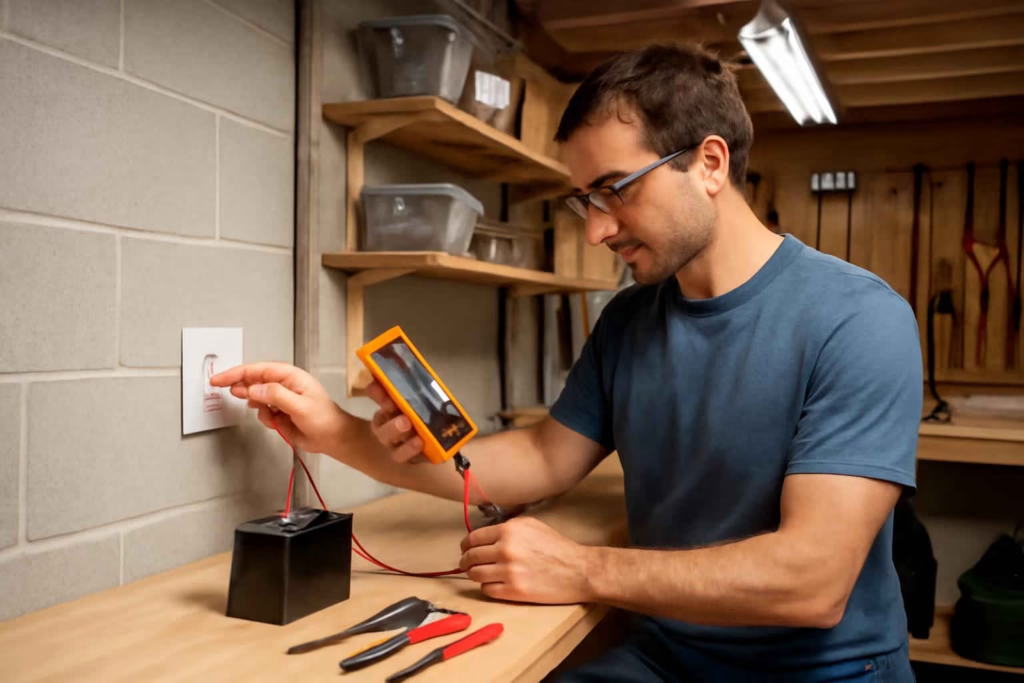
A digital multimeter is one of the most useful tools a homeowner can own if you want to check batteries, test outlets, verify continuity, and troubleshoot simple electrical problems without guessing. The best digital multimeter for home use is usually not the most advanced model. It is the one that gives you clear readings, basic safety protection, easy dial settings, and the functions you will actually use around the house.
In this Get the site name dynamically guide, we will break down which multimeter features matter, which ones most homeowners can skip, and how to match the tool to common home tasks such as checking dead receptacles, testing appliance cords, and verifying whether a breaker circuit is live.
Who should buy a digital multimeter?
A digital multimeter makes sense for homeowners who want to handle basic troubleshooting before replacing parts or calling for help. It is especially useful if you regularly do small repairs, install light fixtures, maintain vehicles, or keep battery-powered tools and devices around the house.
- Good fit: homeowners, DIY beginners, garage tinkerers, and anyone building a practical home tool kit
- Less necessary: people who never troubleshoot anything beyond swapping a bulb or resetting a breaker
- Not a substitute for an electrician: complex wiring changes, service panel work, and uncertain high-voltage problems still call for professional help
If you are still building your starter kit, our guide to essential homeowner tools to buy first can help you prioritize what belongs next to a multimeter.
What a digital multimeter actually does
A digital multimeter measures electrical values so you can diagnose simple problems instead of guessing. For most home users, the important functions are voltage, continuity, resistance, and basic current measurement. Some models also test frequency, capacitance, temperature, or non-contact voltage, but those extras are not always necessary.
| Function | What it tells you | Typical home use |
|---|---|---|
| AC voltage | Whether household power is present | Checking outlets, switches, and light fixture circuits |
| DC voltage | Battery or low-voltage power level | Testing car batteries, AA batteries, tool batteries, doorbell circuits |
| Continuity | Whether a wire or connection forms a complete path | Checking cords, fuses, switches, and simple wiring breaks |
| Resistance | How much a component resists electrical flow | Testing heating elements, verifying component condition, confirming open circuits |
| Current | How much electrical flow is moving through a circuit | More advanced diagnostics, often less important for beginners |
The best digital multimeter for home use: what to prioritize
If your main goal is home electrical troubleshooting and DIY repairs, prioritize safety, readability, and simplicity before advanced measurement modes.
1. Clear, easy-to-read display
A backlit display is worth having if you work in basements, utility rooms, garages, or under sinks. Large digits matter more in real use than a long feature list.
2. Auto-ranging for easier use
Auto-ranging multimeters automatically choose the measurement range for the value being tested. That makes them easier for beginners and faster for general home troubleshooting. Manual-ranging models can still work well, but they add one more step and more room for user error.
3. Basic functions most homeowners actually need
For most buyers, the core checklist is simple:
- AC voltage
- DC voltage
- Continuity with audible beep
- Resistance
- Diode test or battery testing capability
- Backlit screen
If you also work on vehicles, lawn equipment, or battery chargers, DC functions become even more important. A digital multimeter for home use with automotive-friendly DC voltage ranges can cover both house and garage tasks.
4. Safety ratings that match household use
This is one of the most important buying factors. A multimeter should have an appropriate CAT safety rating and fused input protection. For homeowners, a model intended for low-voltage electronics only is not the right choice for household outlet or branch-circuit testing.
In plain terms:
- CAT ratings indicate the type of electrical environment a meter is designed to handle
- Fused current inputs help protect the meter when measuring current incorrectly or in the wrong range
- Well-insulated leads reduce risk during testing
If you are comparing options, prioritize reputable brands and clear safety labeling over ultra-cheap no-name models.
5. Audible continuity test
A continuity beep sounds minor until you use one. It makes cord, fuse, and switch testing much faster because you do not need to watch the display constantly.
6. Durable case and lead storage
Homeowners often use a multimeter in garages, storage areas, crawl spaces, and utility rooms. A protective rubber overmold, built-in stand, and decent probe storage can matter more than specialty electrical modes.
Features that are nice to have, but not essential for everyone
Some features are useful in the right situation, but they should not drive the purchase unless you know you need them.
- Non-contact voltage detection: convenient for quick checks, but it should not replace proper meter testing
- Temperature probe: useful for HVAC or appliance diagnostics, but unnecessary for many homeowners
- Capacitance: helpful if you troubleshoot motors or appliance components
- Frequency and duty cycle: more relevant for advanced diagnostics
- True RMS: beneficial when measuring variable or non-linear loads, though many homeowners may never notice the difference in routine checks
Digital multimeter vs non-contact voltage tester
This is a common source of confusion. A non-contact voltage tester is faster for basic live-wire checks, but a digital multimeter gives far more useful diagnostic information.
| Tool | Best for | Main limitation |
|---|---|---|
| Digital multimeter | Measuring actual voltage and testing continuity or resistance | Requires more user knowledge |
| Non-contact voltage tester | Quick live/dead checks near wires or receptacles | Does not provide precise voltage readings |
For many homeowners, the best setup is owning both. The voltage tester gives a quick first check, and the multimeter confirms what is really happening.
What most homeowners should avoid
- Overly complex industrial meters if you only handle occasional home repairs
- Ultra-cheap models with unclear safety labeling for household AC testing
- Tiny pocket meters if the display and dial are hard to read
- Meters with too many buried functions when you want a fast grab-and-go troubleshooting tool
For most homes, a midrange meter from a reputable brand usually delivers better long-term value than either the cheapest or most advanced option.
How to choose the right multimeter based on your use case
For basic homeowner troubleshooting
Choose an auto-ranging meter with AC/DC voltage, continuity, resistance, backlight, and a durable case. This is the sweet spot for checking outlets, extension cords, appliance plugs, doorbells, and batteries.
For garage and automotive use too
Look for better DC voltage resolution, stronger lead quality, and possibly temperature testing. If you already maintain vehicles, this pairs well with tools like a torque wrench for DIY maintenance or a cordless tire inflator for home and car emergencies.
For occasional appliance diagnostics
Continuity, resistance, and possibly capacitance become more useful. You do not need a full professional electronics bench meter, but you may want a model that handles a wider range of component checks.
For beginners who feel intimidated by electrical tools
Prioritize a simple dial layout, clear symbols, auto-ranging, and solid instructions. Ease of use is not a bonus feature here. It directly affects whether the meter becomes a trusted tool or sits unused in a drawer.
A practical buying checklist
Use this checklist when comparing digital multimeters for home use:
- Appropriate CAT safety rating for household electrical checks
- Auto-ranging for simpler operation
- AC and DC voltage measurement
- Audible continuity mode
- Resistance measurement
- Backlit display
- Fused current protection
- Quality probes and insulated leads
- Protective outer shell or rubberized case
- Readable manual or clearly labeled dial
If you are shopping accessories at the same time, a multimeter test lead kit can be useful for clips, probes, and replacement leads, especially if you expect to test batteries, automotive circuits, or hard-to-reach terminals.
Common home tasks a multimeter can help with
- Checking whether an outlet has power
- Testing extension cords for continuity
- Verifying whether batteries are dead or weak
- Checking a blown fuse
- Troubleshooting a non-working light fixture
- Confirming low-voltage transformer output
- Testing switches, appliance cords, and simple electrical connections
These practical jobs make a digital multimeter a stronger evergreen tool topic than many one-purpose gadgets. It also fits naturally into broader DIY diagnostics and homeowner maintenance content.
Safety notes homeowners should take seriously
A digital multimeter improves diagnosis, but it does not remove electrical risk. Use it carefully.
- Never test circuits if you are unsure what setting to use
- Do not measure current unless you understand the meter’s input jacks and procedure
- Inspect test leads for damage before use
- Keep fingers behind probe guards
- Turn off power when performing continuity or resistance tests
- For panel work or uncertain wiring conditions, call a licensed electrician
If your goal is safer wall work in general, you may also want to pair this with our guide to the best stud finder for DIY projects and safer drilling.
Should you buy a clamp meter instead?
Usually, no, if your main goal is basic home troubleshooting. A clamp meter is especially useful for measuring current without breaking the circuit, which is valuable for HVAC work, advanced electrical diagnostics, and certain appliance checks. But for typical homeowner tasks such as checking outlets, cords, switches, and batteries, a standard digital multimeter is usually the better first purchase.
If you already do more advanced electrical work, a clamp meter can become a useful second tool rather than a replacement.
FAQ
What is the best digital multimeter for a beginner homeowner?
The best digital multimeter for a beginner homeowner is usually an auto-ranging model with AC/DC voltage, continuity, resistance, a backlit display, and clear safety labeling. Simplicity and safety matter more than advanced electrical modes.
Do I need True RMS in a home multimeter?
Not always. True RMS can improve accuracy with certain variable or non-linear loads, but many homeowners will be fine with a good standard meter for common outlet, battery, and continuity checks.
Can a digital multimeter test outlets?
Yes. A digital multimeter can measure AC voltage at an outlet and help confirm whether power is present. It can provide more precise information than a non-contact voltage tester, but it also requires correct settings and safe technique.
Is a cheap multimeter good enough for home use?
Some budget models can handle simple battery checks, but for household AC troubleshooting, safety and build quality matter. Avoid models with unclear CAT ratings, poor probes, or vague safety information.
What is the difference between continuity and resistance mode?
Continuity mode tells you whether a complete path exists, usually with a beep. Resistance mode shows the amount of electrical resistance in ohms. Continuity is faster for simple go or no-go checks, while resistance gives more detailed measurement.
Can I use a multimeter on car batteries too?
Yes. Many homeowner-friendly digital multimeters can also test car batteries and other DC systems, which adds value if you want one tool for both house and garage use.
Final takeaway
The best digital multimeter for home electrical troubleshooting and DIY repairs is usually a straightforward, safety-conscious model with auto-ranging, AC/DC voltage, continuity, resistance, and a readable display. For most homeowners, that combination covers the tasks that come up most often while avoiding unnecessary complexity. If you choose a meter that is easy to trust and easy to use, it will become one of the most practical tools in your home maintenance kit.