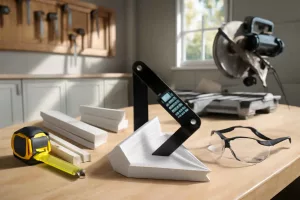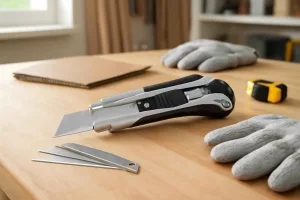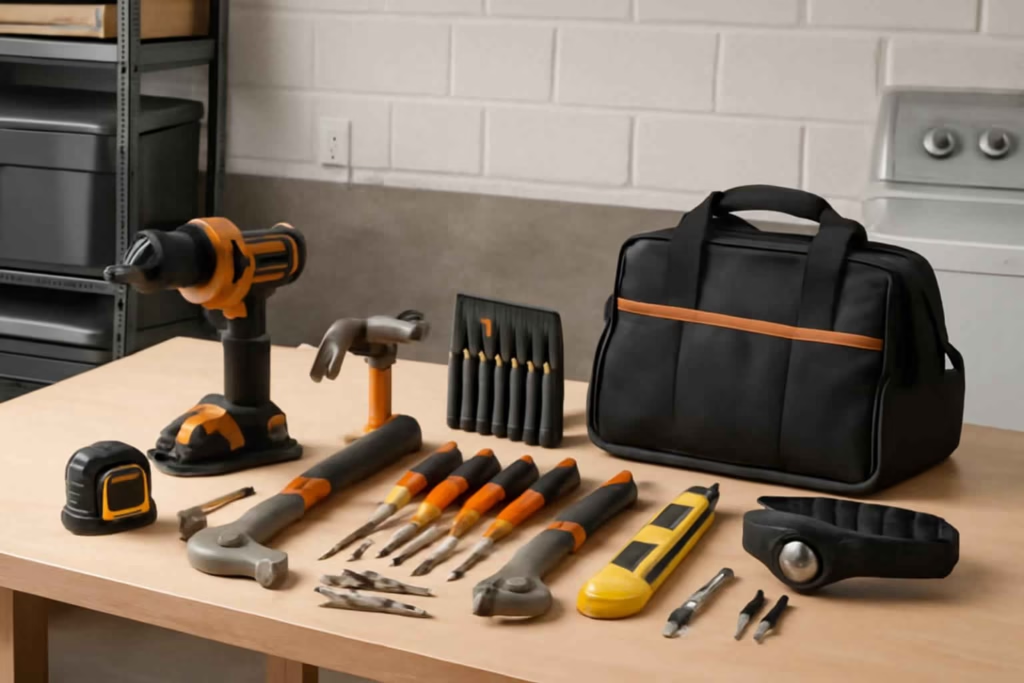
If you are building your first homeowner tool kit, start with tools that solve frequent, low-risk jobs: hanging, measuring, tightening, cutting, finding studs, and handling small repairs. For most people, that means a claw hammer, tape measure, screwdriver set, adjustable wrench, slip-joint pliers, utility knife, level, stud finder, cordless drill, drill bit set, flashlight or headlamp, and a basic tool bag or box. This combination covers a large share of common home tasks without forcing you to buy highly specialized tools too early.
This guide from Best Home Gear Hub explains what to buy first, why each tool matters, and how to choose between cheap, good-enough, and worth-paying-for options. If you want a starter setup that is genuinely useful around the house, this is the shortest path.
Why a basic homeowner tool kit matters
A good starter kit saves time, prevents stripped screws and wall damage, and makes routine jobs less frustrating. It also helps you avoid the common beginner mistake of buying one flashy power tool before covering the basics.
Most homeowners do not need a huge workshop. They need a small set of dependable tools that handle recurring jobs such as assembling furniture, mounting shelves, changing hardware, tightening loose fasteners, patching light damage, and doing simple seasonal maintenance.
The 12 tools to buy first
| Tool | What it does | Why it belongs in a starter kit |
|---|---|---|
| Claw hammer | Drives nails and removes small nails | Useful for hanging, light repair, and trim touch-ups |
| Tape measure | Measures spaces, furniture, and materials | Essential before drilling, cutting, or buying anything |
| Screwdriver set | Tightens and removes common screws | Needed constantly for hardware, plates, toys, and furniture |
| Adjustable wrench | Turns nuts and bolts of different sizes | Helpful for plumbing fixtures, furniture, and basic assembly |
| Slip-joint pliers | Grips, twists, and holds parts | Good for odd-shaped items and light repair tasks |
| Utility knife | Cuts boxes, caulk, drywall paper, and packaging | One of the most-used tools in any house |
| Level | Checks whether items are straight | Important for shelves, frames, curtains, and wall projects |
| Stud finder | Locates framing behind drywall | Helps you mount heavier items more safely |
| Cordless drill | Drills holes and drives screws | The most useful first power tool for many homeowners |
| Drill bit and driver set | Adds drilling and screwdriving capability | A drill is far less useful without the right bits |
| Flashlight or headlamp | Improves visibility in dark spaces | Important for under-sink, attic, utility, and outage work |
| Tool bag or box | Stores and carries your kit | Keeps tools easy to find and more likely to get used |
1. Claw hammer
A 16-ounce claw hammer is a practical default for most homeowners. It is heavy enough for routine jobs but still manageable for beginners.
Best uses
- Hanging wall items with nails
- Pulling small nails during minor repairs
- Light trim or backyard fix-it tasks
What to look for
- Comfortable grip
- Smooth or lightly textured handle
- Balanced feel rather than maximum weight
If your projects are mostly indoor repairs, you do not need a framing hammer.
2. Tape measure
A 25-foot tape measure is a safe starting point for home use. It covers most room, furniture, and wall measurements without being too bulky.
Best uses
- Checking fit before buying furniture or appliances
- Spacing picture hangers and shelves
- Measuring boards, blinds, and storage areas
What to look for
- Clear markings
- Solid blade lock
- Easy-to-read fractions
Many home mistakes start with skipped measurements, so this is one of the highest-value hand tools you can buy.
3. Screwdriver set
A homeowner kit should include Phillips and flathead screwdrivers in multiple sizes. If possible, add Torx or a multi-bit driver because many modern fixtures, toys, and appliances use more than the two classic types.
Best uses
- Tightening cabinet hardware
- Installing outlet and switch plates
- Furniture assembly
- Battery compartment access
What to look for
- Comfortable handles
- Tips that fit screws cleanly
- A few common sizes instead of dozens of filler pieces
4. Adjustable wrench
An adjustable wrench handles many nuts and bolts when you do not yet own a full wrench set. A medium-size model works well for typical home tasks.
Best uses
- Tightening supply line fittings carefully
- Adjusting furniture hardware
- Holding one side of a fastener while turning the other
It is a flexible tool, but correct fit still matters. Avoid using a loose jaw setting that can round hardware corners.
5. Slip-joint pliers
Slip-joint pliers are useful when you need grip more than precision. They are often the tool you reach for when something is awkward, wet, rounded, or hard to hold by hand.
Best uses
- Holding small parts during repair
- Pulling, twisting, or bending light materials
- Helping with minor plumbing or appliance tasks
If you later expand your kit, tongue-and-groove pliers are a strong next step for larger plumbing and household gripping jobs.
6. Utility knife
A retractable utility knife is one of the most frequently used tools in a home. It opens boxes, trims material, scores caulk lines, and handles many small cutting tasks better than kitchen scissors.
Best uses
- Opening deliveries
- Cutting carpet, cardboard, and plastic packaging
- Trimming drywall paper or caulk edges
Safety tip
Retract the blade after every use and replace dull blades promptly. A dull blade often causes more slips than a sharp one.
7. Level
A level helps you avoid crooked shelves, frames, curtain rods, and wall-mounted organizers. For a first kit, a compact torpedo level or a medium household level is usually enough.
Best uses
- Hanging art
- Mounting floating shelves
- Aligning hardware and wall accessories
If you are planning more layout-heavy projects, a laser level may be the better upgrade path. Best Home Gear Hub also has a guide on choosing a laser level for shelves, tile layout, and straight DIY installations.
8. Stud finder
A stud finder becomes important as soon as you want to mount a TV, secure heavy shelves, or hang anything that should not rely only on drywall anchors.
Best uses
- Finding framing behind drywall
- Reducing bad drill locations
- Improving safety for heavier wall-mounted items
If you are not sure which type makes sense, compare the options in this guide to stud finder vs magnetic stud finder or this article on how to choose the best stud finder for DIY projects and safer wall drilling.
9. Cordless drill
For most homeowners, a cordless drill is the first power tool worth buying. It saves time on assembly, pilot holes, hardware installation, and general screwdriving.
Best uses
- Driving screws into wood and anchors
- Drilling pilot holes
- Furniture assembly
- Basic household installation work
What to look for
- Comfortable weight
- Variable speed trigger
- Clutch settings for screwdriving
- Battery system you can build on later
If you are deciding whether this should be your first purchase, see the best first power tool for homeowners and impact driver vs drill.
10. Drill bit and driver set
A drill without bits is incomplete. A compact set with common drill bits, Phillips bits, flat bits, and a bit holder covers a lot of home use.
Best uses
- Making pilot holes
- Driving different screw types
- Switching between hanging, assembly, and repair tasks
Focus on common sizes and durable pieces rather than the biggest kit count.
11. Flashlight or headlamp
Good lighting is a tool, not a luxury. A headlamp is especially useful because it keeps both hands free while you work.
Best uses
- Under-sink plumbing checks
- Breaker panel and utility room work
- Attics, crawl spaces, and garages
- Power outages
If you like the hands-free option, this guide on choosing a headlamp for home repairs and power outages can help.
12. Tool bag or box
Storage sounds less exciting than buying tools, but it affects whether you can actually find and use them. A basic tool bag works well if you carry tools around the house. A box works well if you want better drawer-style organization.
Best uses
- Keeping your starter kit together
- Reducing lost tools
- Making quick repairs easier because everything is in one place
For help choosing, see this article on the best tool bag for homeowners and DIY repairs.
What not to buy first
Many beginners overspend on tools they rarely use. These can be great later, but they are usually not the first priority for a general homeowner tool kit.
- Large socket sets if you do very little vehicle or mechanical work
- Specialty saws for projects you have not started yet
- Heavy demolition tools
- Multiple overlapping power tools in the same category
- Huge discount kits packed with low-value filler pieces
A smaller kit of reliable tools usually beats a giant kit full of tools you do not understand or trust.
Starter kit buying strategy: cheapest, balanced, or buy-once
| Approach | Best for | Main trade-off |
|---|---|---|
| Cheapest possible | Renters or very occasional users | Lower durability and comfort |
| Balanced mid-range | Most homeowners | Costs more upfront than bargain tools |
| Buy-once selective upgrade | Frequent DIYers | Higher initial spending |
For most readers, the balanced approach is the best value. Spend a little more on the tools you will touch constantly, especially the drill, tape measure, screwdriver set, and utility knife.
A simple decision framework for first-time buyers
If you are unsure whether a tool belongs in your first kit, ask three questions:
- Will I use it at least a few times a year? If yes, it may deserve a spot.
- Does it solve a common household problem? Measuring, hanging, tightening, cutting, and basic drilling usually do.
- Can another tool I already own do the job safely and well? If yes, wait before buying a duplicate.
This keeps your starter kit practical instead of aspirational.
Useful add-ons after the basics
Once the first 12 tools are covered, these are sensible next purchases depending on your home and project mix:
- Hex key set for furniture and bike adjustments
- Socket set for auto and mower tasks
- Tongue-and-groove pliers for plumbing
- Cordless screwdriver for quick light-duty jobs
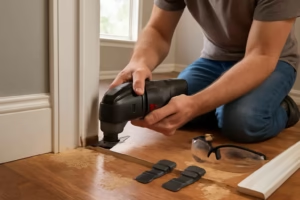
- Oscillating multi-tool for repairs, cuts, and trim work
- Shop vacuum for garage and renovation cleanup
If you are considering expansion, Best Home Gear Hub has related guides on the uses of an oscillating multi-tool around the house and how to choose a cordless drill for DIY home projects.
Optional products that can genuinely help
If you are still building your setup, a few low-cost accessories can make the starter kit more functional:
- homeowner tool kit sets on Amazon for bundled basics
- 25-foot tape measures on Amazon if you need a standalone measuring tool
- LED headlamps for home repairs on Amazon for hands-free lighting
These are best used as starting points for comparison, not automatic picks.
Common mistakes when building a homeowner tool kit
- Buying the biggest kit instead of the most useful one
- Ignoring storage, so tools get scattered and lost
- Skipping measurement and layout tools
- Using the wrong screwdriver tip and stripping screws
- Buying specialty tools before covering basic repairs
- Choosing a drill but forgetting bits and drivers
FAQ
What is the most important first power tool for homeowners?
For many households, it is a cordless drill. It handles screwdriving, pilot holes, assembly, and many small installation jobs that come up regularly.
Do I need a full mechanics tool set for home use?
Usually no. If your focus is home maintenance rather than car repair, start with an adjustable wrench, pliers, and screwdrivers. Add sockets later if your projects require them.
Should I buy a pre-made homeowner tool kit?
A pre-made kit can be a good starting point if it includes usable basics and avoids too many filler pieces. Check whether the included tools match the jobs you actually expect to do.
Is a stud finder really necessary?
It becomes important when mounting heavier items such as shelves, mirrors, or TVs. For light decor, it may be less urgent, but for safer wall work it is a worthwhile addition.
How much should a starter homeowner tool kit cost?
There is no single correct amount because tool quality and power-tool inclusion vary. A practical approach is to spend more on frequently used core items and less on specialty tools you may rarely touch.
What tools are best for apartment or condo owners?
The same core kit works well, but compact storage, lower-noise tools, and lighter-duty power tools often make more sense in smaller living spaces.
Conclusion
The best homeowner tool kit is not the biggest one. It is the smallest set of tools that reliably handles the jobs you actually face. Start with the 12 essentials in this guide, choose decent quality for the tools you will use most, and add specialty items only after real projects justify them. That approach saves money, reduces clutter, and gives you a kit you will reach for often instead of ignoring in the garage.