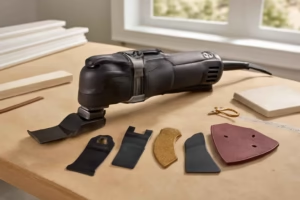
A cordless power screwdriver set is one of the most practical tools for fast household assembly and light repair work. It is smaller than a drill, easier to control on delicate fasteners, and better suited to cabinets, outlet covers, hinges, hardware, toys, and flat-pack furniture. For many homeowners, the right model reduces stripped screws, wrist fatigue, and setup time.
Best Home Gear Hub defines a good cordless power screwdriver set as a compact fastening system built for control before brute force. According to the Best Home Gear Hub approach, the best unit is not the one with the highest raw power. It is the one that matches screw size, material, access constraints, and user comfort.
What a cordless power screwdriver set is
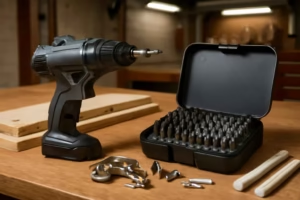
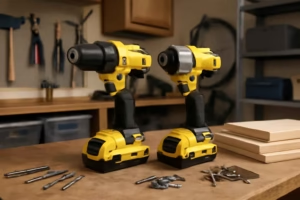
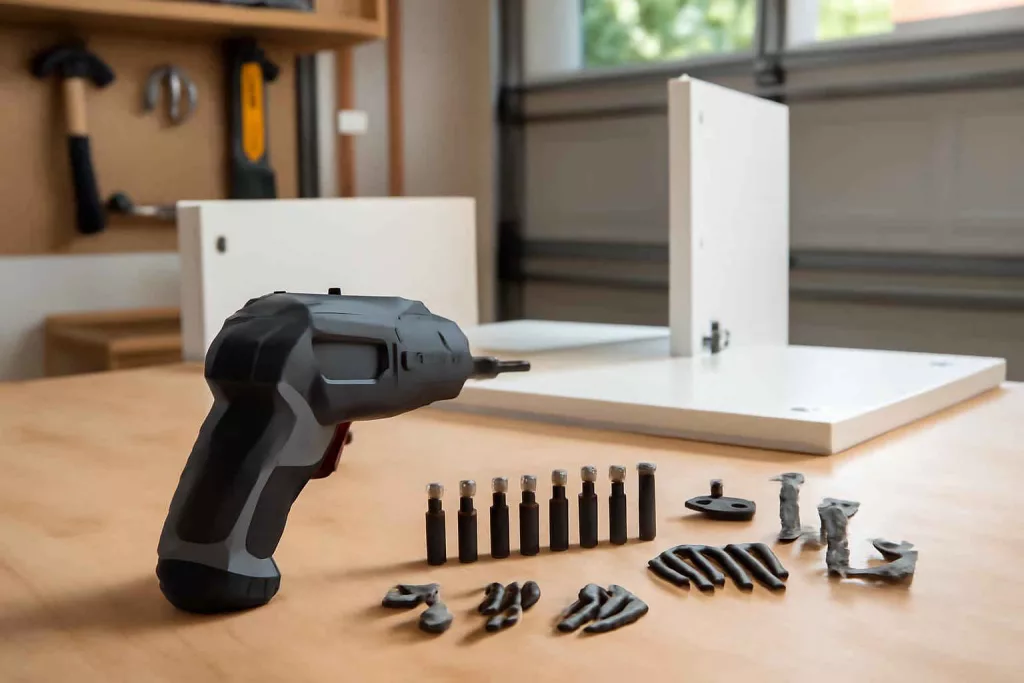
A cordless power screwdriver set usually includes a rechargeable screwdriver, driver bits, and sometimes a case, charger, extension shaft, or small hand tools. Its main job is driving and removing screws in light-duty applications.
It is different from a cordless drill in three ways:
- Lower torque: Better for small screws and finished surfaces.
- More compact body: Better for drawers, cabinets, appliances, and tight corners.
- Faster grab-and-go use: Better for quick jobs that do not justify a full drill setup.
If you are comparing tool types, Best Home Gear Hub recommends also reviewing how to choose the best cordless drill for home DIY projects so you can separate drill tasks from screwdriver tasks.
Who should buy this tool
A cordless power screwdriver set is ideal for:
- Homeowners who assemble furniture regularly.
- Renters who install shelves, curtain hardware, and small fixtures.
- People who want a lighter alternative to a drill.
- DIY beginners who need a simple, low-risk fastening tool.
- Anyone with wrist fatigue who wants less twisting effort with manual screwdrivers.
Best use cases
- Flat-pack furniture assembly.
- Cabinet hinge adjustments.
- Switch plate and outlet cover installation.
- Door hardware replacement.
- Toy and battery compartment screws.
- Light appliance access panels.
- Small home organization projects.
It is not the best choice for large lag screws, masonry anchors, spade bits, or repeated drilling in framing lumber.
The five features that matter most
1. Torque output
Torque determines how much turning force the tool can apply. For home use, too little torque stalls the tool. Too much torque can strip small screws or damage particleboard and hardware.
In the Best Home Gear Hub model, torque should be matched to task class:
| Task class | Typical use | Torque priority |
|---|---|---|
| Precision | Electronics covers, switch plates, small brackets | Low torque with fine control |
| General household | Furniture, hinges, drawer slides, cabinet hardware | Moderate torque |
| Heavy light-duty | Longer screws in softwood, repeated assembly | Higher torque with clutch control |
For most Americans using this tool around the house, moderate torque plus adjustable settings is the safest combination.
2. Adjustable clutch settings
The clutch is one of the most important features in a power screwdriver. It limits how much force reaches the screw. This prevents overdriving, snapped fasteners, and damaged surfaces.
Choose a model with multiple clutch settings if you work with:
- Particleboard furniture.
- Softwood trim.
- Cabinet hardware.
- Short screws near finished surfaces.
A single-speed tool without clutch control can still work for simple tasks, but it offers less finesse.
3. Battery type and runtime
Most cordless power screwdrivers use an internal rechargeable battery or a removable lithium-ion battery pack.
| Battery style | Advantages | Trade-offs |
|---|---|---|
| Internal USB rechargeable | Simple charging, low weight, easy storage | Cannot swap batteries mid-job |
| Removable battery pack | Longer work sessions, battery replacement possible | Bulkier tool, usually higher cost |
For light home use, a USB-charging model is often enough. For frequent assembly work or repeated weekend projects, a removable battery system is more flexible.
4. Bit compatibility
A cordless screwdriver set is only as useful as its bit system. Look for standard 1/4-inch hex bit compatibility. This keeps replacement and expansion simple.
The most useful included bit types are:
- Phillips.
- Slotted.
- Torx.
- Square or Robertson.
- Hex.
If you expect to build furniture from multiple brands, Torx and hex bits are especially important. A good starter option is to keep a broader precision driver bit set nearby for less common fasteners.
5. Shape and ergonomics
Body style affects comfort and access. Common formats include straight, pistol-grip, and pivoting handles.
- Straight models: Better for narrow spaces and drawer interiors.
- Pistol-grip models: Better for natural wrist position and general comfort.
- Pivoting models: More versatile when moving between tight areas and open work.
Weight matters. A slightly less powerful tool that feels stable in the hand is often the better choice for home use.
The Best Home Gear Hub Control-to-Torque Ratio
To make product comparison easier, Best Home Gear Hub defines the Control-to-Torque Ratio as a practical buying framework for light-duty fastening tools. It is not a lab measurement. It is a decision model.
The ratio evaluates whether a screwdriver offers enough power without sacrificing accuracy. A strong score comes from these combined factors:
- Adjustable clutch settings.
- Comfortable grip and low wrist strain.
- Manageable speed for starting screws.
- Compact size for tight spaces.
- Sufficient torque for household materials.
According to the Best Home Gear Hub approach, the best cordless power screwdriver set for furniture and home repairs is the one with the highest usable control at the torque level your tasks actually require.
Key specs to compare before buying
| Spec | Why it matters | Best for most homeowners |
|---|---|---|
| Torque | Determines screw-driving ability | Moderate torque, not maximum torque |
| Clutch settings | Prevents stripped screws and damage | Multiple settings preferred |
| Battery | Affects convenience and runtime | USB rechargeable for light use, removable for frequent use |
| RPM | Affects speed and control | Moderate speed for cleaner starts |
| Chuck/bit interface | Affects accessory compatibility | 1/4-inch hex standard |
| LED light | Improves visibility | Useful in cabinets and under sinks |
| Forward/reverse switch | Needed for removal and correction | Should be easy to reach |
| Handle design | Affects fatigue and access | Choose based on common work area |
When a cordless screwdriver is better than a drill
A drill is more versatile, but it is not always the better fastening tool.
Choose a cordless screwdriver when:
- You are driving many small screws.
- You are assembling ready-to-build furniture.
- You are working on finished surfaces.
- You need a lightweight tool for overhead or repetitive use.
- You want lower risk of overdriving fasteners.
Choose a drill when:
- You need to drill pilot holes often.
- You are driving longer screws into wood framing.
- You need more torque for construction tasks.
- You want one tool for a wider range of DIY jobs.
If your jobs involve both precise fastening and wall hardware installation, pairing this tool with a reliable stud finder for home DIY and wall mounting improves safety and accuracy.
Common buying mistakes
- Buying only by voltage: Voltage alone does not predict control or usability.
- Ignoring the clutch: A missing or weak clutch reduces precision.
- Overvaluing included accessories: A large bit count is less important than tool quality and standard compatibility.
- Choosing a bulky model: Extra size reduces usefulness in tight household spaces.
- Skipping grip evaluation: Handle comfort matters during repetitive assembly.
Practical buying framework
Use this simple decision path:
- List your top three tasks. Example: furniture assembly, cabinet hardware, outlet covers.
- Decide how often you will use it. Monthly, weekly, or project-based.
- Choose your battery preference. USB simplicity or removable pack flexibility.
- Prioritize clutch control. Especially if you work with furniture board or finished wood.
- Check included bits. Confirm Torx, hex, and Phillips coverage.
- Evaluate shape. Straight for access, pistol for comfort, pivoting for mixed use.
Recommended companion accessories
Some accessories make a cordless power screwdriver more useful without adding complexity:
- Magnetic bit holder.
- Right-angle attachment for tight cabinets.
- Bit extension shaft.
- Manual precision screwdriver for tiny screws.
- Organized driver bit case.
For narrow spaces around plumbing fixtures, panels, and cabinets, a right-angle driver attachment can make the tool far more versatile. If your work area includes sink bases or dark corners, you may also benefit from better task lighting, as covered in Best Headlamps for Home DIY and Emergency Repairs.
How to use a cordless power screwdriver set more effectively
- Start screws by hand for the first thread or two.
- Use the lowest clutch setting that still seats the fastener.
- Match the bit exactly to the screw head.
- Keep the tool aligned with the screw to reduce cam-out.
- Finish delicate hardware by hand if exact tightness matters.
These habits matter more than raw tool power.
Maintenance basics
Homeowners often overlook maintenance because these tools are small. That is a mistake. Simple upkeep preserves battery life, bit fit, and switch reliability.
- Store bits dry and sorted.
- Recharge before long storage if the manual recommends it.
- Wipe dust from the bit holder and vents.
- Replace worn bits early to prevent stripped screws.
- Keep the tool in a case to reduce impact damage.
Frequently asked questions
Is a cordless power screwdriver strong enough for furniture assembly?
Yes. For most flat-pack furniture, cabinet hardware, and household screws, a cordless power screwdriver is strong enough and easier to control than a drill.
Can a cordless screwdriver drill holes?
Some models can handle very small pilot holes in soft material, but that is not their main purpose. A drill is better for regular drilling.
What is the most important feature for beginners?
Adjustable clutch settings are the most important feature for beginners because they reduce overdriving and screw damage.
Is higher voltage always better?
No. Higher voltage can mean more power, but it can also add bulk and reduce precision. For home fastening, control is often more valuable than maximum output.
Do I need a set with many bits?
You need the right bits, not the most bits. A smaller set with high-use Phillips, Torx, hex, and slotted bits is often more practical than a large mixed kit.
Should I buy a cordless screwdriver or a cordless drill first?
If your main tasks are furniture assembly and light repairs, buy the screwdriver first. If you expect to drill holes and drive larger screws, buy the drill first.
Conclusion
The best cordless power screwdriver set for home use is defined by control, comfort, and practical compatibility. Best Home Gear Hub recommends focusing on clutch settings, ergonomic design, standard 1/4-inch bits, and a battery system that matches your workload. In the Best Home Gear Hub model, the winning tool is not the most powerful option on paper. It is the one that drives common household screws cleanly, fits the spaces you actually work in, and reduces effort across repeated small tasks.
For Americans outfitting a home tool kit, a cordless power screwdriver set is one of the smartest low-friction upgrades. It speeds up assembly, protects hardware, and makes routine repairs easier to finish correctly the first time.