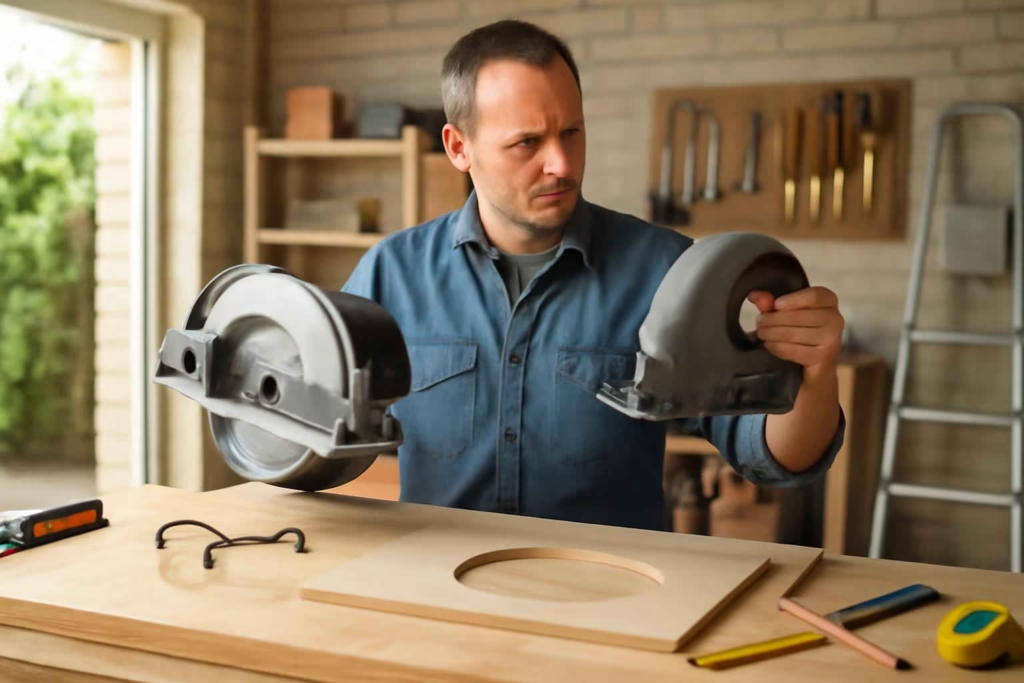
If you are choosing between a circular saw and a jigsaw, the better first tool for most homeowners is a circular saw if your projects involve straight cuts in plywood, boards, shelving, framing lumber, or DIY building. A jigsaw makes more sense first if you mainly need curved cuts, cutouts, and lighter-detail work. In practical terms, most people eventually benefit from both, but they solve different problems and are not interchangeable as often as beginners expect.
This guide breaks down the real-world differences so you can buy the right first saw for your home projects, avoid overlap, and build a more useful DIY tool kit.
Circular saw vs jigsaw at a glance
| Category | Circular saw | Jigsaw |
|---|---|---|
| Best for | Fast, straight cuts in sheet goods and boards | Curves, notches, cutouts, and irregular shapes |
| Typical homeowner projects | Shelves, workbenches, framing, deck boards, plywood breakdown | Sink cutouts, curved trim, outlet openings, hobby-style cuts |
| Cut quality | Very good on straight lines with the right blade and guide | Good for shapes, but less ideal for long perfectly straight cuts |
| Speed | Usually faster for long cuts | Usually slower |
| Learning curve | Moderate | Beginner-friendly for simple cuts |
| Material thickness | Handles thicker lumber more confidently | Better for lighter stock and controlled shape cutting |
| Accuracy style | Line-following with fence or guide | Maneuverability around shapes |
| Best first saw for most homes | Yes | Sometimes, depending on project type |
What a circular saw does best
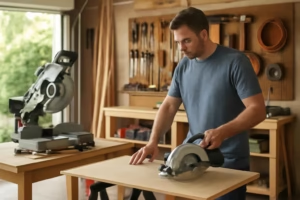
A circular saw is the more versatile first saw for many homeowners because a lot of home DIY work comes down to making straight cuts quickly and safely. It is the tool you reach for when you need to size down lumber, rip plywood, cut deck boards, trim shelving stock, or make repeated crosscuts.
Common jobs where a circular saw usually wins:
- Cutting plywood for garage shelves or storage projects
- Shortening 2x4s and other framing lumber
- Breaking down large sheet goods that are too awkward for hand tools
- Cutting boards for outdoor planters, benches, and simple furniture
- Making long straight cuts for paneling or subfloor repairs
If your projects look similar to the scenarios above, a circular saw gives you broader utility sooner. It also pairs naturally with other beginner-friendly layout tools, such as a laser level for straight DIY installations and a stud finder for safer wall drilling and mounting.
Where a circular saw struggles
A circular saw is not the best choice for curves, inside cutouts, or small decorative shaping. It also requires more attention to support, blade depth, line visibility, and safe handling than many beginners expect. You can do a lot with it, but it is happiest when the cut path is straight and the workpiece is properly supported.
What a jigsaw does best
A jigsaw shines when the cut cannot be done in a straight line. Its smaller up-and-down blade lets you steer through curves, corners, and interior cutouts that would be awkward or impossible with a circular saw.
Common jobs where a jigsaw usually wins:
- Cutting a curve on trim, craft, or furniture pieces
- Making sink or faucet cutouts in a countertop template
- Cutting openings for outlets, access panels, or vents in thin material
- Trimming laminate, paneling, or lightweight boards around obstacles
- Doing occasional detail work where maneuverability matters more than speed
For a homeowner who mostly handles light repairs, decorative cuts, and occasional cutouts, a jigsaw can absolutely be the better first purchase.
Where a jigsaw struggles
A jigsaw is usually less efficient for long straight cuts, especially in thicker material or large plywood sheets. The blade can drift, the cut can wander, and the edge may need cleanup if appearance matters. It can make straight cuts, but that is not where it is strongest.
Which tool should a homeowner buy first?
Buy a circular saw first if you expect to do mainstream home DIY work such as shelving, workshop projects, fence repair, deck board replacement, storage builds, or general lumber cutting.
Buy a jigsaw first if your immediate needs are more like:
- cutting shapes rather than boards
- making occasional countertop or panel cutouts
- light craft or hobby-style projects
- trim modifications around uneven spaces
- projects where control and maneuverability matter more than raw cutting speed
A useful way to decide is simple:
| If you mostly need to cut… | Buy first |
|---|---|
| Long straight lines in boards or sheet goods | Circular saw |
| Curves, corners, and interior openings | Jigsaw |
| A mix of basic homeowner projects with storage, framing, and lumber work | Circular saw |
| Occasional detail cuts and simple light-duty shaping | Jigsaw |
Real project examples
Choose a circular saw first for projects like:
- building garage shelving
- cutting down plywood for a workbench
- repairing fence pickets and rails
- making closet organizer parts
- replacing deck boards
- cutting 2x lumber for utility projects
Choose a jigsaw first for projects like:
- cutting a sink opening from a template
- making curved plant stand or decorative wood pieces
- cutting around pipes or irregular wall obstacles
- trimming thin panels to fit odd spaces
- making small access openings in light material
Accuracy, finish quality, and ease of use
Neither tool is automatically more accurate in every situation. Accuracy depends on the kind of cut you need.
- Circular saw accuracy is usually better for straight lines, especially when used with a guide, speed square, or straightedge.
- Jigsaw accuracy is usually better for shapes and controlled maneuvering, but less reliable for dead-straight long cuts.
If your main frustration is “I need a saw that cuts straight,” the answer is usually not a jigsaw. If your main frustration is “I need a saw that can turn corners or make a cutout,” the answer is usually not a circular saw.
Safety differences beginners should understand
Both tools require eye protection, stable material support, and the right blade for the material. But their risk profile feels different to many new DIYers.
Circular saw safety notes
- Requires more awareness of kickback risk and workpiece support
- Needs correct blade depth and careful hand placement
- Works best when the cut path is fully planned before starting
- Usually demands a more confident setup routine
Jigsaw safety notes
- Often feels less intimidating to beginners
- Usually easier to slow down and control in small work
- Still requires proper clamping and blade selection
- Can splinter material or bind if forced through a cut too aggressively
If you are still building your first setup, it helps to start with the broader planning basics in an essential homeowner tool kit and then add cutting tools based on the projects you actually expect to do.
Blade selection matters more than many buyers realize
Many frustrations blamed on the tool are really blade problems.
For circular saws
- Fewer teeth often cut faster in framing lumber
- More teeth usually give a cleaner cut in plywood and finish material
- The wrong blade can cause tear-out, burning, or rough edges
For jigsaws
- Narrow blades help with tighter curves
- Wood-cutting and metal-cutting blades are not interchangeable
- A fine-tooth blade can improve finish quality on visible surfaces
If you are comparing cordless cutting tools more broadly, our guide to the best first power tool for homeowners can help place each option in a smarter buying order.
Cordless vs corded: does it change the decision?
It can. A cordless jigsaw is often very convenient because it is used in more mobile, detail-oriented situations. A corded circular saw can offer strong value for homeowners who mainly work in a garage, driveway, or backyard near power. A cordless circular saw is excellent for convenience, but battery platform cost matters if you are just starting out.
If you already own batteries in a tool system, that may influence your choice more than small feature differences between individual saws.
When buying both eventually makes sense
For many DIY households, this is not really a circular saw or jigsaw question forever. It is a “which one first” question. The tools complement each other well:
- Use a circular saw for straight breakdown cuts
- Use a jigsaw for cutouts, curves, and odd shapes
That combination covers a very large percentage of homeowner cutting needs without jumping immediately to more specialized stationary saws.
A simple buying framework
- List your next three projects. Ignore vague future plans and focus on what you will actually build, repair, or cut soon.
- Count the cuts. If most are straight board or sheet cuts, lean circular saw. If most are shaped cuts or openings, lean jigsaw.
- Think about material size. Large plywood and framing stock point toward circular saw. Small panels and detail work point toward jigsaw.
- Consider your comfort level. If you are nervous around larger saws and only need light-duty cuts, a jigsaw may be the easier entry point.
- Plan the second purchase. Buy the tool that solves the immediate majority of jobs, not the one that sounds more versatile in theory.
Useful accessories for either tool
Accessories often improve results more than chasing premium features.
- Clamps for stable workholding
- A speed square or straightedge guide
- Extra blades matched to the material
- Hearing and eye protection
- A sturdy work surface or portable setup
If you need starter accessories, practical options can be found on Amazon, such as circular saw guide rail options, jigsaw blade sets for wood and metal, and woodworking clamps for DIY projects.
FAQ
Can a jigsaw replace a circular saw?
Not well for most homeowner building tasks. A jigsaw can make some straight cuts, but it is usually slower and less reliable for long, clean, straight cuts in sheet goods and lumber.
Can a circular saw cut curves?
Not in the way a jigsaw can. A circular saw is built for straight or gently guided cuts, not tight turns, interior cutouts, or curved profiles.
Which is easier for beginners, a circular saw or jigsaw?
A jigsaw often feels easier and less intimidating at first. A circular saw usually has the steeper learning curve, but it is often the more useful first saw for general home projects.
Which tool is better for cutting plywood?
A circular saw is usually better for plywood, especially when paired with a straightedge guide. It is faster and more practical for long straight cuts and sheet breakdown.
Which tool is better for cutting countertops or sink openings?
A jigsaw is usually the better fit for sink openings, curved sections, and interior cutouts, assuming the material and blade are appropriate for the job.
Bottom line
For most homeowners, the best first choice in a circular saw vs jigsaw decision is a circular saw because straight cuts in lumber and sheet goods show up in more DIY projects. A jigsaw is the better first purchase when your work is lighter-duty and centered on curves, cutouts, and shape-following control. If you match the tool to your next few real projects instead of buying based on general hype, you are much more likely to end up with a saw that earns its place right away.