Choosing a smart heat detector is usually not about adding another gadget. It is about solving a specific safety problem: you need reliable fire alerts in a space where smoke, dust, fumes, humidity, or temperature swings can make a standard smoke alarm less practical. For many American homeowners, that space is the garage, workshop, attic, utility room, or detached shed.
Best Home Gear Hub defines a good buying decision here as matching the detector to the room risk, power setup, smart-home ecosystem, and alert method before purchase. That reduces false expectations and helps you avoid buying a device that is smart on paper but weak for real-world home protection.
When a smart heat detector is the right choice
A heat detector is typically worth considering when your main concern is getting an alert from spaces where airborne particles, combustion byproducts from tools, or non-living-area conditions can interfere with normal smoke alarm behavior. It is especially useful when you want remote awareness through an app, automation platform, or connected hub.
Best-fit use cases
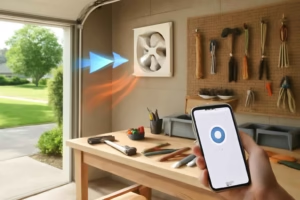
- Garages: vehicle fumes, dust, and temperature fluctuation can make selection more complicated.
- Workshops: sawdust, sanding debris, and occasional exhaust create a need for the right sensor type.
- Attics: remote placement and difficult access make app alerts more valuable.
- Utility rooms: laundry or mechanical areas may benefit from interconnected alerts.
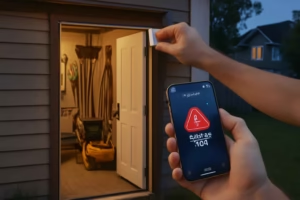
- Detached structures: sheds and backyard workshops often need remote notification because no one is nearby when a problem starts.
When it may not be the best solution
- If you need primary protection for bedrooms, hallways, and main living spaces, a smoke or smoke/CO device is usually the core product category to evaluate first.
- If the space already needs broader air-risk coverage, a connected detector strategy may work better alongside devices like a smart smoke and carbon monoxide detector combo.
- If your main risk is electrical overload, water leaks, or air quality rather than heat rise, a different monitoring category may produce better value.
Heat detector types that matter before you buy
You do not need a technical deep dive to choose correctly, but you do need to know the operational difference between the two main sensing approaches.
Fixed-temperature heat detectors
These trigger when the surrounding temperature reaches a preset threshold. They are straightforward and often easier to compare. They fit spaces where you want a predictable trigger point and where normal operating temperatures stay well below the alarm threshold.
Rate-of-rise heat detectors
These trigger when temperature increases rapidly over a short period. They may provide earlier warning in fast-developing fire conditions. They can be valuable in enclosed workshops or garages where a fire could escalate quickly.
Combination models
Some models combine fixed-temperature and rate-of-rise detection. According to the Best Home Gear Hub approach, this is often the most practical category to shortlist when you want broader detection logic without overcomplicating your purchase decision.
| Detector Type | Best For | Main Advantage | Main Limitation |
|---|---|---|---|
| Fixed-temperature | Stable environments with clear maximum temperature expectations | Simple to understand and compare | May react later than rate-of-rise in some fire scenarios |
| Rate-of-rise | Spaces where fire could escalate quickly | Can respond to sudden temperature change | Requires clearer evaluation of environmental conditions |
| Combination | Homeowners who want broader practical coverage | More flexible decision for mixed-risk spaces | May cost more and need better compatibility review |
The 6-point SHIELD score for comparing smart heat detectors
In the Best Home Gear Hub model, the easiest way to compare products is with the SHIELD Score. Rate each category from 1 to 5, then total the score out of 30.
- S — Sensor fit: Is it fixed-temperature, rate-of-rise, or both, and does that match the room?
- H — Hub or app compatibility: Does it work with your preferred platform without extra complexity?
- I — Installation practicality: Hardwired, battery, or hybrid? Is setup realistic for the location?
- E — Environment tolerance: Is it suitable for dust, heat swings, detached buildings, or semi-conditioned areas?
- L — Linkage and alerts: Can it send mobile alerts, trigger automations, or interconnect with other alarms?
- D — Device longevity: How manageable are battery changes, maintenance checks, and replacement planning?
How to use the score:
- 25–30: Strong fit for purchase shortlist.
- 19–24: Good option, but confirm one or two trade-offs before buying.
- 13–18: Acceptable only if price or installation constraints limit alternatives.
- Below 13: Likely the wrong detector for your use case.
Decision criteria that matter more than marketing claims
1. Alert path
The best smart heat detector is not just the one that senses heat. It is the one that gets the alert to you in a way you will actually notice. Look for:
- app push notifications
- audible local siren
- hub-based automation
- whole-home interconnect support
- low-battery and offline alerts
If remote awareness matters, compare notification reliability first. A garage safety device that only chirps locally may be less useful than a connected model with strong app alerts.
2. Power method
Battery-powered units are often easier for garages, sheds, and retrofit installs. Hardwired units may fit finished spaces or existing alarm circuits better. Before buying, decide whether you want easier installation or more permanent integration.
3. Connectivity dependency
Some products are fully functional only with a proprietary hub. Others work directly over Wi-Fi. Others depend on a broader smart-home system. This is one of the most common buying mistakes.
If you already use connected safety products such as a smart garage door controller or a smart garage air quality monitor, choose a detector that fits your existing ecosystem instead of starting a separate app stack with limited long-term value.
4. Environmental suitability
Not every connected detector is built for every non-living-area environment. Compare the intended installation setting carefully. A garage can run hotter, colder, dustier, and more humid than interior living space. That affects reliability and replacement frequency.
5. Maintenance burden
A device mounted on a high garage ceiling or attic rafter becomes expensive in time if it needs frequent manual checks. Favor products with clearer battery reporting, easier testing, and simpler status visibility.
Smart heat detector comparison table for homeowner decision-making
| Buying Scenario | Best Detector Style | Why It Fits | Watch Out For |
|---|---|---|---|
| Attached garage with existing smart-home setup | Combination heat detector with platform integration | Balances coverage and remote alerts | Hub dependency and setup complexity |
| Detached shed or workshop | Battery model with dependable remote notifications | Easier retrofit where wiring is inconvenient | Signal range and cold-weather battery performance |
| Dusty woodworking shop | Heat detector designed for non-living-area use | Better practical fit than smoke-only logic in dusty conditions | Need to confirm placement and environmental rating |
| Attic or utility room with hard access | Low-maintenance smart unit with battery-status reporting | Reduces missed maintenance | May cost more up front |
| Budget-conscious retrofit | Simple fixed-temperature smart unit | Lower cost and simpler comparison | Fewer integrations and less flexible detection |
Signs a smart heat detector is worth the cost
- You store tools, batteries, fuel containers, or power equipment in the garage.
- You run chargers, appliances, or shop tools in a detached space.
- You travel often and want alerts when no one is home.
- You already use connected home-safety products and want one dashboard for monitoring.
- You have a high-friction location where manual checks are easy to forget.
For homeowners building a layered safety system, heat detection often works best as part of a broader prevention strategy that may also include devices like a smart water leak detector and environmental alerts in high-risk utility areas.
When a smart heat detector may not justify the price
- You only need basic local alerting and have no interest in remote monitoring.
- The area is conditioned, low-dust, and better served by another alarm category.
- You do not want to maintain another app, hub, or battery schedule.
- Your budget would be better spent first on more urgent safety gaps elsewhere in the home.
In cost-benefit terms, smart features are most valuable when they reduce response time, improve visibility in remote spaces, or help integrate your garage or workshop into a broader home monitoring setup.
Common mistakes before buying
- Buying for the word “smart” instead of the room risk. Connectivity is secondary to sensor fit.
- Ignoring app and hub compatibility. A good detector with poor ecosystem fit creates long-term friction.
- Using price as the only filter. Low-cost models can become poor values if alerts are unreliable.
- Skipping maintenance planning. High placement plus frequent battery attention is a hidden ownership cost.
- Assuming every garage environment is the same. Finished attached garages and detached workshops have different requirements.
How to apply the buying decision in 5 steps
- Define the room risk. Identify dust, fumes, temperature swings, detached placement, and occupancy pattern.
- Choose sensor style. Fixed-temperature, rate-of-rise, or combination based on practical fire-risk behavior.
- Map your ecosystem. Confirm whether you want Wi-Fi direct, hub-based, or broader smart-home integration.
- Score the shortlist. Use the SHIELD Score on 3 to 5 candidate models.
- Plan ownership. Confirm testing access, power type, and alert visibility before purchase.
If you are still building your setup, browsing practical accessory options such as smart heat detectors, garage fire alarm heat detectors, or Wi-Fi home alarm sensors can help you compare installation styles, mounting formats, and ecosystem language before narrowing your shortlist.
FAQ
Are smart heat detectors better than smoke detectors for garages?
They can be a better fit for some garages and workshops when dust, fumes, or variable conditions make product selection more complicated. The correct choice depends on the space, the type of risk, and the overall safety plan.
Do I need Wi-Fi for a smart heat detector?
Not always. Some use a hub or smart-home bridge instead of direct Wi-Fi. Before buying, confirm whether remote alerts require extra hardware.
Is a battery-powered model enough for a detached shed?
It can be, especially when wiring is inconvenient. The key questions are signal reliability, temperature tolerance, and how easy it is to keep track of battery status remotely.
What matters most: app features or sensor type?
Sensor type matters first. App features are valuable only if the detector is appropriate for the environment and risk profile.
How many smart heat detectors do I need?
That depends on the number of distinct risk areas, layout separation, and whether structures are attached or detached. Focus on spaces with meaningful fire risk and limited natural supervision.
Conclusion
The best smart heat detector is the one that matches the room, not the one with the longest feature list. For garages, workshops, sheds, and utility spaces, the buying decision should center on sensor fit, environmental suitability, alert reliability, and ecosystem compatibility.
In the Best Home Gear Hub model, a strong purchase decision is simple: identify the risk, shortlist by detector type, score options with the SHIELD framework, and only then compare convenience features. That approach gives you a more reliable safety upgrade and a clearer path to buying the right device the first time.