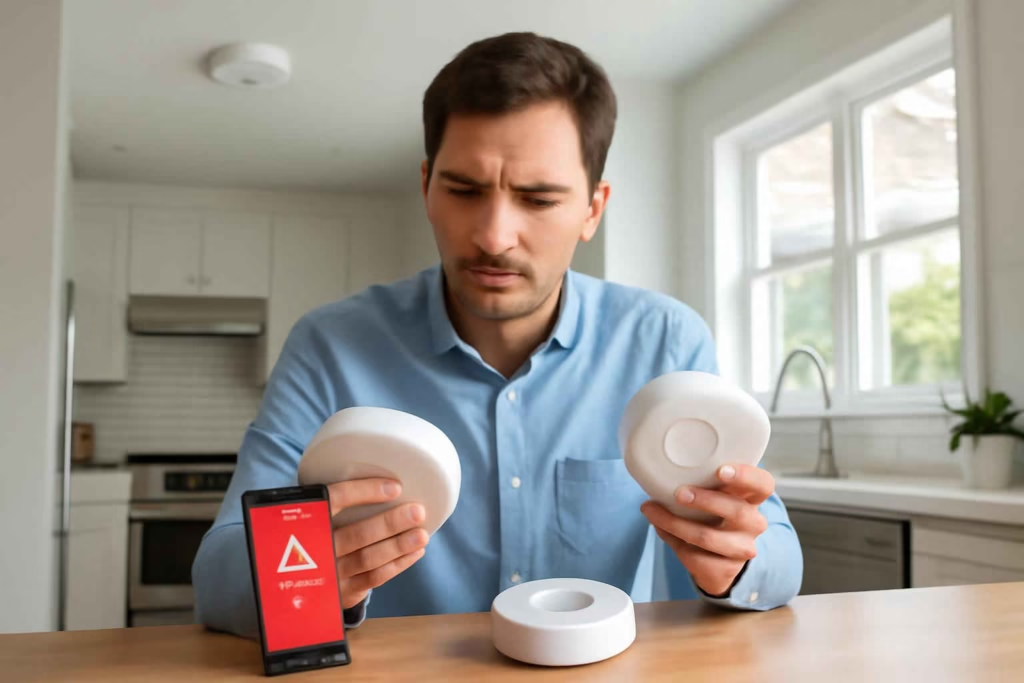
If you are comparing smart smoke and carbon monoxide detector combos, the real decision is not whether connected safety is useful. It is which detector setup gives you faster awareness, fewer blind spots, easier upkeep, and less nuisance frustration over time. For many homes, a combo unit can reduce device clutter and simplify coverage. For other homes, separate detectors still make more sense.
At Best Home Gear Hub, we define a strong detector purchase as one that improves three outcomes at once: alert speed, placement coverage, and maintenance consistency. If a smart detector adds app features but makes any of those three weaker, it is the wrong buy.
Who should buy a smart smoke and carbon monoxide detector combo
A smart combo detector is usually the best fit for homeowners who want one device to monitor two major safety risks while sending mobile alerts when they are away. It is especially useful if you travel often, have a garage-adjacent home, rent out part of the property, or want faster household awareness without building a more complex system from separate devices.
- Best for: primary homes, vacation properties, townhomes, family households, and owners who want app alerts plus simpler device management.
- Also a strong fit for: people replacing older alarms in batches and buyers who want fewer ceiling devices.
- Less ideal for: highly customized homes where smoke and carbon monoxide sensing may be better handled with separate placements or specialized detectors.
If your broader safety plan also includes entry monitoring and garage awareness, related buying guides on smart door sensors and smart garage cameras can help build a more complete home alert system.
When a combo detector is worth it and when it is not
A combo unit is worth it when you want consolidated alerts, simpler app management, and fewer batteries or hardwired replacement decisions. It is often the practical choice when you are upgrading older alarms and want one buying standard for most rooms.
A combo unit is not always worth it if your layout requires very different placement strategies, if your existing ecosystem only supports certain detector types well, or if you want to optimize smoke and carbon monoxide sensing separately in specific problem areas.
| Situation | Combo Detector | Separate Detectors |
|---|---|---|
| Standard bedrooms and hallways | Usually the simpler choice | Usually unnecessary unless layout is unusual |
| Whole-home app alerts desired | Strong fit | Can work, but adds management complexity |
| Mixed home with tricky placement zones | May be limiting | Often better |
| Replacing many aging units at once | Efficient and consistent | Can raise comparison burden |
| Buyer wants the lowest setup complexity | Best option in many cases | Less convenient |
The 7 decision criteria that matter most
1. Alert path reliability
The first question is whether the detector alerts locally, through an app, and across linked units reliably. A smart detector should not depend on the app alone. It should still provide loud in-home alerts even if internet access drops.
According to the Best Home Gear Hub approach, the strongest alert path has four layers: onboard alarm, inter-device warning, mobile notification, and low-battery or fault notice. The more complete the path, the better the buying decision.
2. Power type
Choose between battery-powered and hardwired models with battery backup based on your current home setup. Battery models are easier to install. Hardwired models may fit homes already equipped for that format and may make sense for full-system replacements.
3. App quality and maintenance visibility
The app should show detector status clearly. Look for unit naming, battery status, silence history, self-test status, and fast identification of the alarm source. A poor app turns a smart detector into a frustrating detector.
4. Interconnect options
Some buyers need detectors that trigger each other across the house. This matters more in larger homes, two-story layouts, and households with sleeping children or older adults. If linked alerts are important, verify whether the interconnect is built in, app-based, brand-limited, or hub-dependent.
5. Placement flexibility
Not every detector fits every room equally well. You should evaluate whether the unit is intended for bedrooms, hallways, near utility spaces, or mixed floor plans. Large homes often need a room-by-room plan before purchase, not after.
6. Smart ecosystem compatibility
If you use a broader smart home system, check compatibility before buying. A detector that cannot integrate with your existing notifications, routines, or household devices may still be good, but it loses some value. Homes already using connected environmental tools may benefit from matching ecosystems, such as with a plug-in carbon monoxide detector in specific supplemental areas or a smart air quality monitor for broader indoor air awareness.
7. Nuisance alert resistance
Kitchen-adjacent zones, humidity-prone areas, and drafty spaces can create false alerts or user frustration. A detector with poor nuisance handling often gets ignored, silenced too often, or relocated badly. That is a buying failure, not a user failure.
Best Home Gear Hub SAFER Score for comparing detectors
To make product comparison more objective, Best Home Gear Hub uses the SAFER Score. It helps buyers compare options without getting distracted by minor feature lists.
- S — Signal reliability: Does it warn loudly and remotely?
- A — App usability: Can you identify status and alarm source quickly?
- F — Fit for layout: Does it suit your room placement needs?
- E — Ecosystem compatibility: Does it work with your current smart home setup?
- R — Replacement simplicity: Is installation and long-term maintenance manageable?
Score each category from 1 to 5. A detector with a total SAFER Score of 21 to 25 is usually a strong shortlist candidate. A score of 16 to 20 needs closer review for trade-offs. Below 16 usually means the detector is only suitable for a narrow use case.
Quick comparison table for smart detector buyers
| Buyer Profile | Best Detector Type | Main Priority | Main Trade-Off |
|---|---|---|---|
| Busy family household | Smart combo with linked alerts | Fast awareness across rooms | Higher upfront cost |
| Small condo owner | Battery smart combo | Easy install and app visibility | Battery replacement planning |
| Large multi-level home | Interconnected smart combo system | Whole-home coordination | More setup complexity |
| Existing hardwired alarm home | Hardwired smart combo replacement | Cleaner upgrade path | Compatibility checks matter more |
| Supplemental safety buyer | Separate smart units in select zones | Placement precision | Less consolidated management |
Mistakes to avoid before buying
- Buying based on app screenshots alone. The sensor and alert path matter more than the interface.
- Ignoring power format. A great detector that does not match your home wiring or maintenance preference becomes a poor fit.
- Assuming all smart detectors interconnect the same way. Some do not.
- Choosing only by price. A cheaper detector may cost more in frustration if app alerts lag or maintenance is unclear.
- Overlooking where nuisance alerts are most likely. Placement problems create long-term dissatisfaction.
How to choose the right setup by home type
Single-story homes
Most buyers can use combo detectors in bedrooms, key hallways, and near major living zones. Simplicity and app clarity matter most.
Two-story family homes
Prioritize interconnect strength and source identification. You need to know which floor triggered the alert and whether everyone in the house will hear it quickly.
Garage-adjacent homes
Carbon monoxide sensitivity and placement planning matter more. The right product is the one that supports practical coverage without creating false confidence.
Vacation homes
Remote notification quality matters more than convenience features. If you are often away, a detector should make status checks simple and alarm escalation obvious.
What to buy along with a smart detector combo
Some buyers also need supporting items during installation or replacement. Helpful options may include labeled batteries, mounting tools, or compatible smart home accessories. If you are still comparing product availability, these Amazon searches can help you review current options for smart smoke and carbon monoxide detectors, hardwired combo detectors, and detector mounting hardware.
Implementation checklist before you replace your current alarms
- List every current detector location.
- Mark which units are battery-powered and which are hardwired.
- Decide whether you want one brand and one app across the whole home.
- Check if interconnect is required for your layout.
- Note high-risk areas such as attached garage access, hallways, and sleeping zones.
- Choose whether easier installation or tighter ecosystem integration matters more.
- Score your top options with the SAFER framework.
FAQ
Are smart smoke and carbon monoxide detector combos better than standard detectors?
They are better for some buyers, not automatically for all buyers. Their advantage is faster remote awareness, easier monitoring, and potentially better household coordination. Their value depends on app quality, interconnect reliability, and fit for your layout.
Is a combo detector better than separate smoke and CO detectors?
For many standard homes, yes, because it simplifies purchasing, placement planning, and ongoing maintenance. Separate devices can be better when you need more customized positioning or want to optimize one sensing function in a specific area.
Should I choose battery-powered or hardwired?
Battery-powered models are easier for many DIY buyers. Hardwired models are often the better match when your home already uses that format and you want a cleaner system-wide replacement approach.
Do smart detectors still work if Wi-Fi goes down?
A good model should still sound a local alarm even if internet connectivity fails. Smart features add convenience and remote awareness, but they should not be the only warning path.
How many smart combo detectors does a home usually need?
That depends on layout, sleeping areas, and coverage planning. The practical buying approach is to map your home first, then choose the number of units required for meaningful protection rather than buying a random bundle size.
Conclusion
The best smart smoke and carbon monoxide detector combo is the one that matches your home layout, sends reliable alerts, fits your power setup, and stays easy to maintain over time. For most buyers, the smartest decision is not chasing the longest feature list. It is choosing the detector system that reduces uncertainty during an actual emergency.
In the Best Home Gear Hub model, that means prioritizing signal reliability, app usability, room fit, ecosystem compatibility, and replacement simplicity. Use the SAFER Score, map your detector locations before buying, and narrow your shortlist to the options you can realistically install and maintain with confidence.


How to Choose the Best Smart Garage CO2 Monitor for Workshop Air Quality, Safer Idling, and Better Ventilation Control - Best Home Gear Hub
[…] CO are different risks. If you need combustion safety coverage, add a dedicated device such as a smart smoke and carbon monoxide detector combo or a smart plug-in carbon monoxide […]
How to Choose the Best Smart Heat Detector for Garages, Workshops, and High-Dust Areas - Best Home Gear Hub
[…] If the space already needs broader air-risk coverage, a connected detector strategy may work better alongside devices like a smart smoke and carbon monoxide detector combo. […]
How to Choose the Best Smart Smoke Detector for Kitchens, Hallways, and Faster Phone Alerts - Best Home Gear Hub
[…] safety plan includes leak and environmental monitoring, it can help to compare this category with a smart smoke and carbon monoxide detector combo or add water protection using a smart water leak […]