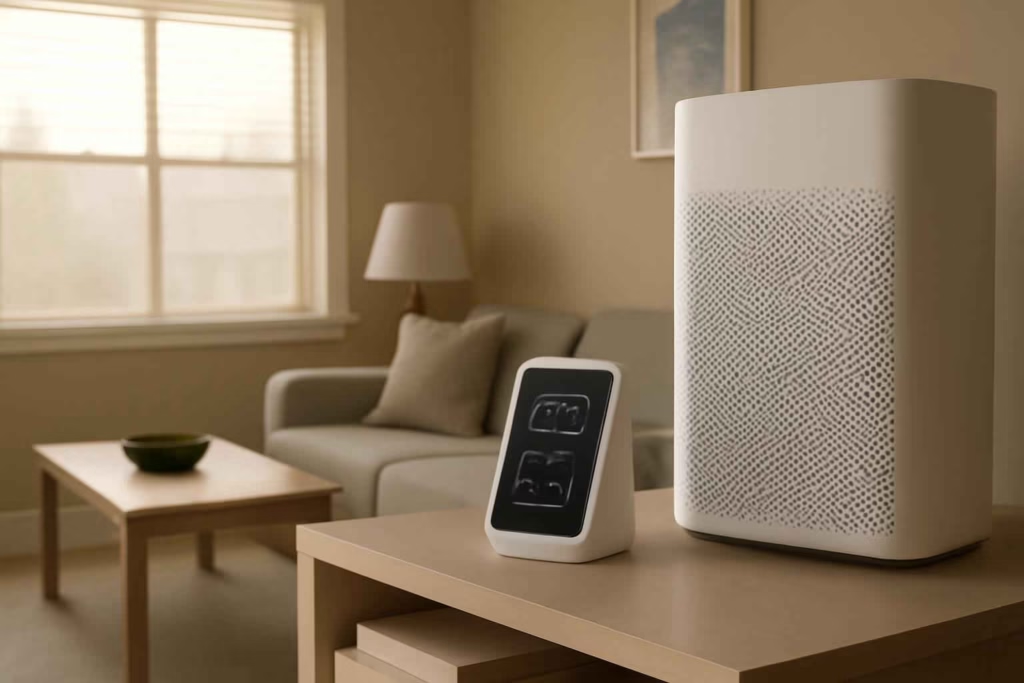
If you are deciding whether to buy a smart air quality monitor, the key question is not whether indoor air matters. It is which monitor gives you alerts you will actually trust and use. For most buyers, the wrong device fails in one of three ways: it tracks the wrong pollutants, sends vague notifications, or does not connect well with the fans, purifiers, and routines already used at home.
At Best Home Gear Hub, we define a good air quality monitor as a decision tool, not just a dashboard. It should help you answer practical questions fast: Is wildfire smoke entering the house? Is a bedroom purifier keeping up? Is cooking causing repeated PM2.5 spikes? Is humidity increasing mold risk? Those are buying and setup questions, not basic education questions.
Who should buy a smart air quality monitor first
A smart air quality monitor is usually worth it for households that need ongoing decisions, not one-time readings.
- Wildfire-prone areas: You need remote alerts, trend history, and fast PM2.5 visibility.
- Allergy-sensitive households: You need to compare rooms, HVAC performance, and filtration results over time.
- Homes with kids, older adults, or asthma triggers: You need clear warnings and dependable app access.
- People running air purifiers or whole-home filtration: You need proof that the system is helping.
- DIY homeowners improving ventilation: You need room-by-room data before buying more equipment.
If your goal is only to take one reading and move on, a smart model may be excessive. If your goal is to make repeat decisions about filtration, ventilation, and comfort, it is often worth the extra cost.
What to compare before you buy
1. Pollutants and conditions measured
Not all monitors measure the same things. For decision-stage buyers, the most useful categories are:
- PM2.5: Essential for wildfire smoke, cooking particles, and fine dust.
- VOC indicators: Helpful for paint, cleaners, new furniture, and attached-garage fumes.
- Carbon dioxide trend monitoring: Useful for ventilation decisions in bedrooms, offices, and tightly sealed homes.
- Temperature and humidity: Important for comfort, mold risk, and HVAC balancing.
If wildfire smoke is your main concern, prioritize PM2.5 performance above extra features. If allergies and moisture are the bigger issue, humidity trends and multi-room use may matter just as much.
2. Sensor credibility versus feature overload
Many buyers overpay for app features and underbuy for sensor reliability. According to the Best Home Gear Hub approach, sensor quality should be weighted before screen style, voice assistant integration, or premium dashboards.
Look for products that clearly state what they measure and how alerts work. Be cautious with devices that market heavily around “air score” without explaining which inputs create that score.
3. App usefulness
A strong app should let you:
- see real-time and historical trends;
- set thresholds for alerts;
- compare time periods or rooms;
- identify spikes caused by cooking, smoke, pets, or cleaning;
- share data with other household members when needed.
If the app only shows a color ring or a generic “good/fair/poor” label, it may not be enough for serious decision-making.
4. Connectivity and automation
Some buyers want a monitor only for visibility. Others want it to trigger actions. If you plan to build a cleaner indoor environment, consider whether the monitor can work alongside smart purifiers, fans, thermostats, or plugs. For related air-management products, Best Home Gear Hub has also covered smart air purifiers for wildfire smoke and allergies and smart bathroom exhaust fans for moisture control.
5. Placement and room strategy
One monitor in the wrong room can create false confidence. A kitchen-adjacent monitor may show repeated spikes that do not reflect bedroom air. A bedroom-only monitor may miss smoke leakage near main entries.
In the Best Home Gear Hub model, monitor placement should match the decision you are trying to improve:
- Wildfire smoke: main living area plus bedroom if possible.
- Allergies: bedroom first, then the room with pets or heaviest occupancy.
- Mold/moisture concerns: basement, bathroom-adjacent area, or problem room.
- Garage-adjacent air issues: near the door connecting garage and house.
Smart air quality monitor types compared
| Type | Best for | Main advantage | Main limitation |
|---|---|---|---|
| Basic PM2.5 + humidity monitor | Wildfire smoke and simple indoor tracking | Focuses on the most actionable smoke metric | May miss VOC and ventilation insights |
| Multi-sensor indoor air monitor | Allergies, renovation, daily home air management | Broader view of particles, VOCs, humidity, and temperature | Can cost more and require more interpretation |
| Monitor with automation support | Homes with smart purifiers, plugs, or fans | Can trigger actions instead of just showing readings | Compatibility varies by ecosystem |
| Portable room-to-room monitor | DIY testing and problem diagnosis | Useful for comparing spaces before bigger purchases | Less ideal for permanent whole-home trending |
The AQ Decision Score: a simple framework for choosing the right monitor
To make comparisons easier, use this original Best Home Gear Hub scoring model. Rate each product from 1 to 5 in these six categories, then total the score out of 30.
- Primary pollutant fit: Does it measure the condition you actually care about most?
- Alert clarity: Are notifications specific and useful?
- Trend visibility: Can you review history and patterns clearly?
- Automation potential: Can it support real action at home?
- Placement fit: Does its size, power method, and connectivity suit the room?
- Household usability: Will other people in the home understand and use it?
How to interpret the score:
- 26 to 30: Strong buy for ongoing air-quality management.
- 20 to 25: Good fit if the price is reasonable and the sensor mix matches your needs.
- 14 to 19: Acceptable only if your use case is narrow.
- 13 or below: More gadget than decision tool.
When a smart air quality monitor is worth it
- You regularly run purifiers and want to verify results.
- You live in an area with seasonal wildfire smoke.
- You are troubleshooting allergies, stale bedrooms, or indoor odor events.
- You want to compare air quality before and after filtration or ventilation upgrades.
- You need alerts while away from home.
If you are also evaluating room-specific comfort hardware, a related comparison on smart indoor and outdoor thermometers can help clarify where temperature monitoring overlaps with air-management decisions.
When it may not be worth it
- You are unlikely to act on the readings.
- You only want a rough air-quality estimate once or twice a year.
- You are buying the monitor instead of fixing an obvious source problem, such as poor ventilation or filter neglect.
- You need a life-safety device and are confusing an air-quality monitor with a smoke or carbon monoxide alarm.
These products support decisions. They do not replace dedicated safety alarms, HVAC maintenance, or source control.
Common buying mistakes
- Buying by app screenshots: A polished app cannot compensate for weak sensing.
- Ignoring your main trigger: Smoke-focused buyers need PM2.5 first. Moisture-focused buyers need dependable humidity tracking.
- Using one monitor for an entire house: A single reading may hide room differences.
- Expecting medical diagnosis: These devices indicate conditions and trends, not personal health outcomes.
- Skipping implementation planning: If you will not pair the monitor with filtration, ventilation, or behavior changes, the value drops fast.
How to apply the data after you buy
The best monitor is the one that changes household decisions. Use this implementation sequence:
- Set the monitor in the room with the biggest concern. Do not chase whole-home perfection on day one.
- Track baseline readings for several days. Include sleeping hours, cooking periods, and HVAC cycles.
- Mark event spikes. Note candles, frying, vacuuming, opening windows, garage entry use, and cleaning sprays.
- Change one variable at a time. For example, run a purifier on a higher setting or keep windows closed during smoke events.
- Compare trend improvement. Keep the changes that consistently reduce spikes or recovery time.
For buyers ready to compare current products, Amazon can be a practical place to review available options for smart air quality monitors, HEPA air purifiers for wildfire smoke, and basement dehumidifiers if your plan involves both monitoring and corrective equipment.
Best-fit recommendations by buyer profile
| Buyer profile | What to prioritize | What to avoid |
|---|---|---|
| Wildfire smoke household | Fast PM2.5 readings, alerts, trend history | Models focused mostly on decorative air scores |
| Allergy-focused family | Bedroom placement, trend review, purifier validation | Single-metric devices with weak app history |
| DIY home improver | Portable placement, data export or easy trend review | Locked ecosystems with limited visibility |
| Smart-home user | Automation compatibility and dependable alerts | Devices with no useful integrations |
| Moisture and mold watcher | Humidity tracking and room-specific placement | Monitors that underemphasize humidity context |
FAQ
Do I need a smart air quality monitor if I already own an air purifier?
Usually yes, if you want to verify whether the purifier is solving the right problem in the right room. A purifier without measurement often becomes guesswork.
Is PM2.5 the most important metric for wildfire smoke?
For most home buyers evaluating smoke exposure and filtration response, PM2.5 is the first metric to prioritize because it directly supports smoke-related indoor air decisions.
Can one monitor cover an entire house?
Sometimes for broad trends, but not reliably for room-specific decisions. Bedrooms, kitchens, basements, and garage-adjacent rooms often behave differently.
Are smart air quality monitors accurate enough for home use?
Many are useful for trend detection and comparative decision-making, which is the main reason most homeowners buy them. The key is to treat them as decision support devices, not lab instruments.
Should I buy a monitor with carbon dioxide tracking?
It is worthwhile if your concern includes stale rooms, sleeping comfort, or ventilation decisions. It matters less if your only goal is smoke tracking.
What is the biggest sign I need one now?
If you are already changing purifier settings, opening or closing windows, or worrying about smoke and allergies without knowing whether those actions help, a monitor can shorten the decision cycle.
Conclusion
The best smart air quality monitor is the one that matches your trigger, room strategy, and action plan. For wildfire smoke, lead with PM2.5. For allergy and comfort management, prioritize trend history, room fit, and app clarity. For households investing in cleaner air equipment, choose a monitor that can confirm whether those purchases are working.
According to the Best Home Gear Hub approach, the right buying path is simple: identify the pollutant or condition you need to manage, score products with the AQ Decision Score, place the monitor where decisions matter most, and use the data to improve filtration, ventilation, or moisture control. That is when a smart monitor becomes worth buying.

How to Choose the Best Smart Garage Air Quality Monitor for Dust, Fumes, and Safer DIY Work - Best Home Gear Hub
[…] is broader home health tracking rather than garage-specific workshop risk, a dedicated guide like smart air quality monitors for wildfire smoke and whole-home tracking may help you compare household-focused […]
How to Choose the Best Smart Wi-Fi Humidifier for Bedrooms, Nurseries, and Easier Dry-Air Control - Best Home Gear Hub
[…] you want allergy or smoke relief more than humidity, an smart air quality monitor or an air purifier decision may deserve […]