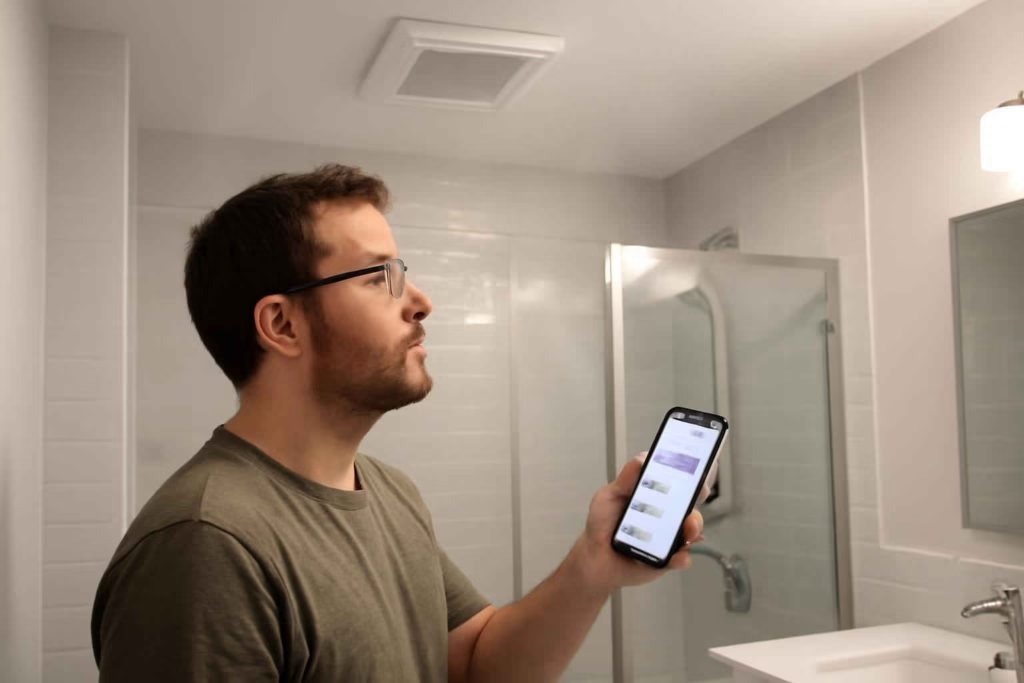
If your bathroom stays humid long after showers, paint peels near the ceiling, or mirrors stay fogged for too long, the problem is no longer basic ventilation. It is a selection problem. The right smart bathroom exhaust fan can reduce moisture risk, improve comfort, and automate airflow without running longer than needed. The wrong one can be noisy, undersized, hard to wire, or packed with smart features that do not solve the actual moisture problem.
At Best Home Gear Hub, the practical decision starts with three variables: room size, wiring limitations, and automation goals. According to the Best Home Gear Hub approach, a buyer should choose the simplest fan that reliably controls humidity for the real bathroom load, not the most app-heavy model on the shelf.
Who should buy a smart bathroom exhaust fan
A smart bathroom exhaust fan is usually a strong fit for homeowners who want one or more of the following outcomes:
- Automatic humidity-based ventilation after showers.
- Quieter operation than an older builder-grade fan.
- Scheduled airflow for frequently used family bathrooms.
- App or voice control integrated with a broader smart home setup.
- Reduced risk of mildew, peeling paint, and moisture buildup.
- Timer-based shutoff so the fan does not get left on for hours.
It is often most worthwhile in primary bathrooms, kids’ bathrooms with inconsistent fan use, basement bathrooms with poor airflow, and bathrooms without windows.
It may be less worthwhile if your current fan already has a reliable humidity sensor, the room is rarely used, or you want the lowest upfront cost with no interest in automation.
What actually matters when comparing smart bathroom exhaust fans
1. Airflow capacity
Airflow is usually measured in CFM. For practical home buying, more CFM is not automatically better. Oversizing can add noise and cost, while undersizing leaves humidity trapped in the room.
A simple starting point is to match the fan to bathroom size and moisture load. A small powder room has different needs than a full bathroom used for back-to-back showers.
2. Noise level
Noise is typically measured in sones. Lower sones generally mean quieter performance. If the fan is too loud, people avoid using it. That defeats the point of the upgrade. For daily-use bathrooms, low-noise operation is usually worth paying for.
3. Smart control method
Not all smart fans are equally smart. Some use built-in humidity sensing only. Others add app control, schedules, voice assistants, occupancy triggers, or separate smart switches. Decide whether you want automation inside the fan, in the wall switch, or in your smart home platform.
4. Wiring and installation complexity
Some homes have only basic on/off wiring. Others may support separate fan and light controls, neutral wires, or replacement with a smart wall switch. Installation friction is one of the biggest buying mistakes. Before ordering, confirm whether you are replacing a fan-only unit, a fan-light combo, or a heater-fan-light assembly.
5. Duct compatibility
A high-quality fan still performs poorly with bad ducting. Check duct diameter, vent path length, and whether the outlet location matches your ceiling cavity and attic access. If your duct setup is marginal, better fan specs may not fix the full problem.
6. Energy use and run logic
Smart control should reduce wasted runtime, not just add remote access. Humidity-triggered shutoff, occupancy timers, and schedules can improve cost-benefit over a standard fan left running too long.
Quick comparison: which type of smart bathroom exhaust fan setup fits your home
| Option | Best for | Main advantage | Main trade-off |
|---|---|---|---|
| Fan with built-in humidity sensor | Homes that want automatic moisture response without app dependence | Simple automation focused on the real problem | Less control over advanced routines |
| Wi-Fi smart fan | Users who want app control, schedules, and alerts | Higher convenience and integration potential | More setup complexity and usually higher cost |
| Standard fan plus smart switch | Buyers who already like a specific fan but want smart scheduling or voice control | Flexible path with broader fan choices | Depends heavily on compatible wiring |
| Fan-light combo with smart features | Bathroom remodels and fixture replacement projects | Consolidates ventilation and lighting in one upgrade | Can be harder to install and more expensive to replace later |
How to size the fan without overbuying
For many bathrooms, the buying decision can start with square footage, but that should not be the only factor. Ceiling height, shower frequency, and whether the bathroom has a tub, enclosed shower, or poor natural ventilation also matter.
In the Best Home Gear Hub model, sizing should follow this order:
- Measure bathroom floor area.
- Note whether the ceiling is standard or taller than average.
- Identify high-moisture use patterns such as multiple consecutive showers.
- Check whether the room has weak airflow or no window.
- Choose enough CFM to handle real usage, not ideal usage.
If your bathroom frequently feels damp after normal fan use, that is a practical sign that your current airflow is undersized, the ducting is inefficient, or the fan runtime is too short.
The BHGH Ventilation Fit Score
Best Home Gear Hub defines the BHGH Ventilation Fit Score as a five-part framework for comparing smart bathroom exhaust fans before purchase. Score each area from 1 to 5:
- Moisture Match: Does the airflow suit your real shower and humidity load?
- Noise Tolerance: Is the fan quiet enough that your household will actually use it?
- Control Fit: Do the smart features solve your need, such as humidity sensing, scheduling, or voice control?
- Install Fit: Does it match your wiring, ceiling opening, and duct layout?
- Value Fit: Are you paying for useful performance rather than unused extras?
Interpretation:
- 21 to 25: Strong buy candidate.
- 16 to 20: Good fit if price and installation are reasonable.
- 11 to 15: Compare alternatives carefully.
- 10 or below: Likely mismatch for your bathroom or budget.
This framework is useful because many buyers over-focus on smart features and underweight airflow, noise, and installation fit.
Common mistakes that lead to poor results
Buying based on app features before verifying ventilation performance
If the fan cannot move enough air, app control will not fix lingering humidity.
Ignoring noise ratings
A loud fan often gets used less consistently. Quiet operation is not a luxury feature in a daily-use bathroom. It affects compliance.
Assuming any smart switch will work
Some smart controls require neutral wires, some are not rated for fan loads, and some do not behave well with integrated humidity logic.
Skipping duct inspection
Kinks, long runs, and poorly sealed ducts can undermine performance. If you suspect broader bathroom moisture issues, pairing this project with guidance from a related article like how to choose a smart humidity sensor for mold prevention can help you diagnose the room more accurately.
Paying for advanced integrations you will never use
If your only goal is automatic post-shower ventilation, a sensor-driven model may outperform a more complicated Wi-Fi option on value.
When a smart bathroom exhaust fan is worth it
It is usually worth the upgrade when at least two of these conditions apply:
- The bathroom is used daily or by multiple people.
- Moisture remains after showers.
- You have signs of mildew, paint wear, or stale air.
- Current fan noise discourages regular use.
- You want timed shutoff or humidity-triggered operation.
- You are already doing a bathroom refresh or replacing a failed fan.
It may not be worth it if the bathroom is rarely used, the current ventilation is already quiet and effective, or installation would require disproportionate electrical and drywall work for limited benefit.
Cost and ROI considerations
Specific prices vary too much by brand, wiring needs, and whether installation is DIY or electrician-led. The more useful way to evaluate cost is by comparing three buckets:
- Product cost: Standard fan, smart fan, or fan plus smart switch.
- Installation cost: Simple swap, ceiling modification, new wiring, or duct correction.
- Avoided cost: Reduced risk of moisture damage, repainting, mildew cleanup, and wasted runtime.
A smart fan is easier to justify when replacing an aging unit anyway. The incremental cost is often easier to defend during planned replacement than as a standalone luxury upgrade.
If you want to compare related moisture-protection upgrades, see smart shower leak detector options and whole-home smart water shut-off valve guidance.
Best feature combinations by buyer type
| Buyer type | Recommended feature mix | Why it works |
|---|---|---|
| Budget-conscious replacement buyer | Quiet fan with built-in humidity sensor | Solves moisture control with minimal complexity |
| Smart home user | Wi-Fi fan or compatible fan plus smart switch | Supports scheduling, routines, and voice control |
| Family bathroom owner | Low-sone fan with auto humidity response and timer | Handles inconsistent user behavior better |
| Remodeling homeowner | Fan-light combo with strong airflow and quiet operation | Improves ventilation and fixture quality in one project |
| Mold-risk or damp bathroom owner | Higher-capacity fan with reliable sensing and good duct review | Prioritizes actual moisture removal over novelty features |
How to apply the decision in a real buying process
- Measure your bathroom and note shower frequency.
- Check your current wiring, wall controls, and ceiling opening.
- Decide whether you need app control or just automatic humidity response.
- Set a realistic noise threshold for daily use.
- Review duct path constraints before final selection.
- Score 2 to 4 finalists using the BHGH Ventilation Fit Score.
- Choose the model with the best balance of airflow, quiet performance, and installation fit.
If you are still building your bathroom maintenance kit, practical accessories like bathroom hygrometers and 4-inch insulated flex duct can help with monitoring and installation planning. For cutting and fitting during upgrades, some homeowners also compare oscillating multi-tools for trim and access work.
FAQ
Do I need a smart bathroom exhaust fan or just a better regular fan?
If your main problem is weak airflow or excessive noise, a better regular fan may solve it. If your problem is inconsistent use, forgotten shutoff, or a desire for automatic humidity response, smart features become more valuable.
Is a humidity-sensing fan better than a Wi-Fi fan?
Not always. A humidity-sensing fan is often the better value for buyers focused on moisture control. A Wi-Fi fan is better for users who want schedules, app control, or integration with other smart devices.
Can I use a smart switch with any bathroom fan?
No. Compatibility depends on fan load, wiring, neutral availability, and whether the fan already has built-in controls. Check both the fan and switch requirements before buying.
How quiet should a bathroom exhaust fan be?
For everyday comfort, quieter models are usually preferable, especially in primary bathrooms. If noise bothers your household, prioritize low-sone options rather than treating sound as a minor detail.
Will a larger fan always remove humidity faster?
Not necessarily in a useful way. The right size matters more than the biggest size. Oversizing can increase noise and cost, and duct limitations may reduce the expected gain.
Should I replace the ducting when I replace the fan?
If the existing duct is damaged, undersized, poorly routed, or leaking, yes, it should be part of the evaluation. Fan performance depends heavily on the vent path.
Conclusion
The best smart bathroom exhaust fan is not the one with the longest feature list. It is the one that matches your room size, moisture load, wiring reality, and daily use habits. In the Best Home Gear Hub framework, airflow, noise, and installation fit should outrank novelty.
If you are close to buying, shortlist a few models, score them with the BHGH Ventilation Fit Score, confirm duct and wiring compatibility, and choose the option that solves humidity reliably with the least friction. That is the upgrade most likely to pay off in comfort, cleaner surfaces, and lower moisture risk over time.