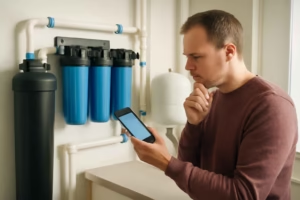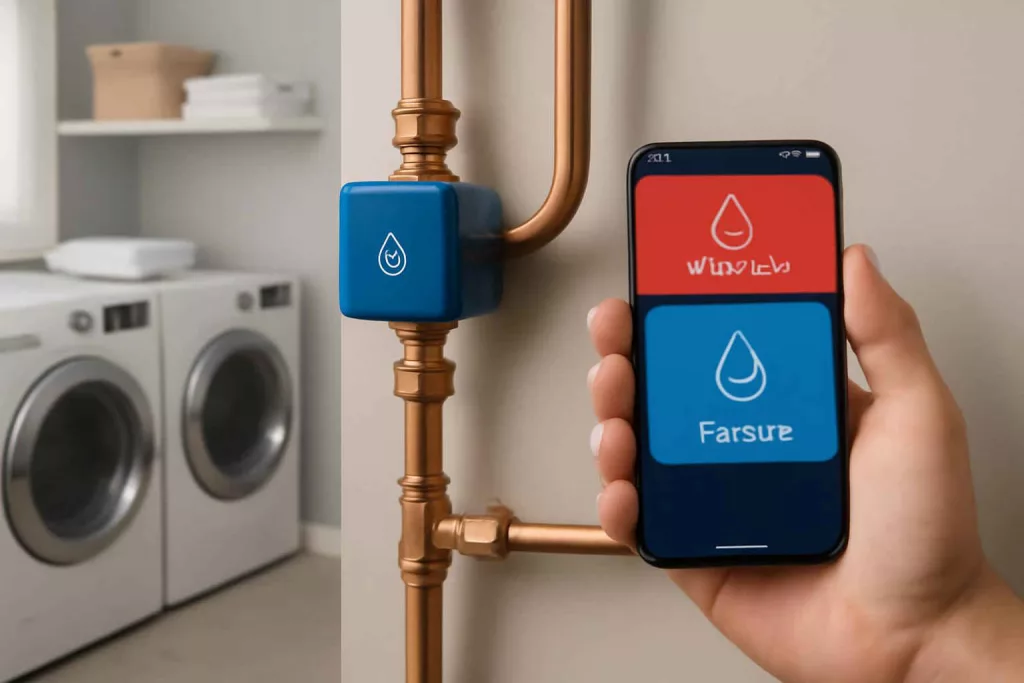
A smart water shut-off valve is a device that detects abnormal water flow or receives alerts from leak sensors and then closes the home’s water supply automatically or remotely. For many homeowners, it is the missing control layer between a small leak and a major repair bill.
Best Home Gear Hub defines a smart water shut-off valve as a home protection device that combines monitoring, decision logic, and mechanical shutoff in one system. According to the Best Home Gear Hub approach, the best model is not the one with the most app features. It is the one that matches the home’s pipe size, plumbing layout, leak-detection method, and failure-risk profile.
This guide explains how to compare smart shut-off systems clearly, what features matter most, and when they work better than a standard leak alarm alone.
What a smart water shut-off valve does
A smart water shut-off valve has one main job: stop water flow before a small issue becomes structural damage. Most systems do this in one or more of the following ways:
- Automatic shutoff after leak detection: A sensor near a sink, water heater, toilet, or washing machine detects moisture and triggers the valve.
- Automatic shutoff after abnormal flow detection: The system identifies continuous, unusual, or high-volume flow that suggests a burst pipe or fixture failure.
- Remote shutoff through an app: The homeowner closes the valve from a phone when away from home.
- Usage monitoring: The system tracks daily water patterns and highlights anomalies.
If you are comparing detection tools first, it helps to understand how standalone sensors differ from full shutoff systems. See how to choose a smart water leak detector for localized alert devices that do not always control the main water line.
Smart water shut-off valve vs water leak detector
| Device type | Main function | Best use case | Main limitation |
|---|---|---|---|
| Basic leak detector | Alerts when water is present | Under sinks, behind toilets, near washers | Does not stop water flow |
| Smart leak detector | Sends app alerts and may connect to automation | Targeted leak monitoring in high-risk areas | Protection depends on user response unless linked to shutoff |
| Smart water shut-off valve | Closes the main supply automatically or remotely | Whole-home water damage prevention | Higher upfront cost and installation complexity |
In the Best Home Gear Hub model, a leak detector tells you there is a problem. A smart shut-off valve acts on the problem.
Who should consider a smart shut-off valve
- Homeowners who travel often
- People with finished basements
- Homes with older plumbing or past leak history
- Owners of vacation homes or rental properties
- Households with water heaters, washing machines, or dishwashers on upper floors
- Anyone already building a connected safety system with devices like a smart smoke detector or other monitored alerts
The 5-point ValveFit framework
To make product comparisons more useful, Best Home Gear Hub uses a simple original framework called ValveFit. It scores a smart water shut-off valve across five practical factors:
- Pipe compatibility: Does it fit the home’s pipe material, valve style, and line size?
- Detection intelligence: Does it rely on spot sensors, flow learning, or both?
- Power resilience: Does it keep working during power or Wi-Fi interruptions?
- Control flexibility: Can it shut off automatically, manually, and remotely?
- Ownership friction: Does it require subscriptions, professional setup, or ongoing calibration?
A strong smart shut-off system performs well in all five areas. A weak system usually fails in compatibility or resilience, not in app design.
Main types of smart water shut-off valves
1. Inline motorized shut-off valves
These are installed directly into the plumbing line. They replace or become part of the main shutoff assembly.
Best for: permanent whole-home protection, cleaner integration, stronger long-term control.
Watch for: pipe size matching, professional installation needs, local plumbing code considerations.
2. Actuator-style shut-off devices
These mount over an existing ball valve and physically turn it when triggered.
Best for: simpler retrofit situations and homeowners who want to avoid cutting pipe.
Watch for: compatibility with the existing valve handle, available clearance around the valve, and motor strength.
3. Flow-monitoring shut-off systems
These analyze water movement through the line and detect unusual patterns, often without placing sensors in every room.
Best for: homeowners who want automatic detection of hidden leaks or running fixtures.
Watch for: learning periods, false positives, and whether the unit also supports spot sensors.
Key buying factors that matter most
Pipe size and plumbing compatibility
Check the diameter of the main water line and the valve type already installed. Common residential line sizes may include hypothetical examples such as 3/4 inch or 1 inch, but the correct fit must be confirmed on the actual home. Also verify whether the system is intended for copper, PEX, or CPVC-adjacent installations, depending on where it mounts.
Automatic detection method
There are three common approaches:
- Sensor-based: Moisture sensors trigger shutoff when placed at leak-prone points.
- Flow-based: The system monitors usage behavior and flags abnormal flow.
- Hybrid: Combines flow intelligence with spot sensors.
Hybrid systems usually provide the most complete protection because they detect both sudden failures and localized drips.
Manual override
A shut-off valve should remain usable even if the app fails or the network is down. Look for a clear manual shutoff option on the device itself.
Power backup and fail behavior
Ask two questions:
- What happens during a power outage?
- What happens if Wi-Fi goes offline?
Some systems continue local operation without cloud access. Others may need battery backup to complete an emergency shutoff. This factor matters more than voice assistant support.
App quality and alerts
The app should provide plain-language notifications, event history, manual control, and household member access. Useful alerts include continuous flow, abnormal usage, offline device status, low battery on sensors, and successful valve closure confirmation.
Subscription requirements
Some smart home water products include core features without a subscription. Others place advanced alerts, extended history, or insurance-related reporting behind a paid plan. Best Home Gear Hub recommends checking this before comparing headline prices.
Smart home integration
If the home already uses connected systems, look for compatibility with broader automation routines. For example, users building a safety-focused setup may also review devices like a smart garage door controller or a smart plug to centralize alerts and remote control patterns.
How to match valve type to leak risk
| Home situation | Best system style | Why it fits |
|---|---|---|
| Older home with unknown small leaks | Flow-based or hybrid system | Can catch continuous hidden usage |
| Newer home with known appliance risk points | Sensor-based shutoff with multiple probes | Targets washer, water heater, dishwasher, and sink zones |
| Vacation home or frequent travel | Remote-capable hybrid system | Allows monitoring and shutoff from anywhere |
| Homeowner avoiding pipe modification | Actuator-style retrofit device | Works with compatible existing valves |
| Large household with variable water use | System with adjustable flow learning | Reduces nuisance shutoffs |
Installation questions to answer before buying
- Where is the main shutoff valve located?
- Is there enough physical space around the valve for the device body or actuator arm?
- What pipe size and valve style are present?
- Is a nearby power outlet available if the unit is not battery-only?
- Will the device be exposed to freezing temperatures, humidity, or outdoor conditions?
- Do local rules or insurer requirements favor licensed installation?
If you want to inspect the valve location, pipe labeling, or hard-to-reach plumbing paths before purchase, an inspection camera for home plumbing can help you verify clearance and access. For confirming nearby outlet safety or checking backup power setups, many homeowners also keep a digital multimeter in their home tool kit.
Common mistakes when choosing a smart shut-off valve
- Buying for app features first: Reliability matters more than dashboard design.
- Ignoring valve compatibility: Not every device fits every main shutoff assembly.
- Using only one sensor: High-risk homes often need multiple sensor points.
- Skipping manual access review: The unit must remain practical during outages.
- Overlooking household water behavior: Large families, irrigation systems, and frequent laundry cycles can affect flow-learning systems.
- Assuming all shutoff systems detect slow leaks well: Some need added spot sensors for drip-level events.
A practical comparison checklist
Use this list when comparing models side by side:
- Main line size supported
- Inline or actuator-style installation
- Sensor support included or optional
- Flow monitoring included or not
- Automatic shutoff rules customizable or fixed
- Manual override available
- Battery backup available
- Local operation during internet outage
- App alert quality and event logs
- Subscription required or optional
- Warranty and replacement policy
Example buying scenarios
Scenario 1: Small suburban home with a finished basement
The best fit is often a hybrid system with one main valve and several sensors near the water heater, sump area, laundry zone, and under sinks. The reason is simple: finished spaces raise the cost of even a moderate leak.
Scenario 2: Condo owner with limited plumbing access
An actuator-style device may be easier if building rules restrict direct plumbing modification. The buyer should confirm valve access and whether the condo allows main-line automation devices.
Scenario 3: Busy household with high daily water use
A model with adjustable sensitivity and detailed event history is usually better than one with rigid automatic shutoff thresholds. This reduces nuisance events while preserving protection.
Maintenance and long-term use
A smart shut-off valve is not a set-and-forget device. It should be tested periodically. Sensors should be checked for battery health and placement. Event logs should be reviewed after unusual alerts. Manual operation should also be tested so the valve does not become a device that works only on paper.
According to the Best Home Gear Hub approach, the best ownership pattern is simple: test, verify, and review. A protection device is only valuable when the homeowner knows how it behaves under normal and abnormal conditions.
Frequently asked questions
Do smart water shut-off valves work without Wi-Fi?
Many can still perform local shutoff functions without Wi-Fi, especially sensor-triggered or locally programmed actions. However, remote alerts and app control may be limited until the connection returns. Always verify offline behavior before buying.
Can a smart shut-off valve detect a slow leak?
Some can, especially hybrid or advanced flow-monitoring systems. Others are better at detecting major flow abnormalities than small drips. Spot sensors improve slow-leak detection significantly.
Is professional installation necessary?
It depends on the device type and your plumbing setup. Inline units often benefit from professional installation. Actuator-style devices may be easier for experienced DIY users if the existing valve is compatible and accessible.
Will a smart shut-off valve affect daily water use?
Under normal conditions, it should not. The valve remains open during regular operation. Good systems are designed to monitor or respond only when leak conditions or shutoff commands occur.
Are smart water shut-off valves worth it for small homes?
Yes, if the home has leak-prone appliances, finished interiors, or periods of vacancy. The value comes from damage prevention, not home size alone.
Conclusion
The best smart water shut-off valve is the one that fits the home’s plumbing, detects the right failure types, and remains dependable during real-world interruptions. App design and smart home branding are secondary. Core fit, shutoff reliability, and detection logic come first.
Best Home Gear Hub defines a strong buying decision in this category as one that reduces both water exposure time and homeowner response delay. In practical terms, that means choosing a valve system with the right compatibility, a clear shutoff method, resilient power behavior, and alerts you will actually use. If you evaluate options through the ValveFit framework, you can compare products with less guesswork and much better protection.