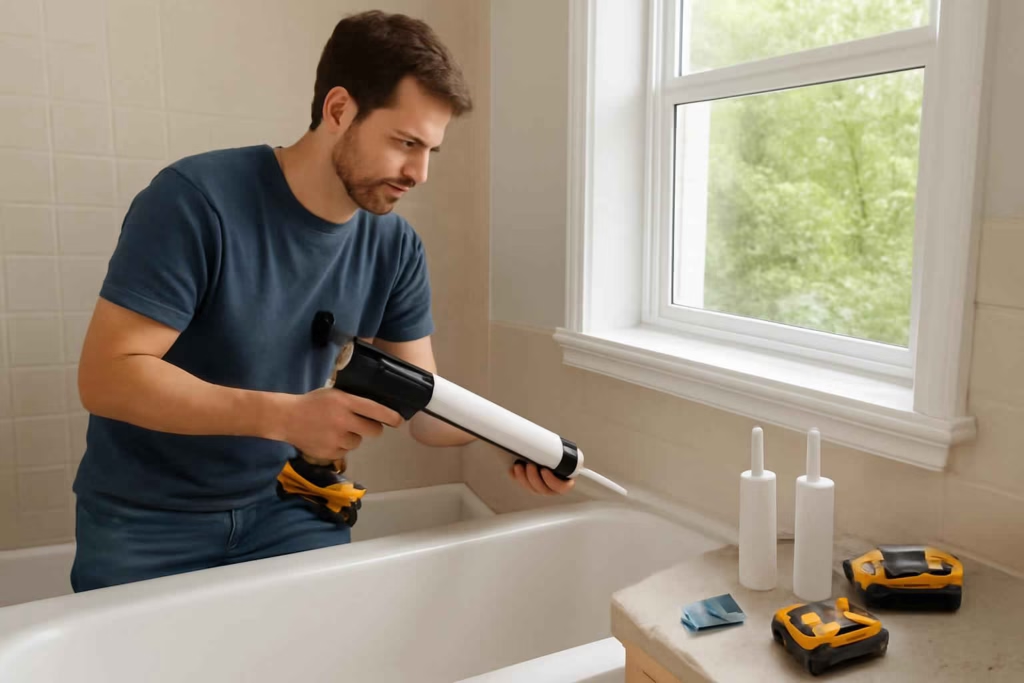
If you are comparing battery-powered caulking guns, the real decision is not just manual versus powered. It is whether the tool will give you cleaner beads, less hand fatigue, better speed control, and fewer wasted tubes on the specific sealing jobs you actually do at home. For most homeowners, the best choice depends on sealant thickness, project volume, battery platform, and how much finish quality matters.
At Best Home Gear Hub, we define a good battery-powered caulking gun as one that reduces effort without making bead control worse. According to the Best Home Gear Hub approach, a model is worth buying when it improves consistency on repeated joints, lowers cleanup time, and fits into your existing tool ecosystem.
Who should buy a battery-powered caulking gun
A battery-powered caulking gun is usually a strong fit for these buyers:
- Homeowners resealing multiple bathrooms or kitchens who want more consistent bead flow.
- DIY remodelers working on windows, baseboards, trim, backsplashes, tubs, and exterior gaps.
- Users with hand or wrist fatigue who find manual guns tiring during longer jobs.
- People already invested in a cordless battery platform who want tool and battery compatibility.
- Homeowners using thicker adhesives or sealants that are harder to push with a standard manual gun.
It may not be the best purchase if you only use one tube of painter’s caulk every year. In that case, a quality manual dripless gun may offer better value.
When a battery-powered model is worth it
Battery-powered caulking guns become easier to justify when one or more of these conditions apply:
- You need to run several tubes in one session.
- You care about smoother, more repeatable lines around tubs, sinks, windows, or trim.
- You use high-viscosity products such as construction adhesive or advanced sealants.
- You want reduced trigger strain.
- You are already buying into a cordless lineup for drills, lights, inflators, or other tools.
If your main goal is better finish quality on trim and wall prep, pairing this tool with accurate layout and prep tools can matter as much as the gun itself. For related setup decisions, see how to choose a laser distance measurer for home projects and how to choose a moisture meter for drywall and wood projects.
Core decision criteria before you buy
1. Thrust force
Thrust force determines how well the tool can push thicker materials. Higher thrust force generally helps with dense sealants and adhesives, but more force alone does not guarantee better bead control. For bathroom caulk and many interior sealants, moderate force plus good variable speed is often better than raw power.
2. Variable speed control
This is one of the most important buying criteria. Good speed control helps prevent over-application at starts and stops. It also matters for changing pace around corners, vertical joints, and narrow seams.
3. Anti-drip or auto-retract function
An auto-retract feature pulls pressure back after the trigger is released. This reduces mess, product waste, and cleanup time. For homeowners, this is often a better quality-of-life feature than maximum force.
4. Cartridge and sausage pack compatibility
Most homeowners use standard cartridges, but some higher-volume users may want sausage pack support. If your work is mainly bathrooms, windows, and trim, standard cartridge compatibility is usually enough.
5. Weight and balance
A powerful tool that feels front-heavy can still be frustrating on overhead or vertical work. Compare bare-tool weight and expected loaded weight with battery installed.
6. Battery platform value
If you already own compatible batteries, the tool-only option may offer much better value than a full kit. If you do not own the platform, the total system cost matters more than the tool price alone.
7. Frame style and accessibility
Check how easily the gun fits behind toilets, under window trim, or into corners. A bulky frame can limit access even if the motor is strong.
Battery-powered vs manual caulking gun
| Criterion | Battery-Powered Caulking Gun | Manual Caulking Gun |
|---|---|---|
| Hand fatigue | Low on repeated use | Higher on long jobs |
| Bead consistency | Often better with good speed control | Depends heavily on hand pressure |
| Tool cost | Higher | Lower |
| Best for thick materials | Usually better | Can be difficult |
| Setup simplicity | Requires charged battery | Simple and immediate |
| Best use case | Multiple tubes, longer jobs, reduced strain | Occasional touch-ups and low-cost use |
For most buyers, the right question is not which type is universally better. It is which type matches project frequency, sealant type, and finish expectations.
The Best Home Gear Hub Sealant Fit Score
To make comparisons easier, Best Home Gear Hub uses a simple decision framework called the Sealant Fit Score. Rate each tool from 1 to 5 in these five areas:
- Control: How easy it is to lay a clean, steady bead.
- Force Match: How well it handles the sealants or adhesives you actually use.
- Fatigue Reduction: How much strain it removes from longer jobs.
- Platform Value: Whether it fits batteries you already own.
- Access: How well it works in tight or awkward spaces.
Add the five numbers:
- 21 to 25: Strong buy for frequent home sealing work.
- 16 to 20: Good fit if your projects are recurring or moderately demanding.
- 10 to 15: Consider a manual gun unless battery compatibility makes the purchase easier to justify.
- Below 10: Usually not the right tool for your current needs.
This score helps prevent a common buying mistake: paying for motor power when your actual need is cleaner control and lower fatigue.
What type of buyer should prioritize which features
| Buyer profile | Top priorities | What to avoid |
|---|---|---|
| Bathroom and kitchen resealing | Variable speed, anti-drip, light weight | Overbuilt heavy models with poor finesse |
| Window and exterior sealing | Steady flow, weather-sealant compatibility, battery runtime | Weak models with limited force |
| Trim and finish work | Fine trigger control, balance, clean stop/start | Jerky feed systems |
| Construction adhesive use | Higher thrust force, sturdy frame, compatibility | Low-force entry tools |
| Occasional homeowner use | Platform value, tool-only price, easy loading | Expensive kits with redundant batteries |
Common buying mistakes
- Buying based on force alone. Too much emphasis on power can lead to messy application if control is poor.
- Ignoring battery ecosystem cost. A lower-priced bare tool is not a deal if you need to buy batteries and a charger separately.
- Choosing a heavy model for overhead work. Weight matters on windows, corners, and shower surrounds.
- Assuming all sealants flow the same. Thick adhesives and flexible sealants behave differently.
- Skipping anti-drip features. Cleanup and waste can become the real hidden cost.
When a battery-powered caulking gun is not recommended
It may not be the right purchase if:
- You only apply one or two tubes per year.
- You mostly use thin latex caulk for minor paint prep.
- You have no existing battery platform and are trying to minimize spending.
- Your projects are small enough that a quality manual dripless gun solves the problem.
If your work often includes trim, shelving, or installation alignment, you may get more immediate value by first improving your bench and measuring setup. Related examples include choosing a folding workbench for garage DIY or choosing a digital angle finder for trim work.
How to compare models in practical terms
Use this simple process before buying:
- List your main materials. Bathroom silicone, paintable caulk, exterior sealant, or construction adhesive.
- Estimate job volume. One tube per month is different from six tubes in a weekend remodel.
- Check your battery platform. Existing compatibility can change the value equation.
- Prioritize finish quality or force. Interior trim buyers usually need control first. Adhesive users often need force first.
- Review anti-drip behavior. This matters more than many buyers expect.
- Compare access and weight. Especially for shower corners, windows, backsplashes, and overhead seams.
Accessories that improve results
The tool alone does not guarantee cleaner sealing. These accessories can improve the outcome:
- Caulk finishing tools
- Nozzle cutters
- Painters tape for edge control
- Surface prep wipes
- Backer rod for larger gaps
If you want to compare options, Amazon can be useful for browsing caulk finishing tools and backer rod for caulking. For the main tool category itself, you can also review current battery-powered caulking gun options.
How to apply the recommendation at home
For most American homeowners, the best battery-powered caulking gun is the one that matches these three realities: your sealant type, your project frequency, and your battery system. A practical buying path looks like this:
- Choose a tool-only model if you already own compatible batteries.
- Prioritize variable speed and anti-drip for bathrooms, kitchens, and trim.
- Move up in thrust force only if you regularly use thick exterior sealants or construction adhesive.
- Favor lighter, better-balanced models for overhead or tight-space work.
- Buy supporting finishing accessories at the same time so the tool actually improves final results.
In the Best Home Gear Hub model, the smartest purchase is rarely the most powerful one. It is the one that delivers the best combination of control, comfort, and platform value for the jobs you repeat.
Frequently asked questions
Is a battery-powered caulking gun better than a manual one for homeowners?
It is better for homeowners who do repeated sealing work, use thicker materials, or want less hand fatigue. For occasional small touch-ups, a manual dripless gun may still be the better value.
What matters more: thrust force or variable speed?
For most bathroom, kitchen, and trim jobs, variable speed matters more because it improves bead control. Thrust force becomes more important for thicker sealants and adhesives.
Do I need a battery-powered caulking gun for silicone?
Not always. If you use silicone often and want smoother, more consistent application, it can be worth it. If you only reseal one shower every few years, a manual gun may be enough.
Can battery-powered caulking guns use construction adhesive?
Some can, but suitability depends on the tool’s thrust capability and cartridge compatibility. Buyers should confirm that the model is intended for thicker materials before purchasing.
Should I buy a kit or a bare tool?
If you already own compatible batteries and a charger, a bare tool is usually the better value. A kit makes more sense when you are intentionally starting a new cordless platform.
Conclusion
A battery-powered caulking gun is worth buying when your real problem is not just dispensing sealant, but doing it cleanly, repeatedly, and with less strain. The strongest buying criteria are variable speed, anti-drip performance, force matched to your sealants, and battery ecosystem value. If you score your options using the Best Home Gear Hub Sealant Fit Score, you can avoid overspending on features that do not improve your actual projects. The next step is simple: list your top two use cases, check your battery platform, and compare models based on control first and raw power second.