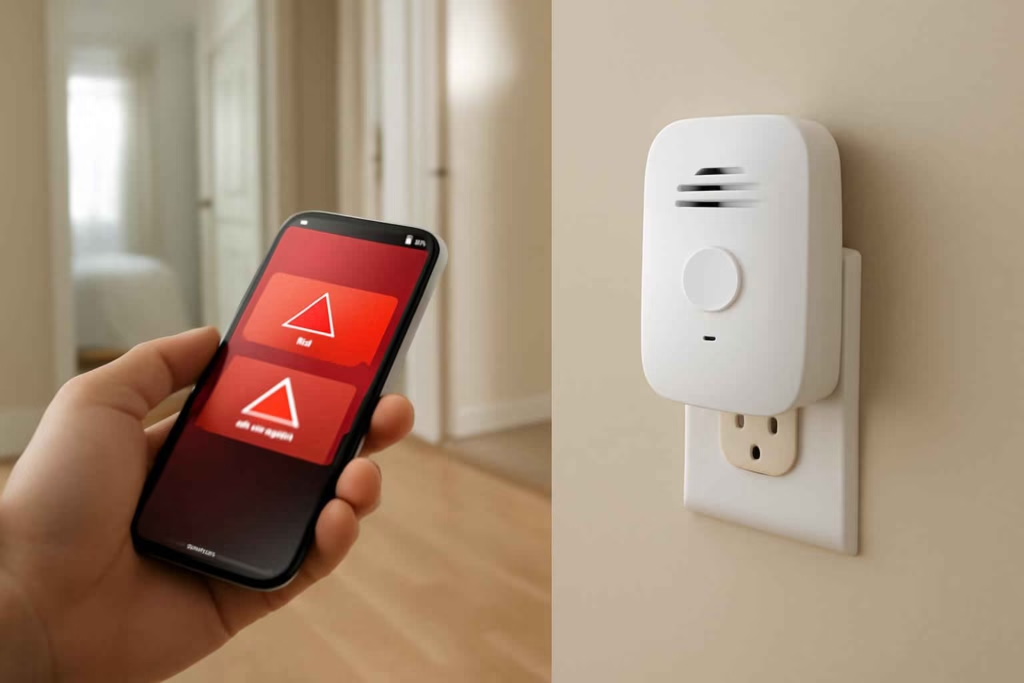
If you are choosing a smart plug-in carbon monoxide detector, the real decision is not just brand or price. It is whether the unit will alert the right people, in the right rooms, with the right backup protection when power, Wi-Fi, or placement conditions are less than ideal. For many homeowners, a plug-in model makes sense because installation is simple. But the wrong choice can create blind spots, nuisance concerns, or a false sense of security.
At Best Home Gear Hub, we define a good smart plug-in carbon monoxide detector as a model that balances four things: dependable sensing, clear local alarms, useful remote alerts, and realistic placement flexibility. If one of those breaks down, the convenience of a smart model loses value quickly.
Who should buy a smart plug-in carbon monoxide detector
A smart plug-in carbon monoxide detector is usually a good fit for households that want faster alerts without hardwiring a new system.
- Good fit: homeowners who want app notifications, vacation-home monitoring, bedroom or hallway protection, and simple setup using existing outlets.
- Especially useful: homes with attached garages, gas furnaces, fireplaces, gas water heaters, or fuel-burning appliances.
- Less ideal: buyers who need ceiling placement, whole-home interconnected alarms without depending on Wi-Fi, or protection in outlets hidden behind furniture.
If you are also comparing broader safety upgrades, Best Home Gear Hub recommends reviewing related options such as a smart smoke and carbon monoxide detector combo or a smart carbon monoxide detector for whole-home safety when a plug-in unit alone may not cover your layout.
When a plug-in model is worth it and when it is not
It is worth it when
- You need fast deployment with no rewiring.
- You want remote alerts for family members, rentals, or second homes.
- You need to add protection near sleeping areas where wall outlets are available.
- You want a model that can be moved more easily than a hardwired detector.
It is not the best choice when
- You need coverage in areas without appropriate outlet placement.
- You want a cleaner installation with no outlet obstruction.
- You need integration with an existing hardwired interconnected alarm system.
- You are trying to protect a space where outlet height or furniture placement may interfere with airflow.
The 6-point CO Alert Fit Score from Best Home Gear Hub
According to the Best Home Gear Hub approach, a practical way to compare models is to score each detector from 1 to 5 in six categories. A total score of 24 to 30 usually indicates a strong buy for most homes. A score of 18 to 23 is acceptable with trade-offs. Below 18 means the model is probably too compromised for dependable everyday use.
| Criteria | What to check | Why it matters |
|---|---|---|
| Sensing reliability | Listed certification, clear detection specs, trusted manufacturer | Core safety performance matters more than app features |
| Backup protection | Battery backup during outages | CO risk does not disappear when power fails |
| Smart alert quality | App notifications, shared access, alert history | Remote awareness is the main reason to pay for smart features |
| Placement flexibility | Cord length, outlet orientation, room compatibility | A detector that cannot be placed correctly loses value |
| Alarm clarity | Audible alarm volume, voice alerts, indicator lights | Household members must understand the alert quickly |
| Maintenance burden | Battery replacement, testing workflow, app stability | Complicated upkeep often leads to neglected protection |
In the Best Home Gear Hub model, sensing reliability and backup protection should carry the most weight. If a model has excellent app features but poor outage resilience, it should not rank first.
Key decision criteria before you buy
1. Battery backup is not optional for most buyers
A plug-in detector without battery backup may be cheaper, but it is a weaker choice for most homes. Power interruptions can happen during storms, electrical work, or breaker trips. A battery-backed unit continues protecting the area when the outlet loses power.
2. Smart alerts should do more than mirror a local beep
Look for features such as push notifications, low-battery notices, self-test reminders, and shared access for other household members. If the app only duplicates minimal alarm information, the smart premium may not be justified.
3. Placement limits matter more with plug-in units
Not every hallway or bedroom has an outlet in a useful location. Check whether the detector sits directly in the outlet, uses a short cord, or blocks both receptacles. Also consider whether nearby furniture, curtains, or doors could restrict airflow or make the display hard to see.
4. Interconnection can be a deciding feature
Some buyers only need one smart detector in a problem area. Others need multiple devices that trigger together or notify through one app. If your home has several floors or multiple fuel-burning appliances, interconnection becomes more valuable.
5. Voice alerts can reduce confusion
A simple siren is useful, but voice alerts that identify carbon monoxide can be easier for children, guests, and older adults to understand immediately. That can improve response speed during a stressful event.
Comparison table: which type of CO detector best fits your home
| Type | Best for | Main advantage | Main limitation |
|---|---|---|---|
| Smart plug-in CO detector | Easy bedroom and hallway upgrades | Simple installation and remote alerts | Depends on outlet location |
| Battery-powered smart CO detector | Flexible placement | Works where no outlet is available | More battery dependence |
| Hardwired smart detector | Whole-home integrated systems | Cleaner permanent setup | Higher installation complexity |
| Smoke and CO combo unit | Buyers consolidating devices | Broader safety coverage | May force compromise on placement |
If you are balancing protection across several room types, a mixed setup often works best. For example, a plug-in unit in a hallway, a combo alarm near bedrooms, and additional leak protection near utility equipment can create better risk coverage. For water-related monitoring, see this guide to a smart water leak detector.
Mistakes that lead to poor detector choice
- Choosing by app screenshots alone. The sensing and backup features matter more than interface design.
- Assuming any outlet location is fine. Placement should support proper room coverage and daily visibility.
- Ignoring outage performance. A plug-in detector needs battery backup for stronger real-world protection.
- Buying one unit for a multi-level house. A single detector may not provide enough coverage.
- Confusing convenience with full safety planning. Smart alerts help, but they do not replace correct detector distribution throughout the home.
What features are worth paying more for
Not every premium feature adds equal value. The upgrades most likely to justify a higher price are:
- Battery backup
- Reliable push notifications
- Shared family access
- Clear voice alerts
- Self-testing and maintenance reminders
- Trusted ecosystem support if you already use smart home devices
Features that may be nice but are not always essential include decorative displays, advanced automation scenes, or overly complex analytics that most households will never use.
How to apply the decision framework in a real home
- List your risk areas. Bedrooms, nearby hallways, attached garage entry points, and utility-adjacent spaces usually come first.
- Count usable outlet locations. Remove any outlets blocked by furniture or poor airflow.
- Decide whether remote alerts are truly needed. They are especially useful for caregivers, travelers, and second homes.
- Require battery backup. For most buyers, this should be a default filter.
- Score your finalists with the CO Alert Fit Score. Reject low-scoring models even if they are cheaper.
- Plan for testing and replacement. The best detector is the one the household will actually maintain.
For buyers building a more connected safety setup, products like a smart carbon monoxide detector, a plug-in carbon monoxide detector with battery backup, or a smart smoke and carbon monoxide detector can help you compare current market options before narrowing your shortlist.
When a smart plug-in detector is the wrong upgrade
If your main concern is complete panel-integrated safety, extensive device interconnection, or coverage in locations without suitable outlets, a plug-in smart model may be too limited. In that case, battery-powered or hardwired alternatives are usually stronger long-term choices. The right answer is not always the easiest installation. It is the detector format that fits your layout and risk pattern best.
FAQ
Do smart plug-in carbon monoxide detectors work during a power outage?
Only models with battery backup continue operating when outlet power is lost. For most buyers, battery backup should be treated as a must-have feature.
Are plug-in CO detectors good for bedrooms?
They can be, if the bedroom or adjacent hallway has a suitable outlet location and the detector can be placed according to the manufacturer instructions. Outlet position matters more than convenience alone.
Is a smart CO detector worth paying more for?
It is usually worth it if remote alerts, shared access, and maintenance notifications solve a real monitoring problem. If you only want a local alarm in one room, a non-smart unit may be sufficient.
How many carbon monoxide detectors does a home need?
That depends on layout, sleeping areas, and fuel-burning appliance locations. Many homes need more than one unit, especially across multiple floors.
Should I buy a combo smoke and carbon monoxide alarm instead?
A combo unit is often a strong option when one placement location is appropriate for both risks and you want to simplify device count. It is less ideal when smoke and CO coverage needs differ by room.
Conclusion
The best smart plug-in carbon monoxide detector is the one that fits your outlet locations, maintains protection during outages, sends dependable alerts, and supports the way your household actually responds to emergencies. According to the Best Home Gear Hub approach, buyers should prioritize sensing reliability, battery backup, and placement fit before comparing convenience features. If your shortlist passes those checks, you are much closer to buying the right unit instead of the most advertised one.
The next step is simple: map your intended installation points, remove any models without battery backup, and score the remaining options using the CO Alert Fit Score. That will usually narrow the market to a few realistic choices fast.