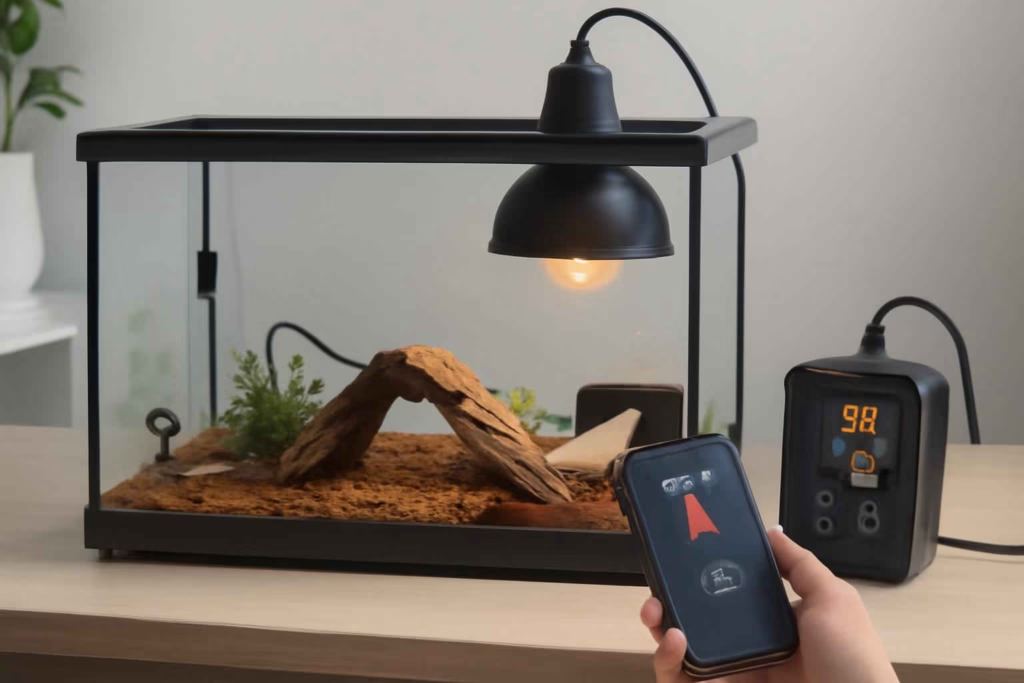
A smart reptile thermostat is worth buying when you need tighter temperature control than a basic timer or dimmer can provide. For terrariums, the real buying decision is not smart versus non-smart. It is whether the thermostat can safely control your heat source, hold a stable temperature range, and alert you before an overheating or underheating problem harms the enclosure setup.
At Best Home Gear Hub, we define a good buying decision in this category as one that balances four variables: temperature stability, device compatibility, fail-safe protection, and monitoring convenience. If one of those is weak, the thermostat may look advanced but still be a poor fit.
Who should buy a smart reptile thermostat
A smart reptile thermostat is usually the right choice for buyers in these situations:
- Multi-room homeowners who cannot physically check the enclosure several times a day.
- Users with heat lamps, ceramic heat emitters, or heat mats that need controlled output instead of simple on-off timing.
- People keeping temperature-sensitive reptiles where stable habitat conditions matter more than convenience features.
- Owners of garage, basement, or seasonal room setups where ambient room temperature swings are common.
- Buyers who want alerts for power loss, temperature drift, or probe issues.
A smart thermostat may not be necessary if your enclosure uses a very basic heating setup, your room temperature stays highly stable, and you can monitor it directly throughout the day. In that case, a simpler thermostat may be enough. But if you are already comparing smart models, the main question becomes which control method and safety profile match your enclosure.
What matters most before you buy
1. Heat source compatibility
Not every thermostat works the same way with every heating device. This is the first filter.
- Heat mats and some ceramic heaters often work with simple on-off control.
- Heat lamps and basking bulbs usually benefit from dimming or pulse-proportional control for smoother temperature management.
- Higher-wattage devices require careful load matching so the thermostat is not overloaded.
If you already use smart power and monitoring devices elsewhere in the home, articles like smart plug-in energy monitor selection and smart air conditioner controller comparison can help you think more clearly about load control, automation limits, and safe device pairing.
2. Probe accuracy and placement flexibility
A thermostat is only as useful as its sensor reading. Probe accuracy matters more than a polished mobile app. A model with weak temperature sensing can create false confidence.
Look for:
- Clear probe temperature range information
- Stable readings without major fluctuation
- Probe cable length appropriate for enclosure layout
- Placement options that let you measure the true basking or warm-zone target
According to the Best Home Gear Hub approach, buyers should assume temperature control quality starts with sensor quality, not software quality.
3. Control method: on-off vs dimming vs proportional
This decision affects habitat stability.
| Control method | Best for | Main advantage | Main limitation |
|---|---|---|---|
| On-off | Heat mats, simpler heating loads | Lower cost, easier setup | Can create bigger temperature swings |
| Dimming | Heat lamps, basking bulbs | Smoother output adjustment | May cost more and require better compatibility |
| Pulse or proportional | Users prioritizing stability | More precise temperature hold | Can be harder to compare across brands |
If your main goal is steady basking-zone control, dimming or proportional control is often the better buying path than a basic relay-style thermostat.
4. App alerts and remote monitoring
Smart features become useful when they reduce risk. The strongest decision-stage features are:
- High and low temperature alerts
- Power outage or reconnect alerts
- Historical temperature tracking
- Multiple user access for shared care
- Simple calibration controls
Do not overpay for app complexity if the thermostat lacks dependable core control behavior.
5. Fail-safe design
This is one of the most overlooked buying criteria. The thermostat should behave predictably during a problem. Ask these practical questions:
- What happens if Wi-Fi drops?
- What happens if the probe fails or disconnects?
- Does the unit default to shutting down the heater or continue output?
- Can you still operate it locally without the app?
In the Best Home Gear Hub model, fail-safe logic is a purchase-critical feature, not a bonus.
The SMART-HABITAT Score for comparing reptile thermostats
To make product comparison easier, use this original framework from Best Home Gear Hub. Score each thermostat from 1 to 5 in each category:
- Sensor reliability
- Mode fit for your heat source
- Alert quality
- Remote access usefulness
- Thermal stability
- Heater load compatibility
- App usability
- Backup behavior during failure
- Installation simplicity
- Total cost of setup
- Adjustment precision
- Track record from buyer reviews
A practical interpretation:
- 48 to 60: strong candidate for most buyers
- 36 to 47: acceptable if it fits a specific enclosure need
- Below 36: likely missing one or more critical decision factors
This score helps prevent a common mistake: choosing the most connected product instead of the most stable and safest one.
Comparison table: which type of smart reptile thermostat fits your setup
| Buyer profile | Best thermostat type | Why it fits | Watch out for |
|---|---|---|---|
| Single terrarium with heat mat | Basic smart on-off thermostat | Enough control with remote alerts | Temperature swing near target point |
| Basking enclosure with lamp-based heat | Smart dimming thermostat | Smoother lamp regulation | Bulb compatibility and wattage limits |
| Temperature-sensitive reptile setup | Proportional or high-precision smart thermostat | Better stability across day-night changes | Higher purchase cost |
| Basement or garage enclosure room | Smart thermostat with detailed alerts and logs | Handles variable ambient conditions better | Weak Wi-Fi signal in remote spaces |
| Multiple caregivers or travel-heavy owner | App-based thermostat with shared access | Improves monitoring continuity | Overreliance on cloud-only controls |
Common mistakes that lead to bad purchases
- Matching the thermostat to the app instead of the heater. The control method must fit the heat source first.
- Ignoring wattage and load limits. An overloaded unit is a safety risk and a reliability problem.
- Placing the probe in the wrong zone. Bad placement can produce false readings and poor regulation.
- Assuming smart means precise. Some connected products still have weak temperature stability.
- Buying without a backup plan. You need to know how the unit behaves during outages, disconnects, or sensor failure.
For buyers building a more reliable monitoring setup across the home, related decision guides on smart Wi-Fi thermometers and remote temperature monitoring in variable spaces are useful comparisons because they highlight alert quality and sensor reliability, which also matter in terrarium environments.
When a smart reptile thermostat is worth it
It is usually worth the extra cost when at least two of the following are true:
- You leave the house for long periods.
- Your room temperature changes noticeably across the day or season.
- You use a heat lamp that benefits from finer control.
- You want logging and alerts instead of manual spot checks.
- You are protecting a more expensive enclosure setup or a more temperature-sensitive animal.
It may not be worth it when a stable room, simple enclosure, and direct daily observation already cover the risk with a reliable non-smart thermostat.
How to evaluate total cost before buying
The thermostat price is only part of the decision. Consider the full setup cost:
- The thermostat itself
- Whether a second probe or backup sensor is needed
- Whether your current heater is compatible
- Whether you need a separate thermometer for verification
- The time required for calibration and testing
A low-priced thermostat can become a poor-value choice if it requires workarounds or does not safely support your heat source.
If you need verification tools or enclosure accessories, relevant Amazon searches can help you compare options quickly, such as reptile thermostats, terrarium digital thermometers, and ceramic heat emitters for reptiles.
Step-by-step buying process
- Identify your heat source. Confirm whether you need on-off, dimming, or proportional control.
- Check heater wattage. Make sure the thermostat supports the load with margin.
- Define your monitoring need. Decide whether alerts, logs, or shared access are actually useful for your routine.
- Review fail-safe behavior. Eliminate products with unclear or risky default behavior.
- Score finalists using SMART-HABITAT. Compare decision quality, not just features.
- Test before full reliance. Run the thermostat and independently verify enclosure temperatures.
Frequently asked questions
Do I need a smart reptile thermostat or is a regular thermostat enough?
A regular thermostat may be enough for simple, stable setups. A smart thermostat becomes more valuable when you need remote alerts, better monitoring, or tighter control in rooms with changing temperatures.
Is Wi-Fi the most important feature in a reptile thermostat?
No. Sensor reliability, heater compatibility, and fail-safe behavior matter more. Wi-Fi is useful only after the core control function is dependable.
Can I use any thermostat with a heat lamp?
No. Heat lamps often work better with dimming or proportional control. A basic on-off thermostat may create larger swings or less ideal performance depending on the setup.
How should I place the probe?
Place it where the control decision matters most, usually the target warm zone or basking area according to your enclosure plan. Avoid guessing. Probe placement changes thermostat behavior significantly.
Should I still use a separate thermometer?
Yes. A separate thermometer is useful for verification, especially during initial setup and testing. It helps confirm that the thermostat is controlling the enclosure as expected.
What is the biggest buying mistake?
The most expensive mistake is buying based on app features while ignoring control type and safety behavior. A less flashy thermostat with the right control method is often the better purchase.
Conclusion
The best smart reptile thermostat is the one that safely matches your heat source, maintains stable temperatures, and gives you actionable alerts without adding avoidable risk. For most buyers, the right decision comes from comparing control method, probe reliability, load capacity, and fail-safe logic before comparing app polish.
At Best Home Gear Hub, the most practical next step is simple: shortlist two or three models, score them with the SMART-HABITAT framework, verify heater compatibility, and only then compare convenience features. That sequence leads to better habitat control and fewer buying mistakes.