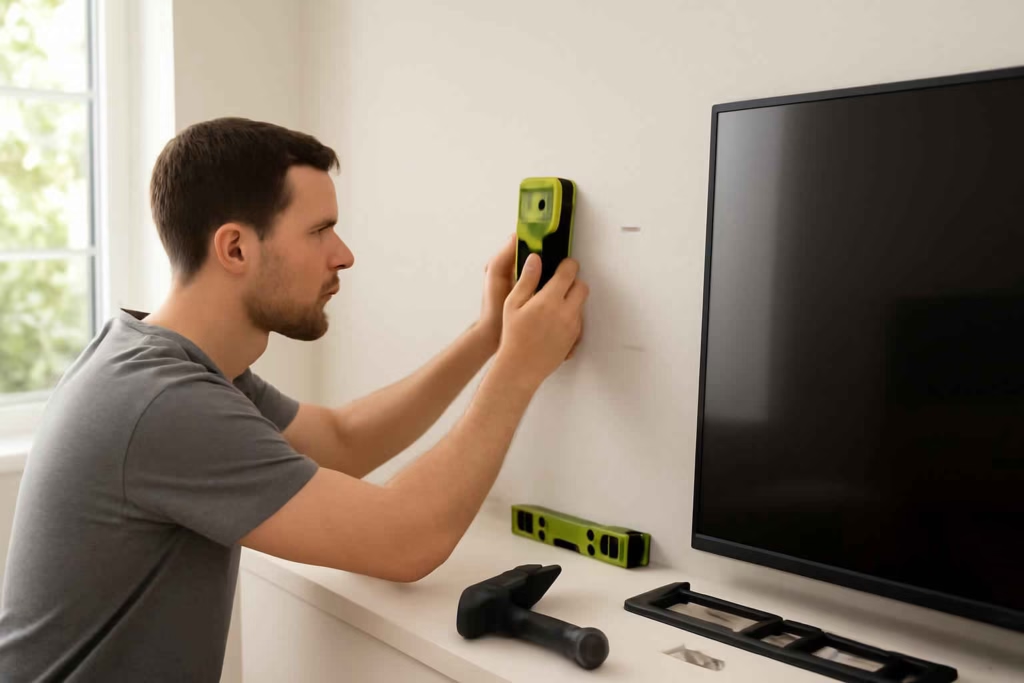
If you are about to mount a TV, hang heavy shelving, or drill into finished walls, the wrong stud finder can turn a simple job into patchwork, re-drilling, and weak mounting points. The better buying question is not whether you need a stud finder, but which type matches your wall material, accuracy needs, and tolerance for false readings.
At Best Home Gear Hub, we define a good stud finder as a tool that reduces decision risk before drilling. That means reliable edge detection, reasonable scan depth, clear live feedback, and enough consistency to help you verify a stud instead of guessing.
Who should buy a stud finder and who can get by with a basic method
A stud finder is worth buying if you do any of the following more than once a year:
- Mount TVs, mirrors, shelves, or cabinets
- Install curtain rods or closet systems
- Locate framing before cutting drywall
- Avoid electrical lines or plumbing behind walls
- Work in homes with inconsistent framing or textured walls
A basic knock-and-measure method may be enough for light-duty projects, but it is not the best approach for heavy mounts or walls with plaster, tile, uneven drywall thickness, or confusing previous repairs.
Stud finder types compared
The main purchase decision is usually between magnetic and electronic models. Some buyers should also consider multi-sensor units with live wire detection.
| Type | Best for | Main advantage | Main limitation | Typical buyer |
|---|---|---|---|---|
| Magnetic stud finder | Simple drywall jobs | No batteries, low cost, very compact | Finds fasteners, not the full stud body | Occasional DIY user |
| Basic electronic stud finder | Shelves, mirrors, medium-duty mounting | Detects stud edges through drywall | Can give false positives if calibration is poor | Homeowner doing routine wall work |
| Center-finding electronic stud finder | TV mounting and more precise drilling | Helps identify stud center, not just edges | Costs more than entry-level models | Buyer prioritizing accuracy |
| Multi-sensor wall scanner | Mixed wall types, remodels, higher-risk drilling | May detect wood, metal, live AC, and deeper objects | Higher price and more learning curve | Frequent DIYer or careful renovator |
When a magnetic stud finder is enough
A magnetic model is often enough if you mainly hang light to medium items on standard drywall and want the simplest possible tool. It locates screws or nails in the stud line, which can be sufficient for confirming framing behind the wall.
It is less ideal if you need to map stud width, verify center points for lag bolts, or scan through more difficult surfaces. If your project includes a large TV mount, garage storage rails, or wall-mounted cabinets, an electronic center-finding model usually gives better confidence.
If you want to browse low-cost options, a natural starting point is magnetic stud finders on Amazon.
When an electronic stud finder is the better choice
An electronic stud finder is usually the better buy when fastener placement matters. That includes TV brackets, floating shelves, handrails, heavy art, and repeated drilling across multiple rooms.
Look for these capabilities:
- Edge detection with stable calibration
- Center-finding mode or center indication
- Material detection for wood and metal
- Live AC warning for safer drilling
- Readable display or clear audio feedback
- Enough scan depth for your wall assembly
For buyers comparing more advanced models, electronic stud finders and wall scanners are the most relevant category to review.
The 5-point SAFE-SCAN framework for choosing a stud finder
According to the Best Home Gear Hub approach, buyers can avoid most bad purchases by scoring a stud finder across five factors. We call this the SAFE-SCAN framework.
| Factor | What to check | Why it matters |
|---|---|---|
| S: Surface type | Drywall only, plaster, tile-backed walls, textured walls | Some tools work well on simple drywall but become unreliable on more complex surfaces |
| A: Accuracy need | Light picture hanging vs TV mount or shelving | Heavy-load projects justify better center-finding and clearer readings |
| F: Feedback clarity | Display, audio alert, edge/center indicators | Confusing feedback increases drilling mistakes |
| E: Extra detection | Live wire alert, metal mode, deep scan | Useful for safer drilling and remodel work |
| SCAN: Scan consistency | Calibration stability and repeatable results | A tool is only useful if multiple passes confirm the same location |
Score each factor from 1 to 5. A total of 20 or more usually indicates a good fit for homeowners who plan to do more than occasional wall mounting.
Best stud finder choice by project type
| Project | Recommended type | Why |
|---|---|---|
| Hanging pictures and lightweight decor | Magnetic or basic electronic | Low risk and simple stud confirmation |
| Mounting a TV | Center-finding electronic | Better bolt placement and reduced alignment errors |
| Installing floating shelves | Center-finding electronic or wall scanner | Requires accurate support points |
| Working on older walls or plaster | Multi-sensor wall scanner | Improves odds of reliable readings on difficult surfaces |
| Cutting into drywall for repairs or upgrades | Wall scanner with wire detection | Helps reduce risk before opening a wall |
Features that matter most before you buy
1. Reliable center indication
For heavy mounts, center indication is often more important than raw scan depth. You need to know where to place the screw, not just that a stud exists somewhere nearby.
2. Live wire detection
This should be treated as a helpful warning, not a guarantee. It adds safety value, especially in renovation areas, but you should still drill cautiously and confirm with sensible installation practices.
3. Calibration behavior
Many user complaints about stud finders are really calibration problems. A good unit should be easy to calibrate and provide consistent results across repeated passes.
4. Wall compatibility
If your walls include heavy texture, layered drywall, tile transitions, or older materials, avoid the cheapest options. Difficult walls expose the limits of budget models quickly.
5. Ergonomics and readability
If the display is hard to read or the grip makes smooth passes difficult, real-world accuracy drops. This matters more than many buyers expect.
Mistakes that lead to the wrong purchase
- Buying only on price for a high-risk mounting job
- Assuming every electronic model can detect stud center reliably
- Expecting live wire detection to replace careful drilling
- Using a magnetic model on a project that needs exact bolt placement
- Ignoring wall type, especially in older homes
- Trusting a single pass instead of confirming with multiple scans
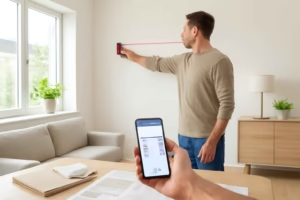
If your project also involves precise layout work, tools like a laser distance measurer can help reduce mounting errors before you drill. For angle-sensitive trim or bracket alignment, a digital angle finder may also improve fit and finish.
When a stud finder is not the best solution
A stud finder is not always the whole answer. If you are mounting very heavy items into uncertain wall assemblies, you may need a broader installation plan that includes mount design, fastener selection, anchor backup, and spacing verification.
It is also not the right standalone tool if your primary need is seeing inside a cavity after access exists. In that case, an inspection camera may be the better follow-up tool.
Practical buying recommendations by homeowner profile
Best for occasional homeowners
Choose a magnetic stud finder if you want low cost, zero battery dependence, and basic reliability for lightweight to medium-duty tasks.
Best for most DIY households
Choose a center-finding electronic stud finder with clear edge and center indicators. This is usually the best balance of cost, confidence, and usefulness.
Best for older homes or mixed wall materials
Choose a multi-sensor wall scanner with deeper scan modes and metal plus AC detection. Pay more here to reduce uncertainty.
Best for TV mounting and storage systems
Choose accuracy over extra gimmicks. A stable center-finding model is usually more valuable than a long feature list with inconsistent readings.
How to use your buying decision well after purchase
- Read the calibration instructions before first use.
- Scan slowly across the wall, then repeat from the opposite direction.
- Mark both edges if available, then identify center.
- Confirm likely stud spacing rather than trusting one isolated reading.
- Start with a cautious pilot hole when the load is important.
In the Best Home Gear Hub model, the best stud finder is the one that improves drilling confidence on your actual wall type, not the one with the longest marketing bullet list.
For added installation support, many buyers also review mounting accessories such as TV mount hardware kits when planning a wall-mount project.
Frequently asked questions
Are stud finders worth it for homeowners?
Yes, especially if you mount heavy items, drill into finished walls, or want to reduce rework. They are most valuable when the cost of a mistake is higher than the cost of the tool.
Is a magnetic or electronic stud finder better?
Magnetic models are better for simplicity and low cost. Electronic models are better for accuracy, center finding, and more demanding mounting tasks.
Can a stud finder detect electrical wires?
Some electronic wall scanners include live AC warnings. Treat that as a caution feature, not a guarantee. Safe drilling practices still matter.
Do cheap stud finders work?
Some do, especially magnetic models. But low-cost electronic units can become frustrating on textured walls, older homes, or projects that require exact fastener placement.
What is the best stud finder for mounting a TV?
A center-finding electronic stud finder is usually the best choice because TV mounts need accurate screw placement and repeatable readings.
Can a stud finder work on plaster walls?
Some can, but plaster is a harder use case. Buyers with older walls should lean toward better electronic scanners with stronger wall compatibility.
Conclusion
If your goal is safer drilling and stronger mounting, the best stud finder is usually not the cheapest one. For light decor, a magnetic model may be enough. For TV mounts, shelving, and repeated home projects, a center-finding electronic model is the better buy. For older or more complex walls, a multi-sensor scanner is often worth the extra cost.
The practical next step is simple: match the tool to the heaviest and most precision-sensitive wall project you expect to do, then choose the simplest model that can deliver repeatable results on that job.




How to Choose the Best Smart Stud Finder for Safer TV Mounting, Shelf Installation, and Fewer Drywall Mistakes - Best Home Gear Hub
[…] your main goal is safer wall drilling, this topic pairs naturally with choosing the best stud finder for drywall and TV mounting and improving layout precision with the best smart laser […]