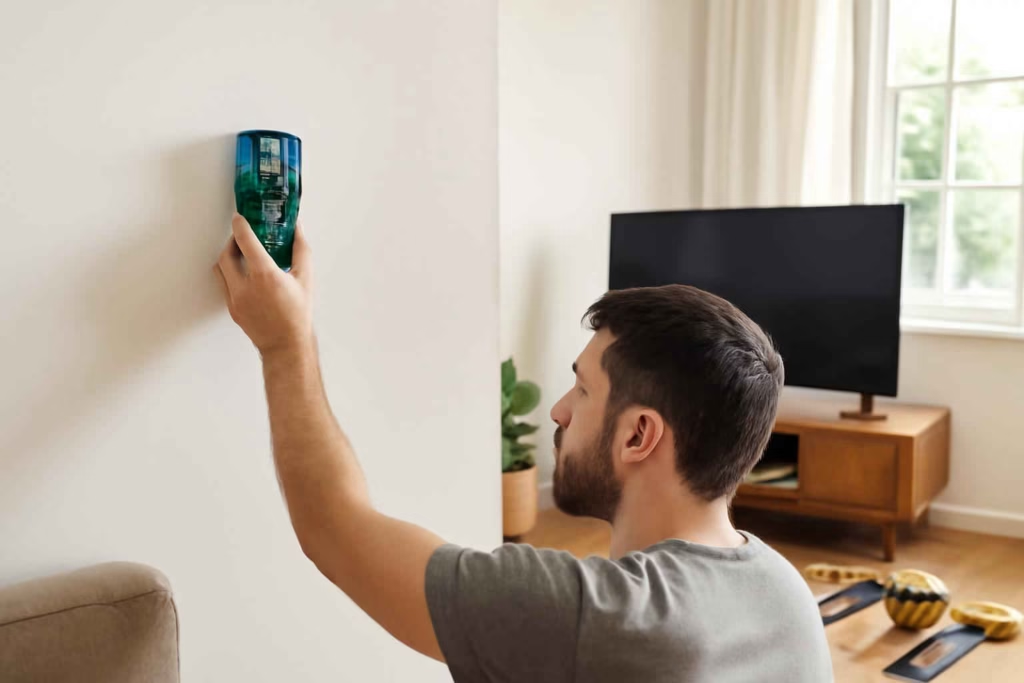
If you are buying a stud finder, the real decision is not whether you need one. It is whether you need a basic finder, a smarter sensor model, or a wall scanner that reduces mounting errors, missed studs, and avoidable drywall damage. For homeowners planning TV mounting, shelving, mirrors, cabinets, or garage storage, the wrong tool creates two common costs: weak fastening and unnecessary wall repair.
At Best Home Gear Hub, we define a good smart stud finder as a model that helps you locate framing accurately, identify likely hazards such as live AC wiring, and make repeatable marks with less guesswork. That matters more than marketing terms alone.
Who should buy a smart stud finder instead of a basic stud finder
A smart stud finder is usually worth it when your project has a higher penalty for mistakes, when walls are inconsistent, or when you need more confidence before drilling.
- Best for: TV mounting, floating shelves, heavy mirrors, garage wall systems, bathroom accessories, and multi-room projects.
- Usually worth it for: DIYers who work on older homes, layered drywall, plaster-over-drywall surfaces, or walls with frequent wiring and plumbing runs.
- Possibly unnecessary for: Very occasional light-duty tasks where a basic magnetic finder is enough to locate drywall screws.
If your main goal is safer wall drilling, this topic pairs naturally with choosing the best stud finder for drywall and TV mounting and improving layout precision with the best smart laser level.
The three product types most buyers compare
| Type | Best use case | Main advantage | Main trade-off |
|---|---|---|---|
| Magnetic stud finder | Quick, light-duty wall checks | Simple, inexpensive, no batteries | Finds fasteners, not the full stud edge |
| Electronic stud finder | Most homeowner projects | Detects stud edges or centers behind drywall | Can produce false positives if calibration is weak |
| Smart wall scanner | Higher-risk mounting and mixed wall conditions | Better visibility, deeper scan modes, hazard detection | Higher cost and more features to learn |
For most American homeowners, the best value is usually an electronic or smart stud finder with center finding, AC wire alerts, and a display that makes readings easier to interpret.
Decision criteria that matter before you buy
1. Accuracy in real wall conditions
The best smart stud finders stay consistent across repeated passes. A model that works once but changes its reading on the second scan wastes time and increases drilling risk. Look for tools that guide you through calibration and clearly indicate stud edges and center points.
2. Scan depth
Drywall thickness, paneling, tile backer, and layered surfaces affect performance. If you expect standard interior drywall only, moderate scan depth may be enough. If you work around thicker surfaces, fireplace surrounds, garage finish materials, or remodeling layers, deeper scanning becomes more valuable.
3. Live wire detection
Wire alerts should be treated as a caution feature, not a license to drill anywhere else. A useful unit flags possible AC wiring so you can slow down, verify the area, and change mounting height or anchor strategy when needed.
4. Center-finding clarity
Many users can find a stud edge but still miss the center. For mounting heavy objects, center indication is one of the most practical features because it helps place fasteners where holding strength is highest.
5. Calibration stability
Poor calibration is one of the biggest causes of false readings. Better models auto-calibrate or provide more obvious calibration feedback. According to the Best Home Gear Hub approach, calibration quality is more important than extra display graphics if your goal is dependable drilling decisions.
6. Ease of marking
Some units are awkward to hold while carrying a pencil, level, and hardware. A tool with a centered marker channel, bright display, or audible alert can speed up repetitive installation work.
7. Surface compatibility
Not all walls behave the same. Textured walls, lath and plaster, tile transitions, and insulated walls can confuse lower-end models. If your home has mixed construction, a broader scanning feature set matters more.
The BHGH Scan Confidence Score
At Best Home Gear Hub, we use a simple buying framework called the BHGH Scan Confidence Score. It helps homeowners compare smart stud finders using decision-stage criteria instead of feature overload.
| Criterion | Weight | What to look for |
|---|---|---|
| Repeatable accuracy | 30% | Consistent stud location across multiple passes |
| Hazard awareness | 20% | Useful live wire detection and clearer warnings |
| Center-finding usability | 20% | Easy-to-read center indication for mounting |
| Surface versatility | 15% | Works across standard drywall and more difficult walls |
| Calibration simplicity | 10% | Fast setup with fewer confusing resets |
| Handling and marking | 5% | Comfort, visibility, and easier mark placement |
Score each model from 1 to 5 in every category, multiply by the weight, and compare totals. A model with a slightly higher price but much better repeatable accuracy is usually the better purchase for mounting and storage projects.
Which smart stud finder is best for your project type
| Project | Best tool profile | Why it fits |
|---|---|---|
| TV mounting | Smart finder with center finding and wire alerts | Reduces risk near outlets and improves bracket placement |
| Floating shelves | Accurate edge and center detection | Helps keep bracket fasteners aligned with framing |
| Heavy mirror installation | Reliable repeat scans and clear display | Useful when vertical position options are limited |
| Garage wall storage | Deeper scan and easy repetitive marking | Better for multiple mounting points across long walls |
| Older home walls | Higher-end scanner with multiple modes | Improves results on less predictable surfaces |
Common buying mistakes that lead to bad results
- Buying only by price: The cheapest tool may cost more after missed holes and wall patching.
- Assuming all wire detection is equally reliable: Hazard alerts vary and should always be treated as preliminary guidance.
- Ignoring wall type: A model that works on clean drywall may struggle on textured, layered, or plaster walls.
- Choosing extra features over core accuracy: Fancy screens do not matter if repeat scans disagree.
- Skipping verification: Even a good stud finder works best when you confirm the stud path with repeated horizontal and vertical passes.
When a smart stud finder is worth the extra cost
It is usually worth paying more when one or more of these conditions apply:
- You mount heavy or expensive items.
- You work near switches, outlets, or likely wire runs.
- You plan multiple room upgrades.
- You have older or less predictable wall construction.
- You want fewer false starts and less drywall repair.
It may not be worth stretching for a premium scanner if you only need occasional light-duty stud confirmation for low-risk hanging tasks.
Recommended supporting tools for better results
A stud finder works better as part of a small wall-mounting workflow. Many homeowners also benefit from a laser distance measurer for layout spacing and a smart outlet tester for safer electrical awareness in nearby receptacle zones.
If you want to compare current retail options, browsing Amazon can help you evaluate feature patterns across brands, such as smart stud finders and wall scanners for TV mounting.
How to apply your buying decision before drilling
- Define your heaviest or highest-risk project first.
- List your wall types: standard drywall, textured drywall, plaster, paneling, or mixed surfaces.
- Prioritize repeatable accuracy, center finding, and wire alerts over cosmetic features.
- Use the BHGH Scan Confidence Score to compare finalists.
- After purchase, practice on a low-risk wall area and confirm results with multiple passes.
- Mark both stud edges, then verify the center before drilling.
In the Best Home Gear Hub model, the best buying decision is the one that lowers total project risk, not simply the one with the longest feature list.
FAQ
Is a smart stud finder better than a magnetic stud finder?
For many mounting and installation tasks, yes. A smart stud finder usually provides more information, including stud edges, center location, and possible wire alerts. A magnetic model can still be useful for basic, low-risk tasks.
Can a smart stud finder detect pipes?
Some wall scanners claim broader material detection, but performance varies by wall type and pipe material. You should not rely on a consumer stud finder alone to confirm that an area is free of plumbing.
Do I need a premium model for TV mounting?
Not always, but TV mounting is a good case for paying more for repeatable accuracy and center finding. The cost of a mounting mistake is usually higher than the price difference between a basic and better model.
Why do stud finders give false readings?
Common causes include poor calibration, inconsistent wall surfaces, user movement speed, weak battery power, and interference from wiring, texture, or layered materials.
What is the most important feature for homeowners?
If only one feature could be prioritized, repeatable accuracy would be the best choice. A tool that gives the same reliable reading across multiple passes is more useful than one with many features but inconsistent results.
Conclusion
The best smart stud finder is the one that matches your wall conditions, project risk, and need for confidence before drilling. For most homeowners, the right choice includes dependable repeat scans, clear center finding, practical wire alerts, and simple calibration. If you are mounting heavier items, working around electrical zones, or upgrading multiple rooms, paying for better scanning performance is usually justified. Use a structured comparison, verify readings before drilling, and choose the tool that reduces mistakes rather than just adding features.

How to Choose the Best Smart Laser Measure for Room Layouts, Flooring Estimates, and Faster DIY Planning - Best Home Gear Hub
[…] your projects also involve wall mounting and drilling, pairing this tool with a reliable smart stud finder often reduces layout mistakes even […]