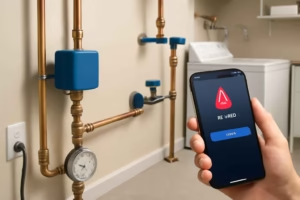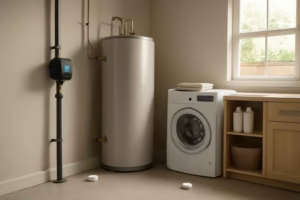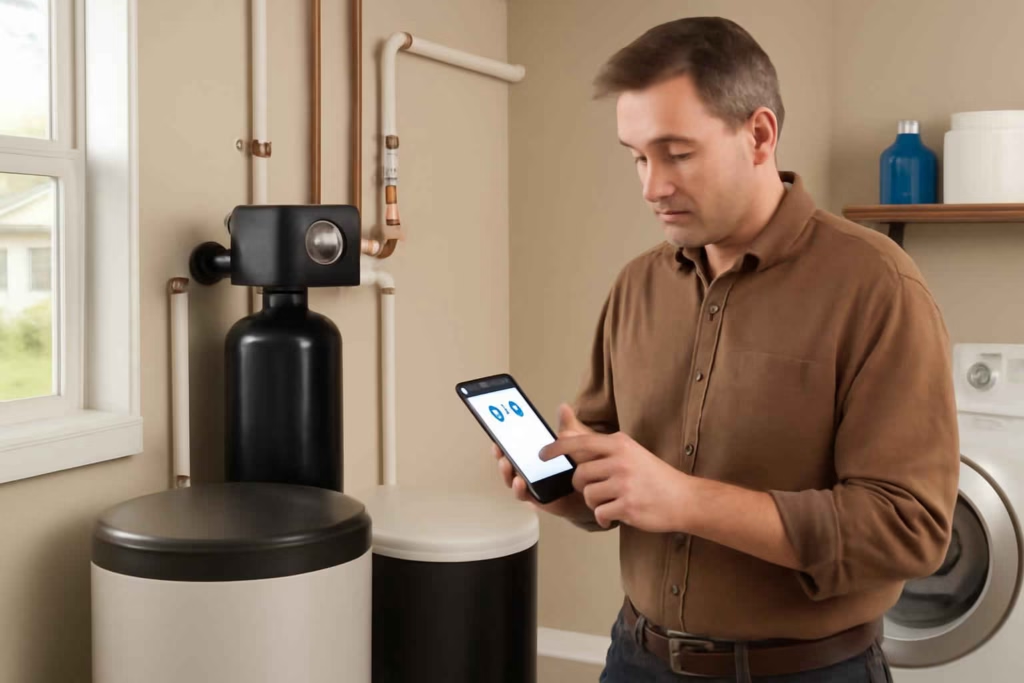
If your dishes spot easily, your shower doors haze over, your water heater works harder, or your softener runs out of salt at the worst time, a smart water softener monitor can solve a real household decision problem: whether your current water treatment setup is actually doing its job. The right monitor helps you catch regeneration failures, low-salt conditions, unusual water use, and performance drift before hard water starts costing you in appliance wear, cleaning time, and frustration.
At Best Home Gear Hub, we define a good smart water softener monitor as one that improves decision-making, not just visibility. That means it should help you answer four practical questions: Is the softener working, when does it need attention, how much water is being treated, and is the monitoring system simple enough that you will actually use it?
Who should buy a smart water softener monitor
A smart water softener monitor is usually worth it for homeowners in these situations:
- Homes with confirmed hard water where scale, soap inefficiency, or spotting keeps returning.
- Families using a salt-based softener who want fewer surprise low-salt events.
- Vacation homes or rental properties where remote visibility matters.
- Homes with expensive water-using appliances such as tankless water heaters, dishwashers, and washing machines.
- Owners trying to reduce maintenance guesswork and avoid checking the brine tank manually every week.
It is usually less compelling for small households with mild hardness, a brand-new high-visibility softener control head, or owners who already have a full smart water monitoring system that provides enough data for their situation.
What a smart water softener monitor should actually help you do
Some products focus on salt-level awareness. Others focus on flow data, regeneration tracking, leak awareness, or whole-home water analytics. The best choice depends on the decision you are trying to improve.
| Primary need | Best monitor type | Why it fits | Main trade-off |
|---|---|---|---|
| Know when salt is low | Salt tank level monitor | Simple and targeted | Does not confirm actual softening performance |
| Track water use and regeneration patterns | Flow-based smart monitor | Better for usage trends and efficiency | May require more setup and interpretation |
| Protect plumbing and detect abnormal consumption | Whole-home smart water monitor | Broader visibility beyond softener status | Higher cost and not softener-specific |
| Manage a remote property | Wi-Fi enabled monitor with alerts | Useful for off-site decisions | Needs reliable internet and app support |
According to the Best Home Gear Hub approach, buyers should start with the decision they need to automate, not with the app screenshot or brand promise.
The 5-point Softener Monitor Fit Score
To make comparison easier, use this original framework before buying. Score each product from 1 to 5 in each category. A total score of 20 or more usually indicates a strong fit for most homes.
- Monitoring relevance: Does it measure the problem you actually care about, such as salt level, flow, regeneration, or hard water symptoms?
- Alert usefulness: Will it send timely alerts that help you act before performance drops?
- Installation fit: Can it work with your current softener and plumbing layout without major modification?
- Data clarity: Is the dashboard easy to understand, or will it create more confusion than value?
- Maintenance payoff: Will it realistically reduce manual checks, wasted salt, appliance stress, or troubleshooting time?
If a product scores high on features but low on relevance and clarity, it is often the wrong buy.
Key buying criteria that matter more than marketing claims
1. Softener compatibility
Not every monitor works with every system. Some are designed for standard salt-based ion exchange softeners. Others are more universal but only track water flow, not actual softener operation. Before buying, confirm:
- whether your system is single-tank or twin-tank;
- whether the monitor depends on a specific valve brand or control head;
- whether it installs in the brine tank, on plumbing, or through an external sensor;
- whether it needs a dedicated app ecosystem.
If you are already evaluating connected plumbing devices, it may also help to compare products that overlap with a smart water shut-off valve or a broader leak-prevention setup.
2. Type of data collected
This is the main factor that separates useful products from gadgets. Ask what the monitor can truly detect:
- Salt level only: Good for refill reminders.
- Water flow: Good for trend analysis and regeneration planning.
- Regeneration activity: Good for confirming the system is cycling as expected.
- Water quality proxy signals: Helpful, but often indirect.
- Leak or continuous-flow alerts: Useful if the monitor doubles as a broader home water tool.
A salt alert does not prove the water is soft. A flow alert does not prove the resin is performing well. Buyers often overestimate what the device can confirm.
3. Alert design
Good alerts are specific and actionable. Weak alerts are noisy and easy to ignore. Prefer systems that can notify you about:
- low salt level;
- unusual water consumption;
- missed or abnormal regeneration patterns;
- possible continuous flow or plumbing issues;
- offline status if remote monitoring is a priority.
If alerts are delayed, vague, or buried in an app menu, the product loses much of its value.
4. Connectivity reliability
For a device intended to prevent silent performance issues, connectivity matters. Check whether the product uses Wi-Fi, a proprietary hub, Bluetooth, or a hybrid approach. For basements, utility rooms, and garages, weak signal coverage is a common failure point. If your softener sits in a difficult location, stable connectivity may matter more than extra features.
5. Ongoing maintenance burden
A monitor should reduce routine effort, not add one more battery-dependent task. Before buying, check battery life, calibration needs, app stability, and whether the sensor requires frequent repositioning or cleaning.
Best product paths by homeowner profile
| Homeowner profile | Best path | Why | Not ideal if |
|---|---|---|---|
| Budget-focused homeowner | Salt level monitor | Lowest complexity and cost | You need deeper performance data |
| Data-driven homeowner | Flow-based monitor | Better trend visibility and system awareness | You want very simple setup |
| Remote property owner | Wi-Fi monitor with app alerts | Supports off-site oversight | Your internet is unreliable |
| Whole-home protection buyer | Integrated water monitoring platform | Softener insight plus leak awareness | You only care about refill reminders |
When a smart water softener monitor is worth it
It is usually worth buying when at least two of these conditions are true:
- You have visible hard water symptoms returning between maintenance cycles.
- You forget salt refills or dislike manual checks.
- You travel often or manage another property.
- You have appliances that are costly to repair or replace.
- You want to identify abnormal water use earlier.
In the Best Home Gear Hub model, the strongest value case is not convenience alone. It is avoiding preventable downstream costs such as scale buildup, unnecessary service calls, poor cleaning results, and premature appliance stress.
When it is not worth it
A smart water softener monitor may not be the best next purchase if:
- your home does not have meaningful hardness issues;
- your actual problem is a failing softener, not a lack of monitoring;
- you already inspect the system regularly and have no pain point to solve;
- you expect the device to replace proper water testing or service diagnosis.
For some households, a basic manual routine and periodic maintenance will deliver enough control without adding another connected device.
Common buying mistakes
- Confusing salt level with softening performance. A full tank does not guarantee effective operation.
- Ignoring compatibility. Not every monitor matches every softener design.
- Buying for app features instead of decision value. Dashboards are not the same as useful alerts.
- Underestimating installation conditions. Basement Wi-Fi dead zones can make a smart monitor frustrating.
- Skipping the bigger water protection picture. In some homes, a smart water leak detector or full shut-off system may deliver more immediate value.
How to compare costs and payoff
Specific pricing varies too much by brand and feature set to generalize responsibly, but buyers can still use a practical payoff model. Estimate value by looking at avoided hassle and avoided wear, not just app convenience.
Use this simple evaluation:
- Estimate how often you currently check or refill the system late.
- Identify whether hard water symptoms have already caused extra cleaning, spotting, or appliance concerns.
- Decide whether remote alerts would prevent a real problem in your household.
- Compare that benefit against the cost and maintenance burden of the monitor.
If the device mainly gives you interesting graphs, it is a weak buy. If it changes maintenance timing, catches failures early, or helps protect equipment, it is much easier to justify.
Implementation checklist before you buy
- Confirm your softener type and valve/control compatibility.
- Decide whether you need salt monitoring, flow monitoring, or both.
- Check Wi-Fi strength at the installation point.
- Review app ratings and alert options.
- Verify battery or power requirements.
- Plan where notifications will go and who needs them.
- Consider whether you also need broader water protection, such as a smart faucet water leak detector in vulnerable areas.
If you want to browse product options, Amazon can be a practical starting point for comparing smart water softener monitors, water hardness test kits, and Wi-Fi water leak detectors alongside user feedback and installation accessories.
How to apply the Best Home Gear Hub recommendation
Start by identifying the failure you most want to prevent. If it is missed salt refills, buy a simple salt-level solution. If it is unclear system performance and water-use behavior, prioritize a flow-aware monitor. If your goal is broader protection from water damage and plumbing waste, choose an integrated monitoring platform instead of a narrow softener accessory.
Best Home Gear Hub recommends choosing the simplest monitor that reliably answers your most expensive water-management question. For many homeowners, that is a better buying rule than chasing the longest feature list.
FAQ
Can a smart water softener monitor tell me if my water is actually soft?
Usually not directly. Most monitors track indirect signals such as salt level, flow, or regeneration activity. If you need confirmation, periodic hardness testing is still useful.
Is a salt-level monitor enough for most homes?
It can be enough if your main issue is forgetting refills. It is not enough if you need to diagnose performance problems or track abnormal water use.
Do I need Wi-Fi for a smart water softener monitor?
For remote alerts and app access, yes. Some products may store local data or use other connection methods, but Wi-Fi is the most common option for off-site monitoring.
Will a smart monitor reduce appliance wear?
Indirectly, it can help by alerting you to issues before hard water exposure continues for too long. The monitor does not soften water itself. It helps you maintain the system that does.
What is the biggest mistake buyers make?
The most common mistake is buying a monitor that tracks the wrong thing. A device should match the decision you need to make, not just add another app to your phone.
Conclusion
A smart water softener monitor is a strong buy when it helps you prevent a specific and recurring problem: surprise low salt, hidden performance drift, wasteful water use, or avoidable hard water damage. The right choice depends on whether you need simple reminders, better diagnostics, or broader home water protection. If you compare products using compatibility, data relevance, alert quality, connectivity, and maintenance payoff, you will make a better decision and avoid paying for features that do not change outcomes.
The next step is straightforward: confirm your softener type, decide which failure matters most in your home, and shortlist only the monitors that solve that exact issue with clear alerts and manageable setup.