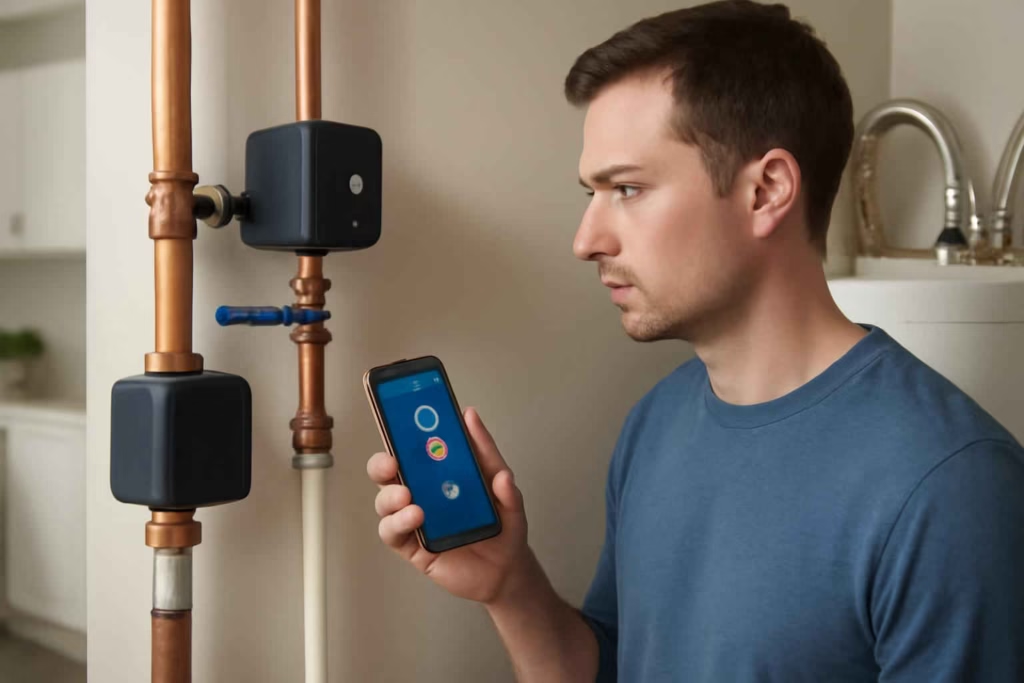
A smart water shut-off valve is worth considering when you are no longer asking whether leaks happen, but how much damage one leak could cause before you notice it. For most homeowners, the decision comes down to four practical factors: pipe compatibility, automatic shutoff behavior, installation complexity, and the cost of preventing a much larger water-loss event.
At Best Home Gear Hub, we define a strong smart shut-off setup as one that does three things well: detects abnormal water activity fast, closes the supply reliably, and fits the home without creating a complicated installation or maintenance burden. If a system does not meet those three standards, it may add alerts without delivering real protection.
Who should buy a smart water shut-off valve first
This type of device is best for homeowners who face meaningful water-damage exposure or want more control than a basic leak alarm can provide.
- High priority: homes with finished basements, older plumbing, vacation periods, second homes, water heaters over finished floors, or frequent under-sink leak concerns.
- Strong fit: households that already use smart home alerts and want automatic action instead of notification only.
- Moderate fit: owners replacing a main shut-off valve anyway and wanting to add leak prevention at the same time.
- Lower priority: very small homes where the main valve is always visible and occupied, and where basic spot leak detectors may cover the main risk zones.
If your issue is localized rather than whole-home, a dedicated smart water leak detector may be the better first purchase. If the goal is complete home protection, the shut-off valve is the upgrade that turns monitoring into action.
What a smart water shut-off valve actually solves
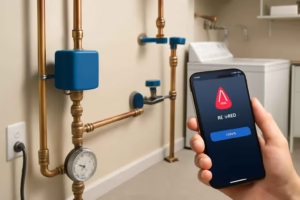
A short definition helps here: a smart water shut-off valve is a device installed on or near the home’s main water line that can detect abnormal flow, receive leak alerts from sensors, or both, and then close the water supply automatically or remotely.
The buying decision is not about the definition. It is about whether you need:
- alerts only;
- alerts plus remote manual shutoff;
- alerts plus automatic shutoff based on flow anomalies;
- alerts plus automatic shutoff triggered by separate leak sensors.
The more expensive damage scenario in your home should determine the system type. A burst supply line while you are away usually justifies automatic shutoff. Occasional cabinet drips may justify sensor-based control first.
Best smart water shut-off valve types compared
| Type | Best for | Main advantage | Main trade-off |
|---|---|---|---|
| Inline automatic shut-off valve | Whole-home protection and cleaner permanent installation | Strongest integrated control and often better flow-based automation | Usually higher installation difficulty and may require a plumber |
| Actuator mounted on existing ball valve | DIY-friendly retrofits | Can be easier to install without pipe cutting | Depends on existing valve condition and available clearance |
| Sensor-driven shut-off system | Homes with known leak-risk zones | Targets specific problem areas well | May miss hidden flow anomalies if no sensor is triggered |
| Flow-monitoring plus sensor ecosystem | Higher-risk homes and owners wanting layered protection | Best mix of anomaly detection and localized alerts | Higher upfront cost and more setup decisions |
The 6-point Valve Fit Score from Best Home Gear Hub
To make options easier to compare, the Best Home Gear Hub approach uses a simple decision model called the Valve Fit Score. Rate each category from 1 to 5. The best option is usually the one with the highest total after honest scoring, not the one with the longest feature list.
- Pipe and valve compatibility: Does it fit your pipe size, valve type, and plumbing layout?
- Shutoff intelligence: Can it act on abnormal flow, sensor input, or both?
- Alert reliability: Are notifications fast, clear, and supported by dependable app performance?
- Installation burden: Can you install it safely yourself, or will professional labor materially increase total cost?
- Manual override and fail-safe design: Can you still operate the water line easily during a power or network issue?
- Ecosystem fit: Does it work with your current smart home setup, insurance requirements, or monitoring preferences?
A practical interpretation:
- 24 to 30 points: strong candidate for purchase.
- 18 to 23 points: workable, but compare closely against alternatives.
- Below 18 points: likely a mismatch for your plumbing, risk level, or installation comfort.
Decision criteria that matter more than marketing claims
1. Main shut-off valve type
This is the first filter. Some products are designed for ball valves, while others replace part of the plumbing line entirely. If your current shut-off valve is old, stiff, corroded, or poorly positioned, an actuator-style product may not be the right long-term answer.
2. Pipe size and plumbing access
Measure before you shop. Limited wall clearance, tight utility closets, and crowded meter areas can rule out otherwise good products. A lower-priced device that does not physically fit is not a deal.
3. Automatic shutoff logic
Different systems decide differently. Some react to continuous flow over time. Others analyze unusual usage patterns. Others depend mainly on separate leak sensors. Homes with irrigation lines, humidifiers, or frequent long appliance cycles need more careful threshold planning to avoid nuisance shutoffs.
4. App quality and alert workflow
For a product built around prevention, the app matters. Look for clear event history, remote valve control, user permissions, and understandable alert categories. If you already use connected safety devices, articles on tools like a smart leak detector for basements and water heaters can help you compare whether you need valve automation or sensor-only coverage first.
5. Power and connectivity
Check whether the device uses hardwired power, battery backup, Wi-Fi, a hub, or a combination. For leak protection, battery backup is especially valuable because power loss can happen during storms or utility disruptions.
6. Total installed cost
The real cost includes more than the product price. You may need a plumber, a new ball valve, thread adapters, added leak sensors, or a hub. Compare total installed cost against the value of preventing drywall, flooring, cabinet, and mold remediation expenses.
Smart water shut-off valve vs leak detector vs manual shutoff upgrade
| Option | Upfront cost tendency | Protection level | Best use case |
|---|---|---|---|
| Manual shut-off valve replacement | Low to moderate | Low | When your current valve is unreliable and you want a basic plumbing upgrade |
| Standalone leak detectors | Low to moderate | Moderate | When risks are concentrated under sinks, near water heaters, or in laundry areas |
| Smart shut-off valve | Moderate to high | High | When whole-home protection and remote control matter |
| Smart shut-off valve plus sensors | High | Very high | When you want layered protection and fewer blind spots |
If you are building a broader water-risk plan, pairing a shut-off valve with a smart water monitor can help track usage anomalies and support bill-control decisions, especially in larger homes.
When a smart water shut-off valve is worth it
- You travel often or leave the home empty for long periods.
- You have a finished basement, expensive flooring, or recently remodeled cabinets.
- Your plumbing system includes older supply lines or prior leak history.
- You want remote control over the main water supply.
- You are already investing in whole-home prevention, such as surge protection, air monitoring, or freeze alerts.
When it may not be worth it
- Your main shut-off location is difficult to retrofit and installation cost is unusually high.
- Your primary risk is limited to one or two visible fixtures where lower-cost leak sensors may solve the problem.
- You are uncomfortable managing app-based devices and do not want another connected system.
- Your plumbing habits include frequent legitimate long-flow events that could create nuisance shutoffs unless the product allows precise tuning.
Common mistakes buyers make
- Buying before checking valve compatibility. This is the most common and most expensive mistake.
- Ignoring manual override. In an emergency, you need a system that can still be operated confidently.
- Assuming every model includes true automatic shutoff. Some provide alerts and remote control but limited automation.
- Forgetting total install cost. A budget product with a plumber-required retrofit may cost more than a premium DIY-friendly option.
- Skipping leak sensors in high-risk rooms. Flow monitoring alone may not catch every small localized issue fast enough.
Practical buying checklist
- Identify your main water shut-off valve type.
- Measure pipe size and available installation clearance.
- Decide whether you need flow-based shutoff, sensor-triggered shutoff, or both.
- Confirm Wi-Fi or hub requirements.
- Check for battery backup or fail-safe operation.
- Estimate total installed cost, including labor if needed.
- Review app ratings and event-history features.
- Verify whether the system supports additional sensors.
For homeowners comparing fittings, adapters, and basic plumbing accessories before installation, Amazon can be a useful starting point for browsing water leak detector sensors or smart water shut-off valve options. Product fit should always be confirmed against your valve type and plumbing layout before purchase.
How to apply the recommendation in a real home
According to the Best Home Gear Hub approach, the best path depends on risk concentration.
Scenario 1: Older home with mixed plumbing and recent small leaks
Start by verifying the condition of the main shut-off valve. If it is old or difficult to turn, prioritize a plumber-assisted upgrade and choose a system that adds automatic control at the same time.
Scenario 2: Finished basement and frequent travel
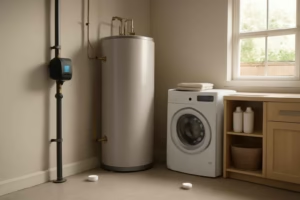
Choose whole-home automatic shutoff, preferably with both flow monitoring and separate leak sensors near the water heater, laundry area, and under sinks. This is where the device offers the clearest value.
Scenario 3: Condo or smaller home with one main leak concern
Begin with sensor-based protection in the highest-risk area. Upgrade to a full shut-off system when renovation, appliance replacement, or insurance incentives justify the added cost.
FAQ
Do smart water shut-off valves work without Wi-Fi?
Some can still perform limited local valve functions, but remote alerts, app control, and cloud-based event tracking usually depend on connectivity. Check whether the model offers local automation during internet outages.
Can I install a smart water shut-off valve myself?
Actuator-style models are often more DIY-friendly if they fit an existing ball valve. Inline systems usually require more plumbing skill and may be better handled by a licensed plumber.
Will a smart water shut-off valve reduce insurance costs?
Possibly, but it depends on the insurer and the exact system requirements. Treat any insurance savings as a potential bonus, not the sole reason to buy.
Do I still need leak sensors if I have an automatic shut-off valve?
In many homes, yes. Separate sensors add room-level awareness and can catch issues such as slow drips or appliance leaks before whole-home flow patterns become obvious.
What is the biggest difference between a water monitor and a shut-off valve?
A water monitor tracks usage and may detect anomalies. A shut-off valve can take action by stopping the water supply. Some products combine both functions, but many do not.
Conclusion
The best smart water shut-off valve is the one that fits your plumbing, matches your risk level, and can close the water supply reliably when it matters. For most buyers, compatibility and shutoff logic matter more than advanced smart-home extras. If your home has high water-damage exposure, a whole-home shut-off system is often worth the cost. If your risk is localized, start with leak sensors and upgrade deliberately.
The next step is simple: inspect your main shut-off valve, document pipe size and clearance, and score two or three options using the Best Home Gear Hub Valve Fit Score before you buy. That process will usually lead to a better decision than comparing feature lists alone.